


.webp)


Many customers all have one problem on how to install our Fiber Optic Indoor Cable product after they buy them back home, today this article will help you solve this problems. Installation process is mainly divided into three steps after summarized by Fiber-Mart. Fiber optic cable is exposed to electrical and mechanical, chemical and environmental elements, so the appropriate installation is crucial to the long-term stability and survival of fiber optic cable. The installation of the cable also must satisfy the NEC (the national electrical code) and local building codes. NEC indicates that fiber optic cable can be placed in the same runway, cable or enclosure and cable television, telephone, communication circuit.
1. Dealing with the cable
This step will shown two wrong ways which many people should not do with the indoor cables.
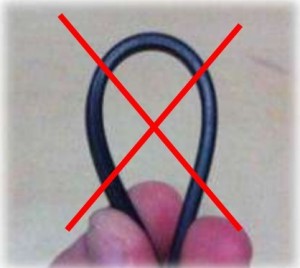
Do not bend the cable more than 90°
Extreme bending (such as the following figure shown) will cause great signal loss and is one of the most common mistakes that contractors always make when we deal with the cable.
Do not cut excess cable
Maintain two equal excess length at both ends. Keep it nice anf coil it in larger radius to avoid damages to the cables.
2. Measuring the length of the Indoor cable
Location of your TP
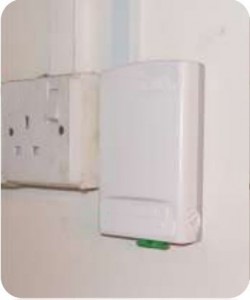
The preferred location will be near to your TV with electrical point (to support your modem) or network hub where Cat 5/6 are laid to. Make sure 8 inches of space in between bottom of TP to the floor/cabinet for easy insertion of fiber patch cord.

Length from FDP to TP
Fiber-Mart allows only two splicing joints at two locations, one at Termination Point or TP (home) and one at Fiber Distribution Point or FDP (riser or common corridor). Make sure you have measured the path distance in between the FDP and TP before decide on the length. Excess lengths of at least 3m at each end are to be included in your calculation for installer’s termination.

3.Material to use
PVC pipe
Here we are assuming that all of our customers want the cable to be hidden inside the wall or ceiling for aesthetic purposes. Instead of flexible pipe which is commonly used by most contractors, we highly recommend PVC pipe as a medium to protect your fiber optic cable as it will be easier to do maintenance if there is a need to replace the fiber optic cable or add in additional cable. Recommended angle at the each joint will be no less than 120 Degree. Make sure the cable is able to be pulled at each direction easily
Fiber-Mart does not hold responsibility on any misuse, mismanagement or any action caused by user’s lack of knowledge when using our fiber optic indoor cable. This document serves as a guide and may not be the only solution as situation will change depending on the building type and structure. Another news we should tell you. With the National Boss Day’s coming, Fiber-Mart’s Fiber optical cable products are doing with 30% discount of the price, include the indoor fiber cables, if you have some needs, please shop to Fiber-Mart as soon as possible.





No comments have been posted yet.