


.webp)


In today's rapidly advancing digital era, the need for efficient and reliable communication networks is paramount. A key innovation in this field is the optical signal amplifier, an essential component of modern communication systems, especially those using optical fiber cables.In this article, we will provide a comprehensive overview of the numerous advantages offered by optical signal amplifiers. We will delve into their technical benefits, explore various real-world applications, and illustrate their significant impact on both consumer and business communication infrastructures. Whether your goal is to enhance internet stability in residential settings, boost network capacity for your enterprise, or extend connectivity to underserved regions, Fibermart is here to support your needs with expertise and advanced solutions. Join us as we explore how optical signal amplifiers can transform your communication network to meet the demands of today's digital landscape.
The Advantages of Optical Signal Amplifiers in Modern Communication
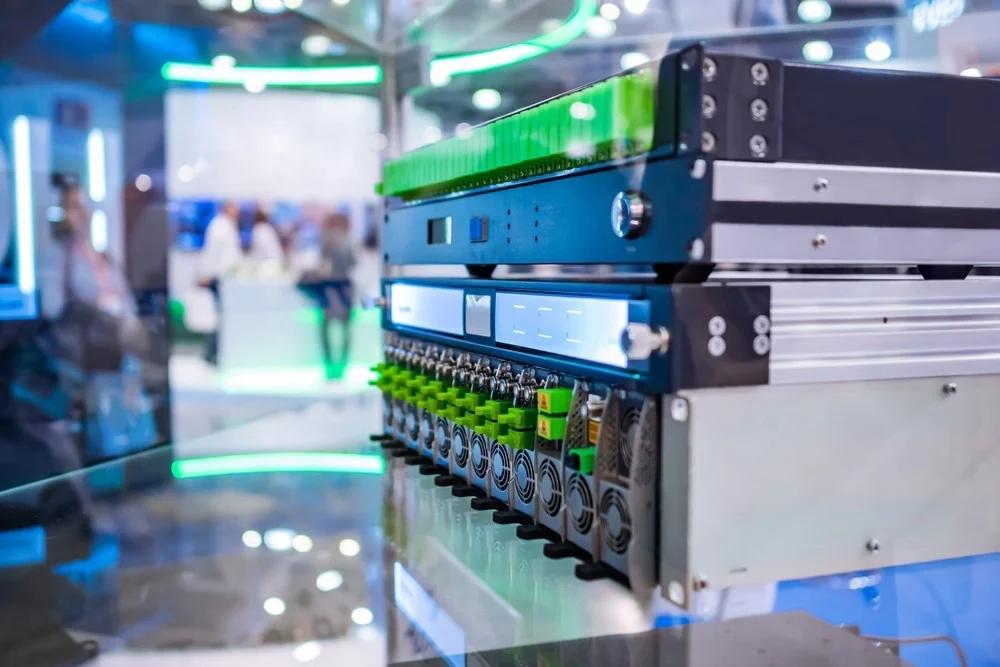
Advantages of Optical Signal Amplifiers
1.Improve Communication Quality and Stability
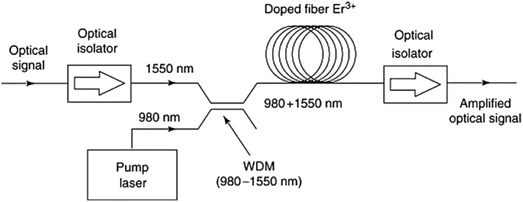
One of the primary benefits of optical signal amplifiers is their ability to significantly improve the quality and stability of communication. As data travels through optical fiber cables, it experiences attenuation, which weakens the signal over long distances. Optical signal amplifiers counteract this attenuation by boosting the signal strength, ensuring that the data remains clear and strong throughout its journey.
In addition to combating signal loss, optical signal amplifiers also reduce the error rate during data transmission. This is particularly important for applications that require high-quality, error-free communication, such as streaming high-definition video or conducting real-time financial transactions. By minimizing errors, these fiber optic amplifiers help maintain the integrity and reliability of the communication network, providing a seamless experience for end-users.
2.Increase Communication Distance
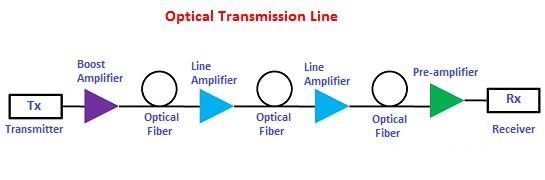
Another significant advantage of optical signal amplifiers is their ability to extend the communication distance. Traditional optical fiber cables can only transmit data up to a certain point before the signal becomes too weak to be useful. However, with the help of optical signal amplifiers, this distance can be greatly increased.
For instance, in long-haul communication systems, optical signal amplifiers enable data to travel thousands of kilometers without the need for frequent repeater stations. This not only simplifies the network design but also reduces the overall cost of infrastructure. Consumers, especially those in rural or remote areas, benefit from expanded coverage and improved access to high-speed internet and other communication services.

3.Enhance Network Capacity and Bandwidth
The demand for higher network capacity and bandwidth is ever-increasing, driven by the proliferation of data-intensive applications and services. Optical signal amplifiers support this demand by enabling the use of advanced multiplexing techniques, such as Wavelength Division Multiplexing (WDM).
WDM allows multiple data streams to be transmitted simultaneously over a single optical fiber cable by using different wavelengths of light. Optical signal amplifiers are essential in this process, as they amplify each wavelength independently, ensuring that all data streams remain strong and clear. This results in a significant increase in the network's capacity and bandwidth, allowing it to handle more data at higher speeds. This is particularly beneficial for businesses and service providers looking to offer high-speed internet and other data services to their customers.
4.Reduce Operational Costs
Cost efficiency is a major concern for any network operator. Optical signal amplifiers help reduce operational costs in several ways. First, by extending the communication distance and reducing the need for repeater stations, they lower the infrastructure costs associated with long-haul communication networks.
Additionally, modern optical signal amplifiers are designed to be energy-efficient, consuming less power compared to older technologies. This reduction in power consumption translates to lower energy bills and a smaller carbon footprint, aligning with the growing emphasis on sustainable and environmentally friendly technologies.
For Fiber Optic Manufacturers, these cost savings can be significant. By incorporating efficient optical signal amplifiers into their products, they can offer more competitive pricing and better value to their customers, further driving adoption and growth in the market.
5.Ease of Integration and Deployment
The integration and deployment of optical signal amplifiers into existing communication networks are relatively straightforward. These devices are designed to be compatible with a wide range of optical fiber cables and network configurations, making them highly flexible and versatile.
Moreover, the installation and maintenance of optical signal amplifiers are simplified thanks to advancements in technology. Many modern amplifiers come with user-friendly interfaces and automated features that make them easy to set up and operate. For consumers and businesses alike, this means less downtime and fewer technical challenges, ensuring a smooth and hassle-free experience.
Application Scenarios
1.Home and Small Business Use
In residential and small business settings, optical signal amplifiers can greatly enhance internet stability and speed. This is particularly important as more people work from home, stream high-definition content, and engage in online gaming. By ensuring a strong and stable signal, optical signal amplifiers help eliminate buffering, lag, and other issues that can disrupt the user experience.
For small businesses, reliable communication is key to maintaining productivity and customer satisfaction. Optical signal amplifiers ensure that employees can access cloud services, video conferencing, and other essential tools without interruption, enabling them to work efficiently and effectively.
2.Large Enterprises and Data Centers
Large enterprises and data centers require robust and high-density network architectures to handle vast amounts of data. Optical signal amplifiers play a crucial role in maintaining the performance and reliability of these networks.
In data centers, for example, optical signal amplifiers enable high-speed data transmission between servers, storage devices, and other infrastructure components. This is essential for supporting the demands of modern applications, such as big data analytics, artificial intelligence, and cloud computing.
Scalability is another key benefit. As businesses grow and their data needs increase, optical signal amplifiers allow for easy expansion of the network without compromising performance. This ensures that enterprises can continue to operate efficiently and remain competitive in their respective markets.
3.Rural and Remote Areas
One of the most impactful applications of optical signal amplifiers is in extending communication services to rural and remote areas. These regions often face significant challenges in accessing reliable and high-speed internet due to the geographical distance from major network hubs.
Optical signal amplifiers help overcome these challenges by boosting signal strength over long distances, ensuring that even the most remote communities can enjoy the benefits of modern communication. This has far-reaching social and economic implications, enabling access to education, healthcare, and economic opportunities that were previously out of reach.
4.Intelligent Cities and IoT Networks
As cities become smarter and more interconnected, the demand for robust communication networks continues to grow. Optical amplifiers are integral to the infrastructure that supports smart city initiatives and IoT (Internet of Things) applications.
For instance, in a smart city, sensors and devices need to communicate in real-time to manage traffic, monitor environmental conditions, and enhance public safety. Optical signal amplifiers ensure that these communications are reliable and efficient, enabling the seamless operation of smart city technologies.
Future-proofing urban networks is another important consideration. As the number of interconnected devices increases, the capacity and bandwidth requirements of the network will also rise. Optical signal amplifiers provide the necessary scalability to accommodate this growth, ensuring that cities can continue to innovate and evolve.
Conclusion
As we look to the future, the continued innovation and adoption of optical signal amplifiers will be essential in meeting the growing demands of our interconnected world. By investing in these technologies, we can ensure that our communication networks remain robust, reliable, and ready to support the advancements of tomorrow.
At Fiber-mart, we are proud to offer top-of-the-line products like the 33dBm PM Optical Amplifier High Power Polarization Maintaining EDFA Fiber Amplifier. This advanced amplifier is designed to deliver exceptional performance, making it an ideal choice for enhancing your communication network. Its high power and polarization-maintaining features ensure superior signal quality and stability, making it perfect for a variety of applications.
We invite you to visit our website to learn more about this product and explore our extensive range of optical fiber solutions. Whether you're looking to upgrade your current setup or expand your network, Fibermart has the expertise and products to meet your needs. Discover how our cutting-edge optical signal amplifiers can transform your communication experience and help you stay ahead in the digital age.





No comments have been posted yet.