


.webp)


In the world of high-speed data, where information travels at the speed of light, the physical connections that make it all possible are paramount. Among the various options available, one connector has become a dominant force in crowded network environments: the Duplex LC connector. To truly appreciate its role, we should think of it not just as a component, but as a meticulously engineered gateway for data.
What is a Duplex LC Connector?
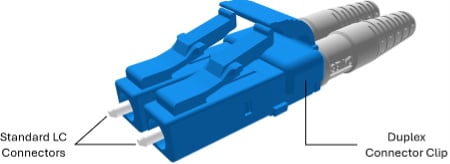
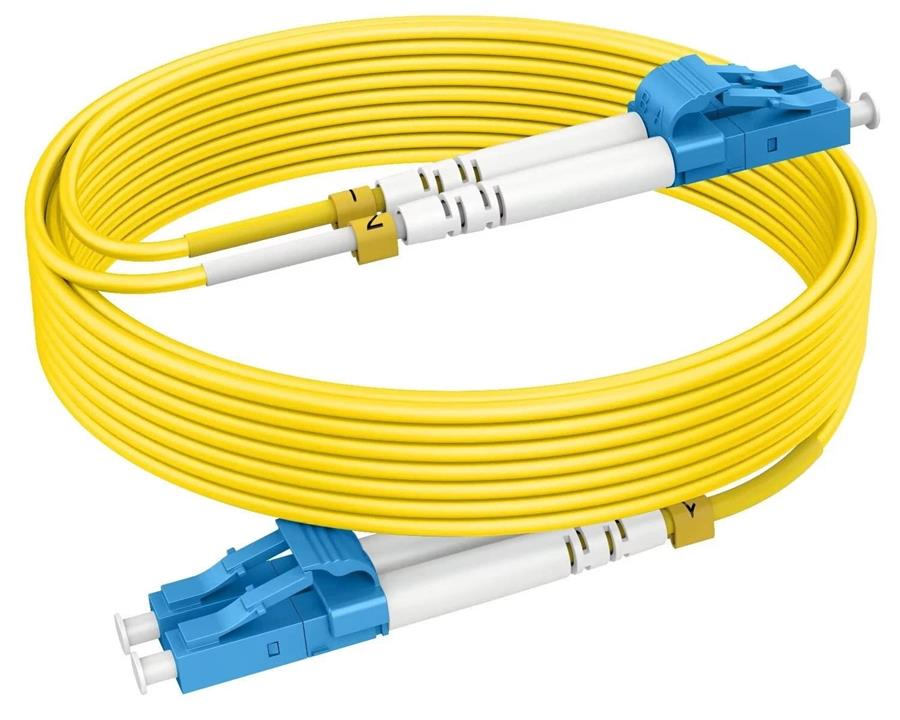
At its heart, a Duplex LC connector is a single, compact unit designed to link two optical fibers together, creating a pathway for bidirectional communication. The "LC" stands for "Lucent Connector," a nod to its origins at Lucent Technologies, while "Duplex" simply means it handles two fibers simultaneously—one for sending data and the other for receiving. This elegant two-in-one design is a cornerstone of modern networking, allowing for efficient data flow in both directions over a single, unified clip.
This connector is a masterpiece of miniaturization. It employs incredibly small ferrules—the tiny cylinders that hold the fiber ends—each with a diameter of just 1.25mm. This small size is coupled with a clever push-pull latching mechanism, which makes it easy to connect and disconnect even in the most tightly packed network cabinets. You will frequently find this connector paired with multimode duplex fiber optic cables, making it an indispensable part of the backbone in data centers and enterprise networks.
How does Duplex LC Connector work?
The reliability and performance of the Duplex LC connector come from the seamless collaboration of its key parts. Each component has a dedicated role in ensuring a stable and efficient connection.
The Precision of the Ferrules
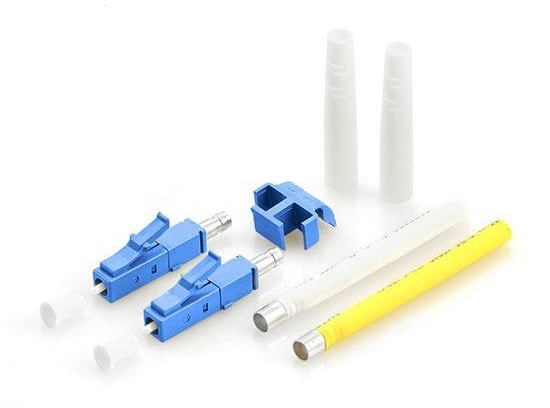
The ferrules are the heart of the connector's precision. A duplex LC features two of these ceramic or stainless steel cylinders, each precisely bored to cradle a single hair-thin optical fiber. Their primary job is to align the cores of the two mating fibers with exceptional accuracy. When this alignment is perfect, light signals can pass from one fiber to the next with minimal loss or reflection, which is absolutely critical for maintaining the integrity of high-speed data transmission.
The Connector Body and Latching Mechanism
The body of the connector acts as a protective shell, safeguarding the delicate ferrules and internal components from physical damage and contaminants. Integrated into this body is the brilliant latching mechanism. This push-pull design allows a technician to securely seat the connector with a gentle push and release it with a simple pull on the tab. This user-friendly feature is a major advantage in high-density environments where space is at a premium and finger access is limited.
Strain Relief and Secure Assembly
Completing the assembly is the boot and the duplex clip. The boot is a flexible sleeve at the rear of the connector that protects the point where the cable meets the connector body. It absorbs bends and tugs, reducing stress on the fragile fibers and significantly extending the cable's lifespan. The duplex clip is the simple yet effective feature that physically bonds the two LC connectors together, ensuring they remain a matched pair and preventing them from being accidentally mismatched in a patch panel.
Why the Duplex LC Connector is a Preferred Choice
The widespread adoption of the Duplex LC connector is no accident. It offers a compelling set of advantages that directly address the needs of modern, high-performance networks.
Excelling in Crowded Spaces
One of its most lauded benefits is its high-density design. Because the duplex LC is so much smaller than older connector types like the SC or ST, it allows network engineers to fit a far greater number of connections into the same physical space. This is invaluable in data center racks and telecom closets, where every square inch is precious real estate.
Uncompromising Performance and Ease of Use
Beyond its size, the duplex LC delivers superior performance, characterized by low insertion loss and high return loss. These technical terms essentially mean that the signal remains strong and clear as it passes through the connection, with very little of it being weakened or reflected back. Coupled with the effortless push-pull latching system, this combination of high performance and user-friendly operation reduces installation time and minimizes the potential for errors during maintenance or reconfiguration.
Installation and Maintenance of An LC Duplex Connector
Step-by-Step Installation Instruction
1. Get Ready the Cable: Use a stripping tool to remove about 2-3 cm of the outer coating from the fiber optic cable, being careful not to damage any of its inner fibers.
2. Clean the Fiber: Utilize isopropyl alcohol and lint-free wipes to clean off contaminants or dirt that may be present on exposed strands of fibers.
3. Cleave the Fiber: Cut at a straight line with a precision cleaver so as to make sure we have an even end face, which guarantees a good quality connection.
4. Insert the Fiber: Gently push one end of the cleaved fiber into the rear side duplex LC connector up until it will go in, making certain it aligns properly within the connector housing.
5. Crimp the Connector: Fibers within connectors need to be crimped using suitable pressure to stabilize them and ensure reliability during operation after installation.
6. Polish The Connector End Face: Lightly rubbing polishing film against the connector’s surface helps remove slight flaws and ensures better transmission of light through it.
7. Inspect the Connection: Using a fiber microscope, look at the connector end face for debris or imperfections; if necessary, clean and re-polish the connections.
8. Test The Connection: Verify insertion loss and return loss (within allowable limits) by testing connections optical Time Domain Reflectometer (OTDR) or light source power meter combination.
By doing these things, you will ensure that duplex LC connectors are installed securely and efficiently, thus enhancing performance and dependability in any network system using optical fibers.

Using a Duplex 2mm Epoxy Connector Kit
To make use of a Duplex 2mm Epoxy Connector Kit in an effective way, it is necessary to take the following detailed steps:
1. Prepare the Fiber: Start by stripping the fiber to expose the cladding, being careful not to damage inner fibers.
2. Mix and Apply Epoxy: Follow the manufacturer’s instructions and mix epoxy resin with hardener. Then, apply mixed epoxy to the connector ferrule, insert fiber through the ferrule hole, and ensure that the fiber is coated with epoxy.
3. Cure The Epoxy: – Put connector assembly into epoxy curing oven or use a heat gun to cure epoxy as directed by the manufacturer of epoxies; make sure that all parts are correctly cured for good holding strength on fibers.
4. Cleave the Fiber: Once cured, use a precision cleaver to cut fiber sticking out from the ferrule so that it creates flat, even ends.
5. Polish Connector End Face: – Employ a polishing puck together with a series of polishing films (coarsest to finest) for this process, which is done critically towards achieving low insertion loss performance and high return loss performance; follow instructions given in the kit starting from coarse grit moving progressively towards finer grits.
6. Inspect Connector: Use a fiber optic inspection microscope to inspect the polished connector end face; look for scratches, pits, or debris that might affect its functioning, and if necessary, re-polish it.
7. Test Connector: – Finally carry out optical testing using Optical Time Domain Reflectometer (OTDR) or light source power meter ensuring connection meets industry standard for insertion loss return loss.
By following these steps one can terminate duplex 2mm epoxy connectors reliably thus ensuring proper operation integrity of their fibre optic network is maintained.
Maintenance Tips for Optimizing Performance
To keep your fiber optic network performing at its best, follow these maintenance tips:
1. Regular Cleaning: Always clean connectors, adapters and ports regularly with cleaning tools designed for fiber optics such as lint-free wipes and isopropyl alcohol. Foreign materials can cause significant signal loss. Hence, ascertain that your fiber optic lc connector is always clean.
2. Visual Inspection: Use a microscope for inspecting all cables and connectors so as to detect potential problems like dust or scratches early enough before they become worse.
3. Proper Storage: Store unused cables and connectors in a dust-free environment with their protective caps on to prevent physical damage and contaminants from entering.
4. Cable Management: Employ structured cable management techniques that will ensure neatness while avoiding bending too much which can lead to stress related failures besides causing signal losses due to increased attenuation.
5. Environmental Control: Ensure that installation sites are free from extreme temperatures fluctuations as well as high humidity levels among other factors known to affect performance. In such conditions, corning optical fiber glass may be more resilient than other types of fibers.
These are some of the things you should do if you want your network stay functional for long without any issues arising. Check duplex fiber optic patch cable connections regularly.
Common Issues and Troubleshooting Tips in Duplex LC
Identifying and Eliminating Connector Problems
In fixing connector problems, a methodical approach must be followed. I start by visually examining the cables and connectors for damage or dirt using a microscope for fiber optic inspection. Dust or oil are typical impurities that can seriously affect signal quality. Then, I clean up these connections with suitable cleaning tools meant for fiber optics, like isopropyl alcohol and lint-free wipes, until they are debris-free.
If the problem continues, I employ an Optical Time-Domain Reflectometer (OTDR) to locate faults or breaks along the fiber cable. It’s crucial that you ensure connectors are well mated together and tightly secured because loose ones may result in high insertion and return loss.
There are situations where we may need to re-terminate or replace faulty connectors to bring back good signal performance levels. With this procedure, I am able to quickly find out what went wrong with my connection points and fix it, thus making them work again better than before being attended to, which helps keep up high performance standards for fiber optic networks.
Ensuring Appropriate Alignment and Connections
To make a fiber optic network properly aligned and connected there are some processes that must be followed carefully. My first step involves checking whether the fiber cores have been aligned correctly or not through the use of an optical fiber visual fault locator or alignment tool. It should be understood that accurate alignment is crucial in minimizing insertion loss and maximizing signal transmission.
The next thing I do is inspect connectors to see if they are clean and free from any dirt particles because small contaminants can lead to significant degradation of signals.
Once connectors are cleaned up and checked, I mate them together with extra care taken so that they can create secure and stable connections. One has to ensure proper seating of these connectors plus engaging locking mechanisms, which will prevent any movement capable of introducing signal errors. Connection testing is also done using an Optical Loss Test Set (OLTS), which measures insertion loss and return loss to verify that they fall within acceptable limits, particularly for systems using corning optical fiberglass.
Therefore, by checking alignment methodically, cleaning connectors, and utilizing accurate testing tools, strong, efficient connections within the fiber optic network are assured. Such keenness guarantees high performance reliability too.
Maintaining Fiber Optic Patch Cable Integrity
To guarantee network dependability and efficiency, it is important to protect the integrity of fiber optic patch cables. Physical damage can be averted by following specific handling procedures at all times. For instance, they should not be bent or twisted beyond their limits or pulled too hard which could result in microbends that lower signal quality. It also means using the right cable management systems, such as protection sleeves designed for bend radiuses, among others, so that physical stress on them is minimized.
Besides, frequent checks are necessary. I personally inspect these cables regularly looking out for any visible wear and tear signs; in case there are any damaged parts detected I replace them immediately because if left unattended they may lead to loss of signals eventually. Cleaning connectors prior to making connections cannot be overemphasized because this step helps prevent contamination, which might degrade the quality of signal transmission otherwise, especially when dealing with fiber optics. Moreover, it is advisable to have with you a fibre optic microscope during inspections so that one can see clearly whether connectors are clean enough or not aligned properly.
By taking care when moving around structured cabling systems like patch cords, etc., checking periodically for faults, cleaning regularly through proper kits(based on alcohol), and testing using laser power meters, we ensure safety and maintain good performance levels throughout our networks made up of these types of cables. Otherwise, everything will fail miserably!
How LC Duplex Connectors and Cables Power Modern Networks
In the architecture of our digital world, data doesn't just travel—it flows in relentless, bidirectional rivers. Facilitating this constant, high-speed exchange are unsung heroes: the integrated systems of LC Duplex Patch Cables and LC Duplex Connectors. These are not merely separate components that happen to fit together; they are a co-engineered solution, a seamless fusion of cable and interface designed to meet the most demanding challenges of contemporary connectivity.
A Seamless Integration: Cable and Connector in Concert
The true genius of the LC Duplex system lies in the perfect harmony between the patch cable and its connector. This is a partnership where the whole is significantly greater than the sum of its parts.
The Engineered Synergy of Design
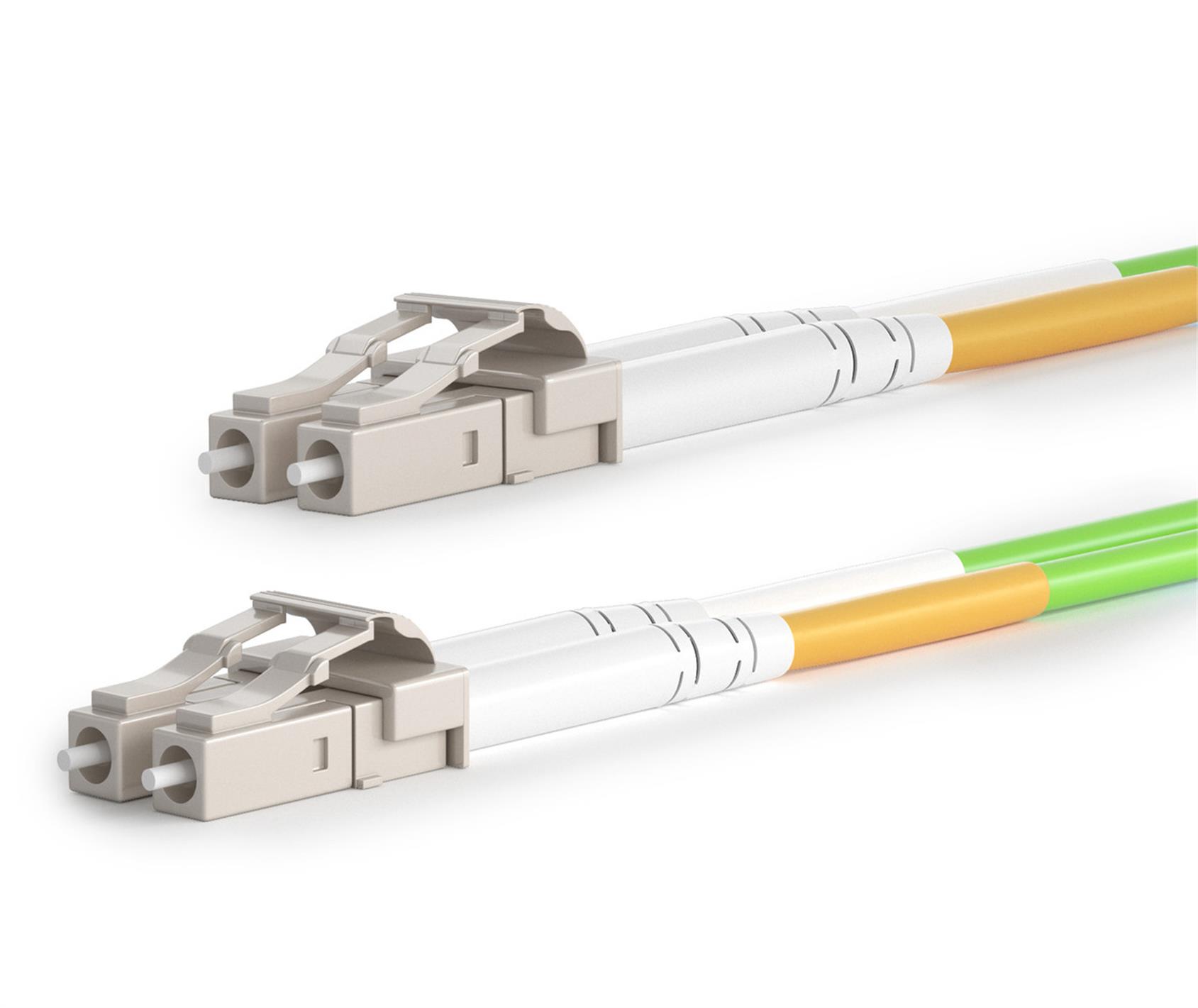
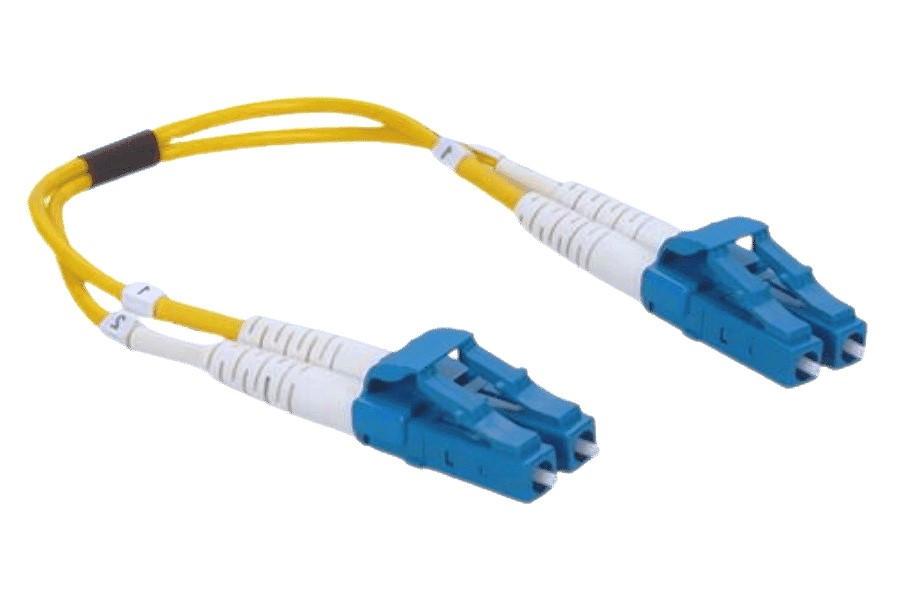
An LC Duplex Patch Cable is, in essence, two precise optical fibers housed within a single protective jacket, meticulously aligned to match the twin-ferrule design of the LC Duplex Connector. This is not a forced marriage but a natural alliance. The connector's iconic 1.25mm ferrule—a standard that propelled miniaturization in fiber optics—provides the exacting alignment, while the cable's duplex zip-cord design offers the flexibility and organization needed for tidy installations. The connector's push-pull latch mechanism snaps securely into transceivers and patch panels, with the robust cable boot managing strain and preventing sharp bends right at the connection point. This integration ensures that from the core of the glass fiber to the port in a switch, the entire link is optimized for performance and reliability.
Technical Mastery in Miniature
The technical prowess of this system commands respect. The heart of the connection is the ceramic ferrule, which holds the microscopic fiber with sub-micron accuracy. This precision directly enables exceptional performance metrics, with insertion losses typically below 0.3 dB and return losses exceeding 40 dB. Such figures are not just abstract numbers; they translate directly into a stronger, cleaner signal. Furthermore, the entire assembly is built to support staggering data rates, from 10 Gigabit Ethernet all the way to 100G and 400G, especially when paired with advanced fibers like OM4 or OM5. The duplex clip, a seemingly simple piece of plastic, is the final piece of the puzzle, guaranteeing that the transmit and receive channels are always kept together, eliminating the polarity errors that can bring a network to its knees.
LC Duplex Cable Connectivity
The evolution of the LC duplex standard has given rise to distinct cable variants, each engineered to excel in specific environments. From general-purpose patching to hyper-dense data centers and performance-critical backbones, understanding these three pillars is key to optimal network design.
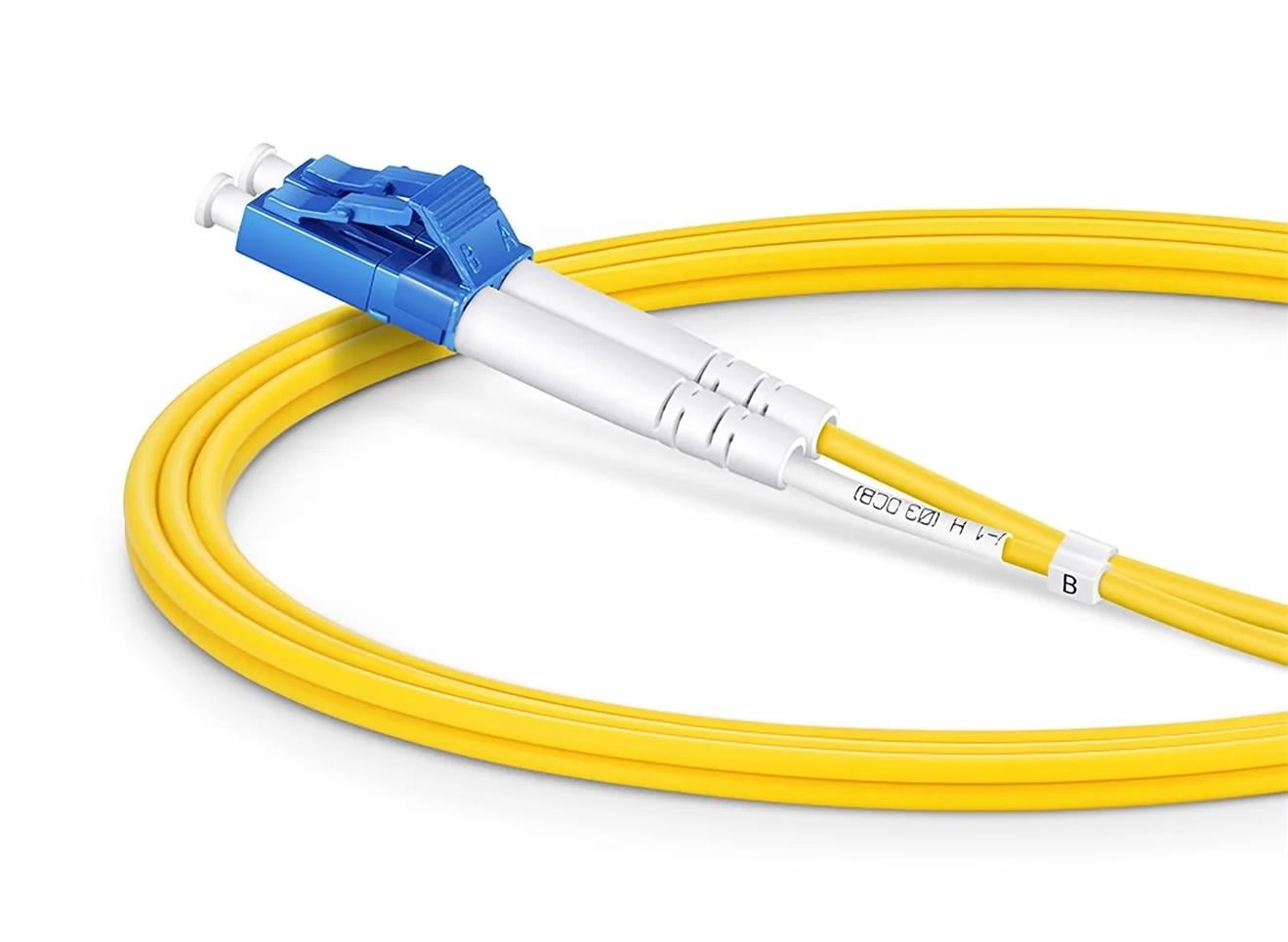
The Standard LC Duplex Cable: The Universal Workhorse
The standard LC duplex cable, with its familiar zip-cord design and two separate connectors clipped together, serves as the reliable foundation for countless fiber optic installations. Its design prioritizes simplicity, cost-effectiveness, and ease of use, making it an incredibly versatile solution.
You will find these cables forming the essential connective tissue in a vast array of scenarios. They are the go-to choice for building backbone cabling, connecting network switches to patch panels in telecom rooms, and facilitating links within enterprise server racks. Their robustness and straightforward design make them perfect for corporate networks, campus-wide data links, and any installation where extreme port density is not the primary concern. The standard LC duplex cable is the indispensable, universal workhorse that keeps the everyday flow of data moving reliably.
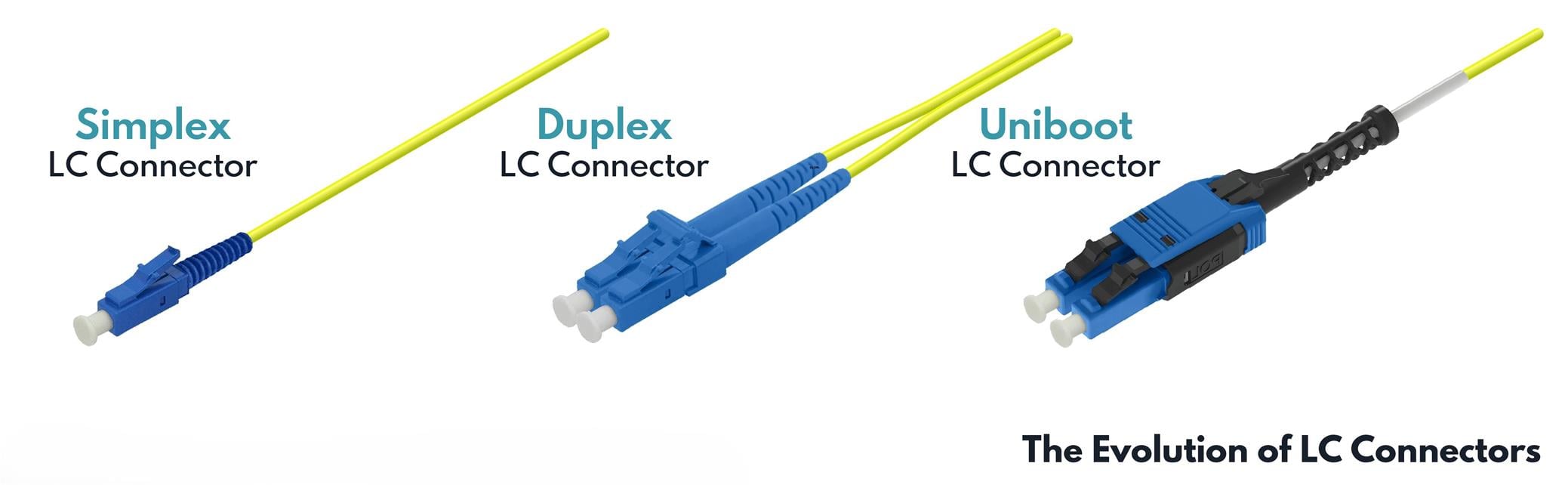
The Uniboot LC Duplex Cable: The Density Innovator
The Uniboot LC cable represents a paradigm shift in physical design, engineered specifically to conquer the challenge of space constraints. Its key innovation is the consolidation of the two fiber connections into a single, streamlined connector body and a singular, round cable jacket.
This design finds its perfect application in the densely packed rows of modern data centers. By halving the physical footprint of each duplex connection, Uniboot cables enable network architects to fully utilize high-port-count switches and patch panels without being limited by congestion. They are the ideal solution for top-of-rack (ToR) and middle-of-row (MoR) deployments, cloud infrastructure, and any co-location environment where maximizing the number of connections per rack unit is critical. The Uniboot cable doesn't just connect equipment; it unlocks the full potential of high-density architecture.
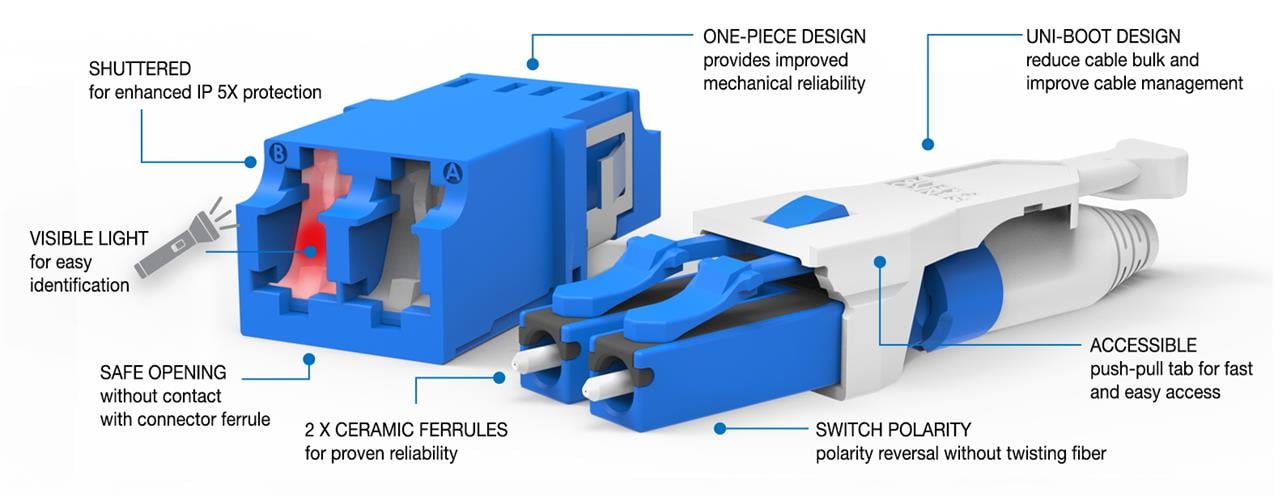
The Ultra Low Loss LC Duplex Cable: The Performance Purist
While other cables focus on physical form, the Ultra Low Loss (ULL) LC cable is a tribute to signal fidelity. It is a precision instrument where every component—from the zirconia ferrule to the end-face polish—is optimized to achieve the lowest possible signal attenuation, often specified at 0.1 dB or less.
The application of Ultra Low Loss cables is reserved for scenarios where every fraction of a decibel matters. They are deployed in long-haul and metro optical links where maximizing the distance between signal amplifiers is essential. Furthermore, they are critical for supporting the stringent performance demands of high-speed protocols like 400GbE and 800GbE, and in mission-critical environments such as financial trading networks, research and scientific computing, and storage area networks (SANs). For these applications, the ULL cable is not an accessory but a necessity, safeguarding the integrity and performance of the entire network link.
Applications of Duplex LC Connector and Duplex LC Fiber Cable
The integrated power of the LC Duplex cable and connector is not theoretical. It finds its purpose in the nerve centers of our digital infrastructure, enabling the applications we rely on every day.
The Lifeline of the Data Center
Imagine the environment of a modern data center: row upon row of server racks, each humming with activity, hosting everything from cloud storage to streaming services. Space is the ultimate commodity, and density is king. Here, the LC Duplex system shines. Its compact form factor allows network engineers to fit hundreds, even thousands, of connections in a single cabinet. This high-density capability is the bedrock upon which scalable cloud infrastructure is built, allowing for the massive parallel processing and rapid data exchange that power everything from social media platforms to financial trading systems.
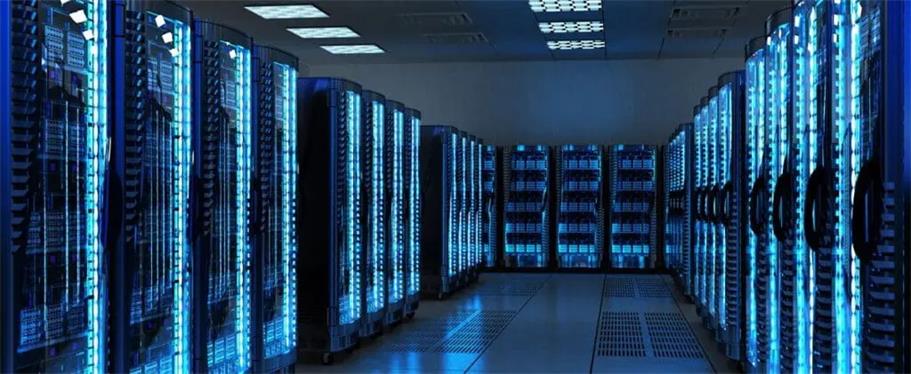
Empowering Telecommunications and Corporate Backbones
Beyond the cloud, these duplex systems form the robust backbone of telecommunications networks and large enterprise campuses. They are the preferred choice for connecting floors in a skyscraper or buildings across a university campus. Their reliability and low signal loss make them perfect for the intermediate distribution frames (IDFs) and main distribution frames (MDFs) that act as the central nervous system of a corporate network. When a video conference call connects teams across continents, or when a hospital transmits large MRI files between departments, it is often the transparent, high-fidelity connection provided by an LC Duplex link that ensures the data arrives intact and without delay.
The Foundation for Evolving Technologies
The influence of this technology extends to the cutting edge. In storage area networks (SANs), where reliable and blisteringly fast data access is non-negotiable, LC Duplex connections are the standard for linking servers to storage arrays. They are also fundamental in deploying Fiber-to-the-Home (FTTH) architectures, bringing immense bandwidth directly to end-users. As we move toward an era dominated by 5G infrastructure, the Internet of Things (IoT), and artificial intelligence, the demand for dense, reliable, and high-speed physical links will only intensify. The LC Duplex system, with its proven track record and forward-looking design, is poised to remain a critical enabler of this next wave of innovation, proving that this unassuming duplex clip and its cable carry the great power to shape our connected future.
Fibermart, certified to ISO9001:2015 and ISO14001:2015, boasts strong teams focused on optical communication R&D, solutions, and supply chain management. Emphasizing high performance and integrating quality management, Fibermart promotes collaboration and innovation to make fiber optics accessible. Products are individually tested for network reliability, and a robust inventory system ensures delivery capacity and rapid response, making fiber optics accessible and available to all.
Conclusion
Together, the explorations of the LC Duplex Connector and its integrated patch cable reveal not just a collection of components, but a foundational technology. This system is far more than the sum of its parts; it is a meticulously co-engineered solution that forms the silent, reliable backbone of our connected world. The journey from understanding the connector's precise ferrules and intuitive latch to appreciating the cable's role in high-fidelity data transmission shows us a complete ecosystem in miniature.
In essence, the LC Duplex standard represents a perfect marriage of form and function. Its compact, high-density design directly answers the physical demands of modern infrastructure, allowing an immense concentration of data pathways in the confined spaces of data centers and network closets. Yet, this small size does not come at the cost of performance. On the contrary, the technical mastery behind its precision alignment and low-loss characteristics ensures that it can handle the torrential data flows of today and tomorrow, from 10G to 400G and beyond.
From powering the cloud servers that host our digital lives to forming the robust backbones of global telecommunications and corporate networks, the LC Duplex system has proven itself to be an indispensable enabler. It is the reliable, scalable, and powerful physical layer upon which our increasingly digital society is being built. As we stand on the brink of broader adoption of AI, IoT, and 5G, the enduring and evolved design of the LC Duplex connector and cable confirms its role not merely as a component of the past, but as a critical conduit for the future.
FAQs
Q: What is a Duplex LC Connector, and why is it considered a go-to solution for fiber networks?
A: A Duplex LC Connector is designed to connect two fiber optic cables using one modular plug. It is widely viewed as the best choice for fiber networks because of its high-density design, low insertion loss, and reliability in single-mode and multimode applications. Multimode options are available with duplex fiber optic cable and patch cable.
Q: What are the critical differences between simplex and duplex fiber connectors?
A: Simplex fibers can only handle one core, which allows data to be transmitted in one direction, while duplex fibers have two cores, which allow data to be transmitted simultaneously in two directions. These types of connectors are used when reliable connectivity with high bandwidth requirements is needed.
Q: What is a plenum duplex fiber patch cable, and where is it used?
A: Plenum duplex fiber patch cords come with plenum-rated jackets that suit use within plenums found in building spaces. These cables meet strict fire safety standards (OFNP rating), which makes them important for commercial installations where compliance with building codes must be met. Such needs require OFNP multimode fibers.
Q: Can you explain the applications of OM3 LC connectors in fiber networks?
A: OM3 LC connectors connect OM3 multimode optical fibers, enabling fast transmission rates of up to 100 Gigabits per second over short distances. Due to their better performance, they are mainly used in data centers and LANs.
Q: What does “LC multimode duplex 2mm epoxy” mean in fiber optics?
A: “LC multimode duplex 2mm epoxy” refers to an LC Fiber Optic Connector for use with multi-mode optical fibers with diameters around 2mm. This connector requires an epoxy adhesive to bond the fiber within the connector body together mechanically to prevent movement between them during regular operation periods. This kind of connector provides good reliability and ease of installation.
Q: What impact does a jacket have on fiber optic cables’ performance?
A: Jackets protect the delicate fiber core against physical damage and environmental elements. Depending on the type of material used for the outer sheath, different levels of protection, flexibility, or fire resistance may be provided, which affects overall cable service life and performance.
Q: Why should one use LC ST duplex fiber patch cables?
A: LC-ST duplex fiber patch cables offer high-density connections and robustness by combining features from LC and ST connectors. They provide compatibility between devices with dissimilar connector types, thus enabling flexibility in complicated network setups.
Q: Why would someone prefer multimode over single-mode fiber optic cables?
A: Multimode allows for many light modes within a short distance, making it suitable for use in areas with high data rates, such as campuses or data centers. It is usually used together with duplex lc fibers to achieve better results. Additionally, multimode cables are cheaper than single-mode ones and are best suited for long hauls since they can transmit signals over longer distances without attenuation.
Q: Why would 1.25mm ceramic ferrule LC connectors be used in fiber networks?
A: 1.25mm ceramic ferrule LC connectors are known for their precision and reliability; they offer good alignment properties while also ensuring minimal signal loss, which makes them ideal for use in high-performance optical networks where stable and efficient data transmission is required.
Q: How do plenum-rated fiber optic cables contribute to network safety?
A: These cables are meant to be installed in plenum spaces, i.e., air circulation areas within buildings, so as to not only meet but exceed fire suppression standards such as OFNP (Optical Fiber Nonconductive Plenum). This reduces the chances of fires breaking out or spreading through them, hence improving overall building security along with everything contained therein, like computer rooms, etc.





Aun no se han publicado comentarios.