


.webp)


Tutorial de empalme por fusión de fibra óptica
El empalme por fusión consiste en utilizar calor de alta temperatura generado por un arco eléctrico para fusionar dos fibras de vidrio (extremo con extremo, con el núcleo de la fibra alineado con precisión). Las puntas de las dos fibras se unen y se calientan para que se fundan. Esto se realiza normalmente con una empalmadora por fusión , que alinea mecánicamente los extremos de las fibras y luego aplica una chispa a través de las puntas para fusionarlas. Muchas empresas de telecomunicaciones y televisión por cable invierten en empalmes por fusión para sus redes monomodo de larga distancia, pero seguirán utilizando empalmes mecánicos para tendidos de cable locales más cortos. Dado que las señales de vídeo analógicas requieren una reflexión mínima para un rendimiento óptimo, el empalme por fusión es más adecuado para esta aplicación. La industria de redes LAN puede elegir entre ambos métodos, ya que la pérdida de señal y la reflexión son preocupaciones menores para la mayoría de las aplicaciones LAN.
Aparato de empalme por fusión
El aparato básico de empalme por fusión consta de dos accesorios en los que se montan las fibras y dos electrodos. La Figura 1 muestra un aparato básico de empalme por fusión . Un microscopio de inspección de fibra ayuda a colocar los extremos de fibra preparados en un aparato de empalme por fusión. Las fibras se colocan en el aparato, se alinean y luego se fusionan. Inicialmente, el empalme por fusión utilizaba alambre de nicromo como elemento calefactor para fundir o fusionar las fibras. Las nuevas técnicas de empalme por fusión han reemplazado el alambre de nicromo con láseres de dióxido de carbono (CO2), arcos eléctricos o llamas de gas para calentar los extremos de las fibras, haciendo que se fusionen. El pequeño tamaño del empalme por fusión y el desarrollo de máquinas de empalme por fusión automatizadas han hecho de la fusión por arco eléctrico (fusión por arco) una de las técnicas de empalme más populares en aplicaciones comerciales.
Proceso de empalme por fusión
El proceso de empalme por fusión de fibra óptica es básicamente el mismo para todas las máquinas de empalme automáticas. Normalmente, este proceso implica el uso de calor localizado para fundir o fusionar los extremos de dos fibras ópticas. El proceso comienza con la preparación de cada extremo de la fibra para la fusión.
Características del lugar del proceso de empalme:
- La actividad de empalme debe realizarse en un lugar muy limpio para evitar el polvo o cualquier contaminación que afecte el proceso de empalme.
- La temperatura del lugar donde se realice el proceso de empalme puede variar entre 15º C y 28º C.
Pista:
Aunque la máquina de empalme por fusión puede trabajar a temperaturas de -10ºC a +5ºC y el cierre se puede instalar a temperaturas entre -1ºC y +45ºC, también nos aseguramos de que el técnico de empalme trabaje en las condiciones óptimas para brindar la máxima eficiencia.
Cuatro pasos básicos para completar un empalme por fusión adecuado:
Paso 1: Preparación de las fibras
1. Retire la cubierta, retirando una cantidad adecuada, generalmente de 2 a 3 m, para empalmar y revestir los tubos de protección y las fibras en la caja de empalme. Deje la cantidad adecuada de elementos de refuerzo para fijar el cable a la caja. Consulte las instrucciones de la caja de empalme para conocer las longitudes necesarias. Limpie todos los materiales que impidan el paso del agua con limpiadores adecuados.
2. Retire los tubos de protección que dejan expuestas las fibras para el empalme. Generalmente, las cajas de empalme requieren aproximadamente 1 m de tubos de protección dentro de la caja y aproximadamente 1 m de fibra dentro de la bandeja de empalme. Limpie todos los materiales que impidan el paso del agua.
3. Cada fibra debe limpiarse completamente antes de pelarla para empalmarla.
4. Cuando esté listo para empalmar una fibra, retire las capas protectoras para exponer la longitud adecuada de fibra desnuda.
5. Limpie la fibra con toallitas adecuadas.
6. Corte la fibra utilizando el proceso apropiado para la cortadora de fibra que se esté utilizando.
7. Coloque la fibra en las guías de la máquina de empalme por fusión y fíjela en su lugar.
Paso 2: Ejecución del programa empalmador
1. Elija el programa adecuado para empalmar por fusión los tipos de fibra que se van a empalmar.
2.The splicer will show the fibers being spliced on the video screen.
3.Fiber ends will be inspected for proper cleaves and bad ones like the one on the right above will be rejected.
4.Automated Splicing
5.Fibers will be moved into position
6.Prefuse cycle will remove any dirt on the fiber ends and preheat the fibers for splicing
7.The fibers will be aligned using core alignment method for that splicer
8.The fibers will be fused by an automatic arc cycle that heats them in an electric arc and feeds the fibers together at a controlled rate
9.When fusion is completed, the splicing machine will inspect the splice and estimate the optical loss of the splice. It will tell the operator if a splice needs to be remade.
10.The operator will remove the fibers from the guides and attach a permanent splice protector by heat-shrinking or clamping clam shell protectors.
Step 2: Evaluating Splices
- Good Splices
- Bad Splices
Some flaws are unacceptable and require starting the splicing process over. Some, like black spots or lines, can be improved by repeating the ARC step, but never more than twice. For large core offsets, bubbles or bulging splices, always redo. (Graphic from Sumitomo manual)
Step 4: Protect the fiber
Protecting the fiber from bending and tensile forces will ensure the splice not break during normal handling. A typical fusion splicing have tensile strength between 0.5 and 0.5 pounds, and won't break during normal processing, but it still needs to protect from excessive bending and drag force. Use heat shrinkable tube, silica gel, and/or mechanical crimping protector will remain joint protection from external elements and breakage.
In general, fusion splicing takes a longer time to complete than mechanical splicing. Also, yields are typically lower making the total time per successful splice much longer for fusion splicing. Both the yield and splice time are determined to a large degree by the expertise of the fusion splice operator. Fusion splice operators must be highly trained to consistently make low-loss reliable fusion splices from Fiber-MART. For these reasons the fusion splice is not recommended for use in Navy shipboard applications.
Featured Products
Mechanical Splice.jpg) Fast Fiber Optic Mechanical Splice for 250um bare fiber |
High Precision Fiber Cleaver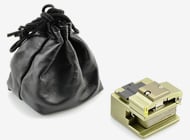 Used to cut the fiber glass to make a good end face for fiber optic splicing |
Cost-effective Fusion Splicers Various options of Fusion Splicers on Fiber-Mart |
Correo electrónico para sugerencias técnicas
: consultoría para soporte técnico o guía de compra de productos relevantes.
Correo electrónico para [email protected]
: consultoría para soporte técnico o guía de compra de productos relevantes.
Correo electrónico para [email protected]





Aun no se han publicado comentarios.