.webp)




































|
Bestellte Artikel
|
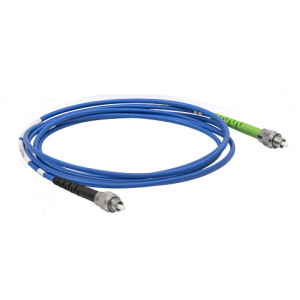
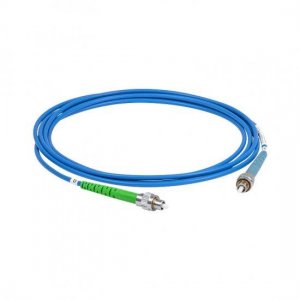
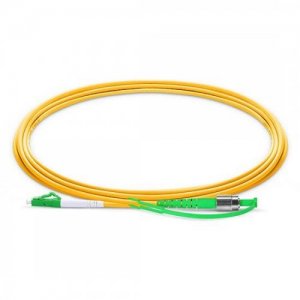
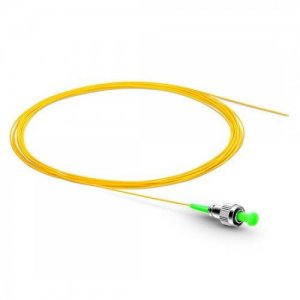
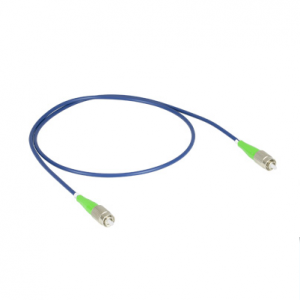
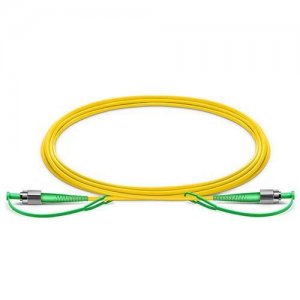
PolarisationserhaltendePolarisationserhaltendes KabelPolarisationserhaltende Fasern (PM-Fasern) sind spezielle Glasfasern, die den Polarisationszustand des durch sie hindurchlaufenden Lichts aufrechterhalten. Im Gegensatz zu herkömmlichen Singlemode Fasern, bei denen die Polarisation aufgrund von Unvollkommenheiten und äußeren Belastungen zufällig gestreut wird, sind PM-Fasern so konstruiert, dass sie über große Entfernungen einen linearen Polarisationszustand aufrechterhalten.
PM-Glasfaserkabel werden häufig in polarisationsempfindlichen Glasfasersystemen zur Lichtübertragung eingesetzt, bei denen der PM-Zustand aufrechterhalten werden muss. Alle PM-Glasfaserkabel von FiberMart erfüllen oder übertreffen die Industriestandards für Anwendungen, bei denen Polarisationsempfindlichkeit erforderlich ist. Unsere PM-Kabel mit hohem Extinktionsverhältnis und PM-Glasfaser-Pigtails sind in vielen flexiblen Konfigurationen und mit verschiedenen Anschlüssen erhältlich, z. B. FC/UPC, FC/APC , SC/UPC, SC/APC und LC-Anschlüsse in den Wellenlängen 460 nm, 630 nm, 780 nm, 980 nm, 1310 nm und 1550 nm. Polarisationserhaltende Kabel (250 µm blanke Glasfaser, 900 µm gepufferte Glasfaser oder 3 mm Kabel) sind in jeder Länge lieferbar. Kaufen Sie PM-Kabel und PM-Glasfaser-Patchkabel versandkostenfrei bei Fiber-MART.COM. ISO9001-zertifizierte Produkte auf Lager!
Introduction
Polarization Maintaining Cable, also known as PM Cable, is a specialized type of fiber optic cable designed to preserve the linear polarization state of light as it travels through the fiber. In standard single-mode fibers, the polarization state is unstable and can vary randomly due to external stresses and imperfections. PM cables overcome this by introducing a permanent, controlled asymmetry (high birefringence) within the fiber core. This is essential for applications where the polarization of light is critical to the system's functionality and performance.
Features
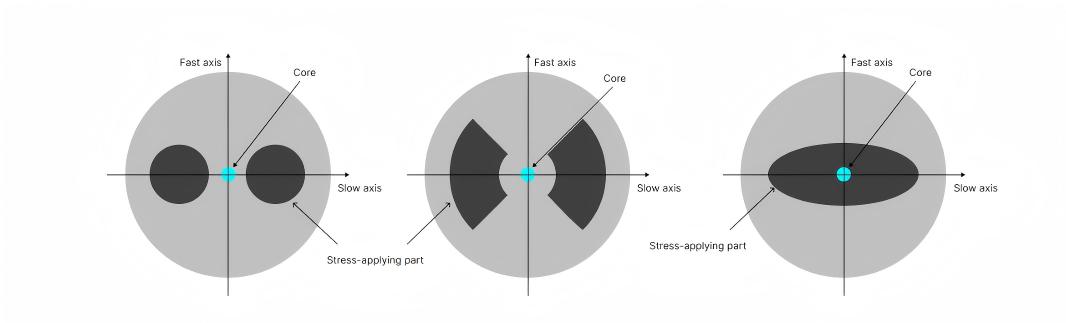
● Stable Polarization State: Maintains a consistent linear polarization orientation over long distances and under varying environmental conditions. ● Low Polarization Crosstalk: High extinction ratio ensures minimal mixing or coupling between two orthogonal polarization modes. ● High Reliability: Robust cable construction protects the sensitive PM fiber from external stress, temperature fluctuations, and bending, which could affect polarization. ● Precision Alignment: Connectors (like FC/APC) are typically keyed and aligned (often to the slow axis) to ensure proper polarization orientation between connected components. ● Variety of Types: Available based on different internal structures (e.g., Panda, Bow-Tie) and with various coatings for different environmental tolerances.
Principle
The core principle is based on creating high birefringence within the fiber. This is achieved by introducing asymmetric stress-applying parts (e.g., elliptical cladding, or stress rods as in Panda and Bow-Tie fibers) around the core during manufacturing. This asymmetry creates two distinct, stable propagation paths (fast axis and slow axis) for light with different polarization orientations. When light is launched into one of these principal axes, the strong birefringence prevents power from coupling to the orthogonal axis, thereby "locking in" the input polarization state along the entire fiber length.
Applications
● Fiber Optic Sensing: Interferometric sensors (gyroscopes, hydrophones, current sensors) where phase information is key. ● Coherent Optical Communications: Systems using advanced modulation formats that encode information in the polarization state. ● Quantum Communication & Computing: For transmitting polarization-encoded qubits. ● Nonlinear Frequency Conversion: Processes like second harmonic generation (SHG) in fibers, which are polarization-dependent. ● Pumped Laser Systems: Especially for fiber lasers and amplifiers where the pump light requires a specific polarization state. ● Research & Laboratory Setups: Any experiment or measurement system where controlling light polarization is critical.
Specifications
Fasertyp
PM-Fasern
Glasfaser
PM Panda, Corning
Kabelaußendurchmesser (OD)
250 μm blanke Faser, 0,9 mm, 2,0 mm, 3,0 mm
Kabeljacke
Steigleitung (PVC), LSZH
Wellenlänge (nm)
780/850/1310/1550 und kundenspezifisch
Steckertyp
LC/SC/FC/ST/E2000 (UPC/APC)
Einfügungsverlust
≤0,3 dB
Rückflussdämpfung
UPC≥50dB, APC≥60dB
Maximale Dämpfung (dB/km)
3,0 (PM850)/1,0 (PM1310)/0,5 (PM1550)
Aussterberate
≥23 dB
Modenfelddurchmesser (µm)
5,5 ± 0,5 (PM850)
9,0 ± 0,5 (PM1310) 10,5 ± 0,5 (PM1550)
Typisches Übersprechen bei 4 m (dB)
-40
Schlaglängenbereich (mm)
1,0-2,0 (PM850)
2,5-4,0 (PM1310) 3,0–5,0 (PM1550)
Maximales Übersprechen bei 100 m (dB)
-30
|