


.webp)


Targeted at technicians, this article systematically elaborates on how the development of artificial intelligence (AI) technology reshapes data center network architectures, and details how fiber optic communication technology adapts to the requirements of AI at different development stages. Covering technical principles, deployment solutions, and practical cases, it provides comprehensive instructional content for technical operation and maintenance personnel as well as solution designers. The core focus is on the core value, adaptation strategies, and engineering implementation key points of fiber optics as the core infrastructure against the backdrop of the AI data explosion.
AI Development: Driving the Evolution of Data Center Network Demands
The Explosive Growth of AI Workloads and Network Pressure
From large language models (LLMs) such as ChatGPT to autonomous driving and generative design, the iteration speed of AI applications continues to accelerate, putting unprecedented demands on the scale and efficiency of data processing. Unlike traditional data centers, the core feature of AI workloads is "parallel computing and transmission", with data interaction volume growing exponentially: a decade ago, a typical enterprise data center handled only tens of terabytes of daily traffic; today, a single training run of a large AI model can generate petabytes of inter-GPU communication data per day.
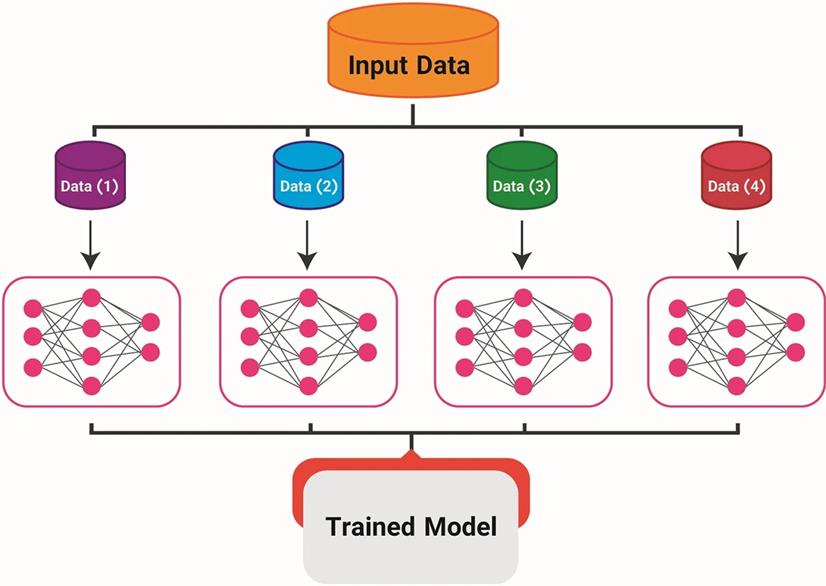
This growth has directly driven a fundamental transformation in network requirements: AI training relies on distributed computing across thousands of GPUs, and each GPU needs to continuously exchange parameters, gradients, and tensors, leading to a surge in "east-west traffic" (server-to-server) within the data center, which has completely surpassed the dominant position of traditional "north-south traffic" (user-to-application). Bandwidth demand has rapidly upgraded from 100G to 400G, and will further break through 800G/1.6T in the next few years. Traditional copper cables and Ethernet have approached their physical limits, making fiber optics the only technical carrier capable of bearing this level of transmission demand.
Fiber Optics: The Core Infrastructure Empowering AI Network Scaling
Scaling Up: Fiber Support for Computational Power Expansion
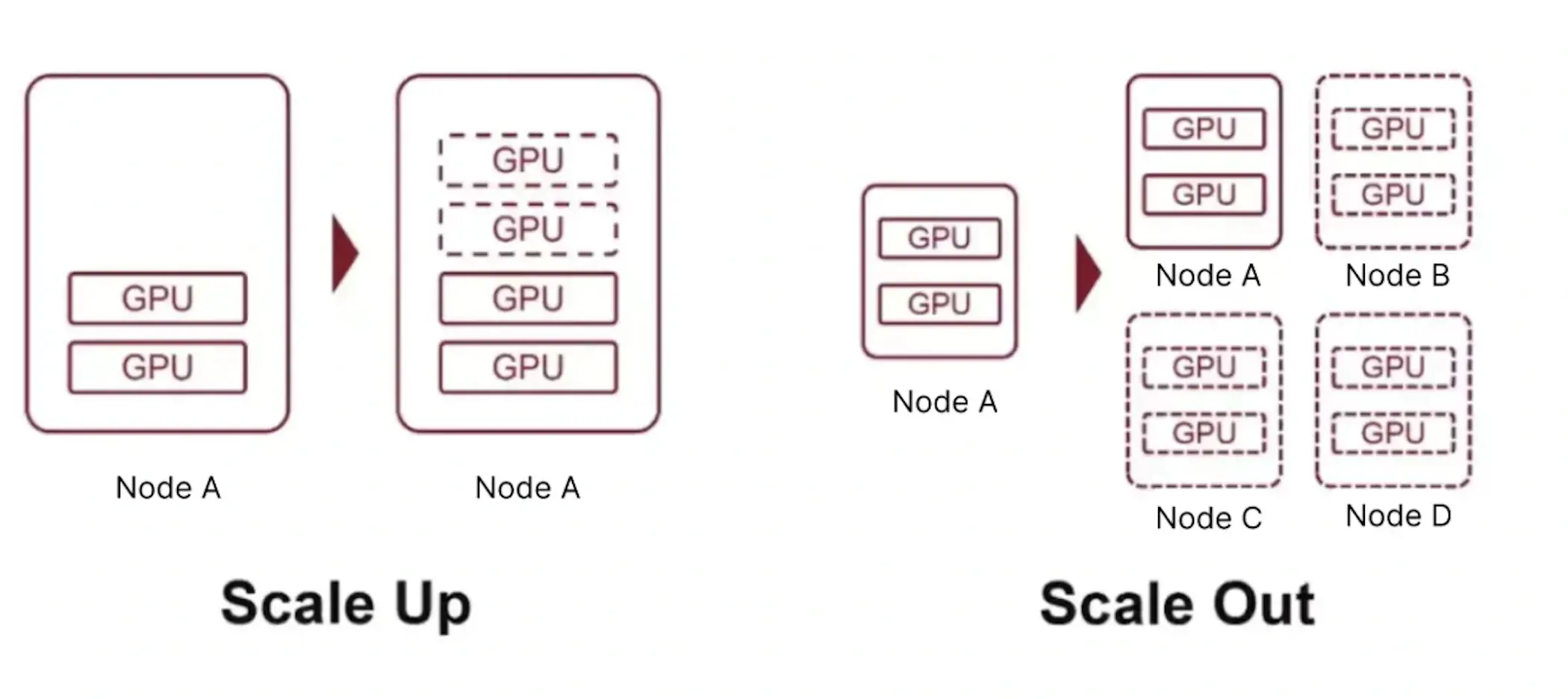
Scaling Up (vertical scaling) focuses on adding resources within existing backend AI network nodes to improve core computing power, so as to meet the instantaneous high demand of AI models for data processing. The most common practice is to add additional servers with GPUs to GPU nodes, expanding the data processing capacity of a single node.
The core role of fiber optics in vertical scaling is to achieve low-latency and high-bandwidth internal interconnection: GPUs in the expanded cluster need to be connected to network switches and AI servers through high-speed interconnection links. As the scale and complexity of AI models (especially LLMs) continue to increase, it is required that the newly added servers and GPUs can provide incremental low-latency bandwidth for the node, ensuring the stable operation of future AI applications.
Key Fiber Optic Solutions: High-bandwidth cables and connectors are required. For example, Corning's innovative high-density fiber solutions based on Corning® SMF-28® Contour fiber can increase transmission throughput without sacrificing reliability. To meet the low-latency transmission needs of massive datasets between servers and storage systems in AI workloads, fibers designed for ultra-low loss and high-speed transmission can ensure the sustainability and efficiency of performance upgrades, avoiding the core node becoming a transmission bottleneck.
Scaling Out: Fiber Solutions for Physical Infrastructure Expansion
Scaling Out (horizontal scaling) complements vertical scaling, focusing on increasing the number of AI nodes to achieve simultaneous data processing across multiple nodes through a distributed architecture, adapting to the demand of AI networks for large-scale parallel computing — that is, upgrading from "high performance of a single node" to "high efficiency of multi-node collaboration".
The core challenge of horizontal scaling is to avoid network bottlenecks and inefficiencies caused by physical expansion. Fiber optics need to provide flexible and modular deployment solutions to support rapid scaling without affecting existing operations. Specifically, high-fiber-count cables, high-density fiber enclosures, and advanced mesh network components are the key to enabling scale-out growth by providing flexible and modular solutions that support rapid deployment and expansion.
Key Engineering Practice Points: The adoption of pre-terminated fiber optic systems (such as Corning's pre-terminated fiber optic solutions) can simplify the installation process and shorten downtime, allowing data centers to expand their physical footprint without interrupting core AI workloads such as continuous training and inference. At the same time, the modular fiber optic design can adapt to the dynamic needs of node expansion without large-scale rewiring.
Scaling Across: Fiber Interconnection for Distributed AI Systems
Scaling Across (cross-domain scaling) is an advanced stage in the development of AI networks, focusing on connecting multiple data centers or AI clusters to build a distributed network, meeting the needs of AI applications for cross-regional deployment and large-scale collaborative computing — for example, an enterprise may need to link its primary data center in one city to another primary data center in another region to build an even larger AI cluster.
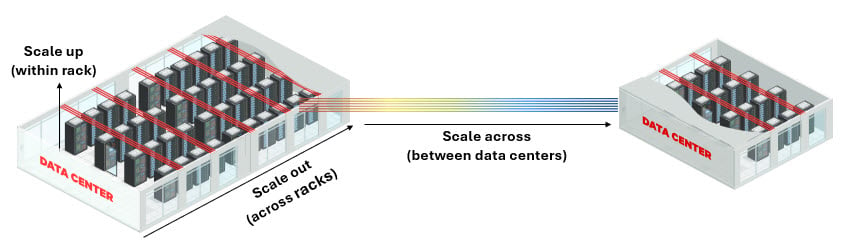
The core requirements of fiber optics for cross-domain scaling are "high density, long distance, and high reliability": data center operators and carriers have limited space for deploying conduits, so maximizing fiber density is the key; at the same time, cross-regional transmission needs to ensure no signal attenuation and low latency to ensure the synchronous operation of distributed clusters.
Core Fiber Optic Products: High-density fiber optic cables are the core carrier. For example, Corning's Contour™ Flow cable is specially designed for cross-domain interconnection deployment, supporting the scalability of AI networks across regions and use cases, adapting to the interconnection needs of data centers in different regions, and ensuring the stability and efficiency of cross-domain data transmission.
Technical Advantages of Fiber Optics in the AI Era
Unmatched Bandwidth Density and Transmission Performance
The bandwidth density of fiber optics is an unparalleled core advantage compared with electrical media such as copper cables: a single fiber strand can carry hundreds of wavelengths through Dense Wavelength Division Multiplexing (DWDM) technology, with a maximum transmission rate of 25 Tbps per fiber pair, fully adapting to the bandwidth demand of AI upgrading from 400G to 800G/1.6T.
Compared with traditional copper cables, fiber optics have particularly prominent advantages in transmission performance: copper cables can no longer meet the high-bandwidth needs of AI in short-distance transmission and are susceptible to electromagnetic interference; while fiber optics transmit optical signals, which are not affected by electromagnetic interference, have stronger signal integrity, and can stably support the transmission needs of large-scale AI data interaction.
| Parameter | Fiber Optics | Copper |
|---|---|---|
| Bandwidth | 60 Tbps and beyond | 10 Gbps |
| Future-Proof | Evolving towards the desktop | CAT7 in development |
| Distance | 12 Miles+@10,000Mbps | 300 Ft.@ 1,000Mbps |
| Noise | Immune |
Susceptible to EM/RFI interference, crosstalk and voltage surges |
| Security | Nearly impossible to tap | Susceptible to tapping |
| Handling | Lightweight,thin diameter, strong pulling strength | Heavy,thicker diameter,strict pulling specifications |
| Lifecycle | 30-50 Years | 5 Years |
| Weight/1,000 ft | 4 Lbs. | 39 Lbs. |
| Energy Consumed | 2W per User | >10W per User |
Ultra-Low Latency: Critical for GPU Cluster Synchronization
The core premise of AI training is the synchronous operation of GPU clusters, and latency is a key factor affecting synchronization efficiency — even microsecond-level latency can cause GPU cluster desynchronization, reducing training efficiency or even interrupting the training process. One of the core advantages of fiber optics is ultra-low latency: optical signals travel much faster and more stably than electrical signals with minimal jitter, enabling near-zero latency transmission.
Key Technical Implementation Points: AI data centers need to adopt equal-length fiber design, precision routing, and low-loss connectors to minimize the latency difference of fiber links and ensure the synchronization of data interaction between GPUs. For example, in GPU-to-GPU interconnection, MTP-16 connectors and 16-core fibers can be used to achieve low-latency NVLink/InfiniBand Fabric connection, ensuring the synchronous operation of the cluster.
Energy Efficiency: Reducing Data Center PUE
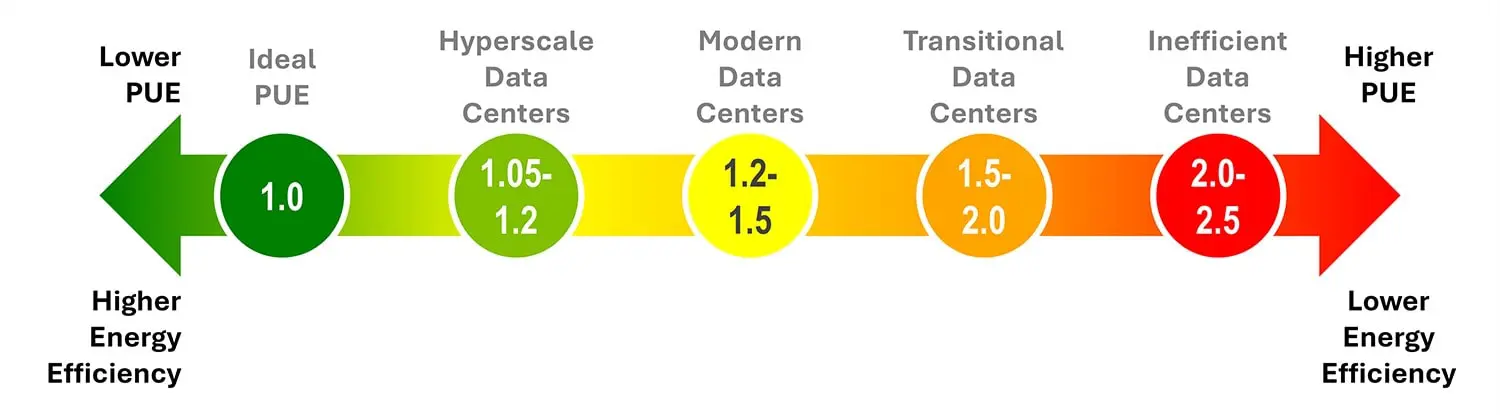
The energy consumption problem of AI data centers is becoming increasingly prominent. Training a cutting-edge AI model (such as GPT-5) can consume 5-10 GWh of electricity, which is equivalent to the electricity consumption of a small town for several days. The energy efficiency of fiber optics is much higher than that of copper cables, making it a key means to reduce the Power Usage Effectiveness (PUE) of data centers.
Core Comparison: Copper cables require electrical amplification every few meters to transmit 1Gb of data, consuming about 1.8W of power; while fiber optics only consume about 0.25W of power to transmit 1Gb of data, and can achieve non-regenerative transmission over hundreds of meters (OM4 fiber) or even kilometers (OS2 fiber), greatly reducing power consumption and heat dissipation requirements. By replacing intra-data-center interconnections from copper cables to fiber optics, operators can typically achieve an 8-12% improvement in PUE. At the hyperscale level, this translates to millions of US dollars in annual savings and significant CO₂ reduction.
Scalability Without Re-Cabling: Adapting to AI Iteration
AI technology iterates rapidly, and network requirements continue to upgrade. The modular design of fiber optic systems can achieve "scaling without re-cabling", adapting to the dynamic development needs of AI. Through modular cassettes, MTP trunk cables, and high-density panels, linear scaling can be achieved to support future 800G+ transmission upgrades without large-scale demolition of existing infrastructure, reducing scaling costs and downtime risks.
Evolution of AI Data Center Architecture and Fiber Deployment
Architecture Transformation: From Three-Tier to AI Mesh
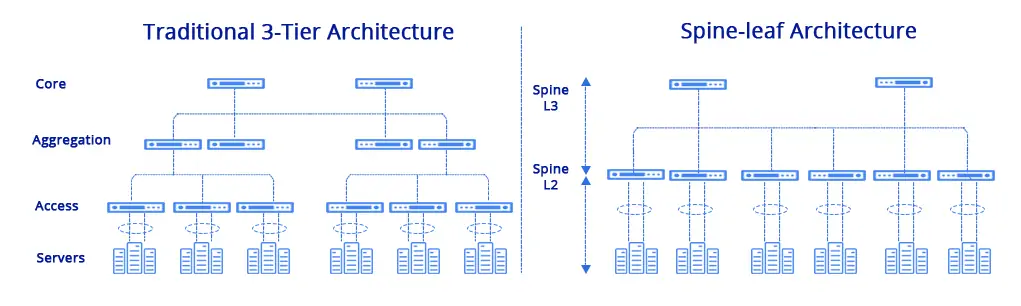
Traditional enterprise data centers adopt a three-tier architecture (Core-Aggregation-Access) to achieve data transmission through a hierarchical structure, with limited fiber density, only adapting to the traditional north-south traffic demand; with the development of cloud computing, the Leaf-Spine architecture has become the mainstream, where each leaf switch is connected to all spine switches to achieve large-scale east-west traffic transmission, requiring the deployment of a large number of fiber links; modern AI data centers adopt the AI Mesh/Superpod architecture to achieve full-mesh interconnection of GPU clusters, relying on ultra-high-density MTP/MPO cabling.
The differences in fiber deployment among the three architectures are as follows:
● Three-Tier Architecture (Legacy): Hierarchical structure with many hops and low fiber density, only suitable for small-scale, low-bandwidth demand scenarios, and has been gradually eliminated by AI data centers;
● Leaf-Spine Architecture (Cloud): Full interconnection between leaf and spine, with a significant increase in the number of east-west fiber links, adapting to the needs of cloud computing and small-to-medium AI clusters;
● AI Mesh/Superpod Architecture (Modern AI): Full-mesh interconnection of GPU clusters, adopting ultra-high-density MTP/MPO cabling to minimize physical interfaces and reduce latency, adapting to the training needs of large AI models.
The Rise of MTP/MPO High-Density Cabling: Key to AI Deployment
The deployment of parallel optics in AI data centers has promoted MTP/MPO high-density cabling to become the mainstream — through 12-core, 16-core, or 24-core fibers, with the help of MTP/MPO connectors, multi-channel 100G link transmission can be achieved. A single trunk cable can replace dozens of duplex links, simplifying cabling, improving cabinet airflow, and enhancing deployment efficiency.
Key Engineering Deployment Points:
● Modular fiber optic systems replace traditional fixed patch panels, adopting plug-and-play cassettes to achieve rapid scaling of GPU clusters without rewiring;
● A 1U rack can accommodate multiple 24-fiber cassettes, achieving hundreds of connections per rack and improving cabinet space utilization;
● Pre-terminated MTP/MPO trunk cables and cassettes can shorten installation time, reduce on-site construction errors, and minimize downtime of AI workloads.
Industry Trend: Analysts predict that by 2027, more than 70% of AI data center connections will adopt MTP or MTP-LC hybrid systems, and high-density cabling will become the standard for AI data centers.
Fiber Deployment Scenarios and Technical Specifications in AI DataCenter
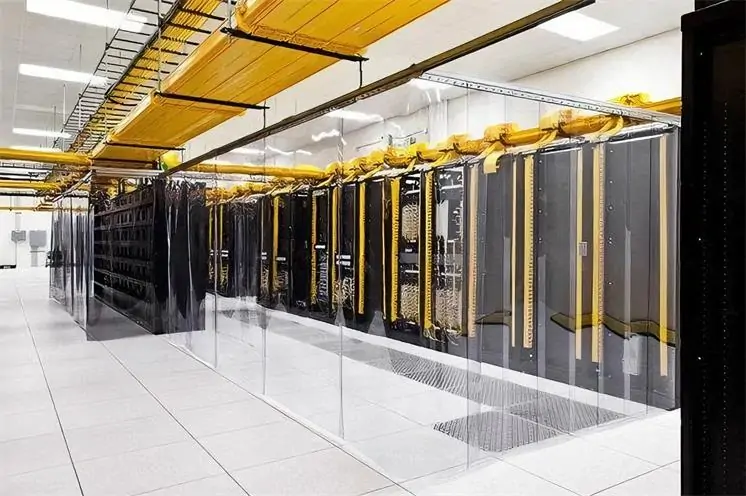
Typical Fiber Connection Topologies in AI Data Centers
Different connection scenarios have different requirements for fiber type, connector, and fiber count. Technicians need to select adaptive solutions according to the deployment scenario to ensure transmission efficiency and reliability. Common scenarios and technical parameters are as follows:
● Intra-Rack Connection: Adopt LC duplex connectors and 2-core fibers, mainly used for connecting servers to Top-of-Rack (ToR) switches, adapting to short-distance and low-fiber-count requirements;
● Inter-Rack Connection: Adopt MTP-12 connectors and 12-core fibers, used for Leaf-Spine architecture interconnection and internal AI cluster connection, balancing density and transmission efficiency;
● GPU-to-GPU Connection: Adopt MTP-16 connectors and 16-core fibers, used for NVLink/InfiniBand Fabric interconnection, ensuring low-latency synchronous transmission;
● Long-Haul Connection: Adopt SC/APC connectors and 2-core fibers, mainly used for Data Center Interconnection (DCI), adapting to long-distance and high-reliability transmission requirements.
Critical Fiber Performance Indicators for AI Applications
When selecting and deploying fiber optics, technicians need to focus on the following core performance indicators to ensure adaptation to AI workload requirements:
● Loss Indicator: Ultra-Low Loss (ULL) fiber is the default specification for Tier-1 AI data centers, with a typical loss ≤ 0.20 dB, avoiding transmission efficiency degradation caused by signal attenuation;
● Return Loss: The return loss of LC duplex jumpers needs to be > 55 dB to minimize signal reflection and ensure transmission integrity;
● Transmission Distance: OM4 multimode fiber is suitable for short-distance connections within 200 meters, OS2 single-mode fiber is suitable for long-distance connections over 100 meters, and G.654.E low-attenuation fiber (0.17 dB/km) can be used for cross-data-center connections to extend amplifier spacing;
● Consistency: Fiber lengths need to be consistent, especially within GPU clusters, to ensure latency synchronization and avoid cluster desynchronization.
Practical Case Studies: Fiber Deployment in Global AI Data Centers
The following typical global cases provide practical references for technicians on fiber deployment, covering deployment experience of different regions and architectures, which can be directly used for engineering design and operation and maintenance.
North America: Meta AI SuperPod
Meta's AI SuperPod clusters adopt MTP-16 fiber trunk cables to achieve 400G InfiniBand NDR interconnection, and each SuperPod connects 4,000 GPUs through pre-engineered optical backplanes. Deployment Effect: Transceiver power consumption is reduced by 7%, PUE is improved by 8%, and it can be easily upgraded to 800G transmission, adapting to the training needs of large AI models. Core Highlight: The pre-terminated fiber optic system simplifies the scaling process, and high-density MTP-16 cabling maximizes cluster interconnection efficiency.
Europe: Google Mons Data Center (Belgium)
Google retrofitted its Leaf-Spine network with OS2 single-mode fiber and LC connectors, extending the transmission distance by 3x without adding repeaters, while reducing heat dissipation energy consumption by 12%. The data center's annual carbon emissions are reduced by 160 tons, achieving a win-win situation of technological upgrading and sustainable development. Core Highlight: The long-distance advantage of OS2 single-mode fiber adapts to the sustainable development goals of European data centers.
Asia: Alibaba Cloud Hangzhou
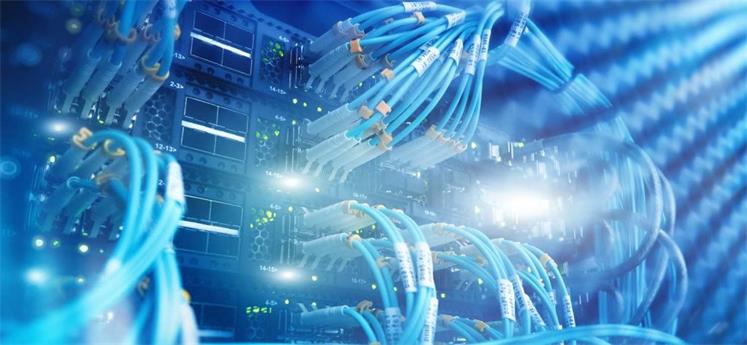
Alibaba adopted MTP-12 trunk cables and MTP-LC breakout solutions to cover GPU clusters, laying the foundation for future Co-Packaged Optics (CPO) integration; through uniform fiber length design, the latency between nodes is controlled within 20ns, and AI inference efficiency is improved by 11%. Core Highlight: The modular design adapts to rapid scaling, and low-latency cabling optimizes AI inference performance.
Nordics: AWS Stockholm Region
AWS deployed G.654.E low-attenuation fiber as the regional backbone, extending the amplifier spacing to 8 kilometers, reducing the number of boosters by 11%, and lowering the deployment cost of Erbium-Doped Fiber Amplifiers (EDFAs). Core Highlight: Low-attenuation fiber reduces the hardware cost of long-distance transmission, adapting to the data center interconnection needs in the Nordic region.
Future Trends: Fiber Infrastructure for Next-Generation AI
The Era of 1.6T Transmission and Co-Packaged Optics (CPO)
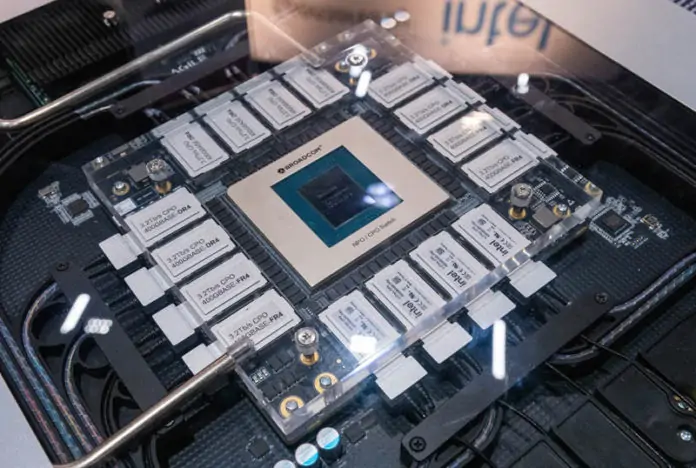
The next generation of AI data centers will adopt 1.6T transmission and Co-Packaged Optics (CPO) as the standard. The external optical budget will shrink to ≤ 0.5 dB, placing higher requirements on the low-loss performance of fiber links, and factory-verified low-loss links will become a necessity. CPO technology co-packages optical devices with chips, shortening the optical link length, reducing latency, and improving integration, while fiber optics need to adapt to the modular requirements of CPO to achieve more efficient signal transmission.
AI-Native Adaptive Fiber Infrastructure
In the future, fiber optic infrastructure will no longer be a static asset, but will become an adaptive and self-optimizing AI "nervous system" — through AI-based monitoring technology, it can real-time predict fiber performance degradation and automatically reroute traffic to ensure transmission stability. The in-depth integration of fiber optics and AI technology will realize intelligent operation and maintenance of infrastructure, further improving the operational efficiency and reliability of AI data centers.
Regional Deployment Trends and Fiber Selection Guidelines
AI data centers in different regions have differences in the priority and topology selection of fiber deployment. Technicians need to optimize solutions according to regional needs:
● North America: Priority is given to computing density and power savings, adopting Leaf-Spine + AI Mesh topology, and has entered the mature deployment stage of 400G-800G;
● Europe: Focus on sustainability and PUE goals, adopting Leaf-Spine + densified backbone, with accelerated deployment;
● Asia-Pacific: Focus on rapid AI cluster growth, adopting Superpod/hybrid Mesh topology, in a high-growth stage;
● Middle East/Africa: Focus on the telecom-to-cloud shift, adopting Leaf-Spine/metro edge topology, in an emerging stage.

Technical Guidelines for Technicians: Fiber Deployment and Maintenance
Key Principles for Fiber Selection
● Short Distance (≤ 200 meters): Prioritize OM4 multimode fiber, matched with MTP/MPO connectors, adapting to high-density interconnection within and between racks;
● Long Distance (> 100 meters): Prioritize OS2 single-mode fiber, and G.654.E low-attenuation fiber can be used for cross-regional interconnection to reduce amplifier deployment costs;
● GPU Cluster Interconnection: Prioritize MTP-16/MTP-24 high-density fiber to ensure low-latency synchronous transmission;
● Future Scaling Needs: Select modular fiber optic systems, reserve 800G/1.6T upgrade space, and avoid duplicate investment.
Maintenance and Quality Control Points
● Testing Standard: All fiber optic components must undergo 100% interferometric testing, with geometric tolerance controlled within ± 0.5μm to ensure transmission performance;
● Cleaning and Inspection: Adopt cleaning and inspection tools that meet IEC 61300 standards, and regularly clean connectors to avoid increased loss caused by dust;
● Traceability Management: Equip each fiber optic component with a QR traceability code to achieve full-life-cycle tracking, facilitating operation and maintenance management;
● Daily Monitoring: Deploy AI-based monitoring systems to real-time monitor fiber loss, latency and other indicators, and early warn of performance degradation risks.
FiberMart Recommended Fiber Optics
For different application scenarios and project requirements, Fiber-Mart has selected cost-effective and high-quality fiber optical products, fully covering the multiple categories for data centers, which can accurately adapt to various selection needs. Click the links below to view detailed product parameters, technical specifications, and quotation information:
● Optics and Networks Recommendations:Data Center Interconnect
● Fiber Transceivers Recommendations: Fiber Transceivers and Active Optical Cable (AOC)
● Fiber Optic Cables Recommendations: MTP/MPO Fiber Cable
● Panel and Enclosures Recommendations: MTP/MPO Panel and Box
Conclusion
The continuous development of AI technology has promoted data center networks from a "supporting role" to a "core enabling role". As the "nervous system" of AI data centers, the performance, density, and deployment scheme of fiber optics directly determine the operational efficiency and scalability of AI workloads. For technicians, it is necessary to deeply understand the fiber requirements of AI at different development stages, master the core technical points of fiber selection, deployment, and maintenance, and optimize solutions according to actual scenarios.
In the future, with the popularization of 1.6T transmission, CPO and other technologies, fiber optic infrastructure will develop in the direction of intelligence and adaptability, continuously adapting to the iterative needs of AI. Through reasonable fiber deployment and operation and maintenance, the efficient, energy-saving, and reliable operation of AI data centers can be realized, laying a solid network foundation for the innovative application of AI technology.





No comments have been posted yet.