


.webp)


In the era of high-speed data transmission, especially with the rapid development of data centers, cloud computing, and 5G technology, the choice of interconnect cables directly impacts the stability, efficiency, and cost of the entire network. DAC (Direct Attach Cable), AOC (Active Optical Cable), and Fiber Patch Cables are three commonly used interconnect solutions, each with unique technical characteristics and application scenarios. Many engineers and network operators often face confusion when choosing: which one is more suitable for their project needs? Today, we will provide an in-depth analysis of these three cables, focusing on sharing technical insights to help you make the most cost-effective choice.
Detailed Explanation of DAC, AOC, and Fiber Patch Cables
Before discussing the differences and selection methods, we first need to clarify the core definitions, technical principles, and structural characteristics of DAC, AOC, and Fiber Patch Cables. Only by understanding their basic attributes can we better judge their suitability in practical projects.
What is DAC Cable?
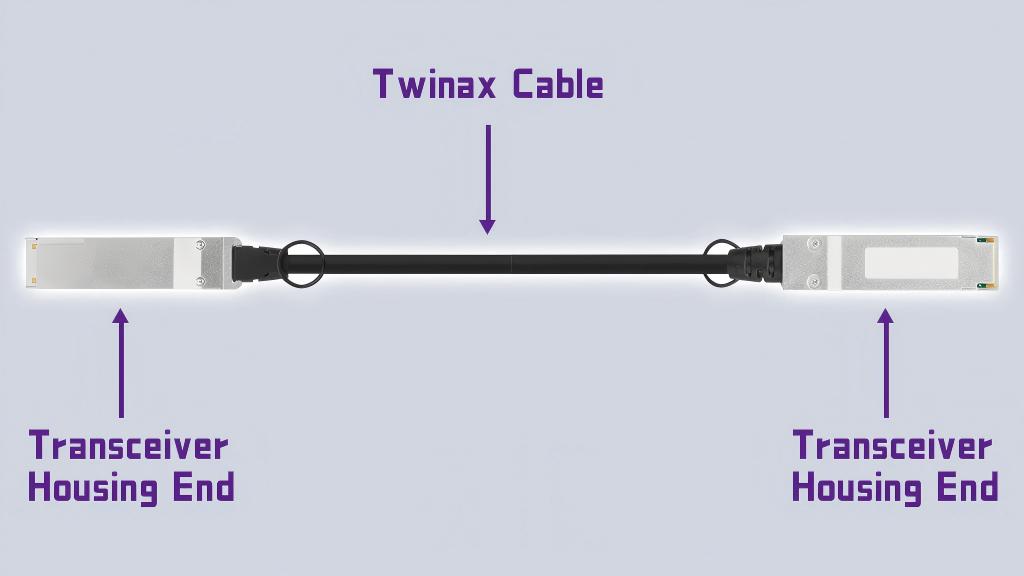
DAC stands for Direct Attach Cable. It is a passive high-speed data transmission cable assembly, also known as a Direct Attach Copper Cable. Its core technical characteristic is that it does not rely on additional electronic components (such as signal converters, amplifiers). It transmits electrical signals directly through high-specification copper wires, enabling point-to-point direct connection between network devices (such as switches, servers) without intermediate signal conversion.
Structurally, a DAC consists of a copper core (usually tin-plated or silver-plated conductors to reduce signal attenuation), insulation layer (PTFE or PP material), dual shielding layers (pair shielding + overall shielding, to resist electromagnetic interference), and integrated connectors on both ends (common specifications include SFP+, QSFP28, QSFP-DD). The connectors and the cable form an inseparable integrated structure, ensuring signal transmission stability and avoiding signal loss due to loose connections.
Performance-wise, DAC supports high-speed transmission up to 800Gbps. However, limited by the inherent signal attenuation characteristics of copper wire, its transmission distance is short, typically within 7 meters (passive DAC ≤3m, active DAC can reach 7-15m). It offers the advantages of low cost, extremely low latency, and near-zero power consumption (passive type), making it very suitable for short-distance interconnect scenarios.
What is AOC Cable?
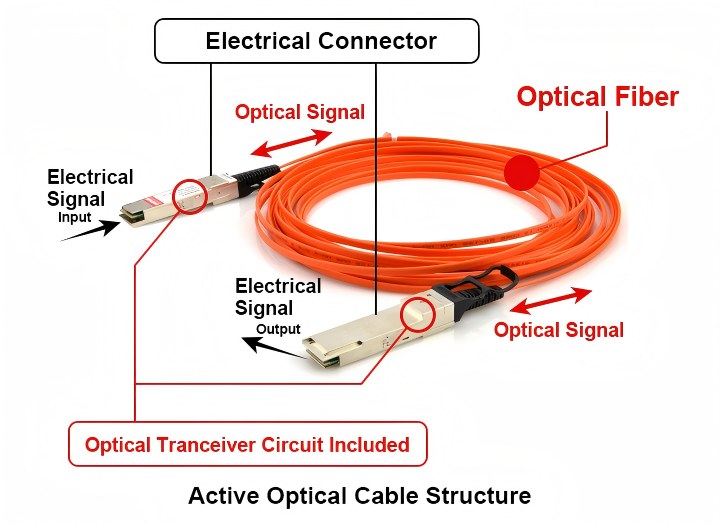
AOC stands for Active Optical Cable. It is an integrated active optical interconnect cable that incorporates optical modules, fiber, and connectors. Unlike DAC, which transmits electrical signals, AOC uses built-in electro-optical conversion chips at both ends to convert electrical signals into optical signals. After transmission through the fiber, the optical signals are converted back into electrical signals at the receiving end, thereby achieving data transmission.
The core structure of an AOC includes multimode fiber core (the main transmission medium, with low signal loss), integrated electro-optical conversion modules at both ends (containing lasers, detectors, and driver chips, requiring external power), and standard connectors (same as DAC, such as SFP+, QSFP28). Compared to DAC, the AOC cable body is more flexible and lightweight (smaller bend radius, typically 3mm), facilitating dense cabling in data centers.
Performance-wise, AOC inherits the advantages of fiber transmission: long transmission distance (up to 100 meters, custom products can be longer), strong immunity to electromagnetic interference (fiber is an insulator, unaffected by external electromagnetic fields), and stable signal transmission (low signal attenuation, low bit error rate). It also supports high-speed transmission up to 800Gbps. Its latency is slightly higher than DAC but significantly lower than the traditional "optical module + fiber patch cable" combination. AOC has moderate power consumption, typically between 1-2W, higher than DAC but lower than standalone optical module solutions.
What is Fiber Patch Cable?
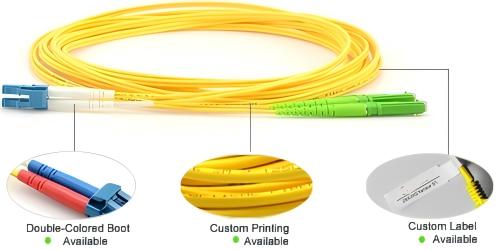
A Fiber Patch Cable is a passive optical cable with connectors on both ends, used to connect optical modules, optical switches, optical splitters, and other equipment to form a complete optical transmission link. Unlike the integrated structure of DAC and AOC, a fiber patch cable is an independent passive component. It must be used with standalone optical modules (e.g., SFP, QSFP) to achieve electro-optical conversion and data transmission.
Classified by fiber type, fiber patch cables can be divided into single-mode fiber patch cables (OS1/OS2, suitable for long-distance transmission) and multimode fiber patch cables (OM1/OM2/OM3/OM4/OM5, suitable for medium to short-distance transmission). Classified by connector type, they include LC, SC, FC, MTP/MPO, and other specifications. Among them, LC and SC connectors are most widely used in data centers due to their small size and convenient plug-and-play nature. The core of a fiber patch cable is the optical fiber, which transmits signals via light waves, thus offering the advantages of extremely low signal attenuation, long transmission distance (single-mode fiber can reach tens of kilometers), strong immunity to electromagnetic interference, small size, and light weight.
The most significant features of fiber patch cables are flexibility and scalability: length can be customized freely (from 1 meter to tens of kilometers). By combining different types of optical modules with fiber patch cables, transmission needs for different distances and bandwidths can be met. However, their disadvantages are also apparent: high overall cost (requires separate purchase of optical modules), higher deployment complexity (requires cleaning and testing connectors to avoid signal loss), and higher latency compared to DAC and AOC.
Differences Between DAC, AOC, and Fiber Patch Cables
To better distinguish these three cables, we compare them across 8 core technical and practical dimensions (key insights) to help you quickly grasp their differences, strengths, and weaknesses.
| Comparisons | DAC (Direct Attach Cable) | AOC (Active Optical Cable) | Fiber Patch Cable |
|---|---|---|---|
| Transmission Medium | Twin-axial copper core (tin/silver-plated) | Multimode fiber + built-in electro-optical chips | Single-mode / Multimode fiber (passive) |
| Transmission Principle | Direct electrical signal transmission, no electro-optical conversion | Electro-optical & optical-electrical conversion, optical signal transmission | Used with optical modules for electro-optical & optical-electrical conversion, optical signal transmission |
| Transmission Distance | Short: Passive ≤3m, Active 7-15m (max) | Medium: ≤100m (custom longer options available) | Long: Multimode ≤550m (10G), Single-mode up to tens of kilometers |
| Latency | Extremely low: ≤0.1μs (lowest among the three) | Low: 0.2-0.5μs (slightly higher than DAC) | Medium: ≥0.5μs (depends on optical module and distance) |
| Power Consumption | Extremely low: Passive ≈0W, Active ≤1W | Medium: 1-2W (requires power for built-in chips) | High: Depends on optical module (typically 2-5W) |
| EMI Immunity | Fair: Dual shielding, but still affected by EMI | Strong: Fiber is an insulator, unaffected by EMI | Strong: Same as AOC, unaffected by EMI |
| Cost | Lowest: No electro-optical chips, simple structure, 30%-50% cheaper than AOC | Medium: Integrated electro-optical chips, cost higher than DAC, lower than fiber patch cable + optical module | Highest: Requires separate purchase of optical modules, total cost is 2-3 times that of AOC |
| Deployment Complexity | Simplest: Plug-and-play, no debugging, cleaning, or field testing required | Simple: Plug-and-play, no separate installation/debugging of optical modules | Complex: Requires separate installation of optical modules, connector cleaning, and field testing to ensure signal quality |
Summary of Differences: DAC focuses on "short distance, low cost, extremely low latency," suitable for cost-sensitive short-distance scenarios. AOC focuses on "medium distance, balanced performance, easy deployment," serving as a transitional choice between DAC and fiber patch cables. Fiber patch cables focus on "long distance, high stability, strong scalability," suitable for long-distance, high-reliability scenarios, but with higher cost and deployment complexity.
Applications for DAC, AOC, and Fiber Patch Cables
Cable selection is closely related to application scenarios. Below, we introduce the suitable scopes for these three cables in specific industry contexts to help you better match products with scenarios.
Application of DAC Cable
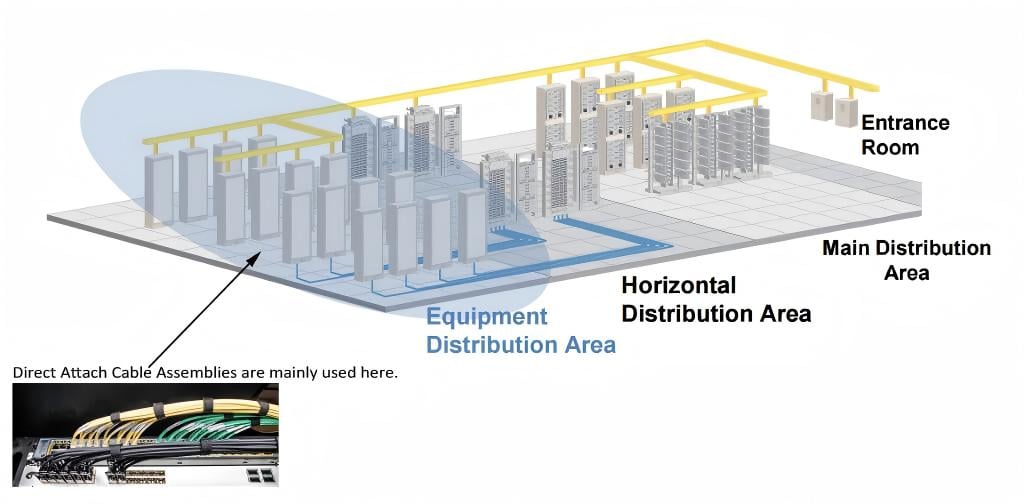
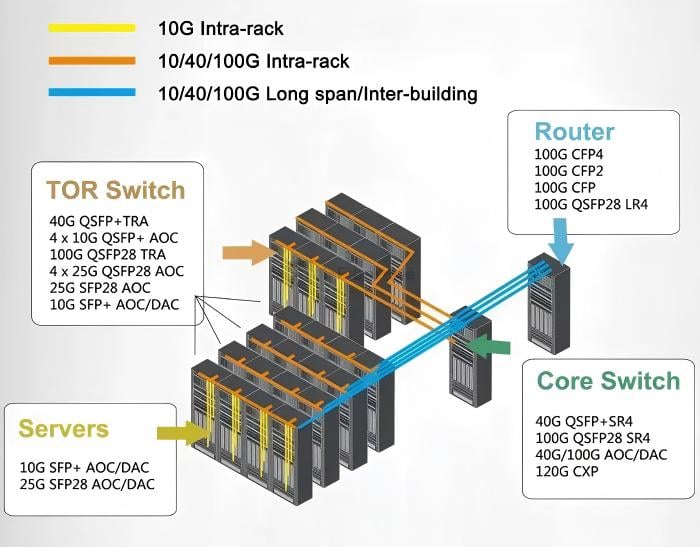
DAC is primarily used for short-distance interconnect scenarios that are cost-sensitive, have low latency requirements, and low power consumption needs. Core applications include internal short-distance connections within data centers, as well as High-Performance Computing (HPC) clusters, Storage Area Networks (SAN), etc.
Specific Scenarios:
● Connections between Top-of-Rack (ToR) switches and servers in data centers (distance ≤3m, high quantity, cost-sensitive).
● Short-distance connections between storage devices (e.g., SAN, NAS) and servers.
● Interconnects within High-Performance Computing (HPC) clusters (requiring extremely low latency to ensure computational efficiency).
● Test environments, small server rooms (small scale, short distance, pursuing cost-effectiveness).
Application of AOC Cable
AOC is primarily used for medium-to-short distance interconnect scenarios where the distance exceeds the DAC limit, but one wants to avoid the cost of fiber patch cables + optical modules and requires flexible cabling. It is the most commonly used cable for cross-rack and cross-row interconnection in data centers.
Specific Scenarios:
● Cross-rack connections in data centers (distance 3-100m, requiring flexible cabling and strong EMI immunity).
● Connections between Middle-of-Row (MoR) switches and Top-of-Rack (ToR) switches.
● Interconnection between small to medium-sized data centers/server rooms (distance ≤100m, seeking a balance between performance and cost).
● Industrial control and monitoring systems (complex electromagnetic environments requiring strong EMI immunity).
Application of Fiber Patch Cables
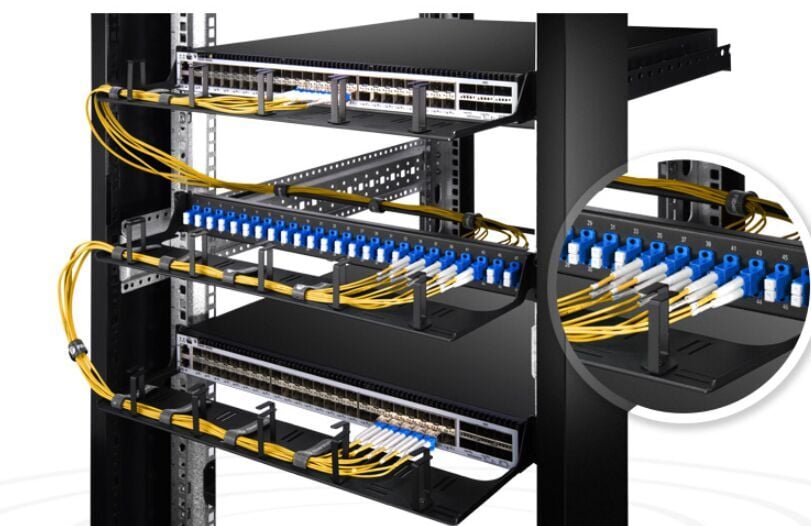
Fiber patch cables are primarily used for interconnect scenarios requiring high stability, reliability, and ultra-long-distance transmission. They are widely used in data center interconnection, long-distance communication between facilities, backbone network construction, and other fields.
Specific Scenarios:
● Interconnection between data centers (distance ≥1km, requiring very low attenuation and high stability).
● Long-distance connections between core switches and aggregation switches in large data centers (distance >100m).
● Backbone network construction for telecom operators and enterprises (requiring long-distance transmission and high reliability).
● Outdoor communications, remote monitoring (requiring strong EMI immunity and weather resistance).
How to Choose Between DAC, AOC, and Fiber Patch Cables
After understanding the definitions, differences, and application scenarios of the three cables, we can follow a "Four-Step Selection Method" to quickly determine the most suitable cable type. The core principle is: Fit the scenario, balance performance and cost, and consider future scalability.
Step 1: Determine Transmission Distance (Core Factor)
● If distance ≤3m: Prioritize DAC. It offers extremely low latency, extremely low power consumption, and the lowest cost, making it the optimal solution for cost-effectiveness. Examples: ToR switch to server connections, short-distance storage-to-server connections in data centers.
● If distance is 3-100m: Prioritize AOC. It overcomes the distance limitation of DAC, offers strong EMI immunity, easy deployment, and costs less than the fiber patch cable + optical module combination. Examples: Cross-rack, cross-row connections in data centers.
● If distance >100m: Must choose Fiber Patch Cables. Only fiber patch cables (paired with optical modules) can meet long-distance transmission requirements with very low attenuation and high stability. Examples: Data center interconnection, backbone network construction.
Step 2: Consider Performance Requirements (Latency, EMI Immunity)
● If extremely low latency is needed (e.g., HPC clusters, real-time data processing): Prioritize DAC (latency ≤0.1μs) even for short distances, as its performance surpasses AOC and fiber patch cables.
● If the environment has strong electromagnetic interference (e.g., industrial control, dense rack areas): Prioritize AOC or Fiber Patch Cables (optical transmission is unaffected by EMI), avoiding signal distortion caused by interference with DAC.
Step 3: Balance Cost Budget
● Cost-sensitive scenarios (high quantity, short distance): First choice is DAC, saving 30%-50% cost compared to AOC.
● Scenarios balancing performance and cost (medium distance): First choice is AOC, cheaper than the fiber patch cable + optical module combination and easier to deploy.
● Ample budget, high-reliability requirements (long distance): Choose Fiber Patch Cables + high-quality optical modules. Although costly, they ensure long-term stable operation.
Step 4: Consider Future Scalability
● If the network might be upgraded to higher bandwidth in the future (e.g., from 25G to 100G): Choose DAC and AOC that support MSA (Multi-Source Agreement) protocols for multi-vendor interoperability, ensuring compatibility with new equipment and avoiding waste from replacement.
● If the transmission distance might be extended in the future: Choose Fiber Patch Cables. Fiber patch cables offer the strongest scalability; only the optical modules need to be replaced to achieve bandwidth and distance upgrades, without the need for rewiring.
Special Note: When selecting products, pay attention to the compatibility of connectors with your equipment (e.g., 10G/25G corresponds to SFP+, 100G corresponds to QSFP28). It is recommended to combine your own equipment models and project requirements to choose products with strong adaptability and avoid procurement errors.
Recommended Quality Cable Selections: Fibermart Optical Communication Solutions
After clarifying the selection logic for DAC, AOC, and Fiber Patch Cables, choosing a reliable supplier can further ensure project stability and cost-effectiveness. Fibermart, as a globally leading provider of optical communication solutions, specializes in the R&D, production, and sales of high-speed interconnect cables. It can meet cable selection needs for various scenarios in a one-stop manner, providing high-reliability and cost-effective product support for projects.
Fibermart DAC (Direct Attach Cable)
Fibermart Product Recommendation: Fibermart offers a full range of high-performance DAC cables covering specifications from 10G to 800G, perfectly matching mainstream device interfaces. For example, the 100G QSFP28 Direct Attach Copper Cable (DAC) uses high-quality twin-axial copper cores and dual-shielding design. Available in transmission distances of 1m/3m/5m, it supports 100Gbps high-speed transmission with extremely low latency (≤0.1μs) and complies with MSA multi-vendor interoperability agreements. It can be directly used for short-distance connections between 100G switches and servers in data centers, offering high cost-effectiveness and strong stability, making it the preferred choice for short-distance interconnection in data centers. Additionally, Fibermart's 400G QSFP-DD DAC Cables are suitable for high-bandwidth scenarios like AI computing and large data centers, featuring excellent signal integrity and compatibility.
Fibermart AOC (Active Optical Cable)
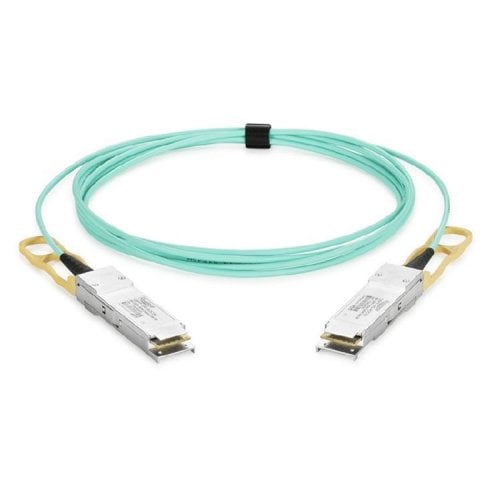
Fibermart Product Recommendation: Fibermart's AOC cable series covers specifications from 10G to 800G, with a complete range of models and reliable quality, suitable for various medium-to-short distance interconnect scenarios. Among them, the 25G SFP28 Active Optical Cable (AOC) is a best-selling product. Available in transmission distances of 10m/20m/50m/100m, it uses high-quality multimode fiber and integrated electro-optical conversion chips, supporting 25Gbps high-speed transmission with strong EMI immunity. It is plug-and-play, requiring no additional debugging, and is suitable for cross-rack connections of 25G equipment in data centers and wiring closets. For high-bandwidth demands, Fibermart's 200G QSFP56 AOC Cables feature long distance, high speed, and high stability, supporting 200Gbps transmission with a maximum distance of up to 100 meters, meeting the cross-rack and cross-area interconnection needs of large data centers.
Fibermart Fiber Patch Cable
Fibermart Product Recommendation: Fibermart offers a full range of fiber patch cables covering various specifications and types, with high quality and low loss to meet different scenario needs. Among them, the OM4 LC-LC Duplex Multimode Fiber Patch Cable is a best-selling product for data centers. With a core diameter of 50/125μm, it supports 10Gbps transmission up to 550 meters, and 40G/100G transmission up to 150/100 meters. Utilizing high-precision polishing technology, it offers low insertion loss (≤0.3dB) and high return loss (≥35dB), suitable for medium-to-short distance interconnection in data centers. For long-distance transmission scenarios, Fibermart's OS2 SC-SC Single-mode Fiber Patch Cable features extremely low attenuation (≤0.4dB/km at 1310nm wavelength), supporting transmission over tens of kilometers, suitable for data center interconnection, long-distance communication between facilities, and other scenarios. Additionally, Fibermart provides MTP/MPO high-density fiber patch cables suitable for dense cabling scenarios in high-speed data centers, effectively saving cabling space.
Summary
There is no "better or worse" among DAC, AOC, and Fiber Patch Cables, only "suitability for the application." Their core positioning can be summarized in one sentence: DAC focuses on short-distance cost-effectiveness, AOC focuses on balanced performance for medium distance, and Fiber Patch Cables focus on long-distance reliability.
In conclusion:
● Short distance (≤3m), cost-sensitive, requiring extremely low latency? Choose DAC.
● Medium distance (3-100m), seeking a balance between performance and cost, with easy deployment? Choose AOC.
● Long distance (>100m), requiring high stability and reliability? Choose Fiber Patch Cables.
The core of cable selection is "fitting the scenario." By combining transmission distance, performance requirements, cost budget, and future scalability for comprehensive judgment, you can select the product most suitable for your project. If you need professional selection support or cost-effective cable products, consider Fibermart and let their expert team empower your project.
Frequently Asked Questions FAQs
What is the main difference between AOC and DAC cables?
AOC (Active Optical Cables) use optical fibers and active components, allowing for longer distances and higher data rates with minimal signal degradation. In contrast, DAC (Direct Attach Copper) cables are made of copper and are typically used for shorter distances, providing a more cost-effective solution for low-latency connections.
Can AOC cables be used in outdoor environments?
Yes, many AOC cables are designed to be waterproof and rugged, making them suitable for outdoor installations. However, it’s essential to check the specifications of the cable to ensure its suitability for the specific environmental conditions you anticipate.
Could AOC and DAC cables be substituted?
Not necessarily. The common interfaces (e.g., QSFP+) are similar; however, the physical media, reach, and power draw vary greatly. You need to follow the cable type for your application case.
Is DAC cable capable of 100G or 400G?
Yes, it is true that modern DACs can be designed to work at high speed, but their length constraints render them primarily only useful in very short distances. Abalone
What are the core positioning of DACs, AOCs, and fiber optic patch cords?
DACs emphasize cost-effectiveness over short distances, AOCs emphasize balanced performance over medium distances, and fiber optic patch cords emphasize reliability over long distances.
What is the most crucial factor when choosing between these three types of cables? How do they correspond specifically?
The most crucial factor is transmission distance; ≤3m, prioritize DAC; 3-100m, prioritize AOC; >100m, fiber optic patch cord is a must.





No comments have been posted yet.