


.webp)


At Fibermart, we know that fiber transceivers are the backbone of modern network infrastructures, enabling high-speed data transmission over long distances. Choosing the right fiber optical transceiver for your network can feel overwhelming with so many options out there. That's why we're here to help! In this blog, we will guide you through the key factors to consider, ensuring you make an informed decision that optimizes your fiber optic network. So, let's dive in and simplify the process together, making sure you get the perfect optical transceivers for your needs!
How to Choose the Right Fiber Transceiver for Your Network?
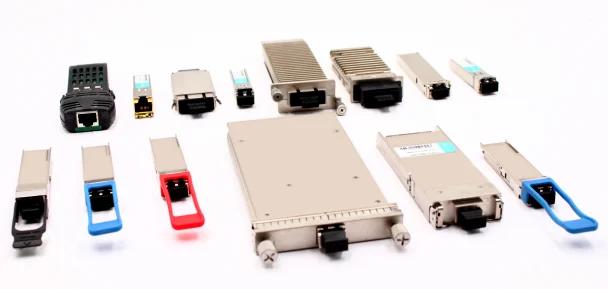
1. Basic Types of Fiber Transceivers
Single-Mode transceiver vs. Multi-Mode transceiver
Understanding the difference between single-mode and multi-mode fiber transceivers is essential:
Single-Mode: These transceivers are suitable for long-distance transmission, typically used in telecom and large-scale networks. They operate at wavelengths of 1310nm or 1550nm and can transmit data over distances exceeding 10 km. Single-mode fiber transceivers offer higher bandwidth and less signal attenuation, making them ideal for backbone connections and long-haul networking.
Multi-Mode: Ideal for shorter distances, such as within buildings or campus environments. They operate at a wavelength of 850nm and are typically used for distances up to 500 meters. Multi-mode fiber transceivers are generally more cost-effective and easier to install, making them suitable for LANs (Local Area Networks) and other intra-building connections.
Form Factors, SFP, QSFP, QSFP28,QSFP-DD
Fiber transceivers come in various form factors, each suited for different applications and network setups:
SFP (Small Form-Factor Pluggable): Commonly used for Gigabit Ethernet and Fiber Channel, offering flexibility and ease of use. SFP transceivers are hot-swappable, allowing for quick and easy changes without shutting down the network.
SFP+ (Enhanced Small Form-Factor Pluggable): Supports higher data rates up to 10 Gbps, making it ideal for high-performance networks. SFP+ transceivers provide the same compact form factor as SFPs but with enhanced capabilities.
QSFP (Quad Small Form-Factor Pluggable): Designed for high-density applications, supporting 40 Gbps and 100 Gbps, suitable for data centers and large network backbones. QSFP transceivers combine four SFP channels into a single package, reducing the number of ports required for high-bandwidth connections.
QSFP-DD: The 800GBASE-DR8 QSFP-DD Optical Transceiver Module is designed for 800GBASE Ethernet throughput up to 500m over singlemode fiber (SMF) with MPO-16 connectors. This transceiver is compliant with IEEE P802.3ck, IEEE 802.3cu, QSFP-DD MSA. The built-in digital diagnostics monitoring (DDM) allows access to real-time operating parameters. It is suitable for 800G Ethernet, Data Center, Breakout 2x 400G DR4 or 8x 100G DR application.
2. Performance Parameters
Transmission Speed
The required data rate is a crucial factor in choosing a fiber transceiver. Determine the speed needs of your network:
1 Gbps: Suitable for standard office networks and smaller data transfer tasks.
10 Gbps: Ideal for high-speed networks, data centers, and large enterprises.
40 Gbps and 100 Gbps: Necessary for very high-performance networks, including large-scale data centers and ISPs.
400G and 800Gbps: The 800GBASE Optical Transceiver Module is designed for 800GBASE Ethernet and 800Gb/s 2xNDR InfiniBand systems throughput up to 100m over OM4 multimode fiber (MMF) using a wavelength of 850nm via a MTP/MPO-16 connector.
Choosing the appropriate speed ensures that your network can handle the required data load without bottlenecks.
Transmission Distance
Matching the transceiver to the distance requirements of your network is essential:
Short-Range (up to 500 meters): Multi-mode transceivers are typically used.
Long-Range (up to 10 km or more): Single-mode transceivers are necessary.
Ensuring the correct transmission distance prevents signal degradation and maintains network reliability.
Wavelength
Ensure the wavelength of the transceiver is compatible with the type of fiber optic cable used:
850nm: Typically used for multi-mode fiber.
1310nm or 1550nm: Used for single-mode fiber.
Correct wavelength matching is crucial for optimal signal transmission and network performance.
3. Compatibility

Network Device Compatibility
It’s important to ensure that the fiber transceiver is compatible with your existing network devices. Compatibility issues can cause significant disruptions and inefficiencies.
Check Device Specifications: Ensure the transceiver matches the specifications of your network equipment.
Brand Compatibility: Some brands design transceivers specifically for their equipment. Make sure your chosen transceiver is compatible with your device brand.
Fiber Type Compatibility
Verify compatibility with the type of fiber optic cable used in your network:
Single-Mode Fiber: For long-distance, high-speed networks.
Multi-Mode Fiber: For short-distance, moderate-speed networks.
Ensuring compatibility avoids potential connectivity issues and maximizes performance.
4. Quality and Reliability
Standards and Certifications
Quality standards and certifications ensure that the transceivers meet industry benchmarks for performance and safety:
RoHS (Restriction of Hazardous Substances): Ensures products are free from certain hazardous materials.
CE (Conformité Européenne): Indicates compliance with European health, safety, and environmental protection standards.
ISO Certifications: Provide assurance of quality management and environmental management standards.
Choosing transceivers with these certifications ensures high quality and reliable performance.
Brand Reputation and Reviews
Consider reputable brands and check user reviews to gauge the reliability and performance of the transceivers. Well-known brands typically offer better quality and support.Opting for reputable brands with positive reviews increases the likelihood of satisfactory performance and customer service.
5. Cost-Effectiveness
Cost vs. Performance
Balancing cost with performance is crucial. While high-end transceivers offer better performance, they also come with a higher price tag. Consider your budget and performance needs to find the right balance.
Budget-Friendly Options: Suitable for small to medium-sized businesses.
High-Performance Options: Necessary for large enterprises and data centers with high data transfer requirements.
Making an informed choice ensures you get the best value for your investment.
Long-Term Maintenance Costs
Consider the total cost of ownership, including maintenance and potential replacement costs. Opting for higher quality may reduce long-term expenses due to lower failure rates and better support.
Maintenance: Regular maintenance can extend the lifespan of transceivers.
Replacement Costs: Higher quality transceivers may have higher upfront costs but lower long-term replacement rates.
Considering long-term costs helps in making a cost-effective decision.
5. Security
Data Transmission Security
Ensuring the transceiver supports secure data transmission is vital to protect against interception and data loss:
Encryption: Some transceivers offer built-in encryption for data security.
Network Security Protocols: Ensure compatibility with your network’s security protocols.
Securing data transmission prevents unauthorized access and data breaches.
Physical Security
Choose robust transceivers that can withstand environmental and physical challenges, reducing the risk of damage and ensuring consistent performance.
Durability: High-quality materials and construction provide better durability.
Environmental Resistance: Transceivers designed to withstand harsh conditions offer better reliability.
Ensuring physical security reduces the risk of operational disruptions.
7. Choosing the Right Supplier
Choosing the right fiber transceivers supplier is as important as selecting the right transceiver. FiberMart offers a comprehensive range of fiber transceivers and related products, ensuring quality and reliability.
Product Range:
FiberMart provides a full range of fiber transceivers, including QSFP28, QSFP+, SFP28, QSFP-DD, SFP+ (SFP Plus) transceivers, X2 transceivers, XENPAK transceivers, XFP transceivers, SFP (Mini GBIC) transceivers, GBIC transceivers, CWDM/DWDM transceivers, 40G QSFP+, and CFP. They also offer active optical cables (AOC) for 100G QSFP28, 40G QSFP+, 25G SFP28, and 400G QSFP-DD and 800G OSFP.
Compatibility:
All Fiber-Mart fiber transceivers, optical transceiver, active optical cables, and direct attach cables are 100% compatible with major brands such as Cisco, HP, Juniper, Finisar, Nortel, Force10, D-link, and 3Com. This transceiver is compliant with IEEE P802.3ck, OSFP MSA. The built-in digital diagnostics monitoring (DDM) allows access to real-time operating parameters. With these features, this easy to install, hot swappable transceiver is suitable to be used in various applications, such as Ethernet, InfiniBand, data centers, high-performance computing networks, enterprise core and distribution layer applications.

Warranty and Customization:
FiberMart offers a lifetime warranty on their products, ensuring peace of mind with your purchase. They also provide fiber transceiver customization options to meet specific requirements.
Conclusion
Choosing the right fiber transceiver for your network involves understanding the basic types, performance parameters, compatibility, quality, cost-effectiveness, and security. By considering these factors and selecting a reputable supplier like Fiber-Mart, you can ensure your network operates efficiently and reliably. With Fiber-Mart’s comprehensive product range and exceptional service, you can find the perfect transceiver to meet your network’s needs.
Whether you need a fiber transceiver for short-range multi-mode applications or a long-distance single-mode optical transceiver, making an informed choice will enhance your network's performance and longevity. By leveraging FiberMart’s expertise and resources, you can optimize your network infrastructure and achieve superior results.





No comments have been posted yet.