


.webp)


In the rapidly evolving landscape of high-speed data transmission, singlemode fiber optic patchcords stand as the backbone of critical network infrastructures, from data centers to long-haul telecommunications. Their ability to deliver low signal loss and high bandwidth makes them indispensable for supporting modern digital operations. However, even the highest-quality patchcords can experience performance degradation due to manufacturing inconsistencies, improper handling, or environmental factors. To ensure the reliability and efficiency of optical networks, rigorous testing and certification of singlemode fiber optic patchcords are not just recommended—they are essential. This article delves into the key principles, methodologies, and standards for testing and certifying these vital components, providing a comprehensive guide for network engineers, technicians, and industry professionals.
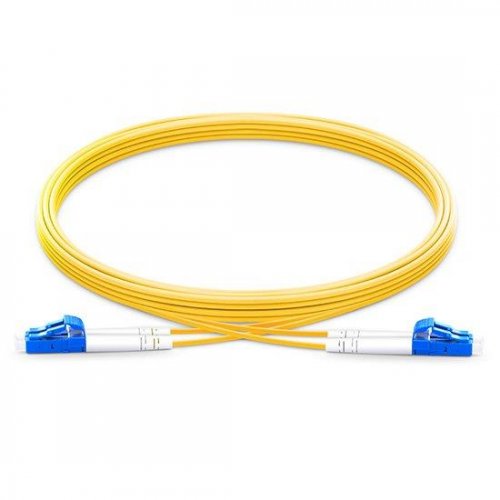
1. Fundamental Concepts for Singlemode Fiber Patchcord Testing
1.1 Key Performance Indicators (KPIs)
To accurately assess the performance of a singlemode fiber optic patchcord, several core KPIs must be measured. Insertion Loss (IL) is the primary metric, representing the amount of optical power lost as a signal travels through the patchcord. For high-performance applications, IL should typically not exceed 0.25dB, as specified by industry standards. Return Loss (RL), another critical indicator, measures the amount of light reflected back toward the source due to impedance mismatches or connector imperfections. A minimum RL of 50dB is required to prevent signal interference and ensure optimal transmission integrity. Additionally, attenuation—signal loss per unit length—must be evaluated, with standard values of 0.4dB/km at 1310nm and 0.3dB/km at 1550nm for singlemode fibers. Other factors, such as connector durability (minimum 1000 mating cycles) and mechanical strength (90N long-term tensile strength), also contribute to the overall performance certification.
1.2 Testing Environment Requirements
The accuracy of test results heavily depends on the stability of the testing environment. Temperature fluctuations can significantly impact fiber properties, so tests should be conducted within the operating temperature range of -10°C to 70°C (14°F to 158°F) specified for most singlemode patchcords. Relative humidity should be controlled between 10% and 90% to avoid moisture-related signal distortion. Additionally, the testing area must be free from dust, vibration, and electromagnetic interference (EMI), as these can affect connector alignment and optical signal measurements. Calibrated test equipment, regularly verified against industry standards, is essential to ensure the reliability and repeatability of results.
2. Essential Testing Equipment and Preparation
2.1 Core Testing Tools
Certifying singlemode fiber patchcords requires specialized equipment tailored to optical measurements. An Optical Time-Domain Reflectometer (OTDR) is indispensable for detecting faults such as fiber breaks, splice losses, or connector issues along the entire length of the patchcord. A Fiber Optic Power Meter (FOPM) paired with a Laser Light Source (LLS) is used to measure insertion loss and return loss, with wavelength compatibility for 1310nm and 1550nm—the standard operating wavelengths for singlemode fibers. For connector inspection, a Fiber Optic Microscope (magnification of 200-400x) is necessary to check for ferrule scratches, contamination, or misalignment, which are common causes of performance degradation. Mechanical testing tools, such as tensile strength testers and bend radius gauges, are also required to verify the patchcord’s physical durability.
2.2 Pre-Testing Preparation
Before initiating tests, thorough preparation is critical to eliminate external variables. First, inspect the patchcord’s connectors using a fiber optic microscope to remove any dust, oil, or debris with lint-free wipes and approved cleaning solutions. Damaged connectors (e.g., cracked ferrules or bent pins) should be replaced immediately. Next, verify the compatibility of the test equipment with the patchcord’s specifications, including connector type (LC, SC, FC, E2000, etc.) and fiber grade (e.g., CORNING OS2). Calibrate the OTDR, power meter, and light source according to the manufacturer’s guidelines to ensure accurate readings. Finally, secure the patchcord in a stable fixture to prevent movement during testing, as even minor bending or twisting can alter attenuation and insertion loss measurements.

3. Step-by-Step Testing Procedures
3.1 Insertion Loss (IL) Testing
Connect the laser light source to one end of a reference cable (known to meet performance standards) and the power meter to the other end. Record the reference power level (P1) at the test wavelength (1310nm or 1550nm).
Disconnect the reference cable and insert the DUT (Device Under Test) between the light source and power meter using compatible adapters. Ensure secure, snug connections to avoid additional loss.
Record the measured power level (P2) transmitted through the DUT. Calculate insertion loss using the formula: IL = 10 × log10 (P1/P2).
Repeat the test three times at each wavelength, averaging the results to account for minor variations. A passing IL value must be ≤0.25dB.
3.2 Return Loss (RL) Testing
Configure the light source and power meter for return loss measurement, ensuring the equipment supports reflection detection.
Connect the DUT to the test setup, ensuring the connector interfaces are clean and properly aligned.
Measure the reflected power (Pr) and incident power (Pi) at the test wavelength. Calculate return loss as: RL = 10 × log10 (Pi/Pr).
Verify that the average RL value across multiple tests is ≥50dB. If the result is below this threshold, inspect the connectors for contamination or misalignment and retest.
3.3 Attenuation Testing
Use an OTDR to measure the total attenuation of the DUT. Connect the OTDR to one end of the patchcord and initiate the test.
The OTDR will generate a trace showing signal loss along the fiber length. Identify the start and end points of the patchcord to calculate the total attenuation.
Divide the total attenuation by the patchcord length to obtain attenuation per kilometer. Ensure the values meet the standard specifications (0.4dB/km at 1310nm and 0.3dB/km at 1550nm).
Analyze the OTDR trace for anomalies such as sudden loss spikes (indicating splice issues) or increased attenuation (suggesting fiber damage).
3.4 Mechanical and Environmental Testing
Tensile Strength Test: Secure the patchcord in a tensile tester and apply a gradual force of 90N for long-term testing or 150N for short-term testing. Ensure no fiber breakage or connector detachment occurs.
Bend Radius Test: Verify the patchcord can withstand the minimum bend radius (10mm for the optical fiber, 10D dynamic/5D static for the cable). Bend the patchcord to the specified radius and remeasure insertion loss—no significant increase (≤0.1dB) should be observed.
Temperature Cycling Test: Expose the patchcord to the storage temperature range (-20°C to 70°C) and operating range (-10°C to 70°C) for specified durations. Retest IL and RL to ensure performance remains consistent.
4. Certification Standards and Compliance
4.1 Industry-Recognized Standards
Certification of singlemode fiber patchcords must adhere to global standards to ensure interoperability and reliability. The International Electrotechnical Commission (IEC) 61754 series specifies requirements for fiber optic connectors, including dimensional tolerances and performance criteria. IEC 60793-2-10 outlines the characteristics of singlemode fibers, including attenuation and dispersion. In North America, the Telecommunications Industry Association (TIA) 568.3-D standard governs fiber optic cabling systems, while the European Telecommunications Standards Institute (ETSI) EN 50173 provides guidelines for building cabling. Compliance with these standards ensures that patchcords meet the rigorous demands of enterprise networks, data centers, and telecommunications systems.
4.2 Certification Documentation
A comprehensive certification report is essential to validate the patchcord’s performance. The report should include the DUT’s specifications (connector type, fiber grade, length, etc.), test equipment details (model, calibration date), environmental conditions during testing, and all measured KPIs (IL, RL, attenuation, mechanical strength). Pass/fail criteria based on industry standards should be clearly stated, along with any anomalies or corrective actions taken. Certified patchcords should be labeled with a unique identifier, certification date, and compliance standards to facilitate traceability and quality control.
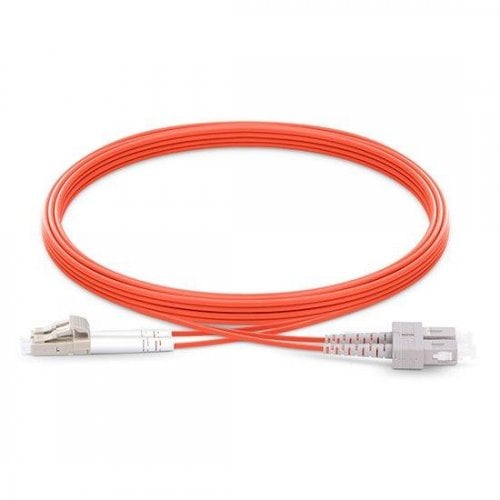
Testing and certifying singlemode fiber optic patchcord performance is a critical step in ensuring the reliability, efficiency, and longevity of optical networks. By adhering to strict testing procedures, using calibrated equipment, and complying with global standards, industry professionals can mitigate the risk of signal loss, downtime, and network failures. From measuring insertion loss and return loss to verifying mechanical strength and environmental resilience, each test plays a vital role in validating the patchcord’s ability to deliver optimal performance in demanding applications. As data transmission speeds continue to increase and network infrastructures become more complex, the importance of rigorous testing and certification will only grow—reinforcing the role of singlemode fiber patchcords as the backbone of modern digital connectivity.





No comments have been posted yet.