


.webp)


With explosive data growth in this era, modern-day data centers are the backbone of the digital world, responsible for enormous amounts of data transmission and storage. Optical connection technology is at the center of enabling fast and efficient data transmission within data centers, and its key component for this job is the SFP transceiver. These small but powerful devices are changing the way data centers handle high-speed data traffic, harmonizing flexibility, scalability, and high performance to meet the growing needs of the digital age.
Importance of SFP Transceivers in Data Centers
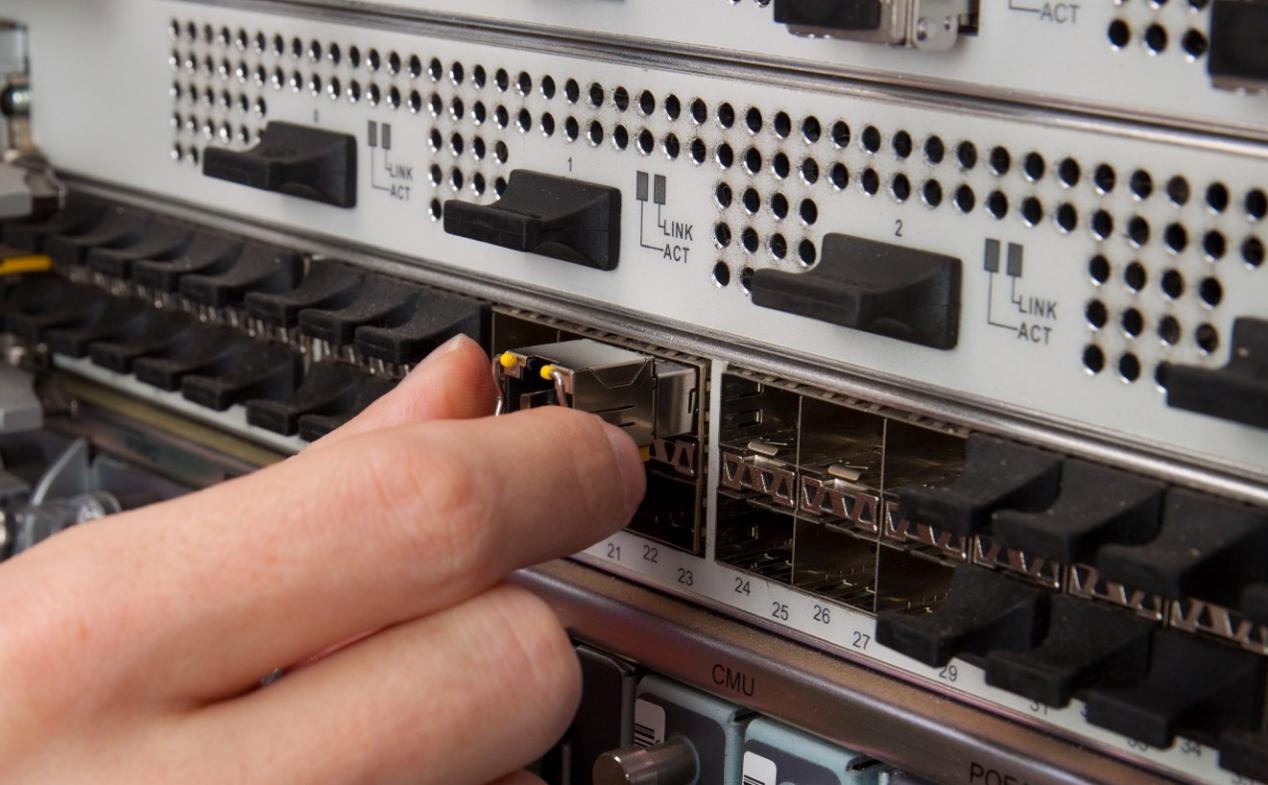
Modern data centers are facing a record data boom due to applications like cloud computing, big data processing, and artificial intelligence. In order to be in a position to handle this trend, they need network solutions that will place them to perform high-speed, long-distance, and low-latency data transmission. That is where the use of fiber transceiver technology in the form of SFP transceivers fits in.
SFPs are fiber transceivers used to convert electrical signals from network equipment into light signals to send over fiber optic cable and vice versa. SFP refers to Small Form Factor Pluggable, which is a hot-pluggable, standardized transceiver module. Due to the fact that it is small in size, it eliminates space, rendering switches and routers port-dense, therefore supporting data centers in achieving maximum possible network capacity using physical space. For example, in massive data centers with thousands of servers, SFP transceivers can be inserted into networking hardware easily, providing a simple and efficient way of introducing network connectivity without inconvenient rewiring.
Performance Advantage of SFP Transceivers

One of the strengths of SFP transceivers is that they are able to support multiple data speeds. Between 1 Gigabit per second and 10 Gbps, and even 25 Gbps in more advanced uses such as SFP28, the modules can be made flexible in order to accommodate different network needs in the data center. The flexibility gives data centers the capability to roll out a unified network infrastructure, which reduces the complexity and cost of needing to deal with various transceiver technologies.
Besides high-speed data transmission, SFP transceivers also enjoy excellent signal integrity and low power consumption. SFP modules, where used with fiber-optic cables, bring maximum signal reduction of attenuation along an extended distance to ensure efficient data transmission. Further, unlike some other transceivers, SFP transceivers consume comparatively less power, which is extremely crucial in data centers that attempt to reduce energy costs and limit environmental impact. For instance, a data center with hundreds of SFP transceivers can drastically minimize total power consumption, a significant amount of money spent on electricity bills in the long run.
SFP Transceiver Technical Characteristics and Versatility

The second important benefit of the SFP transceivers is their hot-swappability. This means that the modules of transceivers can be installed or removed without powering off the entire network device. This feature makes it possible in high-density data center networks where downtime must be kept to a minimum that there is no network operation disruption when performing maintenance or increasing capacity. For instance, in the event of an SFP module being defective, it can be easily removed and replaced with a new one, and network connectivity restored in just a few seconds.
In addition, SFP transceivers also provide support for various fiber types, including single-mode fiber and multimode fiber. Single-mode fiber can be applied to long-distance transmission, whereas multimode fiber can be applied to short-distance transmission in the data center. It is more convenient for data centers to choose the most appropriate fiber transceiver sfp configuration in accordance with their requirements. No matter if it is joining servers in the same rack, joining other network switches within the data center, or joining an external network, SFP transceivers can be tailored to suit the requirements of the task at hand.
Challenges and Solutions in SFP Transceiver Deployment
Despite the many benefits of SFP transceivers, there are certain deployment issues with them in the data center. Compatibility issues arise, especially from the usage of third-party or alternative SFP modules. Data centers therefore need to ensure that they choose SFP transceivers that comply with industry standards fully and have interoperability with installed network equipment. Thorough testing before deployment can help avoid potential compatibility issues.
The second challenge is managing many SFP transceivers in a data center. With hundreds or thousands of modules in operation, it becomes challenging to monitor their status, performance, and maintenance schedules. But network management software has evolved to the extent that monitoring and managing SFP transceivers has become quite an easy operation. The programs can provide real-time feedback regarding each module's performance, alert in advance to potential issues, and even automate some of the maintenance tasks, such as firmware upgrades.

Conclusion
In conclusion, SFP transceivers are one of the most important factors for high-speed optical interconnects in data centers today. Its high performance, flexibility, and ease of use have made it the data center owners' favorite to create scalable, reliable, and cost-effective network infrastructure. With the advancement in digital technology, data centers' needs continue to change, and SFP transceivers are likely to be an integral component of future data center network evolution as well. Be it continuous enhancement in data rate support, power consumption, or compatibility, SFP transceiver technology will undoubtedly continue to advance and innovate itself to solve the problems of the future data world.
Fiber-Mart manufactures and supplies a full range of customizable SFP transceiver modules. Additionally, we also provide compatible SFP transceivers as alternatives to branded products such as Cisco, HP, Juniper Networks, etc. All of our SFP transceiver modules carry a lifetime advance replacement warranty and are 100% functionally tested. Looking forward to working with you.





No comments have been posted yet.