


.webp)


Over the past decade, we've witnessed the evolution of fiber optic connections from an exclusive option for a select few to a fundamental foundation for social, economic, and industrial growth. As governments and the private sector work together to bridge the digital divide, the coming years will see dramatic changes in the deployment, use, and integration of fiber optics into everyday life.
From multi-gigabit speeds to open access models to AI-driven optimization, the fiber broadband industry is not only evolving, it's also changing. Here are seven trends to watch in 2025.
Global coverage is being further expanded
Bridging the digital divide
The digital divide (or broadband access gap) is driving significant investments by public and private companies in infrastructure projects for geographically isolated communities. In the United States, federal and state funding programs are accelerating the rollout of fiber optic networks in rural areas. The European Union's "Digital Decade" also aims to promote internet access and recognizes the transformative social and economic benefits that come with widespread fiber optic deployment.
In developing countries in Asia, Africa, and Latin America, fiber optic networks are seen as a catalyst for rapid socioeconomic growth. Governments in these regions offer incentives and subsidies to attract private investment in sustainable projects, shorten implementation times, and reduce financial risks.
Public-private partnerships and financing
Public-private partnerships (PPPs) are playing an increasingly important role in bridging the digital divide. Governments often lack the technical expertise and financing to build large-scale fiber optic networks on their own, while private companies struggle to achieve a return on investment in sparsely populated areas. The advantage of the PPP model is that it combines public funds with private sector innovation, thus promoting sustainable projects that are more likely to meet coverage and budget targets.
These well-structured partnerships create a win-win situation: government projects receive technical and financial support from major broadband operators, while internet service providers (ISPs) receive a clear path to securing their subscriber base and service continuity.
Geopolitical influence
Market participants in the global fiber optic market agree that reliable broadband access is more than just a public service. It is a critical driver of the modern economy, supporting education, telecommuting, e-commerce, healthcare, and many other sectors. Despite the accelerated development of the fiber optic network, geopolitical and regional factors can influence the speed of project implementation.
From supply chain disruptions to changes in trade relations, global events will alter procurement schedules for fiber optic cables, components, and field equipment. Nevertheless, the trend toward fiber optic expansion in previously underserved areas remains strong.

The increase in gigabit and multi-gigabit speeds
A notable trend in 2024 is that demand for high-speed internet will continue to rise in 2025, driven by high-resolution video streaming, remote collaboration, and data-intensive applications. Businesses, especially global ones, rely on stable, fast connections for large file transfers, advanced cloud computing, and real-time data analytics. Consumers are also increasingly demanding gigabit or multi-gigabit connections, whether for gaming, telemedicine, distance learning, or HD video streaming on multiple devices.
Key technologies
2025 is expected to be the year fiber optics regains popularity, as new technologies like 10G-PON and XGS-PON play a key role in meeting the demand for higher speeds from businesses and consumers. These passive optical network standards enable service providers to offer symmetric speeds of 10 Gbps (and beyond) to residential and business customers, thus meeting growing bandwidth demands.
Competition and market changes
With the increasing proliferation of gigabit and multi-gigabit services, market dynamics are shifting toward service quality, reliability, and customer convenience. Traditional broadband technologies like DSL and cable internet are losing ground because they cannot scale to multi-gigabit speeds without significant upgrades. This shift will intensify competition among internet service providers (ISPs), prompting many to offer bundled services such as advanced Wi-Fi solutions, streaming platforms, or managed IT services to attract and retain customers.
Convergence of advanced technologies
Artificial intelligence and machine learning drive network optimization
To ensure consistent multi-gigabit performance, service providers need more than just fiber optic networks. By 2025, artificial intelligence and machine learning will play an increasingly important role in network management.
These technologies can analyze large amounts of real-time data, including traffic patterns and indicators of potential failures, to proactively optimize network performance. AI-based predictive maintenance allows operators to address potential failures before they become serious, significantly increasing uptime and improving customer satisfaction.
Convergence with 5G and the Internet of Things
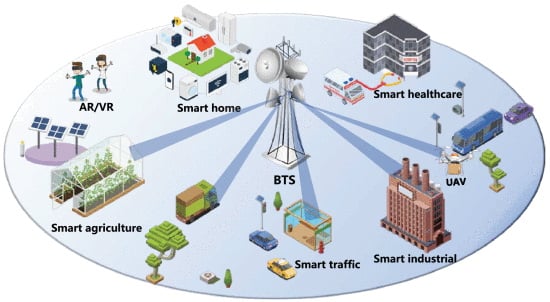
With the increasing deployment of 5G networks, the role of fiber optics in transport network infrastructure will increase. Fiber optic transport networks provide the low latency and high throughput required to handle increasing mobile data traffic, especially given the continued growth of the Internet of Things (IoT). Smart devices in homes, offices, and urban infrastructure generate enormous amounts of data that must be transmitted and processed quickly. With the integration of 5G, fiber optic networks can support the service quality standards required for next-generation applications.
Wi-Fi 7 implementation
As fiber optic networks evolve, so too are Wi-Fi standards. Wi-Fi 7 was released by the Wi-Fi Alliance in early 2024 and is expected to reach its critical expansion point by 2025. With more than 2.1 billion Wi-Fi 7-compatible devices expected to ship by 2028, networks must be prepared for the growing volume of personal data traffic competing with the demands of enterprise networks. To fully realize Wi-Fi 7's potential, high-performance fiber optic connections are essential, enabling seamless multi-gigabit connections from local access points to global networks.
Fiber optics as the basis for smart cities
Smart cities are emerging around the world, leveraging connected sensors and advanced data analytics to improve city management, public safety, and citizen participation. In traditional urban systems, each system operates independently with its own protocols and requirements. A robust communications infrastructure is required to support smart city functions (the interaction between systems to receive, adapt, and respond to information).
To enable functions such as data collection and sharing, centralized management, predictive maintenance, and energy efficiency, a converged fiber optic network is required. Fiber optic broadband access is the fundamental layer that connects these various components—be they intelligent traffic management systems, environmental sensors, or telemedicine centers.
A reliable, scalable, low-latency fiber optic infrastructure is essential for these advanced applications. Autonomous vehicles require near-instant communication with traffic lights, road sensors, and other vehicles for safe navigation. Telemedicine platforms utilize high-resolution video streaming and fast data transmission for patient diagnosis and monitoring.
Starting in 2025, city planners and technology providers will increasingly collaborate to use fiber optics to address a wide range of challenges, from coordinating emergency response to citywide energy savings.
Reputable fiber optics brands advance modern network
Corning
has always focused on innovation and is committed to providing customers with better products and services. They also provide optical communication solutions for different fields to achieve the faster and more reliable connections required by today’s networks.
Panduit
provide the widest product portfolio, including fiber optic system products, copper system products, cabinet products, audio and video system products, to help customers achieve and exceed their goals. Panduit can also help create connectivity solutions, the innovative infrastructure solutions can help organizations improve productivity and adaptability.
CommScope
has been committed to continuously promoting the development of communication technology and creating the world’s most advanced network. They continue to innovate, design, and manufacture, bringing a globally leading network solution portfolio to all customers.
OFS
is ISO9001 certified and supports product design and manufacturing under the guidance of the quality management system. All products comply with the strictest and latest international standards, and have undergone multiple tests to provide customers with the best products.
Fibermart
is certified to ISO9001:2015 and ISO14001:2015, and has built strong, professional teams worldwide specializing in optical communication product R&D, systematic solutions, and supply chain management. Fibermart focus on high-performance, integrating quality management best practices to foster collaboration and innovation. All products undergo rigorous individual testing to ensure network reliability. Fibermart's advanced inventory and warehouse management system guarantees delivery capacity and rapid response times.
Transition to open access networks
Open-access network models, in which multiple ISPs share a single fiber infrastructure, will be widespread by 2025. These models create competition at the service level rather than the infrastructure level, resulting in greater choice and better pricing for end users.
Open access has proven effective in many markets: by lowering barriers to entry, smaller ISPs can compete by providing innovative service packages targeted at niche markets or underserved segments.
Benefits for operators and communities
Open access networks not only improve user availability but also ensure financial sustainability. By spreading network access costs across multiple service providers, infrastructure operators achieve more predictable revenues, while communities benefit from lower prices, improved service quality, and expanded coverage. Given the increasing costs and complexity of building new networks, open access helps maximize the use of existing fiber optic lines and achieve a higher return on investment.

Market challenges and opportunities
Despite its numerous advantages, the open access model faces several obstacles. Creating a fair playing field for all participating internet service providers (ISPs) can be challenging. Furthermore, the costs of network maintenance, upgrades, and expansions must be distributed fairly.
As more governments recognize the social and economic benefits of shared infrastructure, regulations may change to encourage open access models. This shift could alter the competitive landscape and force telecom giants to rethink their business strategies and adopt a more collaborative approach.
Cybersecurity and data protection are increasing concerns.
As fiber optic networks become essential for critical services such as healthcare, transportation, and power, cybersecurity is becoming increasingly important. A single attack on core infrastructure could disrupt communications across an entire region and have serious consequences for public safety and economic stability. Therefore, internet service providers (ISPs) and government agencies are increasingly investing in protecting their networks from threats such as DDoS attacks, ransomware, and unauthorized intrusion.
Evolving regulatory requirements and compliance
Governments around the world are also implementing stricter regulations on data privacy and security, reflecting the increasing reliance on digital services in our daily lives. For example, the EU's General Data Protection Regulation (GDPR) is expected to lead to further regulations specifically focused on cybersecurity, while in the US, federal and state governments are increasing their oversight of broadband deployment and data protection practices.
This constantly evolving regulatory landscape requires a proactive compliance approach. Internet service providers (ISPs) and network operators must invest in a robust security architecture to avoid potential legal issues.

AI-assisted security
Strong cybersecurity is the foundation of every modern network. From endpoint monitoring to network segmentation, proactive strategies play a critical role in protecting data and systems. Artificial intelligence and machine learning are not only used to optimize performance but are also becoming essential components of network security.
Machine learning algorithms can detect anomalies in network traffic and alert administrators to suspicious behavior and potential vulnerabilities in real time. By 2025, AI-based security solutions will be standard across most major internet service providers (ISPs), enabling more precise and dynamic threat detection and response.
Innovation drives the future
Looking ahead to 2025, fiber optic networks are steadily evolving toward terabit speeds and more complex application scenarios. For example, research into quantum fiber, based on the principles of quantum entanglement and cryptography, offers a promising path to ultra-secure communications. New quantum technologies, such as Google's quantum computer chip, are expected to be seamlessly integrated into fiber optic networks, offering unprecedented encryption and data transmission capabilities.
Innovation in implementation methods
Laying methods are also evolving. Methods such as microtrenching (laying fiber optic cables in narrow, shallow trenches in streets) and aerial installation of fiber optic cables can significantly reduce costs and installation time. These methods offer practical solutions in areas where conventional trenching is impractical or poses logistical difficulties. These methods are expected to be widely adopted by 2025, particularly in countries seeking to accelerate network expansion under time and budget constraints.

Conclusion: Preparing for a fiber-optic future
By 2025, the fiber optic broadband industry will be characterized by expansion, innovation, and consolidation. From rural areas finally connecting to high-speed internet to smart cities leveraging reliable networks for advanced applications, fiber optics will unlock a range of transformative opportunities.
2025 will be a pivotal year, underscoring the importance of fiber broadband in the digital age. Fiber broadband has long been considered the gold standard in connectivity. By proactively identifying and adapting to these trends, internet service providers (ISPs), government agencies, technology providers, and other industry players can collectively drive broadband development.





No comments have been posted yet.