


.webp)


Master the intricacies of polarization-maintaining technologies in optical networks. Dive deep into PM cables, splitters, and couplers for optimized communication and signal processing.
The Ultimate Guide To Mastering Polarization Maintaining Technologies In Optical Networks
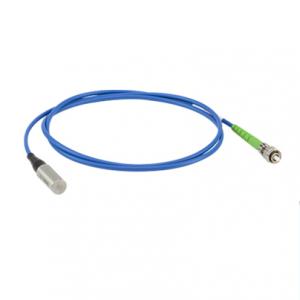
In today's rapidly evolving digital era, optical networks have become the backbone of our communication infrastructures, ensuring the speedy transmission of vast amounts of data across the globe. At the heart of these networks lies the concept of light polarization, an often overlooked but critical element that can dictate the efficiency and reliability of optical transmissions.
In optical networks, controlling and understanding this orientation is paramount, especially when we're looking to maximize our data transmission capabilities. Mastering Polarization Maintaining (PM) technologies emerge as a focal point for both industry professionals and optical communication enthusiasts.
PM technologies, as we will delve into in this guide, ensure that the polarization of light remains consistent as it travels, minimizing potential data loss or distortion. This consistency can be crucial for applications where precision and clarity are non-negotiable.
In this all-inclusive post, we'll detail every facet of polarization-maintaining technologies, shedding light on their importance, functionality, and applications. Whether you're just stepping into the world of optical networks or you're a seasoned professional, this guide promises insights that will sharpen your understanding and appreciation of PM technologies.

The Basics of Polarization in Optical Networks
Polarization is a fundamental concept in optics, but before we dive deep into polarization-maintaining (PM) technologies, it's crucial to lay down the basics. Grasping the essence of polarization will help you better appreciate the significance and need for PM technologies in optical networks.
What is Polarization?
At its core, polarization describes the orientation of oscillations in a light wave. Imagine a rope tied to a post: if you shake the rope up and down, the waves produced oscillate vertically. If you shake it from side to side, they oscillate horizontally. Similarly, light can be described in terms of its electric field oscillations. These oscillations can occur in various orientations.
When light is emitted from typical sources, such as a light bulb or the sun, its waves oscillate in multiple random orientations. This is referred to as 'unpolarized light.' However, when light waves oscillate predominantly in a single direction or orientation, we say the light is 'polarized.'
Significance of Polarization in Optical Communications
In the vast expanse of optical networks, controlling light's polarization becomes pivotal for several reasons:
· Data Integrity: The orientation of light's oscillation can represent data. A disturbance or change in this orientation can lead to data distortion or loss.
· Minimizing Cross-talk: In densely packed optical fibers, signals traveling in adjacent channels can interfere with each other. Proper polarization can help reduce this interference, ensuring clear transmission.
· Maximizing Data Transmission: With advanced modulation techniques, different data streams can be sent simultaneously over different polarizations, effectively doubling the data transmission rate.

What is Polarization Maintaining (PM)?
Polarization Maintaining (PM) technologies are not just another set of optical tools but rather an evolution in our ongoing quest for pristine optical communication. At the heart of this evolution is the ability to consistently control the orientation of light waves, ensuring that the signals we send are received just as we intend them to be.
Introduction to PM Technologies
PM technologies are specifically designed components in optical networks that ensure the polarization of light remains unchanged as it propagates through the system. This is achieved by designing fibers and components that are highly birefringent. Birefringence, in optics, is the phenomenon where a material has a different refractive index for light polarized in one direction compared to light polarized in a direction perpendicular to it.
By exploiting this property, PM fibers can maintain the polarization state of light over long distances, even in the presence of external disturbances that would normally alter the polarization in standard fibers.
Why There's a Need to Maintain Polarization
1. System Reliability
Many advanced optical systems, especially those in sensing and telecommunications, rely on a predictable polarization state for their operation. A shift or drift in polarization can degrade system performance or cause malfunctions.
2. Reduced Signal Degradation
As light travels through fiber, various factors, such as temperature fluctuations, mechanical stress, or imperfections in the fiber, can alter its polarization. This can lead to signal fading or degradation, especially in long-haul transmissions. PM technologies tackle this issue head-on, ensuring signal integrity over vast distances.
3. Precision Applications
In industries like medicine, research, and aerospace, the precision of optical signals is paramount. Whether it's guiding a surgical laser, making astronomical measurements, or ensuring secure communications in satellites, maintaining consistent polarization is non-negotiable.
4. Enhanced Data Capacity
In the world of data transmission, bandwidth is gold. By maintaining separate and stable polarizations, PM technologies can enable Dual Polarization Quadrature Phase Shift Keying (DP-QPSK) and other advanced modulation formats, effectively increasing the data capacity of optical channels.
1. Polarization Maintaining Cable
Navigating the intricate realm of optical communication requires a keen understanding of its essential tools. Among these, the Polarization Maintaining (PM) Cable stands out as a crucial component, working tirelessly behind the scenes to ensure flawless communication. But what exactly is a PM cable, and why is it so pivotal?
Definition and Characteristics
A Polarization Maintaining (PM) Cable is a special type of optical fiber cable designed to retain the polarization of the light injected into it. Unlike conventional single-mode fibers that don't have a defined polarization axis, PM cables have two orthogonal polarization axes. These axes, usually referred to as the 'fast axis' and 'slow axis,' are designed so that light polarized along one axis will travel at a different speed than light polarized along the perpendicular axis.
The crux of a PM cable's design lies in its inherent birefringence, which ensures that, once light with a specific polarization is launched into the fiber, that polarization state is maintained, even over long distances.
Applications and Importance in Optical Networks
1. High-speed Communication Systems: In modern, high-capacity optical communication systems, maintaining polarization can be crucial. Advanced modulation schemes often use different polarizations to carry separate data streams, effectively doubling the channel's capacity. A PM cable ensures that these polarizations remain distinct and don't interfere with each other.
2. Optical Sensors: PM cables find significant applications in fiber-optic sensors. For sensors that rely on detecting changes in light polarization, such as those used in structural health monitoring or industrial process control, maintaining a stable polarization is essential for accurate readings.
3. Research and Development: Many experimental setups in photonics research require a predictable and stable polarization state. PM cables are often the go-to choice for these applications.
4. Telecom Components Manufacturing: Components like optical isolators, circulators, and modulators often rely on PM fibers in their construction to ensure optimal performance.
Pros and Cons of Practical Scenarios
Pros:
· Reliability: PM cables provide a stable polarization state over long distances, making them ideal for applications that can't afford polarization drifts.
· Enhanced Data Rates: As mentioned earlier, by maintaining distinct polarizations, PM cables can support advanced modulation schemes that enhance data transmission rates.
· Precision: In sensitive applications like sensing or precision measurements, PM cables deliver unparalleled accuracy.
Cons:
· Cost: PM cables are typically more expensive than standard single-mode fibers, given their specialized construction.
· Handling: Working with PM cables requires careful alignment of the polarization axes. Mismatched connections can reduce the effectiveness of the PM property.
2. Polarization Maintaining Splitter
Moving ahead in our journey through polarization-maintaining technologies, we arrive at a component that plays a fundamental role in many optical systems: the polarization-maintaining (PM) Splitter. Serving as a nexus in optical networks, the PM Splitter seamlessly divides a single input into multiple output paths, all while ensuring the impeccable maintenance of light polarization.
Understanding The PM Splitter
At its core, a PM Splitter is a device designed to divide the optical power of an incoming light signal into two or more output fibers. Unlike conventional splitters that focus mainly on dividing the optical power, a PM Splitter is meticulously engineered to ensure that the polarization of the input light is maintained across all output paths.
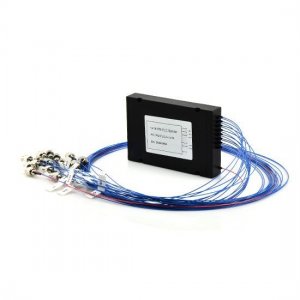
Key Features and Design Considerations
1. Birefringence Preservation: A critical aspect of any PM device, the splitter is designed to uphold the inherent birefringence of the incoming light signal, ensuring polarization integrity across the outputs.
2. Low Insertion Loss: PM Splitters are designed to minimize losses when introducing them into optical networks. This ensures that most of the incoming optical power is retained across the outputs.
3. High Extinction Ratio: The extinction ratio measures the ability of the PM Splitter to maintain polarization. A high extinction ratio indicates exceptional performance in preserving the desired polarization state.
4. Uniformity: In many applications, it's crucial for the divided optical power across all output paths to be uniform. PM Splitters are thus engineered to achieve this balance.
Applications of PM Splitters
1. Telecommunications: In dense wavelength division multiplexing (DWDM) systems, PM Splitters can divide signals while preserving their polarization, enabling parallel processing or routing of the signal.
2. Research and Laboratories: Experiments that require a single light source to be divided and used in parallel paths, especially when polarization integrity is vital, leverage PM Splitters.
3. Interferometric Sensors: For sensors that rely on the interference of light, PM Splitters ensure that the polarization state of the split beams remains consistent, enhancing the sensor's accuracy.
4. Quantum Computing: As quantum technologies evolve, the need for precision optical components grows. PM Splitters play a role in ensuring accurate qubit transmission and manipulation in quantum optical systems.
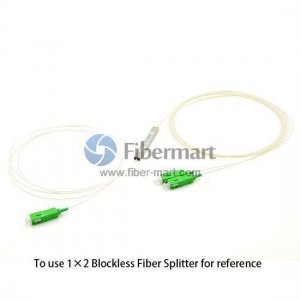
3. Polarization Maintaining Coupler
As we progress in our deep dive into polarization-maintaining technologies, the next pivotal component that deserves our attention is the polarization-maintaining (PM) Coupler. This unique device, integral in many optical setups, enables the merging and splitting of light signals while meticulously maintaining their polarization states.
Basics of the PM Coupler
The PM Coupler is fundamentally a device that either combines two optical signals into one output or splits one optical signal into two, ensuring that the polarization of the light remains unaffected throughout the process.
Design and Characteristics
1. Birefringent Construction: Much like other PM devices, PM Couplers are constructed to preserve the birefringence of the light passing through them, guaranteeing the maintenance of polarization.
2. Low Insertion Loss: Optimized design ensures that PM Couplers introduce minimal losses when incorporated into optical pathways, maximizing the efficiency of the system.
3. Broadband Performance: Many modern PM Couplers are designed to operate efficiently across a broad spectrum of wavelengths, making them suitable for diverse applications.
4. Compact Footprint: Advances in photonics have enabled the miniaturization of PM Couplers without compromising their performance, making them suitable for dense optical assemblies.
Applications of PM Couplers
1. Telecommunications: PM Couplers are used in systems where multiple sources need to be combined onto a single line without disturbing the inherent polarization of the signals, ensuring efficient data transmission.
2. Optical Instrumentation: Instruments like high-resolution interferometers that rely on combining beams with maintained polarization states leverage PM Couplers for optimal performance.
3. Sensing Systems: PM Couplers are often integrated into fiber-optic sensing systems where precision and stability of the polarization state are paramount.
4. Laser Systems: In setups where multiple laser sources need to be combined or where a single laser source needs to be split, PM Couplers ensure that the inherent polarization state of the beams remains undisturbed.
Best Practices for Using PM Couplers
· Alignment Matters: When integrating a PM Coupler into a system, ensure that the polarization axes of the input and output fibers match the coupler's axes. Proper alignment is crucial for optimal performance.
· Environmental Stability: While PM Couplers are designed to be robust, they can be sensitive to environmental factors like temperature. Ensure they are housed in stable environments for consistent results.
· Protective Handling: As precision optical devices, PM Couplers should be handled with care. Avoiding physical shocks or stresses can prolong their operational life.
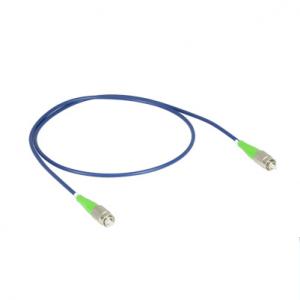
If you or someone you know wants to get their hands on the best polarization-maintaining solutions, then look no further than Fibermart. We are a global leader in the field of fiber optic network solutions, with a presence in both Hong Kong and the United States. Our wide range of products includes Polarization Maintaining Fiber Cable, Polarization Maintaining Splitter, Polarization Maintaining Coupler, and a lot more.
Contact us today and learn more about us in detail.





No comments have been posted yet.