


.webp)


Fiber optic patch cables are fundamental components in modern communication networks, widely used in data centers, telecommunications facilities, and industrial automation systems. They consist of one or more optical fibers enclosed within a protective jacket, capable of transmitting data and signals over long distances with minimal signal loss.
For network engineers, data center operations staff, and even networking enthusiasts, understanding the manufacturing process of fiber optic patch cables not only aids in correctly selecting and installing cables but also enables quick problem-solving in emergency situations. This article details the manufacturing process of fiber optic patch cables and shares professional techniques and considerations.
What is Fiber Optic Patch Cable?
A fiber optic patch cable, also known as a fiber optic connector, refers to an optical cable that has connectors installed on both ends, used to achieve flexible optical pathway connections. A cable with a connector on only one end is called a pigtail.
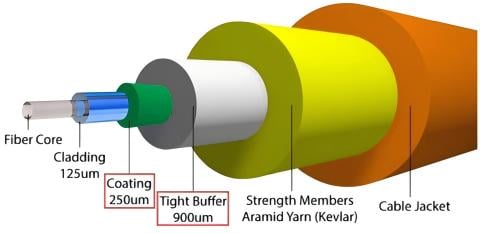
Fiber optic patch cables consist of the optical fiber and the connector. The core, through which light travels, is made of glass. In multimode fiber, the core diameter is 50μm to 65μm, whereas in single-mode fiber, it is 8μm to 10μm. The core is surrounded by a glass cladding with a lower refractive index than the core, which keeps the light within the core. Outside the cladding is a thin plastic coating that provides protection.
Types of Fiber Optic Patch Cable
Before selecting and making fiber optic patch cables, it's essential to understand their different types:
-
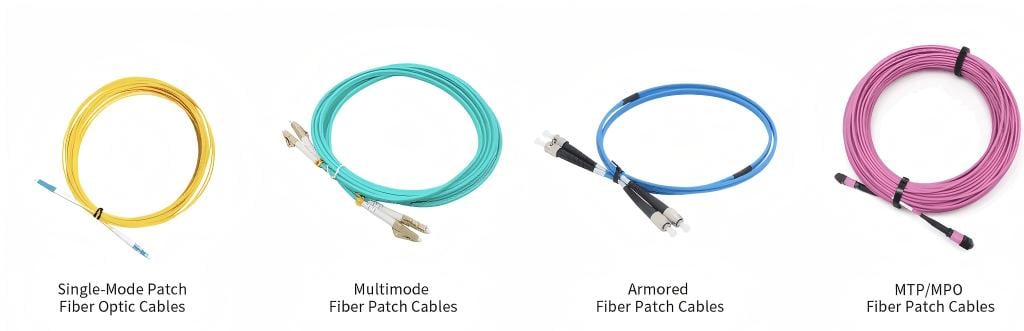
By Transmission Mode: Can be divided into Single-mode fiber (typically denoted by yellow, with blue connectors and boots, used for longer distances) and Multimode fiber (typically denoted by orange or grey, with beige or black connectors and boots, used for shorter distances).
-
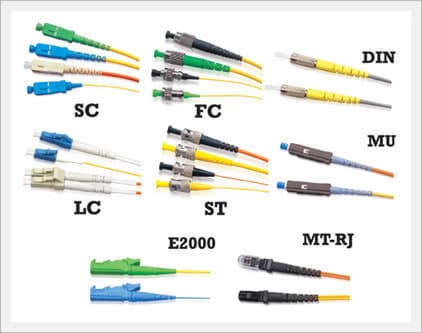
By Connector Type: Common types include FC (round with threaded coupling, most used on patch panels), SC (square, push-pull coupling, very common on routers and switches), LC (similar to SC but smaller), and ST (round with bayonet coupling).
-
By Fiber Count: Divided into Simplex (contains a single fiber) and Duplex (contains two fibers, used for bidirectional communication).
Detailed Fiber Optic Patch Cable Manufacturing Process
Professional manufacturing of fiber optic patch cables is a complex and precise process requiring specialized tools and skilled techniques. The main steps are as follows:
Step 1: Get Preparation for Fiber Patchcord Workshop Equipment and Tools
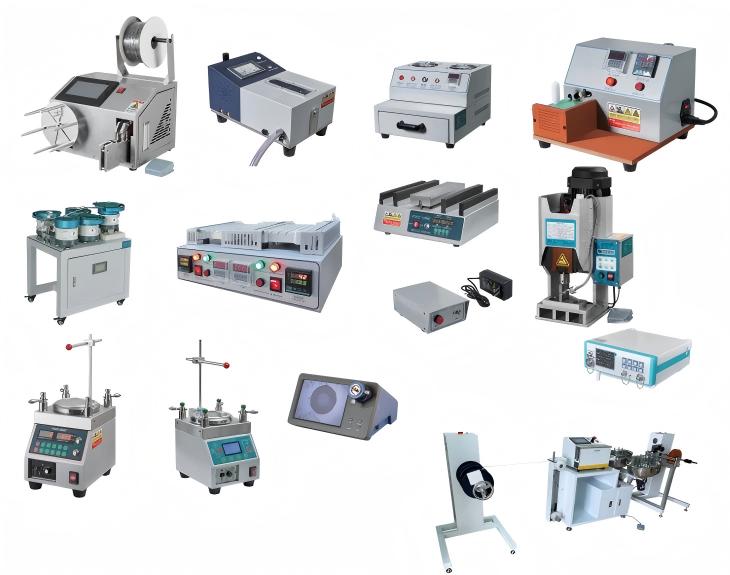
Making fiber optic patch cables requires the following professional tools:
-
Fiber Stripper or Fiber Stripping Machine
-
Kevlar Scissors, or Cable Cutting Machine
-
Fiber Cleaver
-
Fiber Curing Oven
-
Fiber Polishing Machine
-
400x Magnification Microscope for End-Face Inspection
-
Fiber Insertion Loss and Return Loss Test Set
-
3D Interferometer
Step 2: Cutting Correct Fiber Optic Cable in Different Lengths as You Want.
Fiber cables and connectors are all necessary materials, and production can start. The cables, normally supplied on reels, should be cut into required lengths. While the manual cutting is possible, automated machines add to productivity, which can be beneficial as demand rises. This machine is compatible with various cable specifications and lengths, including cutting, strapping, and wrapping functions with high accuracy.
Manual Cutting Method
-
Uses professional fiber optic cable scissors.
-
Requires experienced operators to ensure a clean, perpendicular cut.
-
Suitable for small-batch, multi-specification production needs.
-
Lower equipment investment cost, but relatively slower efficiency.
Fully Automatic Cable Cutting Machine Method
-
Uses fully automatic cable cutting machines for batch processing.
-
Ensures precise, consistent lengths and perfectly perpendicular cuts.
-
Suitable for large-scale, standardized production.
-
Significantly improves production efficiency and ensures product consistency.
-
Fiber-mart offers a variety of market-proven fully automatic cable cutting machines. These machines incorporate the advanced technologies mentioned above and can effectively help you enhance production efficiency and product quality.
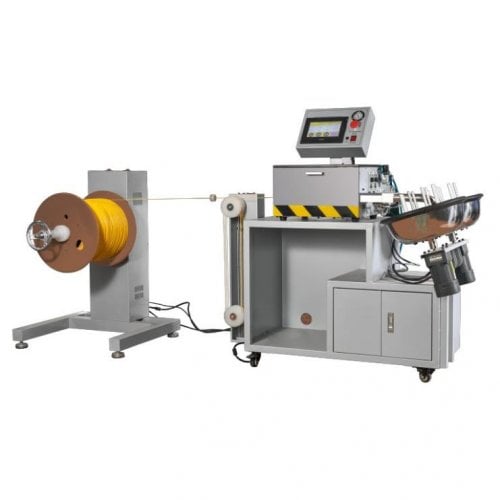
Regardless of the method used, pay attention to the following during cutting:
-
Carefully verify the customer's length requirements and leave appropriate process allowance.
-
Select the appropriate cutting method based on the cable type and diameter.
-
Ensure a clean working environment to avoid contaminating the cable end faces.
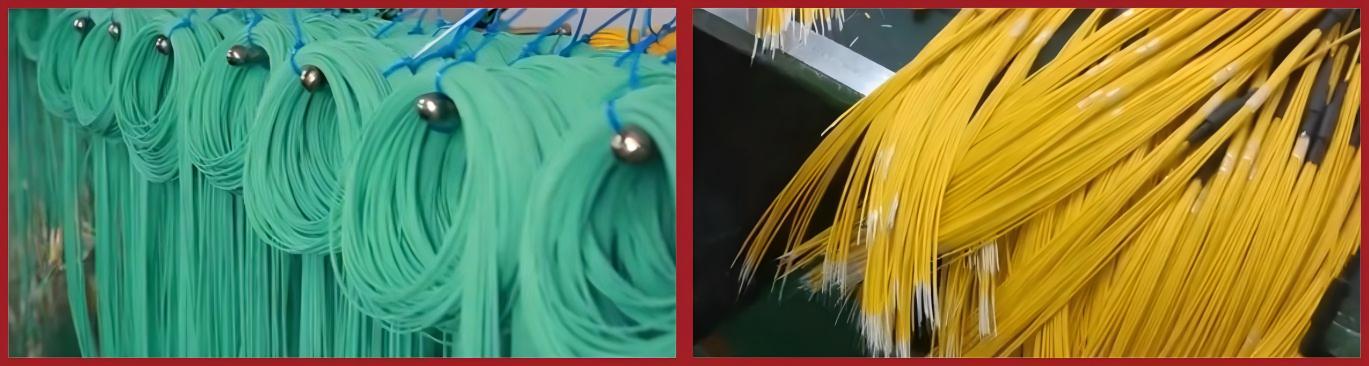
Step 3: Cleaning & Pre-handling Fiber Optic cable
After cutting, the cables have to be cleaned to take off the allowable residues before the connectors are inserted. Arrange the cable system in such a way that the method of connector attachment is made easy.
Step 4: Stripping and Identifying Fiber Patch Jumper Cables
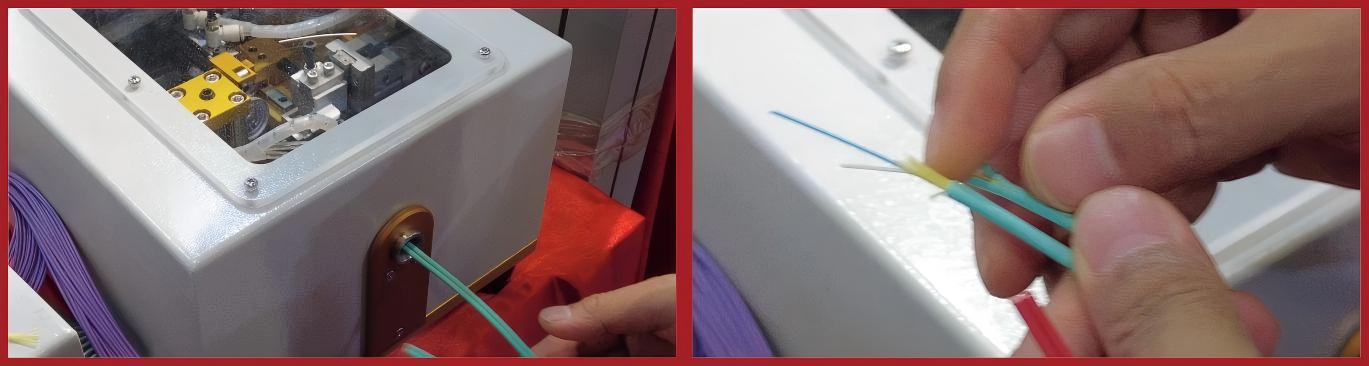
Use a Fiber Cable Stripping Machine to take off the outer jacket that may differ in diameter (3.0 mm, 2.0 mm, or 0.9 mm). The miller stripper is now used to strip the tight-buffered 0.9 mm inner jacket. Identification pastes help in distinguishing the cables for duplex or multi-channel assemblies.
Step 5: Epoxy injection and insert fiber into the connector
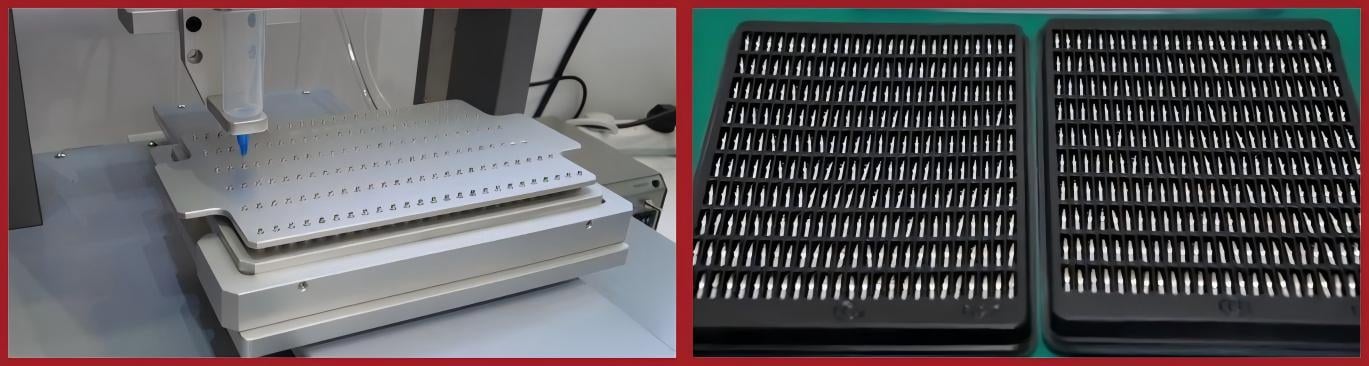
Apply epoxy on the fiber surface and insert the fiber in the ferrule of the connector, in most of the cases using 353 Epoxy. This can be done either manually or via machine.
Step 6: Use Fiber Curing Oven to make fiber solidification
Probably in the connector, via vertical or horizontal furnace, this can be achieved.
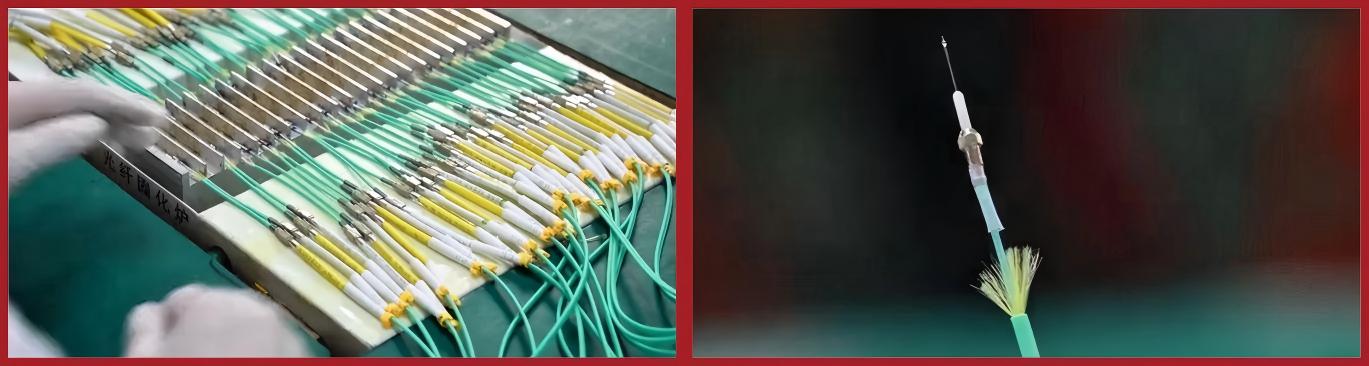
Step 7: Assembly Fiber Connector Spare Part and Crimp It
Continue to follow with joining together of the remaining part of the connectors to the cables.
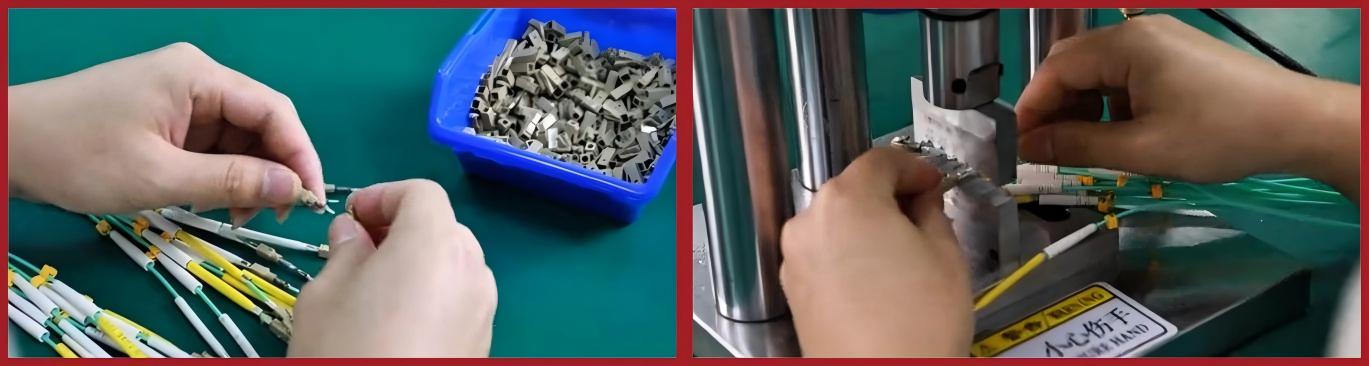
Step 8: Ultrasonic cleaning and Use Fiber Polishing Machine to polish fiber connectors
Next, the semi-finished patch cords are cleaned with an ultrasonic machine, and the connector interfaces are polished with a Fiber Polishing Machine to ensure symmetrical alignment between the two parts.
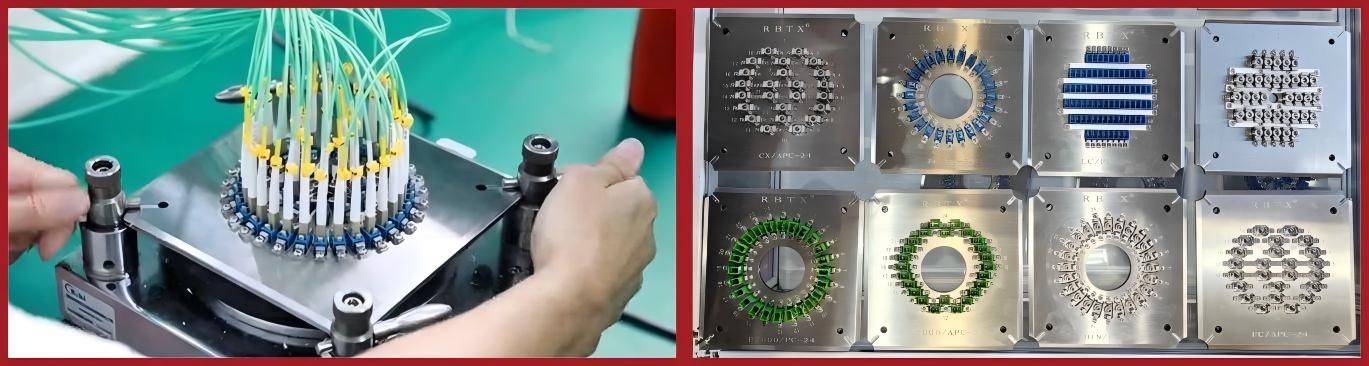
Step 9: Microscope Inspection to Fiber End-face
Check the connector interface using a microscope (with 400x or 600x magnification) to make sure there is no dirt. If there's dust, the connector can be re-cleaned.
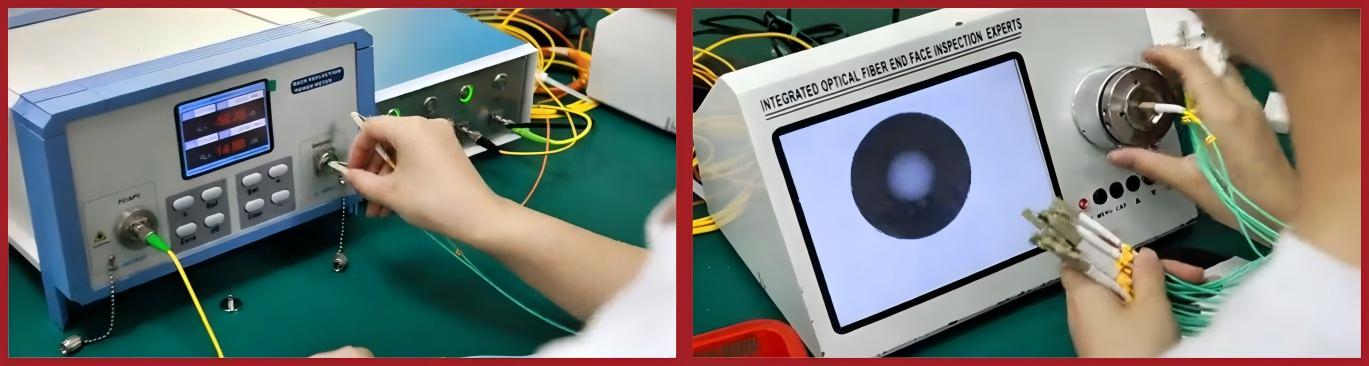
Step 10: Take the Final Testing of Quality Control (QC) by fiber IL/RL Meter and 3D Interferometer inspection
For LM for final quality control, which will test the patch cord by measuring the insertion and return loss value that are essential parameters for performance.
Step 11: Packaging
The last step is packaging, where you need to make sure that the cords are well secured in the package according to the customer's specifications.
Key Professional Manufacturing Points and Techniques
-
Cleanliness is Paramount: Before use, the ceramic ferrule and its end face must be cleaned with alcohol and lint-free wipes. Any dust or oil can impair the fiber coupling efficiency.
-
Mind the Bend Radius: During use, the minimum bend radius of the fiber should not be less than 150mm (approximately 6 inches). Excessive bending and looping increase attenuation during light transmission.
-
End-Face Polish: Different connectors have different end-face polish types, such as PC (Physical Contact, slightly curved), UPC (Ultra Physical Contact, more pronounced curvature), and APC (Angled Physical Contact, 8-degree angle). The appropriate type should be selected based on specific requirements.
Precautions for Using Fiber Optic Patch Cables
-
The transmit and receive wavelengths of the optical modules at both ends of the patch cable must match. A simple way to check is to ensure the color of the optical modules is consistent.
-
Always use protective caps to cover the fiber connectors when not in use.
-
If a fiber connector becomes dirty, clean it with a cotton swab dipped in alcohol.
-
When laser signals are being transmitted, never look directly into the fiber end face, as it can cause eye injury.
Professional Advice for Selecting Fiber Optic Patch Cable Production Equipment
For manufacturers planning to establish a fiber optic patch cable production line or upgrade existing equipment, selecting the right production equipment is crucial. Here is some professional advice:
-
Equipment Precision and Stability: Patch cable production demands extremely high equipment precision. Choosing high-precision polishing machines and fiber cleavers is fundamental to ensuring product quality. Equipment stability directly impacts product consistency and yield.
-
Automation Level: Select the appropriate level of automation based on production scale. Small-batch production may opt for semi-automatic equipment, while large-scale production requires fully automated lines, including automatic stripping, assembly, polishing, and testing equipment, which significantly improve efficiency and reduce labor costs.
-
Equipment Compatibility and Flexibility: Choose equipment capable of handling various connector types (LC, SC, ST, FC, etc.) and different end-face polishes (PC, UPC, APC). This allows for flexible adaptation to market demand changes.
-
Production Efficiency and Capacity: Consider the equipment's cycle time and daily production capacity. For example, automated production lines recommended by Fiber-mart can produce thousands of high-quality patch cables daily while maintaining excellent product consistency.
-
Supplier Technical Support: Choose equipment suppliers that provide comprehensive technical training, prompt after-sales service, and ongoing technical support. Fiber-mart offers its production equipment customers complete operational training, regular maintenance, and process optimization services to ensure the equipment always operates optimally.
Equipment Configuration Suggestions for Different Production Scales
Small-Scale Workshop:
-
Manual Polishing Machine
-
Basic Curing Equipment
-
Essential Test Instruments
-
Daily Capacity: 50-100 cables
Medium-Scale Production Enterprise:
-
Semi-Automatic Polishing Equipment
-
Dedicated Curing Oven
-
Automated Testing System
-
Daily Capacity: 300-800 cables
Large-Scale Professional Manufacturer:
-
Fully Automated Production Line
-
Robotic Assembly System
-
Online Quality Inspection System
-
Daily Capacity: 2000+ cables
Conclusion
Mastering the manufacturing process and technical requirements of fiber optic patch cables not only helps you better select and install cables but also plays a significant role in network maintenance and troubleshooting. Although field-terminating fiber optic patch cables is impractical for most users, understanding their manufacturing process and core technologies enables you to make more informed decisions when selecting and using them.
For most application scenarios, it is recommended to directly choose high-quality fiber optic patch cables from professional manufacturers like Fibermart. They offer a wide variety of high-quality patch cables to meet the needs of different scenarios, ensuring the stability and reliability of network communications.
If you have specific requirements or questions regarding fiber optic patch cables, feel free to visit the Fiber-mart website to learn more about professional information and technical specifications for fiber optic patch cables.


-on-the-Poincaré-Sphere.jpg "What is Polarization Extinction Ratio? How to Measure the PER in PM Fibers?")





No comments have been posted yet.