


.webp)


Driven by explosive east-west traffic growth, AI/ML fabric expansion and global data center bandwidth upgrade, the industry has migrated from 100G to 400G mainstream deployment, with 800G mass rollout and 1.6T pre-standard validation underway. Three dominant pluggable form factors — QSFP-DD, OSFP and QSFP112 — have been defined by leading MSAs and vendor consortiums, following two completely divergent design philosophies: evolutionary backward-compatible upgrade and revolutionary forward-looking performance upgrade.
Sponsored by top global network vendors including Cisco, Juniper, Arista and hyperscalers such as Google and Meta, these three form factors differ fundamentally in mechanical dimension, electrical lane architecture, thermal budget, power envelope and port compatibility. Their inherent design trade-offs directly determine switch port density, long-term thermal reliability, hardware upgrade cycle and total cost of ownership (TCO) for modern Ethernet and InfiniBand fabrics. This white paper elaborates official MSA specifications, native design intentions, pros and cons, and provides vendor-neutral selection guidance aligned with western data center and HPC deployment standards.
OSFP, QSFP-DD, QSFP112 Individual Form Factor Deep Dive
QSFP-DD (Quad Small Form-factor Pluggable Double Density)
Standard Definition & Specifications
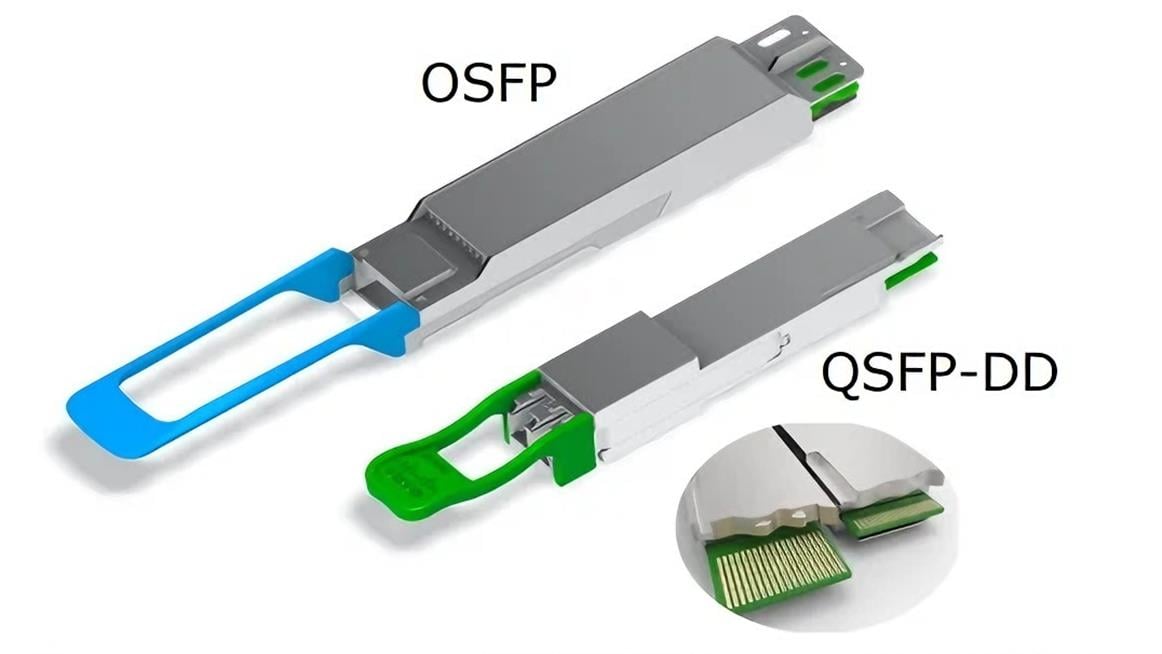
QSFP-DD is governed by QSFP-DD MSA and fully compliant with IEEE 802.3bs standard. It is a typical evolutionary upgraded form factor iterated from legacy QSFP28. The core design logic is doubling electrical lanes from 4 to 8 while retaining the identical mechanical footprint of traditional QSFP28, requiring no modification on switch front panel layout.
It supports multi-rate transmission matched with mainstream modulation schemes:
● 200G: 8×25G NRZ
● 400G: 8×50G PAM4 (mainstream commercial specification)
● 800G: 8×100G PAM4 (thermal constrained deployment)
Backed by full-stack support from all tier-1 switch vendors, QSFP-DD has become the de facto mainstream form factor for brownfield data center upgrades across North America and Europe.
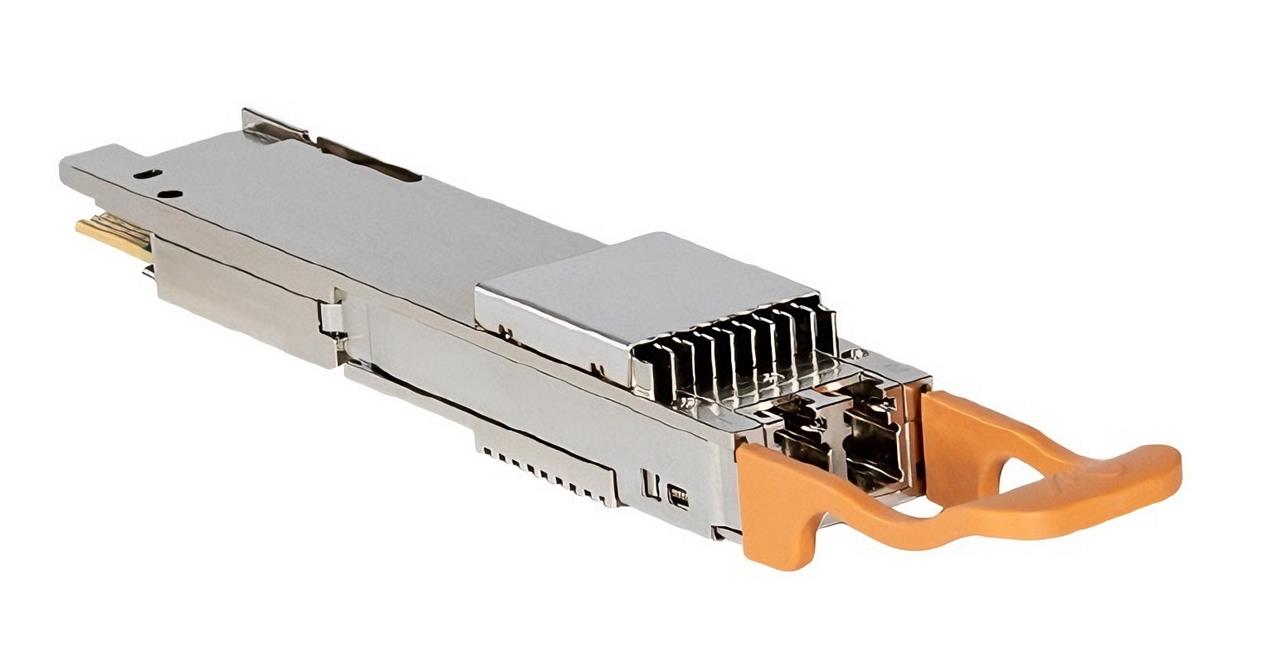
Native Design Advantages
● Unmatched backward compatibility: QSFP-DD ports natively support QSFP+, QSFP28, QSFP56 and QSFP112 transceivers without any adapters. It enables seamless mixed-speed port deployment and protects existing capital expenditure, which is the core advantage emphasized by Cisco and Juniper for enterprise and colocation data center scenarios.
● Maximum front-panel port density: Zero footprint change compared with legacy QSFP series, realizing bandwidth doubling without sacrificing port quantity. It fits high-density leaf-spine switching architecture widely adopted in western cloud data centers.
● Nature mature ecosystem & optimized BOM cost: Complete supply chain and mature manufacturing process reduce research and iteration costs. It is the preferred solution for cost-sensitive 400G DR4/FR4/LR4 optical links.
● System-level thermal co-design: QSFP-DD adopts independent riding heatsink mounted above or between modules. The heatsink can be customized separately, allowing switch vendors to optimize chassis airflow independently and guarantee stable operation of medium-power 400G/800G modules.
Inherent Limitations from Compact Footprint
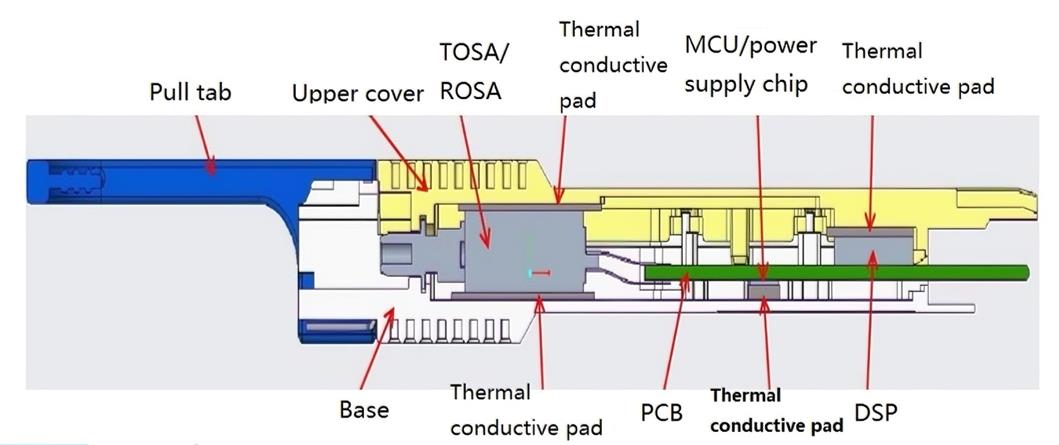
● Limited passive thermal dissipation due to compact housing, heavily relying on switch built-in forced airflow cooling system; prone to thermal throttling under continuous 800G full-load operation.
● Fixed 10W maximum power budget, insufficient power headroom for next-generation 1.6T high-power optics.
● Denser pin layout increases manufacturing complexity and marginal production cost compared with traditional 4-lane QSFP modules.
OSFP (Octal Small Form-factor Pluggable)
Standard Definition & Core Specifications
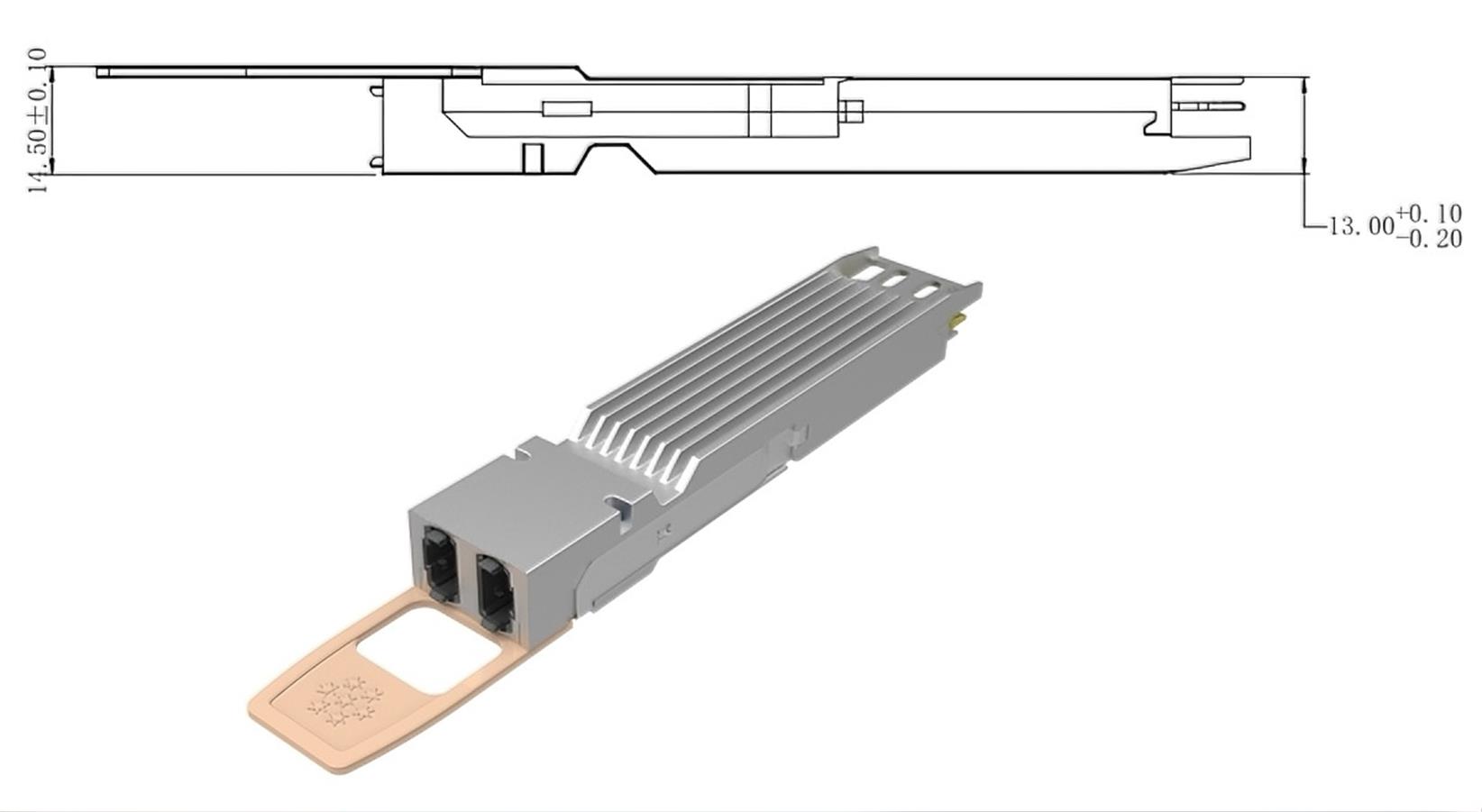
OSFP is promoted by OSFP MSA led by Google and Arista, representing a revolutionary performance-oriented design tailored for 800G native deployment and future 1.6T Ethernet evolution. It also adopts 8 electrical lanes consistent with QSFP-DD, but expands overall physical size by approximately 15% deliberately to break thermal and power bottlenecks of compact QSFP packaging.
Two official top housing designs are released for differentiated airflow scenarios: finned-top for front-to-back airflow switches, and flat-top for tight thermal contact in sealed high-density cabinets. It supports up to 15W power budget, targeting high-power optical engines such as 800G DR8 and FR8.
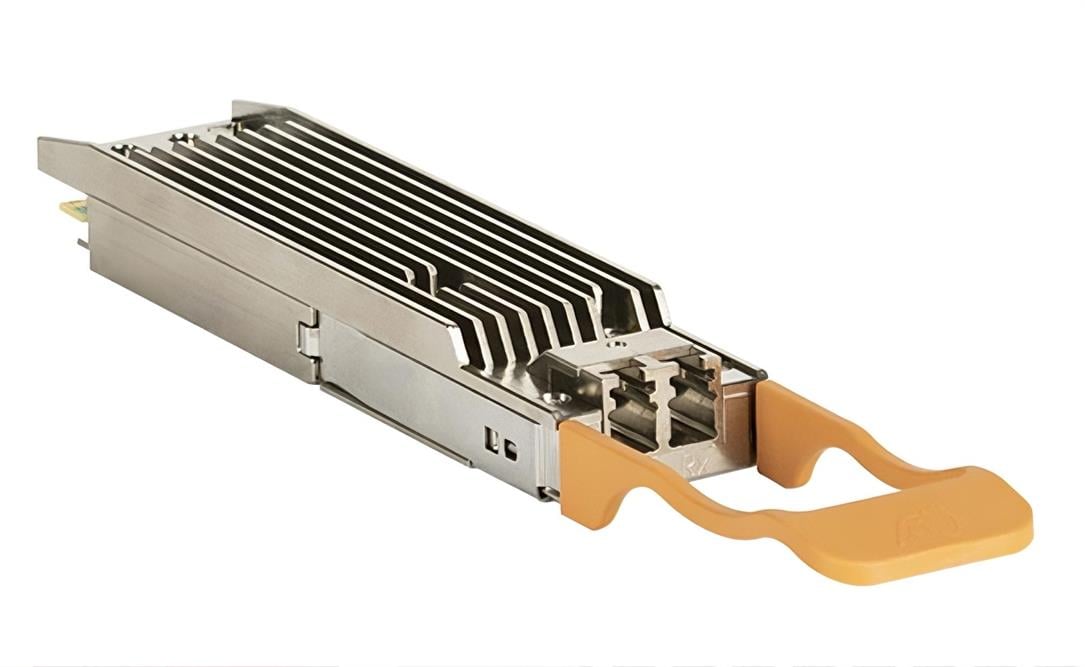
Native Design Advantages
● Industry-leading power and thermal capability: 15W maximum power envelope fully covers high-power 800G optical modules. Larger housing and enhanced heat dissipation substrate eliminate thermal throttling under long-duration full load, perfectly matching AI training fabric and HPC cluster requirements.
● Forward compatibility for 1.6T: Reserved sufficient electrical and thermal margin during initial specification design, enabling smooth upgrade to 1.6T without replacing switch hardware, minimizing long-term infrastructure iteration cost.
● Superior passive cooling performance: Less dependency on high-speed chassis fans, reducing overall data center PUE and operational power consumption.
● Controlled interoperability via adapters: Interconnection with QSFP-DD ports is available with dedicated adapters, supporting hybrid deployment in existing QSFP-DD-based data centers.
Inherent Limitations from Oversized Packaging
● Larger physical size reduces front-panel port density by over 20%, not applicable for high-density leaf switches.
● Zero native backward compatibility with all QSFP-series cages, requiring brand-new dedicated OSFP switch ports.
● Higher initial infrastructure investment, requiring full hardware upgrade for brownfield network reconstruction.
QSFP112 (Quad Small Form-factor Pluggable 112)
Standard Definition & Specifications
QSFP112 is a cost-balanced transitional form factor retaining classic QSFP mechanical dimension. Different from the 8-lane architecture adopted by QSFP-DD and OSFP, it follows a simplified 4-electrical-lane design, achieving 400G bandwidth via 4×100G PAM4 signaling instead of adding extra lanes. It is positioned as a mid-range solution balancing port density, power consumption and thermal performance, filling the gap between legacy QSFP56 and 8-lane high-speed modules.
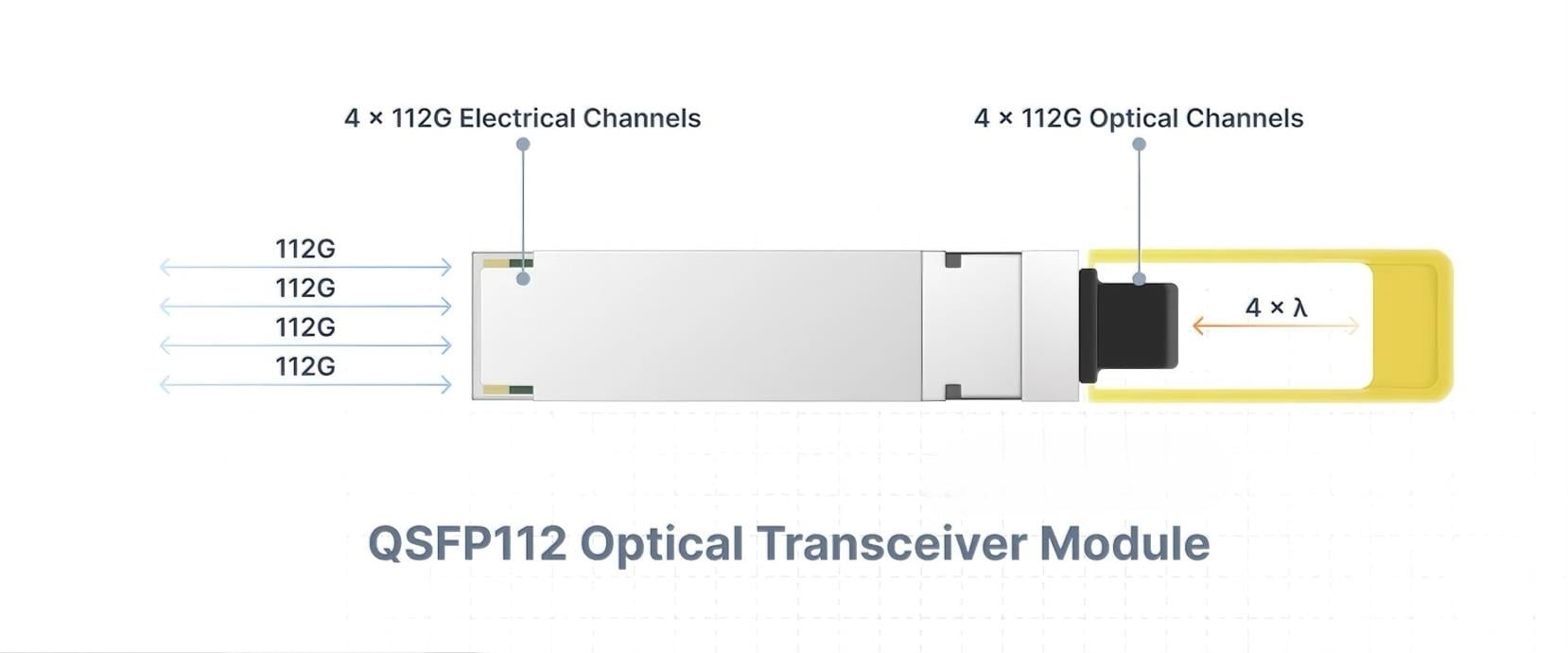
Native Design Advantages
● Lowest heat generation by hardware design: 4-lane architecture cuts chip heat source fundamentally, requiring no extra high-performance heatsink or enhanced chassis cooling system.
● Full electrical compatibility with QSFP-DD ports: Can be directly inserted into standard QSFP-DD cages, occupying only 4 out of 8 lanes. It is fully compatible with existing fiber infrastructure without cabling modification.
● Optimal balance of density and power consumption: Maintains ultra-high port density of QSFP form factor with only 7W typical power consumption, ideal for edge and middle-tier network nodes.
Inherent Limitations
● Hardware lane restriction disables 800G and future 1.6T upgrade capability, lacking long-term evolution potential.
● Half bandwidth waste on 8-lane QSFP-DD ports, unable to maximize port throughput of next-generation switches.
OSFP vs QSFP-DD vs QSFP112, Comprehensive Cross Comparison
Mechanical Structure & Bandwidth Design Philosophy
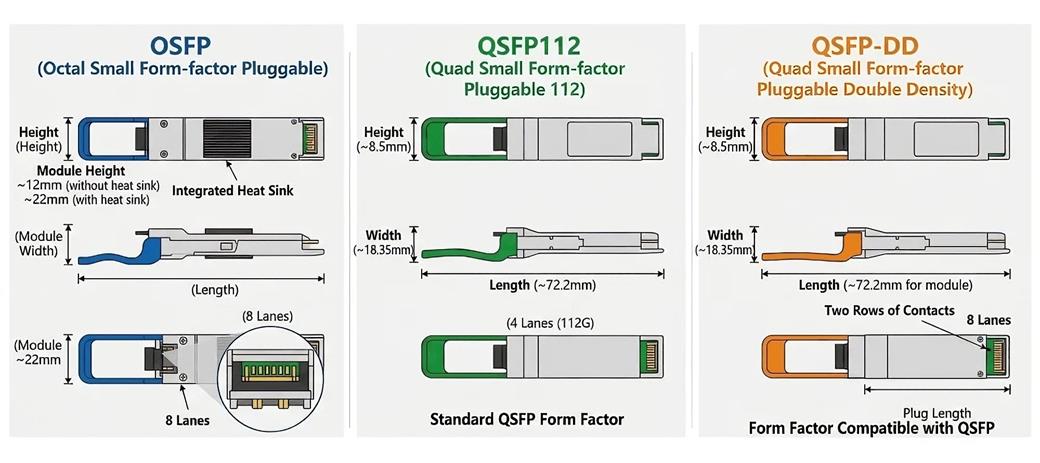
The core divergence of the three form factors originates from different design priorities defined by corresponding MSAs:
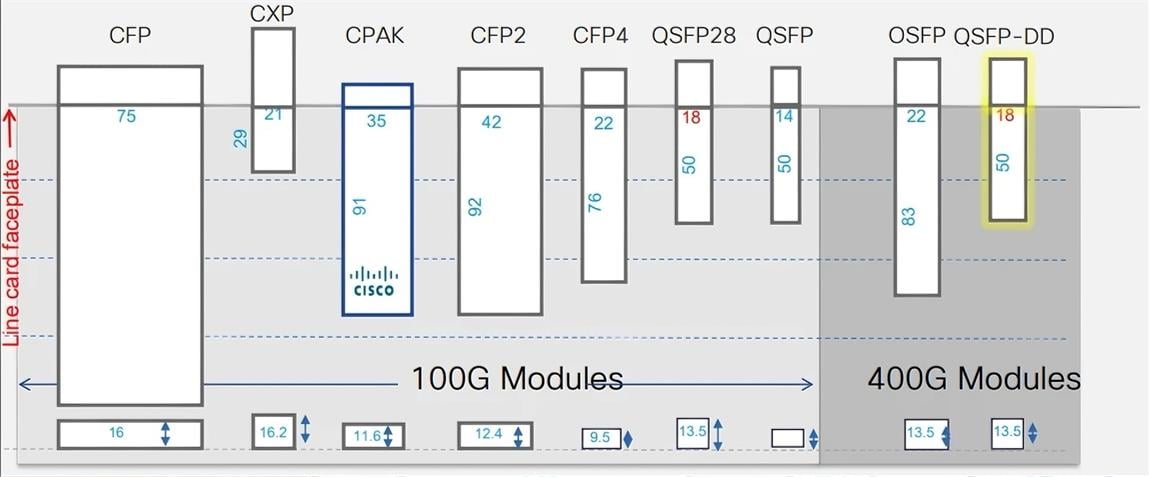
● QSFP-DD: Evolutionary upgrade, identical footprint to QSFP28; 8 electrical lanes. Core priority: port density + backward compatibility for brownfield upgrade.
● OSFP: Revolutionary upgrade, enlarged housing size; 8 electrical lanes. Core priority: thermal margin + forward performance scalability for greenfield high-performance fabric.
● QSFP112: Lane-speed upgrade without dimension change; 4 electrical lanes. Core priority: low power consumption + cost optimization for edge network deployment.
Full Rate Transmission Capacity Comparison
|
Form Factor
|
Lane Architecture
|
200G Support
|
400G Support
|
800G Support
|
|---|---|---|---|---|
|
QSFP-DD
|
8 lanes
|
8×25G NRZ
|
8×50G PAM4
|
8×100G PAM4 (thermal limited)
|
|
OSFP
|
8 lanes
|
8×25G NRZ
|
8×50G PAM4
|
8×100G PAM4 (native optimal solution)
|
|
QSFP112
|
4 lanes
|
Not supported
|
4×100G PAM4
|
Not supported
|
Thermal Performance Comparison (Data Center Actual Operation)
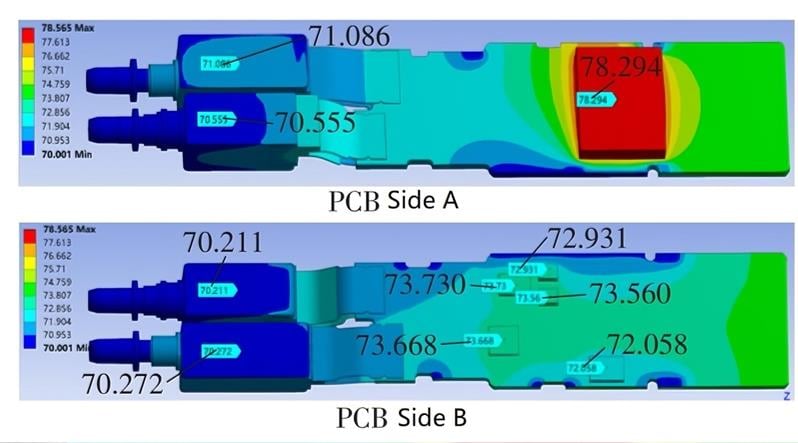
● QSFP-DD: Medium passive cooling capability. Highly dependent on switch chassis forced airflow and external riding heatsink. Suitable for standard temperature-controlled data centers; unstable under high ambient temperature and continuous full-load operation.
● OSFP: Top-tier thermal performance among three form factors. Extra housing space provides sufficient heat dissipation margin. Stable 7×24h full-load operation is guaranteed even in sealed high-temperature cabinets, perfectly matching AI and HPC high-load scenarios.
● QSFP112: Optimal thermal performance at source. Fewer lanes generate lower heat fundamentally. No enhanced cooling system required, achieving the lowest data center PUE among three solutions.
Port Compatibility & Network Migration Path
● QSFP-DD: Complete backward compatibility with legacy QSFP port ecosystem. Supports step-by-step network upgrade and mixed-speed module insertion. It is the dominant solution for brownfield data center migration across Europe and North America.
● OSFP: No native compatibility with any QSFP-series ports. Adapters will introduce extra insertion loss and block chassis airflow, not recommended for large-scale hybrid deployment. Only applicable for greenfield new-built fabrics.
● QSFP112: Electrical compatible with QSFP-DD ports with physical identical dimension. It can reuse existing port and fiber infrastructure, yet wastes half lane resources of 8-lane ports, only suitable for edge non-critical links.
Specification Master Table
|
Comparison Item
|
QSFP-DD
|
OSFP
|
QSFP112
|
|---|---|---|---|
|
Electrical Lane Count
|
8 lanes
|
8 lanes
|
4 lanes
|
|
Max Per-lane Rate
|
100G PAM4
|
100G PAM4
|
100G PAM4
|
|
Max Power Budget
|
10W
|
15W
|
7W
|
|
Native Backward Compatibility
|
QSFP+/QSFP28/QSFP56/QSFP112
|
None (adapter required)
|
Compatible with QSFP-DD ports
|
|
Front-panel Port Density
|
High
|
Low (20% fewer ports)
|
High
|
|
800G Deployment Adaptability
|
Limited, thermal constrained
|
Excellent, native support
|
Not supported
|
|
1.6T Future Scalability
|
Moderate
|
Excellent
|
Poor
|
|
Initial Hardware CAPEX
|
Medium
|
High (dedicated switch required)
|
Low
|
Total Cost of Ownership (TCO) Analysis
● Initial CAPEX: QSFP112 < QSFP-DD < OSFP. OSFP requires brand-new switch hardware with exclusive cages, bringing the highest one-time procurement cost.
● OPEX (Cooling & Power): QSFP112 has the lowest operational power consumption thanks to lower heat generation. OSFP reduces fan rotating speed demand and cuts cooling OPEX under high load. QSFP-DD needs continuous high-speed fan operation to relieve thermal pressure.
● Long-term Iteration Cost: OSFP owns the lowest upgrade cost for 1.6T evolution. QSFP-DD needs chassis thermal optimization for future high-speed iteration. QSFP112 cannot be upgraded and requires full hardware replacement in next-generation network iteration.
OSFP, QSFP-DD, QSFP112 Selection Guidance
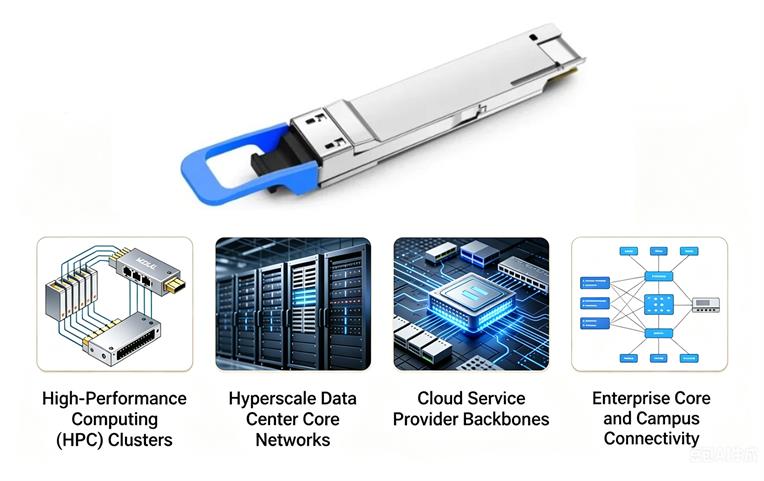
● Choose QSFP-DD for: Brownfield data center upgrade, high-density leaf-spine switches, enterprise campus fabric, cost-controlled 400G large-scale deployment. It is the mainstream choice for most colocation and enterprise data centers in North America and Europe. Not recommended for: Sealed high-temperature cabinets, persistent 800G full-load core links, AI/HPC computing clusters.
● Choose OSFP for: Greenfield data center construction, AI training fabric, HPC cluster, 800G core backbone links, long-term 1.6T network planning. Hyperscalers including Google and Meta widely adopt OSFP for their core high-performance fabrics. Not recommended for: Legacy infrastructure upgrade, high-density leaf switches, budget-limited medium-sized networks.
● Choose QSFP112 for: Data center edge aggregation nodes, InfiniBand NIC ports, cost-sensitive 400G static links without future upgrade demand. It serves as a cost-effective supplementary solution for non-critical network edges. Not recommended for: Core backbone links, networks requiring 800G or 1.6T future expansion.
FiberMart Optical Transceiver Solutions
FiberMart delivers a full-stack optical transceiver portfolio spanning legacy low-speed 1G SFP modules all the way up to cutting-edge 800G QSFP-DD and OSFP high-speed modules, covering every mainstream form factor including SFP+, QSFP+, QSFP28 to match full lifecycle data center networking demands. All modules strictly follow IEEE and MSA industry standards, with complete wavelength options and variants for short-reach intra-rack connections, medium-reach building uplinks and long-haul cross-metro inter-site links. Every unit undergoes precise calibration on transmit power, receive sensitivity and optical performance, allowing network engineers to build accurate fiber loss budgets upfront and avoid hidden link instability risks in production environments.
● SFP Transceiver: Compatible 1G SFP, 100G Base SFP
● SFP+ Transceiver: Compatible 10G SFP+
● 100/400/800G Transceiver: 100G QSFP28, 400/800G QSFP-DD/OSFP
Conclusion
From the perspective of western standard organizations and top network vendors, the three form factors are not competitive substitutes but hierarchical complementary solutions designed for differentiated network layers, resulting from two completely different Ethernet upgrade strategies:
QSFP-DD represents the conservative and compatible evolutionary path, dominating access and aggregation layers relying on its mature ecosystem and seamless legacy compatibility. OSFP stands for the aggressive performance-oriented revolutionary path, monopolizing core backbone, AI fabric and HPC scenarios with superior thermal margin and forward scalability. QSFP112 fills the low-power edge market gap as a cost-optimized transitional solution.
Looking ahead to 2026-2029, western data centers will maintain a long-term coexistence pattern of the three form factors: access/aggregation layers adopt QSFP-DD and QSFP112, while core and AI computing layers fully migrate to OSFP. Network architects shall select form factors based on port density requirement, cabinet thermal condition, upgrade lifecycle and TCO target, rather than simply pursuing the latest packaging standard.
Frequently Asked Questions
What is the main difference between OSFP and QSFP-DD?
OSFP offers better heat dissipation and supports 800G transmission, while QSFP-DD is more compact and fully backward compatible with QSFP28 modules.
Can OSFP modules be used in QSFP-DD ports?
Not directly — but an OSFP-to-QSFP-DD adapter can be used in some cases for interoperability.
What makes QSFP112 different from QSFP-DD?
QSFP112 supports 112G PAM4 lanes, providing higher bandwidth and improved signal integrity for future 800G systems.
Which form factor is best for 800G networks?
OSFP is currently the most widely used form factor for 800G optical modules like OSFP DR8 and OSFP FR8.
Is QSFP112 backward compatible with QSFP28?
Yes. QSFP112 maintains the same mechanical dimensions and interface as QSFP28, allowing smooth upgrades.
Posted on 2 Jun, 2026, by Francisco, Fibermart, All Copy Right Reserved.





No comments have been posted yet.