
.webp)
































|
Recent Order
|
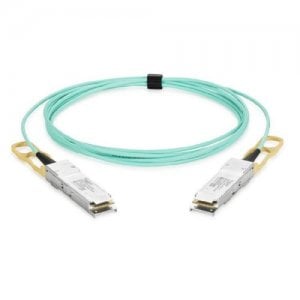
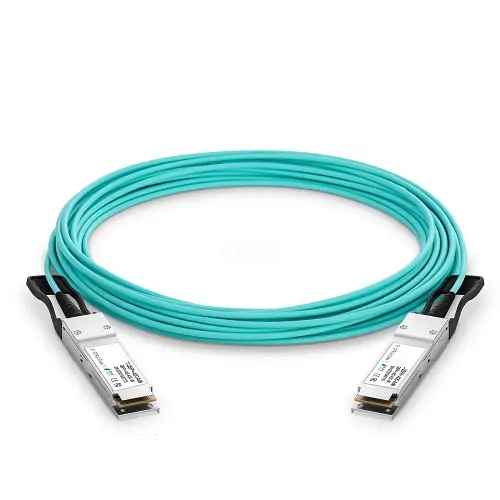
Active Optical Cable (AOC)A variety of 10G ~ 800G Active Optical Cable from Fibermart for your Data Center Interconnection!
Active optical cable is used for short-range multi-lane data communication and interconnect applications. Usually, the wire transmission of optical communication should belong to passive part, but Active Optical Cable is an exception. Active Optical Cable consist of multimode optical fiber, fiber optic transceivers, control chip and modules. It uses electrical-to-optical conversion on the cable ends to improve speed and distance performance of the cable without sacrificing compatibility with standard electrical interfaces. Since people expect more information to be available at their fingertips, our communications systems will need to be quicker, and Active Optical Cable is one of the best solutions to solve this problem. Compared with direct attach copper cable for data transmission, Active Optical Cable provides more advantages, such as lighter weight, high performance, low power consumption, low interconnection loss, EMI immunity and flexibility.
Available in edge pluggable variants only, these “ready to use” electrical-to-optical converters provide generations of optical connectivity at data rates up to 100Gb/s and link distances up to 100 meters. Active Fiber Optical Cable and passive copper Direct Attach Cables (DAC) are commonly deployed in server to Top-of-Rack type applications, where link distances are typically less than 30 meters. The advantage of Active Optical Cable are longer link distances, less bulky physical cabling and an active digital high speed electrical interface facing the host ASIC. Target applications include LAN Ethernet, QSFP28, InfiniBand, OmniPath and Proprietary Interconnect networks.
Introduction
Fibermart Active Optical Cables (AOCs) are high-speed, integrated transceiver assemblies engineered as the definitive solution for short-to-medium-reach, high-bandwidth interconnects within modern data centers. By permanently embedding fiber optic cables with electrical-to-optical converters at each end, AOCs deliver superior performance compared to passive copper solutions. They support a comprehensive range of data rates from 10G to 800G across standards like QSFP28, QSFP-DD, and OSFP, enabling high-density, low-latency connectivity for Ethernet, InfiniBand, and proprietary networks while offering significant advantages in weight, power efficiency, and electromagnetic interference (EMI) immunity.
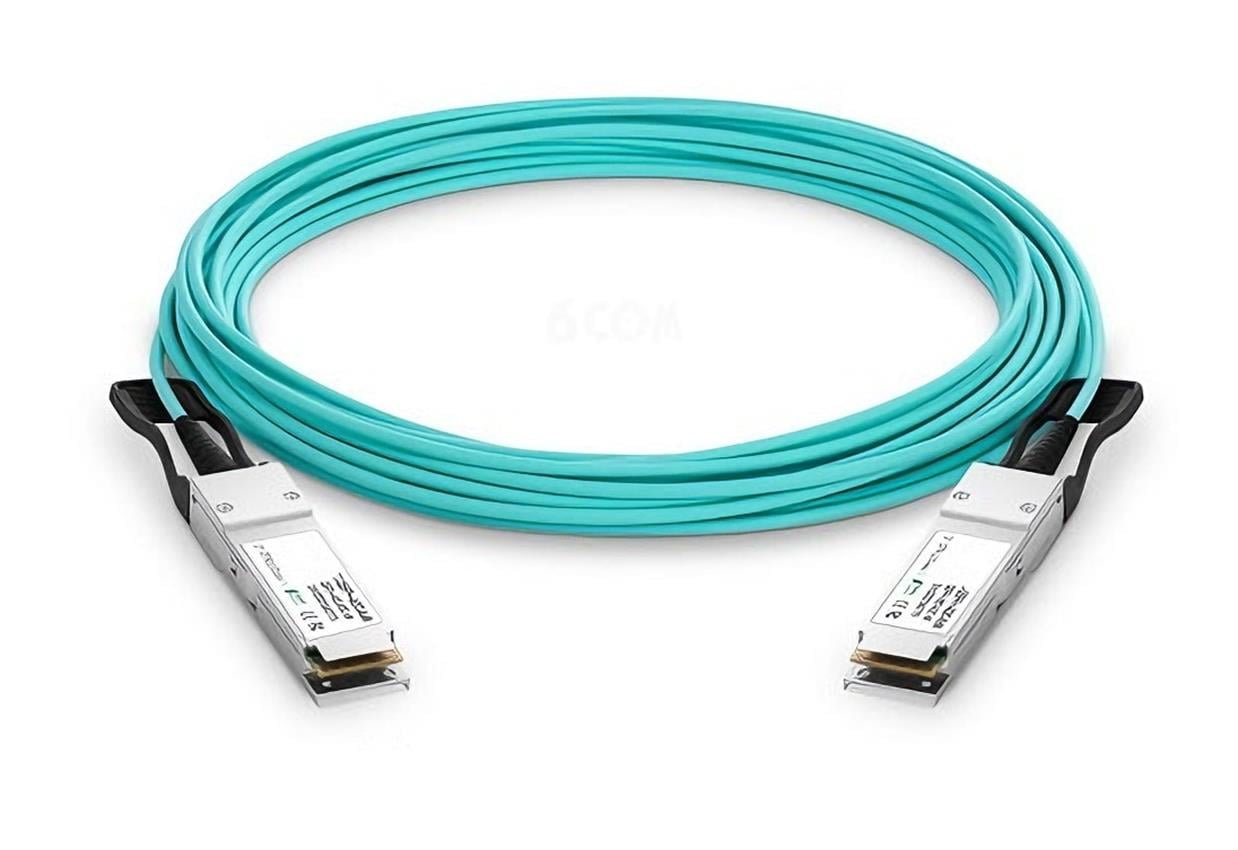 Features● Broad Data Rate & Form Factor Support: For a wide spectrum, 10G (SFP+), 25G/40G (QSFP+), 100G/200G (QSFP28/QSFP56), and 400G/800G (QSFP-DD, OSFP) ● Superior Performance vs. Copper DACs: Provides longer link distances (up to 100m+ with multimode fiber), and complete immunity to electromagnetic interference (EMI). ● Integrated & Ready-to-Use Design: Features fiber optic cables permanently attached to embedded transceivers and creating a robust, plug-and-play assembly. ● High-Density, Low-Power Interconnect: Enables very high port density in network equipment with lower power consumption per port than discrete optical transceivers. ● Protocol and Application Flexibility: Compatible with key data center and HPC protocols including Ethernet, InfiniBand, Fibre Channel, and proprietary interconnects. Principles
Active Optical Cable (AOC) operates by performing a full electrical-to-optical (E-O) and optical-to-electrical (O-E) conversion at each end of the cable assembly. On the transmit end, an integrated driver chip and laser convert incoming high-speed electrical signals from the host switch or server into modulated light signals. These optical signals are then transmitted through the permanently attached multimode (or single-mode) optical fibers.
At the receive end, another integrated photodetector and amplifier convert the light pulses back into precise electrical signals for the connected equipment. This end-to-end active conversion is the key differentiator from passive Direct Attach Copper (DAC) cables. It allows AOCs to overcome the inherent bandwidth-distance limitations and EMI susceptibility of electrical signals over copper, enabling longer reaches, higher data rates, and superior signal integrity. The entire assembly is managed as a single, cohesive link by the host system.
.jpg "AOC Active Optical Cable Network") Applications● Data Center Leaf-Spine and Top-of-Rack (ToR) Connectivity ● High-Performance Computing (HPC) and AI/ML Clusters ● Storage Area Network (SAN) and Hyperconverged Infrastructure ● High-Density Switch-to-Switch Interconnection ● Proprietary High-Speed Interconnect Networks |