


.webp)


Learn about configuring Erbium-Doped Fiber Amplifiers (EDFAs) to maximize signal strength and minimize losses in long-haul, high-capacity DWDM networks.
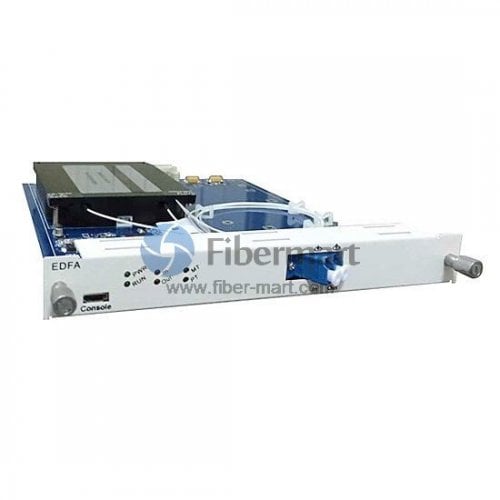
Dense Wavelength Division Multiplexing (DWDM) systems underpin today’s high-bandwidth, long-haul optical networks, which serve as the backbone of global internet infrastructure.
As data rates surge with 5G, AI cloud computing, and hyper-scale data centers, optical signals often need to travel hundreds or even thousands of kilometers with minimal signal degradation. This makes Erbium-Doped Fiber Amplifiers (EDFAs) an essential element for DWDM systems.
EDFAs offer optical signal amplification in the C-band (1530–1565 nm) and L-band (1565–1625 nm) without converting light to electrical signals, making them ideal for transparent, high-speed networks.
However, their configuration is far from plug-and-play. Engineers must carefully optimize gain, noise figure, and power equalization to ensure signal integrity across dozens of wavelengths and vast distances.
|
EDFA Fundamentals in DWDM Applications
Erbium-Doped Fiber Amplifiers are optical repeaters that boost signal strength without the need for optical-to-electrical conversion. Operating typically around the C-band (1530 nm–1565 nm) and L-band (1565 nm–1625 nm), EDFAs leverage erbium ions to amplify multi-wavelength signals simultaneously—ideal for DWDM systems transmitting dozens or even hundreds of channels.
Key Benefits of EDFA-Based Amplification· Simultaneous amplification of multiple DWDM channels with minimal crosstalk · Low noise figure, critical for maintaining OSNR (Optical Signal-to-Noise Ratio) · Transparency to data rates and modulation formats, making them adaptable to 100G, 400G, and beyond · Scalability, allowing integration into ROADM-enabled flexible optical networks
However, poor configuration can lead to gain tilt, channel imbalance, and excessive ASE (Amplified Spontaneous Emission), all of which degrade signal performance.
|
Step 1: Characterize the Optical Link
Start by analyzing the span characteristics:
· Fiber type and length: Standard single-mode fiber (G.652.D) typically incurs 0.2 dB/km loss. For a 100 km span, that’s 20 dB of loss, not including connector or splice losses.
· Number of spans: For ultra-long-haul systems, spans may reach up to 20–25 segments.
· Attenuation budget per span: Total attenuation must be calculated precisely to match the EDFA gain without introducing over-amplification.
Tools like optical time-domain reflectometers (OTDRs) and dispersion analyzers can help map the fiber profile, including loss characteristics and reflection points.
Step 2: Choose the Right EDFA Type
There are three primary types of EDFAs used in DWDM systems, each with distinct use cases:
1. Booster EDFA
· Position: Immediately after the DWDM transmitter
· Function: Amplifies aggregate output power to compensate for the first span loss
· Typical Gain: 13–20 dB
· Output Power: +13 to +23 dBm
2. In-line EDFA
· Position: Between fiber spans
· Function: Reamplifies the signal mid-span to extend distance
· Gain Range: 15–25 dB depending on span loss
3. Pre-Amplifier EDFA
· Position: Just before the receiver
· Function: Boosts weak input signals to the receiver's sensitivity level
· Typical Gain: 20–35 dB
· A low noise figure is crucial (typically <5 dB)
System designers should match amplifier types to network needs. For instance, long-haul DWDM links between data centers may use all three amplifier types.
Step 3: Set Optimal Gain and Output Power
EDFA gain must closely match the total span loss to prevent excessive ASE or saturation.
Key Considerations:
· Gain Flatness: For systems with many channels (e.g., 40 or 80 wavelengths), gain equalization filters or gain flattening filters (GFFs) are essential to ensure uniform amplification across all wavelengths.
· Gain Tilt Compensation: Uneven gain across the spectrum can distort channel quality. Dynamic gain equalization modules may be used to address this in reconfigurable networks.
· Output Power Control: Excessive output power can cause nonlinear effects like four-wave mixing (FWM) and self-phase modulation (SPM). For example, total launch power > +17 dBm into standard single-mode fiber increases nonlinear penalties.
Many modern EDFAs come with automatic gain control (AGC), automatic power control (APC), or automatic level control (ALC) to regulate these values dynamically.
Step 4: Control Noise and ASE Accumulation
Each EDFA adds some level of amplified spontaneous emission. The key performance metric here is the Noise Figure (NF), typically 4–6 dB for high-quality amplifiers.
Mitigation Strategies:
· Limit number of EDFAs in series to reduce cumulative ASE
· Use optical filters after each amplifier to suppress out-of-band ASE
· Deploy hybrid Raman/EDFA schemes in ultra-long-haul systems to improve OSNR by pre-amplifying signals over the fiber span itself
Monitoring OSNR per channel using optical spectrum analyzers (OSAs) helps ensure system integrity.
Step 5: Integrate Optical Supervisory Channels (OSCs)
For remote management and fault detection, especially in long-haul systems with inline EDFAs, incorporating OSCs is critical.
· OSC band is typically outside the DWDM signal band (e.g., 1510 nm)
· Allows control and telemetry for amplifier gain settings, power levels, and fault alarms
· Supports dynamic provisioning in SDN-controlled optical networks
Using an EDFA that supports OSC passthrough ensures seamless network management.
Step 6: Space EDFAs Appropriately in the Link
In-line EDFAs should be spaced according to fiber attenuation and dispersion characteristics. As a general rule:
· Spacing EDFA gain – total span loss)/fiber loss rate
Example: With 20 dB of usable gain and 0.2 dB/km attenuation, EDFAs may be spaced every 100 km. This spacing can vary with higher-order modulation formats or Raman pre-amplification.
In high-bandwidth deployments (e.g., 400G or 1.6T per wavelength), closer spacing and tighter control of gain saturation are mandatory to reduce phase noise and crosstalk.
Step 7: Conduct System-Level Testing
Once amplification parameters are configured, validate performance through:
· End-to-end OSNR testing
· Bit error rate (BER) measurements per channel
· Eye diagram analysis for detecting waveform distortion
· Transient response testing, particularly when channels are dynamically added or dropped
DWDM channels should meet minimum BER thresholds (typically <10⁻¹² pre-FEC) and OSNR margins (>20 dB for 100G coherent systems).
Step 8: Plan for Scalability and Remote Monitoring
Modern DWDM networks are increasingly dynamic. EDFAs used should be:
· Tunable across the full C-band or L-band
· Remote-controllable via SNMP or NetConf
· Modular and hot-swappable for field upgrades
Precision Engineering for Amplification Success
DWDM systems require meticulous amplification planning to deliver high-speed, error-free optical transport over hundreds or thousands of kilometers. EDFA-based amplification for DWDM systems, when configured properly, ensures optimal signal integrity, lowers OPEX through reduced regeneration, and supports scalability into next-generation terabit networks.
From selecting amplifier types and balancing gain dynamics to mitigating noise and integrating real-time controls, every step counts. The right amplifier setup not only prevents signal degradation but also prepares the optical layer for future traffic demands, software-defined reconfigurations, and coherent modulation advances.
Power Your Network with Fibermart
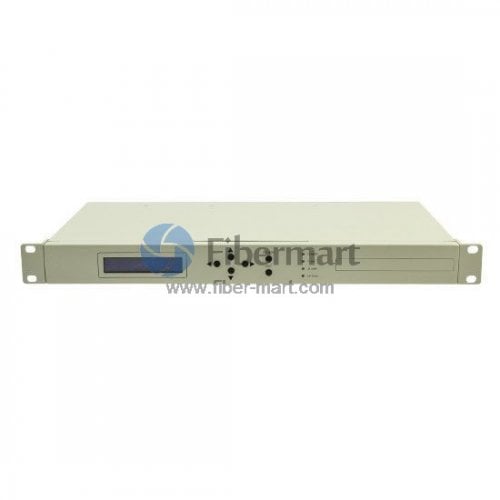
Fibermart offers a full range of high-performance EDFAs, passive DWDM components, and optical monitoring systems engineered for modern long-haul deployments. Whether you're upgrading an existing DWDM backbone or building from scratch, our team of experts can help you choose and configure the right EDFA solution.
Fibermart offers a comprehensive range of EDFAs—including booster, preamp, and line amplifiers—engineered for DWDM networks. With advanced gain control, ultra-low noise figures, and built-in monitoring interfaces, our solutions empower network engineers to scale capacity without compromising signal integrity.
Explore our portfolio or request a custom consultation to maximize your DWDM network performance.





No comments have been posted yet.