


.webp)


In the landscape of modern optical communications, coherent technology has emerged as a game-changer, delivering unprecedented bandwidth efficiency and long-haul transmission capabilities. At the heart of this advanced technology lies Polarization maintaining fiber—a specialized optical fiber engineered to preserve the polarization state of light, a capability that standard single-mode fibers lack. As coherent communications demand precise control over light’s polarization to maximize data throughput, Polarization maintaining fiber has become an indispensable component. This article explores the role, technical attributes, and applications of Polarization maintaining fiber in coherent communications, shedding light on why it is vital for next-generation optical networks.
Understanding Polarization Maintaining Fiber: How It Differs from Standard Fibers
To appreciate the value of Polarization maintaining fiber in coherent communications, it is first necessary to distinguish it from conventional optical fibers and clarify its core functionality.
The Limitation of Standard Single-Mode Fibers
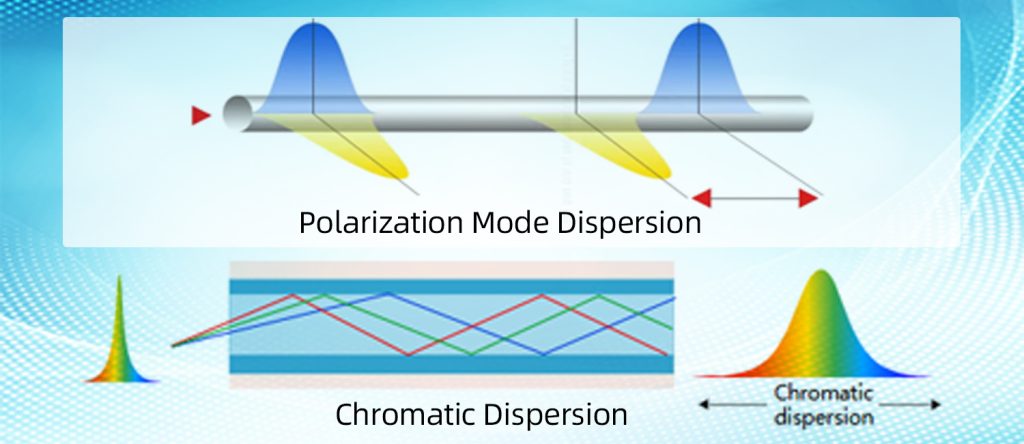
Standard single-mode fibers, while widely used in basic optical communications, suffer from a critical shortcoming: they cannot preserve the polarization state of light. As light travels through these fibers, imperfections in the fiber core (such as slight diameter variations), external stresses (like bending or temperature fluctuations), and environmental interference cause the light’s polarization to scatter randomly. This “polarization mode dispersion (PMD)” distorts signals, especially at high data rates—making standard fibers unsuitable for coherent communications, where polarization is leveraged to carry additional data.
The Design Advantage of Polarization Maintaining Fiber
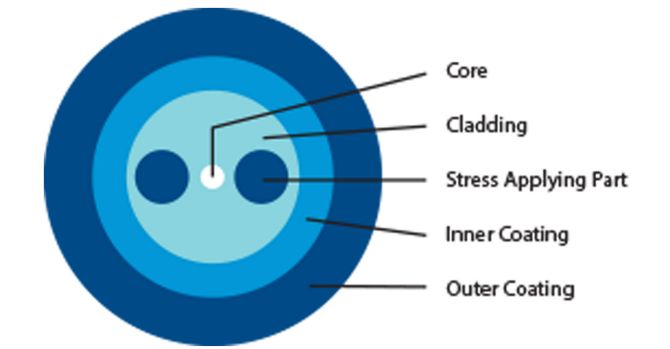
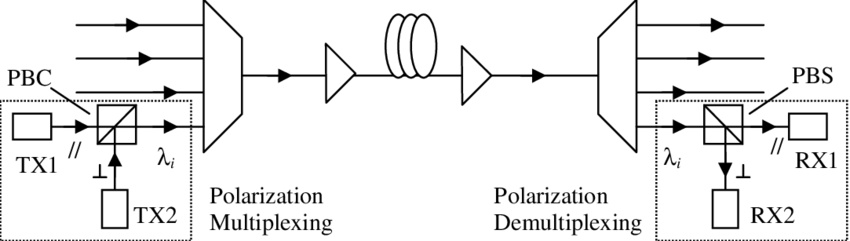
Polarization maintaining fiber addresses this limitation through innovative engineering. Unlike standard fibers, it incorporates structural features (such as the “Panda” design, a common type offered by leading manufacturers like Corning) that create a “preferred” polarization axis. This axis stabilizes the light’s polarization state, preventing random scattering even over long distances. Key to this design is the fiber’s ability to maintain linear polarization, which is essential for coherent systems that use polarization-division multiplexing (PDM)—a technique that doubles bandwidth by transmitting two independent data streams on orthogonal polarization states.
Technical Specifications of Polarization Maintaining Fiber: Tailored for Coherent Performance
The effectiveness of Polarization maintaining fiber in coherent communications is defined by rigorous technical standards, ensuring it meets the demanding requirements of high-speed, long-haul optical networks. Below are the critical specifications that make it suitable for coherent applications:
Polarization Preservation Metrics
Extinction Ratio: A measure of how well the fiber preserves the desired polarization state. High-quality Polarization maintaining fiber (such as those from Fibermart) offers an extinction ratio of ≥23 dB, meaning the unwanted polarization state is suppressed by at least 23 dB—minimizing crosstalk between polarization channels in coherent systems.
Beat Length: The distance over which light’s polarization state completes one full cycle. For Polarization maintaining fiber, typical beat lengths range from 1.0–2.0 mm (at 850 nm) to 3.0–5.0 mm (at 1550 nm). Shorter beat lengths indicate stronger polarization preservation, critical for maintaining signal integrity in long-haul coherent links.
Cross Talk: The leakage of signal between polarization channels. Polarization maintaining fiber achieves ≤-40 dB cross talk at 4 meters and ≤-30 dB at 100 meters, ensuring minimal interference between the two PDM streams in coherent communications.
Optical and Mechanical Performance
Wavelength Compatibility: Coherent communications primarily operate at 1310 nm and 1550 nm (the latter for long-haul links). Polarization maintaining fiber supports these wavelengths, as well as customized options (e.g., 780 nm, 850 nm) for specialized coherent applications.
Attenuation: Low signal loss is essential for long-haul transmission. Polarization maintaining fiber offers maximum attenuation of 3.0 dB/km (at 850 nm), 1.0 dB/km (at 1310 nm), and 0.5 dB/km (at 1550 nm)—enabling coherent links to span hundreds of kilometers without significant signal degradation.
Connector and Cable Design: It is available with industry-standard connectors (LC, SC, FC, ST, E2000) in UPC or APC polish, ensuring compatibility with coherent transceivers and network equipment. Cable options include 250μm bare fiber, 0.9mm buffered fiber, and 2.0–3.0mm jacketed cables (with PVC or LSZH jackets), adapting to diverse installation environments (e.g., data centers, outdoor links).
Insertion and Return Loss: Insertion loss (≤0.3 dB) minimizes signal loss at connections, while high return loss (UPC ≥50 dB, APC ≥60 dB) reduces reflections that can distort coherent signals.
Why Polarization Maintaining Fiber Is Essential for Coherent Communications
Coherent communications rely on two core technologies to boost bandwidth: advanced modulation formats (e.g., QPSK, 16-QAM) and polarization-division multiplexing (PDM). Polarization maintaining fiber is the only fiber type that can support PDM effectively, making it irreplaceable for coherent systems.
Enabling Polarization-Division Multiplexing (PDM)
PDM is a cornerstone of coherent communications, allowing two independent data streams to be transmitted simultaneously on two orthogonal polarization states (e.g., horizontal and vertical). For this to work, the fiber must preserve the separation between these polarization states—otherwise, the streams would interfere, causing data errors. Polarization maintaining fiber ensures that each polarization state remains stable, enabling PDM to double the bandwidth of coherent links without increasing the fiber’s physical size. For example, a coherent system using Polarization maintaining fiber can transmit 400Gbps by combining two 200Gbps streams on separate polarizations, a feat impossible with standard fibers.
Mitigating Polarization Mode Dispersion (PMD)
In standard fibers, PMD causes the two polarization components of a signal to travel at slightly different speeds, leading to signal distortion—especially at high data rates (e.g., 100Gbps and above). This distortion is catastrophic for coherent communications, which rely on precise phase and amplitude control of the signal. Polarization maintaining fiber eliminates PMD by locking the signal to a single polarization axis, ensuring all components of the signal travel at the same speed. This stability is critical for maintaining the integrity of advanced modulation formats used in coherent systems, where even small phase shifts can lead to bit errors.
Supporting Long-Haul Coherent Links
Coherent communications are widely used for long-haul applications (e.g., inter-city, undersea optical networks), where signals must travel hundreds or thousands of kilometers. Polarization maintaining fiber’s low attenuation (0.5 dB/km at 1550 nm) and strong polarization preservation ensure that signals remain intact over these distances. Without it, coherent signals would degrade rapidly due to PMD and polarization scattering, limiting the reach of long-haul networks.
Applications of Polarization Maintaining Fiber in Coherent Communication Systems
Polarization maintaining fiber is integrated into various parts of coherent communication networks, from transceivers to long-haul backbones. Below are its key applications:
Coherent Transceivers and Modems
Coherent transceivers generate and detect polarization-multiplexed signals. Polarization maintaining fiber is used as pigtails (short, pre-terminated cables) to connect the transceiver’s internal optics (e.g., lasers, modulators) to the main fiber link. These pigtails ensure that the polarization state of the signal remains stable as it exits the transceiver, preventing initial signal degradation. Fibermart, for example, offers Polarization maintaining fiber pigtails in flexible configurations, compatible with all major coherent transceiver brands.
Long-Haul and Metro Coherent Backbones
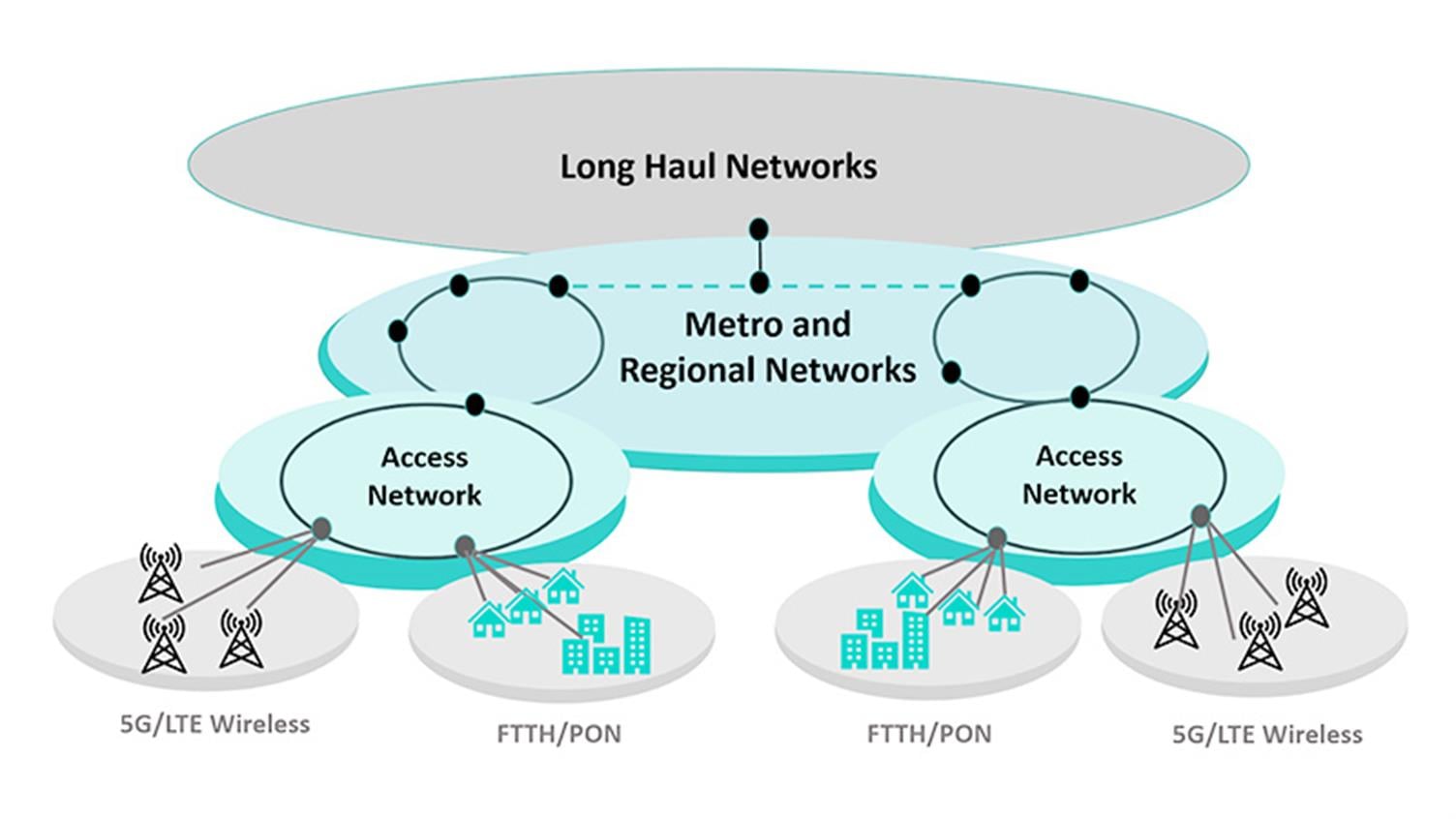
In long-haul networks (e.g., connecting data centers across continents) and metro networks (serving urban areas), Polarization maintaining fiber forms the backbone of the coherent link. Its ability to support PDM and low attenuation allows these networks to deliver high bandwidth (e.g., 800Gbps, 1.6Tbps) over long distances, meeting the demand for cloud services and big data transfer.
Specialized Coherent Applications
Beyond traditional communications, Polarization maintaining fiber is used in specialized coherent systems, such as:
Quantum Communications: Coherent quantum systems rely on stable polarization to transmit quantum bits (qubits). Polarization maintaining fiber preserves the polarization of quantum signals, enabling secure quantum key distribution (QKD) networks.
Aerospace and Defense: Military and aerospace communications use coherent systems for secure, high-speed data transfer. Polarization maintaining fiber withstands harsh environmental conditions (e.g., vibration, temperature extremes) while maintaining signal integrity.
Conclusion
As coherent communications continue to evolve to meet the growing demand for bandwidth, Polarization maintaining fiber will remain a critical technology. Its unique ability to preserve polarization, mitigate PMD, and support PDM makes it the only fiber type capable of unlocking the full potential of coherent systems. From long-haul backbones to quantum communications, Polarization maintaining fiber enables reliable, high-performance optical networks that power the digital economy. For network operators and equipment manufacturers, investing in high-quality Polarization maintaining fiber (such as those meeting ISO9001 standards) is not just a choice—it is a necessity to build future-proof coherent communication systems. As bandwidth requirements keep rising, Polarization maintaining fiber will continue to be the backbone of innovation in optical communications.
-on-the-Poincaré-Sphere.jpg "What is Polarization Extinction Ratio? How to Measure the PER in PM Fibers?")





No comments have been posted yet.