


.webp)


PM fiber's function
The output of a source laser is communicated in a single-mode Fiber using two linear polarisation modes that propagate at right angles to one another. For a brief moment, picture this Fiber as the perfect single-mode waveguide:
The core material is absolutely homogeneous (free of impurities, bubbles, voids, or other flaws); the cladding and core are precisely spherical and concentric; there are no bends or losses (absorption, scattering);
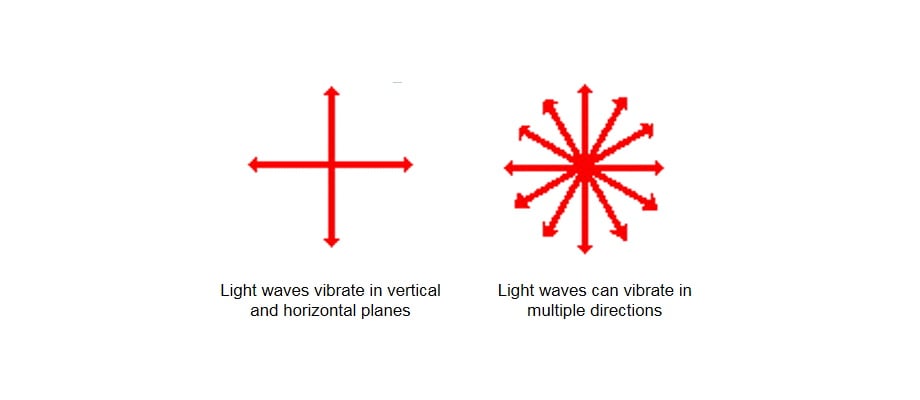
The Fiber and source laser temperatures remain constant; the laser wavelength exceeds the cutoff wavelength; all of the laser energy is contained in the core (no higher order modes); and there is no lateral stress (no external stress from cabling, placement, supports, etc., or even, theoretically, no gravity or air pressure).
Both polarisation modes would reach the fiber's distant end in phase and with equal power in this hypothetical scenario. There would not have been any power connection from one mode to the other along the fiber's length. The two polarisation modes would transmit the signal without dispersion or crosstalk if the laser output contained a modulated signal.
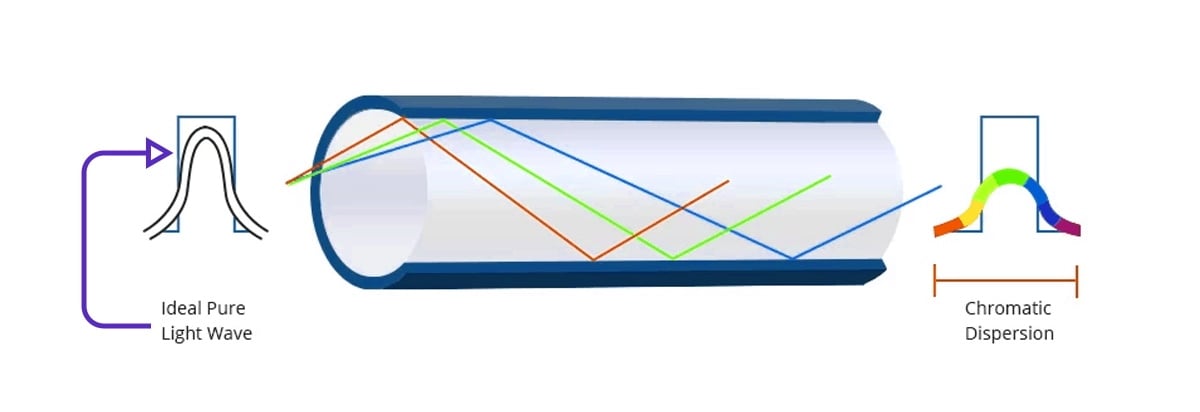
This hypothetical situation is obviously not feasible. Waveguides and produced glass materials are not flawless. Non-uniformities and sub-micron asymmetries exist. Additionally, when single-mode Fibers are cabled and installed in subterranean or aerial networks, they undergo lateral strains. In closures, hand holes, cabinets, and other structures, the wire may bend or even have coils of slack. The polarisation modes may propagate with varying group velocities as a result of these processes. This causes dispersion in the modulated signal at the fiber's receive end. In the worst scenario, it is impossible to distinguish between the analogue waveforms or digital "ones and zeroes."
A Fiber optic communication system's bandwidth or distance may be restricted if this polarization-mode dispersion is not fixed. Designers of Fiber, cables, and systems have therefore created methods to lessen or make up for this dispersion. To reduce asymmetry, non-concentricity, and lateral stresses, Fiber manufacturers have refined their preform and draw procedures. Additionally, draw towers have machines that spin the Fiber as it is being drawn. This aids in regulating the polarisation characteristics of the Fiber. To protect the Fibers from external forces on the cable, cable manufacturers then extrude tubes around the Fibers. Additionally, dispersion-compensating elements, like chips with forward-error-correction algorithms in the receivers, are present in digital electronics used in telecom systems.
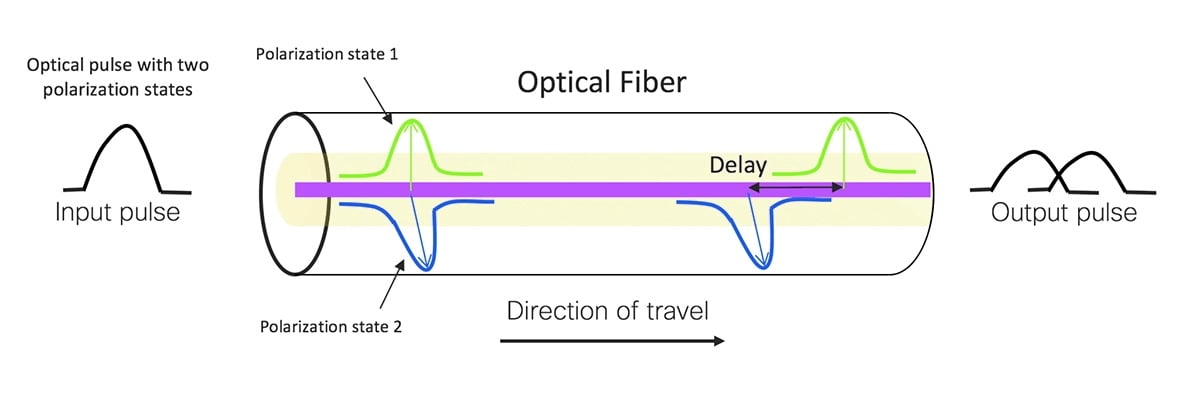
Thus, polarisation in telecom PM Fiber Cable can be successfully controlled. However, two polarisation modes must propagate in a regulated manner in many non-telecom applications. Keeping the two modes apart and then recombining them to examine their phase-interference pattern is the aim of several interferometric sensors. This makes it possible to quantify motion, vibration, and other phenomena influencing the Fiber accurately. In these kinds of applications, the objective is to keep the two polarisation modes propagating along different routes or to reduce the amount of power linked from one polarisation state to another.
PM Fibers minimise the impact of external loads and bends on the polarisation modes in the Fiber, addressing some of the same problems as single-mode communications Fibers. Even though PM Fibers in gyros and some sensors are wound in small coils, power coupling from one polarisation mode to another must still be avoided. In order to maintain the separation of the two polarisation modes and reduce the impact of external loads, PM Fibers are equipped with geometric features or stress-applying "parts" (SAPs). Asymmetric geometric elements and SAPs can be incorporated into Fiber in a variety of ways, resulting in a variety of PM Fiber varieties.
Important traits
PM Fibers must satisfy important optical and mechanical requirements, including as attenuation and tensile strength, just like other speciality and communication Fibers. Additionally, PM Fibers have two specifications to describe their birefringence properties: beat length and holding (H) parameter. Although these measurements are complicated, they are crucial for describing how well the Fibers preserve the two polarisation modes.
A PM fiber's two axes are commonly referred to as the "slow axis" and the "fast axis," due to their disparate indices of refraction. This implies that the phase velocities of light waves in the two polarisation modes will differ. The phase-velocity difference between the two polarisation modes is measured by beat length. Higher birefringence and more space between the two modes result from a shorter beat length.
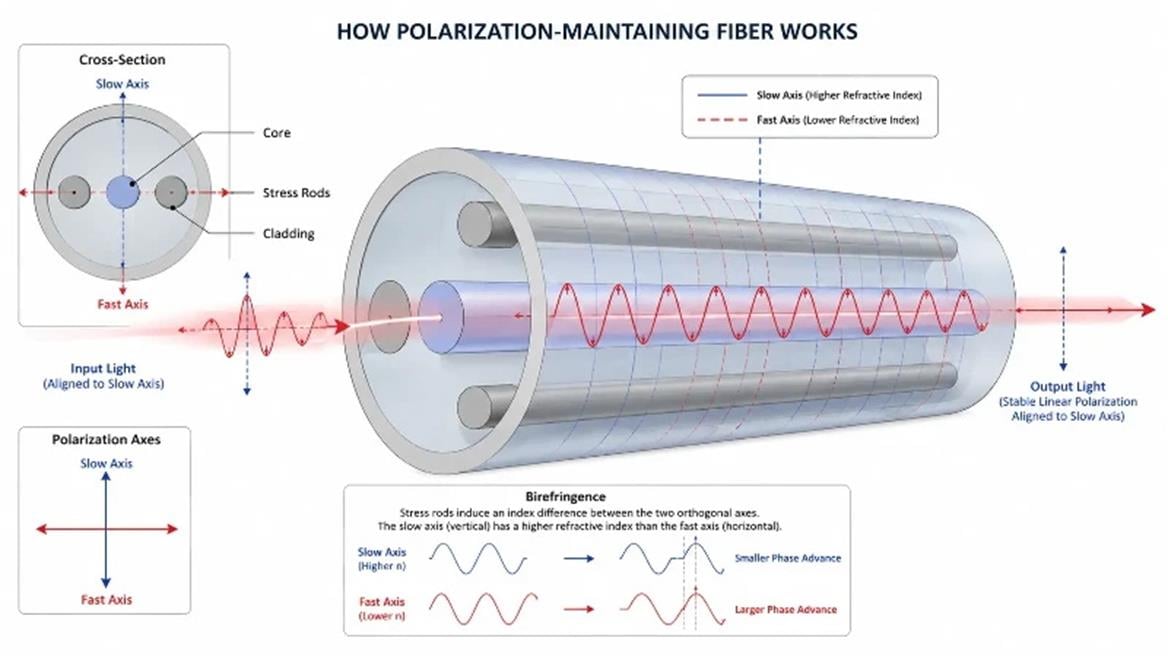
Measurements of PM Fiber Cable beat length vary from a few centimetres to less than a millimetre. For gyros, a 2-mm beat length is widely accessible and frequently utilised. The beat lengths of standard single-mode Fibers used in telecom applications are expressed in meters. Measurements are examined and reported at particular wavelengths since beat length, like other optical metrics, is wavelength-dependent.
The polarization-extinction ratio per unit length is known as the H-parameter. It is used to describe how successfully a Fiber maintains polarisation along a single axis over its length. Standard methods for evaluating polarisation crosstalk are used to calculate the H-parameter. Once more at particular wavelengths, the measurements are expressed as the change in optical power transmitted in one axis per unit length of Fiber.
How to attain birefringence
Special shapes or SAPs that are "built-in" during the preform's creation cause birefringence. Like the rest of the Fiber, SAPs are made of silica-based glass, but they contain dopants with varying coefficients of thermal expansion (CTEs). The SAPs cool and compress at various rates as the Fiber is drawn and cooled, which leaves the glass permanently stressed.
There are three commercial PM Fiber kinds that use SAPs: PANDA, bow-tie, and elliptical-stress-layer Fibers are the first three. Instead of employing SAPs, elliptical-core Fiber, a fourth type, is said to use form birefringence. Birefringence can be achieved in numerous ways. The utilisation of longitudinal gaps or air holes in photonic crystal Fibers is one example. Many producers of gyros, other sensors, and telecom components prefer the PANDA and bow-tie varieties, which are the most commonly utilised.





No comments have been posted yet.