


.webp)


A Protocol Converter is a device used to convert standard of one device to the protocol suitable for the other device or tools to achieve the interoperability. Protocols are software installed on the routers which convert the data formats, data rate and protocols of one network into the protocols of the network in which data is navigating. There are varieties of protocols used in different fields like Power Generation, Transmission & Distribution, Oil & Gas, Automaton, Utilities, AMR, and Remote Monitoring applications. The major protocol translation messages involve conversion of data messages, events, commands and time synchronization.
Applications of Protocol Converters
Protocol Converter applications vary from industry to industry. The protocol converter can be a software converter, hardware converter, or an integrated converter depending on the protocols.
The Key applications of protocol converters are substation automation, building automation and process automation.
Protocol Converters are generally used for transforming data and commands from one device or application to another. This necessarily involves transformation of data, commands, their representation, encoding and framing to achieve the conversion.
There are simple and complex types of conversions depending on the application and domain in which this is being used. The simplest and most commonly used conversion is protocol conversion between Modbus RTU and Modbus TCP. In this conversion, there is no change in the overall framing. Hence it is easy to take the Serial Modbus RTU frame and encapsulate it in a TCP/UDP Socket and send it over Ethernet. Since both the protocol framings are the same, except for the actual physical layer transmission, both the application layers will interpret data similarly as long as the communication interfaces are made transparent.
However, there do exist very complex conversions, for example: where the data is formatted, the data types supported, the object models, etc. They are so different that the conversion engine needs to make modifications not only in framing, but in mapping information for each type of data, command, and in some cases, the object models. Also, there might be user configurations required in defining the mapping of supported and non-supported data types.
These transformations, however, bring about conversion advantages, communication delay, processing latency, and an overall end to end processing time which is finite and needs to be considered in all solution designs.
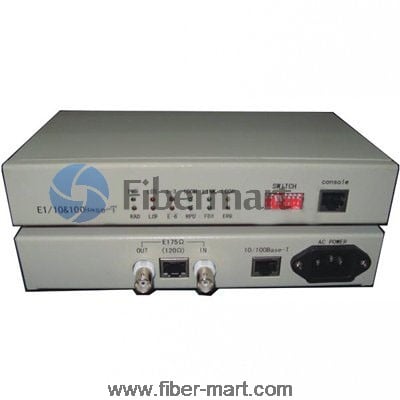
Fiber-Mart supply this Protocol Converter product and also have other high quality fiber optic products , such as fiber transceiver, Ethernet media converter and so on.





No comments have been posted yet.