


.webp)


What Is Fiber Optic Attenuation
Fiber attenuation, also referred to as attenuation loss in optical fiber, is the reduction in optical signal power as it propagates through the fiber optic cable, caused by a variety of internal and external factors. This loss is a critical parameter that directly affects the transmission distance and signal quality of optical communication systems, which is essential for scenarios ranging from data centers and home networks to long-distance communication. Understanding its definition, measurement standards, and influencing factors is the foundation for optimizing fiber optic infrastructure and ensuring reliable, high-speed data transmission.
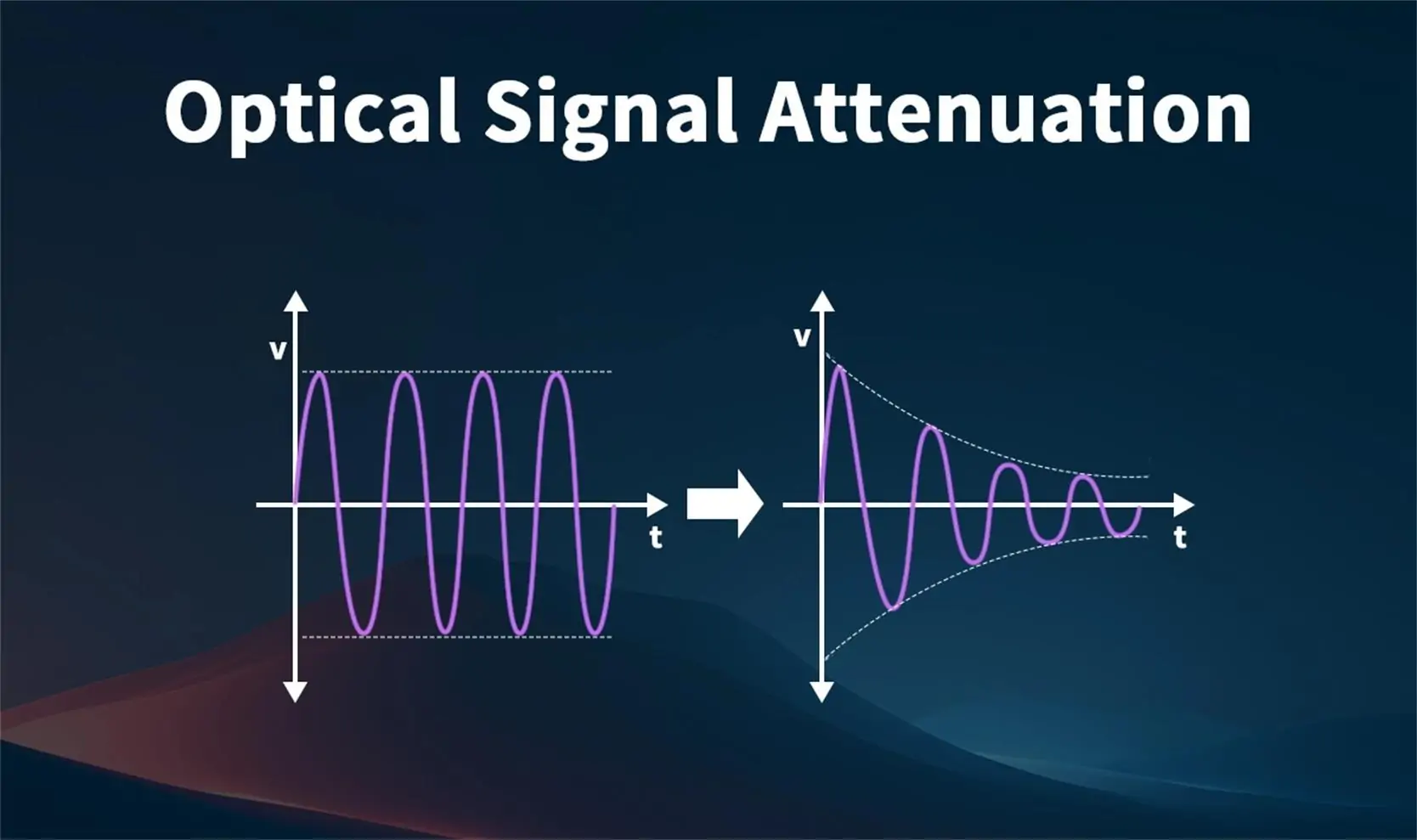
Fiber attenuation is typically measured in decibels per kilometer (dB/km), with different ranges depending on the fiber type. Single-mode fibers usually have an attenuation of 0.2 dB/km to 0.5 dB/km, while multimode fibers have higher attenuation, ranging from 2 dB/km to 6 dB/km. In practical engineering, attenuation is quantified using an attenuation coefficient (α), which reflects the degree of power loss per unit distance, and its typical value for single-mode fibers is 0.2 dB/km. Additionally, fiber loss is closely related to the operating wavelength; transmitting signals at wavelengths with the lowest fiber loss (such as 1310 nm or 1550 nm) can effectively reduce attenuation.
Causes of Fiber Attenuation
The main causes of fiber attenuation can be divided into two categories: intrinsic factors related to the fiber material itself and extrinsic factors caused by manufacturing, installation, or environmental conditions. Each category includes specific loss types that affect signal propagation.
Intrinsic Attenuation
Intrinsic attenuation is determined by the inherent properties of the fiber material and cannot be completely eliminated, only minimized through material optimization and process improvement.
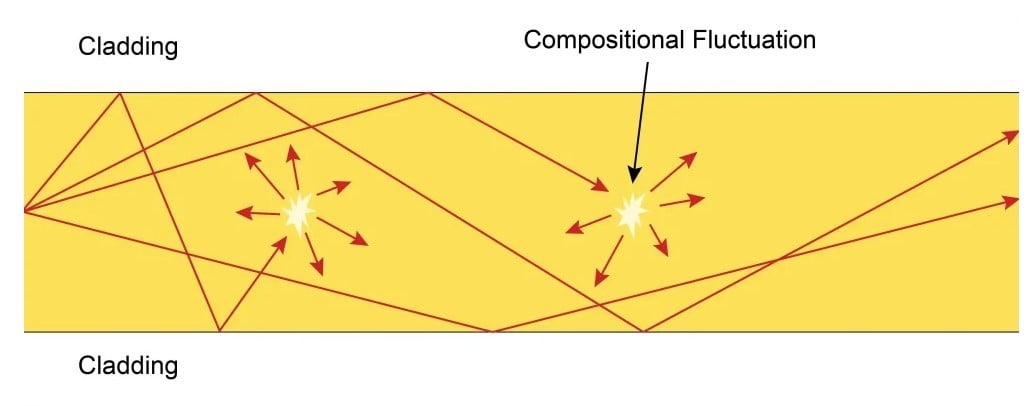
● Rayleigh scattering is the primary contributor to intrinsic attenuation, accounting for nearly 90% of total loss and determining the ultimate limit of fiber loss. It occurs due to microscopic fluctuations in the refractive index of the fiber material, caused by density variations during the manufacturing process. These fluctuations cause light signals to scatter in all directions, resulting in energy loss.
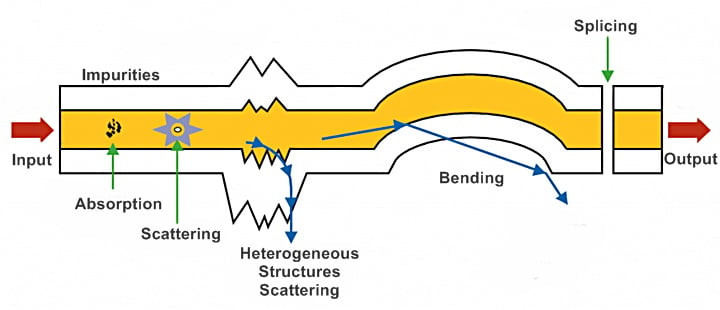
● Intrinsic absorption is caused by the inherent properties of the fiber material, usually silica for optical fibers. Silica has electronic resonances in the ultraviolet and far-infrared regions, which absorb part of the optical power. Additionally, trace impurities naturally present in the material can enhance absorption, further reducing signal strength.
Extrinsic Attenuation
Extrinsic attenuation is caused by external factors and can be effectively controlled through proper manufacturing, installation, and maintenance practices.
● Harmful impurities introduced during fiber manufacturing, such as transition metal ions (iron, cobalt, nickel, copper, manganese, chromium, etc.) and hydroxyl ions (OH⁻), absorb light energy and convert it into heat, leading to attenuation. OH⁻ ions, in particular, cause significant loss around wavelengths of 1.23 μm and 1.4 μm.
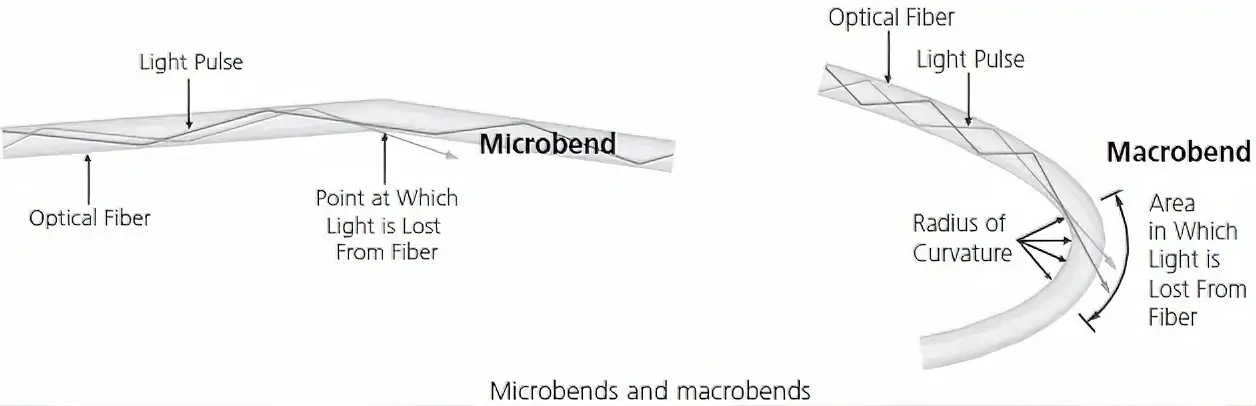
● Bending loss occurs when the fiber is bent at a radius smaller than the recommended minimum (typically four times the cable’s diameter). Sharp bends cause light signals to scatter within the fiber or leak out, resulting in power loss. Even small bends can cause mode coupling issues, while manufacturing defects (e.g., extrusion-induced core-cladding interface flaws) can also lead to bending-related scattering. Different operating wavelengths have varying effects on bending loss, with the bending loss coefficient decreasing as the bending radius increases.
● Inhomogeneity in the fiber material arises from improper process control during manufacturing or non-uniform raw materials. When light propagates through regions with varying refractive indices, scattering occurs, leading to additional energy loss.
● Misalignment loss occurs during fiber splicing or connector installation, caused by several factors, including non-coaxiality of fiber cores (critical for single-mode fibers), non-perpendicular or uneven fiber end faces, mismatched core diameters between spliced fibers, poor splice quality, and mismatched or contaminated connector end faces (e.g., APC vs. UPC connectors).
● Temperature changes and electromagnetic interference (EMI) can also increase attenuation. Signal attenuation typically increases by approximately 4% for every 10°C rise in temperature, while proximity to high-voltage power lines or transformers can introduce EMI-related loss.
Calculation of Fiber Attenuation
Attenuation in fiber optics, also known as transmission loss, is the reduction in intensity of the light beam (or signal) with respect to distance travelled through a transmission medium. Attenuation coefficients in fiber optics usually use units of dB/km through the medium due to the relatively high quality of transparency of modern optical transmission. The medium is typically a fiber of silica glass that confines the incident light beam to the inside. Attenuation is an important factor limiting the transmission of a digital signal across large distances. Thus, much research has gone into both limiting the attenuation and maximizing the amplification of the optical signal. Empirical research has shown that attenuation in optical fiber is caused primarily by both scattering and absorption.
Attenuation in fiber optics can be quantified using the following equation:

Strategies to Reduce Fiber Attenuation
Reducing fiber attenuation requires a combination of material selection, proper installation, process optimization, advanced technology adoption, and routine maintenance. The following practical strategies can effectively minimize signal loss and optimize fiber optic system performance.
Select High-Quality Fiber Materials and Cables
Using fibers with a low attenuation coefficient is the foundation of reducing loss. Low-loss fiber types such as G.655 and G.657 are ideal for long-distance transmission and access networks, while erbium-doped and ytterbium-doped fibers offer lower attenuation and extended transmission distances. Additionally, choosing high-purity glass cores minimizes intrinsic absorption and scattering, and thicker cable gauges (e.g., 23AWG) reduce resistance and loss over long distances.
Optimize Fiber Installation and Splicing
Proper installation and splicing practices are critical for reducing extrinsic attenuation. Key measures include:
● Avoid sharp bends by maintaining the recommended minimum bend radius (typically four times the cable diameter) to prevent bending loss.
● Minimize the number of splices and connectors (each introduces additional attenuation) and use fusion splicing techniques for lower-loss connections.
● Ensure fiber coaxiality (within 0.8 μm for single-mode fibers) during splicing, and guarantee perpendicular, smooth end faces to reduce reflection and scattering.
● Select appropriate connector types to avoid mismatches, and regularly clean connector end faces to prevent contamination.
Optimize Manufacturing Processes
Improving fiber manufacturing precision reduces both intrinsic and extrinsic attenuation. This includes controlling the stress match between the core and cladding layers, reducing impurity content (especially transition metals and OH⁻ ions), and ensuring uniform material composition to minimize inhomogeneity. Advanced optical equipment and material control technologies can further enhance manufacturing efficiency and fiber quality.
Choose the Right Wavelength and Adopt Advanced Technologies
Transmitting signals at wavelengths with the lowest fiber loss (e.g., 1310 nm or 1550 nm) significantly reduces attenuation. Advanced technologies such as Wavelength-Division Multiplexing (WDM) and Dense Wavelength Division Multiplexing (DWDM) optimize bandwidth utilization while minimizing loss by transmitting multiple signals simultaneously over a single fiber. BiDirectional (BiDi) transceivers also reduce the need for additional cables, lowering attenuation in single-core fiber systems.
Control Environmental Factors and Conduct Routine Maintenance
Install fibers in temperature-controlled environments to mitigate temperature-related attenuation, and keep fibers away from high-voltage power lines and transformers to avoid EMI. Regularly test fiber performance using tools like Optical Time Domain Reflectometers (OTDRs) to identify attenuation issues early, and conduct routine maintenance (e.g., cleaning connectors) to ensure long-term reliability.
Optimize Network Topology
Rationally plan fiber network topology to reduce the need for repeaters and optimize routing distances, which effectively lowers signal delay and attenuation. For specific scenarios: data centers can use Direct Attach Copper (DAC) cables or active optical cables (AOCs) for low-loss short-distance connections; long-distance communication benefits from single-mode fibers with low-loss coatings and Erbium-Doped Fiber Amplifiers (EDFAs) to boost signal strength; home networks require proper cable management to avoid tight bends and proximity to electrical appliances.
Common Mistakes to Avoid in Attenuation Reduction
To ensure effective attenuation reduction, avoid the following common mistakes in fiber optic system design, installation, and maintenance:
● Poor cable management, which leads to excessive bending and increased attenuation.
● Ignoring standards compliance, as non-certified cables or connectors often have higher attenuation.
● Overlooking testing and maintenance, which can allow attenuation issues to escalate and compromise system performance.
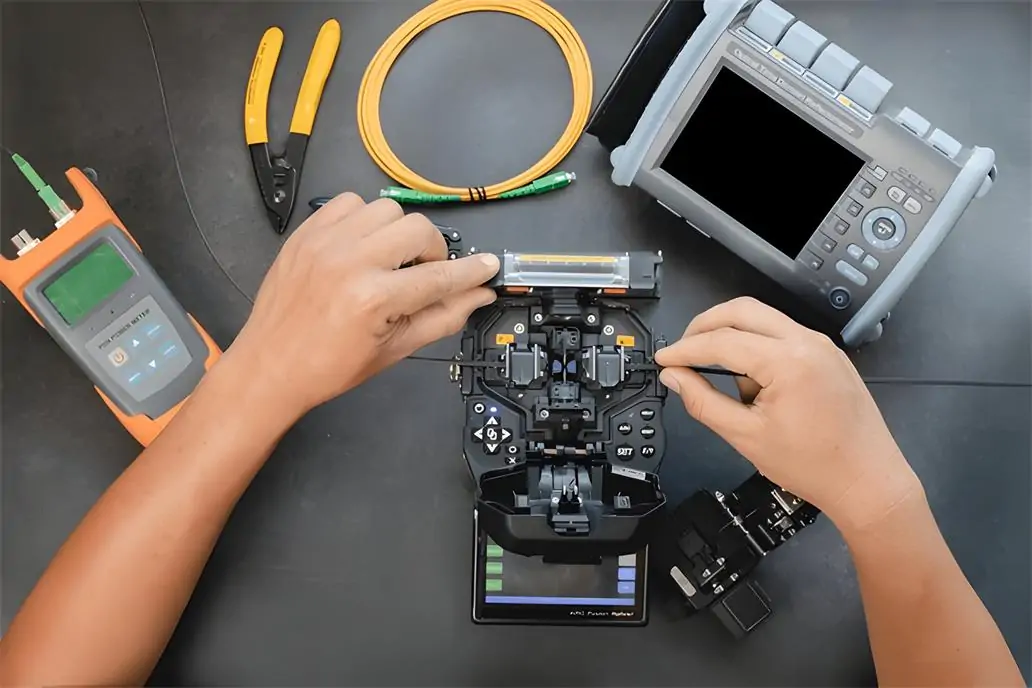
FiberMart Recommended Fiber Optics
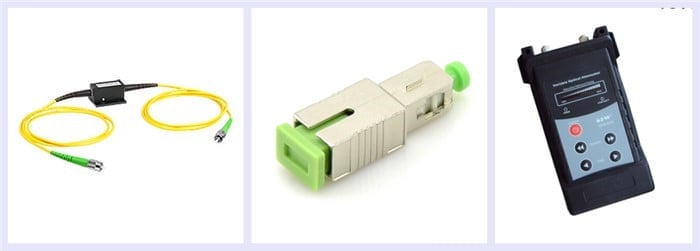
For different application scenarios and project requirements, Fiber-Mart has selected cost-effective and high-quality fiber optical products, fully covering the multiple categories for network constructions, which can accurately adapt to various selection needs. Click the links below to view detailed product parameters, technical specifications, and quotation information:
● Optics and Networks Recommendations: Passive Component
● Fiber Optic Cables Recommendations: Fiber Patch Cable
● Fiber Optic Instruments Recommendations: Fiber Optic Tester
Summary
Fiber attenuation is the reduction of optical signal power during propagation through fiber optic cables, a critical factor affecting transmission distance and quality. Measured in dB/km, single-mode fibers (0.2-0.5 dB/km) have lower attenuation than multimode fibers (2-6 dB/km). Its causes include intrinsic factors (Rayleigh scattering, intrinsic absorption) and controllable extrinsic factors (impurity absorption, bending loss, misalignment, etc.). Key strategies to reduce attenuation involve selecting high-quality fibers/cables, optimizing installation/splicing and manufacturing processes, choosing appropriate wavelengths and advanced technologies, controlling environmental factors, and conducting routine maintenance. Avoiding common mistakes (poor cable management, non-compliance, neglecting testing) is also essential for reliable system operation.
Fiber Optic Attenuation FAQs
Q1: What causes signal attenuation in fiber optic cabling?
Signal attenuation in fiber optic cabling stems from absorption, scattering, and bending losses within the fiber itself. Additionally, improper installation, an excessive number of splices, and environmental factors can also lead to increased attenuation.
Q2: How can I reduce fiber optic signal loss during installation?
To minimize fiber optic signal loss during installation, avoid sharp bends, keep the number of splices to a minimum, and adhere to the recommended minimum bend radius. Utilizing fusion splicing can also effectively reduce connection-related losses.
Q3: Which fiber type has the lowest attenuation?
Single-mode fiber generally features lower attenuation than multimode fiber, which makes it the preferred choice for long-distance data transmission.
Q4: Can temperature affect fiber optic attenuation?
Yes, temperature does impact fiber optic attenuation: signal attenuation rises by approximately 4% for every 10°C increase in temperature. Proper temperature control is therefore crucial for maintaining stable fiber optic performance.
Q5: How do BiDi transceivers help reduce attenuation?
BiDirectional (BiDi) transceivers allow data to be transmitted in both directions over a single fiber. This reduces the total number of fibers required and helps lower insertion loss, thereby mitigating overall attenuation.
Q6: What tools are used to measure fiber attenuation?
The most commonly used tools for measuring fiber optic attenuation are Optical Power Meters and Optical Time Domain Reflectometers (OTDRs), which are utilized to test and pinpoint signal loss in fiber optic systems.





No comments have been posted yet.