


.webp)


Optical fiber cables are the backbone of modern optical communication and sensing systems, with Polarization Maintaining (PM) Cable and OS2 Single Mode Cable being two core products serving distinct application scenarios. Though both belong to the single-mode fiber category in essence, their structural design, performance characteristics and practical applications differ significantly. This article elaborates on the fundamental differences between the two types of cables, providing a professional reference for system design and product selection.
Fundamental Design Principles
Polarization Maintaining Cable: Engineered for Polarization Stability
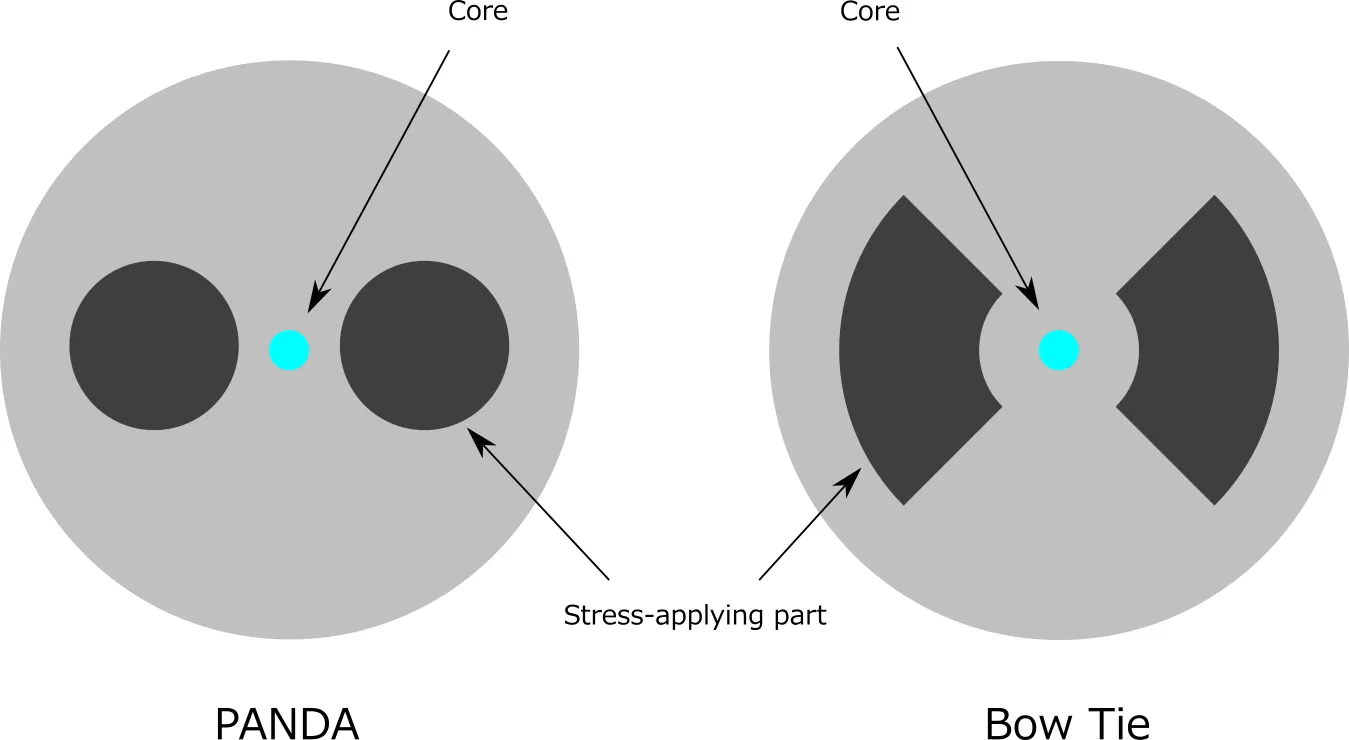
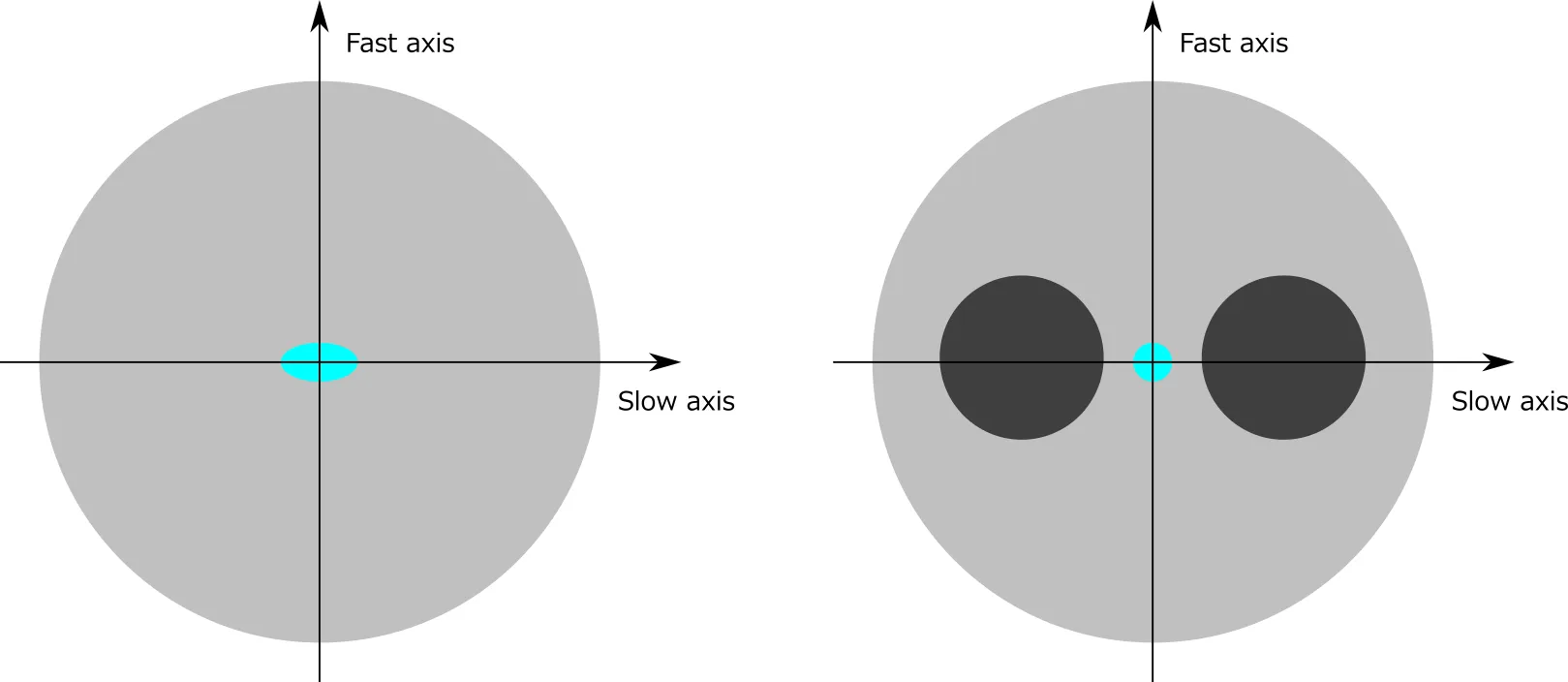
The core design of PM Cable is to achieve high birefringence through asymmetric structural optimization, which is the key to its polarization maintenance capability. During manufacturing, asymmetric stress-applying components (such as stress rods in Panda and Bow-Tie fibers, or elliptical cladding) are integrated around the fiber core. This design creates two stable and independent propagation paths for light: the fast axis and the slow axis.
When linearly polarized light is launched into one of the principal axes, the strong birefringence effect prevents optical power from coupling to the orthogonal axis, thus "locking" the initial polarization state throughout the entire transmission process. This structural design effectively counteracts the polarization distortion caused by external stresses, temperature changes and mechanical bending, ensuring the stability of the polarization state of light in long-distance transmission.
OS2 Single Mode Cable: Optimized for Long-Distance Low-Loss Transmission
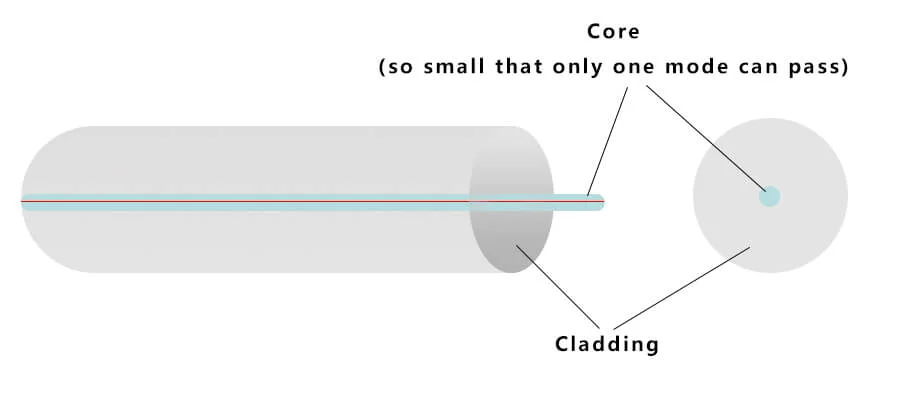
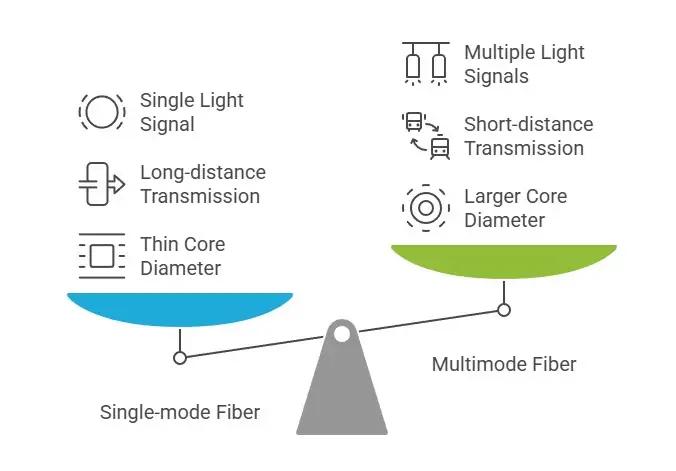
OS2 Single Mode Cable is designed with a precise 9/125μm core-cladding structure, which only allows the fundamental mode of light to propagate along the fiber center. Its core design principle is to eliminate modal dispersion—the main factor causing signal degradation in multi-mode transmission—by restricting the propagation path of light.
Made of ultra-pure glass material, the fiber core minimizes material absorption and scattering losses, enabling light signals to maintain coherence and integrity during long-distance transmission. The cable does not have a dedicated polarization control structure, and the polarization state of light will randomly change due to external environmental factors during transmission, which is a natural characteristic of standard single-mode fibers.
Key Performance Parameter Differences
Polarization-Related Performance
PM Cable has exclusive polarization performance indicators that OS2 Single Mode Cable does not possess. Its Polarization Extinction Ratio (PER) is typically ≥23dB (with connectors), and the typical crosstalk at 4m reaches -40dB, which ensures minimal mixing between two orthogonal polarization modes. The connector of PM Cable adopts a keyed alignment design, which can realize precise alignment of fast axis, slow axis or dual axes, further ensuring the stability of the polarization state.
OS2 Single Mode Cable has no clear polarization performance indicators, and its polarization state is unstable during transmission. It only focuses on the basic transmission performance of the signal and does not have the ability to suppress polarization crosstalk.
Transmission Loss and Attenuation
PM Cable has low insertion loss (≤0.3dB) and different attenuation coefficients at different wavelengths: 3.0dB/km at 850nm, 1.0dB/km at 1310nm and 0.5dB/km at 1550nm. Its loss performance is balanced to meet the needs of polarization-sensitive systems.
OS2 Single Mode Cable is optimized for ultra-low attenuation in long-distance transmission, with insertion loss ≤0.25dB, attenuation coefficient as low as 0.4dB/km at 1310nm and 0.3dB/km at 1550nm. It also has excellent bend resistance (10mm minimum bend radius) and can maintain low loss in complex wiring environments such as data centers.
Wavelength and Structural Compatibility
PM Cable supports a wider wavelength range, covering 780/850/980/1310/1550nm and customizable wavelengths, and can be supplied in multiple structural forms such as 250μm bare fiber, 0.9mm and 3.0mm buffered fiber, adapting to various professional testing and industrial application scenarios.
OS2 Single Mode Cable is mainly applied to the classic communication wavelengths of 1310/1550nm, with diverse outer diameter specifications (0.9mm/1.6mm/2.0mm/3.0mm/3.6mm) and supports simplex/duplex transmission. It is compatible with G.652.D and G.657.A1 fiber grades, meeting the standards of global telecommunications infrastructure construction.

Application Scenario Differentiation
Polarization Maintaining Cable: For Polarization-Sensitive Professional Systems
PM Cable is the core transmission medium for systems where the polarization state of light determines functional performance, and its typical applications include:
● Fiber Optic Sensing: Interferometric sensors such as gyroscopes, hydrophones and current sensors, where phase information and polarization stability are critical for sensing accuracy;
● Coherent Optical Communication & Quantum Technology: Transmitting polarization-encoded qubits and advanced modulation format signals in coherent communication systems;
● Laser Systems: Fiber lasers, amplifiers and nonlinear frequency conversion processes (e.g., second harmonic generation) that require a specific polarization state of pump light;
● Scientific Research: Laboratory experiments and precision measurement systems that need strict control of light polarization.

OS2 Single Mode Cable: For General High-Bandwidth Long-Distance Communication
OS2 Single Mode Cable is the mainstream choice for traditional optical communication infrastructure, with its application scenarios focusing on large-scale, high-bandwidth and long-distance signal transmission:
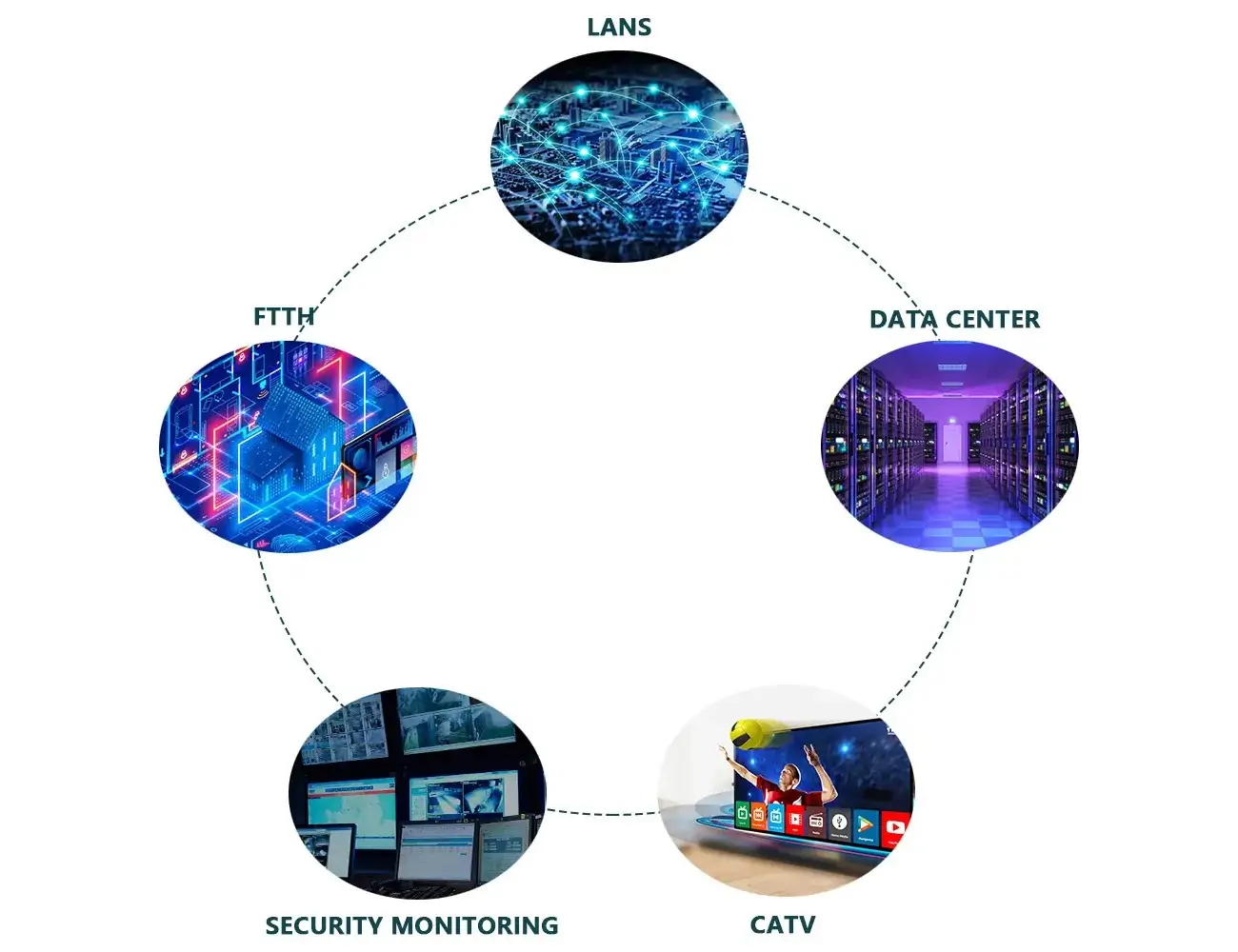
● Telecommunications Networks: Long-haul and metro backbone networks built by telecom operators, supporting tens to hundreds of kilometers of signal transmission;
● Broadcasting and Campus Networks: CATV broadcast video trunk lines and university campus backbone networks, meeting the needs of large-area signal coverage;
● Data Center Interconnection: High-speed interconnection between data centers (DCI) and enterprise-level communication systems, supporting high-rate data transmission such as 10Gbps and 40Gbps;
● FTTX Infrastructure: Fiber-to-the-home (FTTH) and other access network constructions, as the basic transmission cable of broadband access systems.
Core Selection Criteria
The selection of PM Cable and OS2 Single Mode Cable is determined by the core demand of the system: if the system relies on the polarization state of light for signal encoding, sensing or precision control, PM Cable is the only choice, and its high birefringence and precise axis alignment design can ensure the normal operation of the system; if the application is general high-bandwidth, long-distance data transmission without polarization requirements, OS2 Single Mode Cable is more cost-effective, with its mature manufacturing process, low attenuation performance and wide compatibility meeting the needs of large-scale infrastructure construction.
Summary
In summary, PM Cable is a "specialized customized product" for polarization-sensitive scenarios, while OS2 Single Mode Cable is a "universal mainstream product" for general communication. Both play irreplaceable roles in their respective application fields, and the scientific selection based on actual system requirements is the key to ensuring the performance and cost-effectiveness of optical fiber systems.





No comments have been posted yet.