


.webp)


The Fiber-optic versus copper cables debate continues! Learn some top reasons why fiber optic cables are faster than copper cables.
Here's Why Fiber Optic Cables Are Faster Than Copper Ones
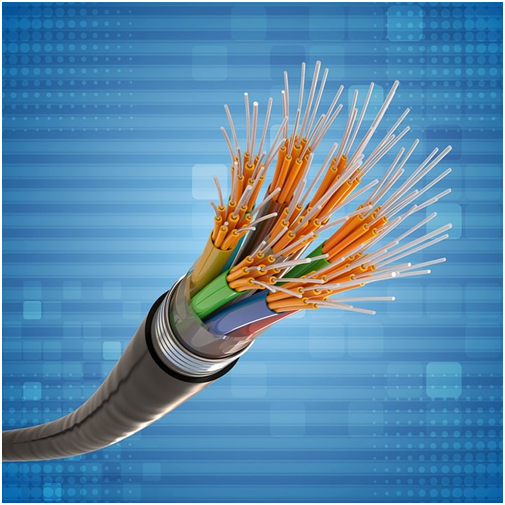
Building a network with higher transmission speed and a vast bandwidth has recently emerged as a key requirement. Many different network cables have been introduced to accomplish this goal over the years. Copper wires were once the go-to cables. They’re now being connected to fiber optic cables for improved connectivity and geographic network expansion.
Fiber optic cables are replacing copper wires entirely in newer networks where high-speed internet is required. While both cables have unique features, the decision regarding fiber optic versus copper cables is critical.
Although copper cables are more economical, fiber optic cables are a more enticing cable infrastructure solution as they offer much more benefits than their copper counterpart. With extensive experience in the industry, experts at Fibermart discuss the benefits of fiber optic versus copper cables in detail.
Fiber Optic versus Copper Cables: Which is Faster?
When you’re building a network that requires high speeds, long distances, and heavy bandwidth connections, fiber optic cables win the debate. However, to understand why it’s the best solution, it’s important to understand the primary differences between them.
Both fiber optic and copper cables transmit data over the network in distinct ways. The copper cable carries electrical pulses along the metal strands. Meanwhile, fiber optic cables carry the light pulses along flexible glass threads. The difference equates to fiber optics being a better solution for an ungraded or new network and, therefore, worth the comparatively heavier upfront investment.
Light versus Electrical Pulses
Fiber optic cables transmit data faster as they utilize light than electrical pulses used by copper cables to carry data from one point to the other. Light typically travels a lot faster and further than electrical pulses in copper cables in a much shorter time.
Laser beams also keep signals reliable and strong when traveling to another point, which isn’t always the case with copper cables and electrical pulses. When electrical pulses are brought to the final destination through copper cables, they suffer from attenuation, or the waveform signal significantly weakens over the distance.
But fiber optic cables easily transmit data over vast distances. Fiber optic cabling can transmit well over 20 miles depending on cable type and signaling.
Data at the Speed of Light
Bandwidth has become the standard way to measure the data transmission rate. It can be measured in Gbps or Tbps these days. While copper-based transmissions can max out at 40 Gbps, fiber optic cable allows one to receive and send data close to lightning speed. You won’t need to worry about any electromagnetic interference issues disrupting the signals, as fiber optic cables are resistant to them.

Electromagnetic interference cannot prevent signals from passing through fiber optic cables cleanly and won’t slow down the data passing through as well. This makes fiber optic cables a better choice for those who value speed for an internet connection. These cables offer a much more reliable and secure connection because they’re resistant to jamming, radiofrequency, and tapping.
Benefits Of Using Fiber Optic Cables Over Copper Cables
Fiber optic cables hold many advantages over traditional copper cables, transforming the landscape of data transmission with their superior capabilities:
1. Higher Bandwidth: Fiber optic cables provide much higher bandwidth than copper cables, as mentioned in the blog earlier. This means they can carry more data, supporting higher data transfer rates and larger volumes of traffic, perfect for high-speed internet and multimedia applications.
2. Lower Attenuation: Fiber optic cables suffer from significantly less signal loss (attenuation) over long distances than copper cables, allowing data to be transmitted over greater distances without the need for repeaters to amplify the signal.
3. No Electromagnetic Interference (EMI): As fiber optics transmit information using light instead of electricity, they are immune to electromagnetic interference, making them more reliable in noisy environments where copper cables may suffer signal degradation.
4. Enhanced Security: Fiber optic cables offer superior data security. Since they don't radiate electromagnetic energy, they are harder to tap into without physically accessing the cable, which would disrupt the signal and be noticed.
5. Lightweight and Space-efficient: Fiber optic cables are lighter and thinner than copper cables, making them more suitable for environments where space is a premium.
6. Durability and Longevity: Fiber optic cables are less susceptible to damage from environmental factors such as temperature fluctuations and moisture, and they don't corrode like copper does, ensuring a longer life span.
In summary, the benefits of fiber optic cables in terms of performance, security, and longevity make them a superior choice over copper cables in many application scenarios.
The Future Proof Solution
The bandwidth requirements and amount of consumed data increase every year. Investing in cutting-edge fiber optic cable-based infrastructure allows a network to operate at future speeds without requiring cabling replacements. Meanwhile, copper cables have a much shorter lifespan.
Higher-end connectivity is becoming even more affordable as time goes by. You can invest in a scalable fiber optic infrastructure to benefit from increased durability, faster speed, cleaner signals, greater ROI, and a smaller footprint.
If you’re looking for high-quality fiber optic cables, Fibermart is a reliable industry-leading online supplier that offers top-notch fiber optic tools for sale. With vast industry expertise and experience, we offer a wide range of connectivity solutions.
You can buy fiber patch cables, optical amplifiers, fiber trunk and breakout cables, MTP cables, MPO cables, LC and SC cables, fiber optic adaptors, fiber couplers, fiber quick connections, PLC splitters, quick connectors, DWDM modules and more.
Reach out to learn how we can help you stay ahead of the networking curve with the latest products and solutions.





No comments have been posted yet.