




.webp)
































|
Recent Order
|
Direct Attach Cable (DAC)Shop Fibermart 10G ~ 800G Direct Attach Cable today with FREE shipping and Life-time Warranty for Your Data Center!
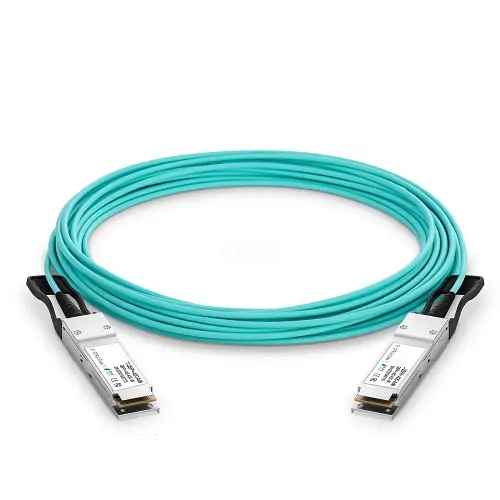
Direct Attach Cable, or DAC Cable for short, is a kind of optical transceiver assembly widely applied in storage area network, data center, and high-performance computing connectivity etc. The DAC cables are used to connect one mobility access switch with another when forming a stack. FiberMart supplies various kinds of high speed interconnect DAC cable assemblies including 10G SFP+ Cables, 40G QSFP+ Cables, and 100G QSFP28 Cables. All of our direct attach cables can meet the ever growing need to cost-effectively deliver more bandwidth, and can be customized to meet different requirements.
Introduction
Fibermart Direct Attach Cable (DAC) is a high-speed, cost-effective interconnect assembly engineered for short-reach, high-bandwidth links within and between network equipment. It integrates fixed transceiver modules directly onto a twinaxial copper or fiber cable, eliminating the need for separate, discrete optical transceivers. Widely applied in data centers, storage area networks, and high-performance computing clusters, DAC cables provide a reliable plug-and-play solution for stack formation, top-of-rack connectivity, and equipment interconnection, effectively meeting the growing demand for more bandwidth with superior power efficiency and lower latency.
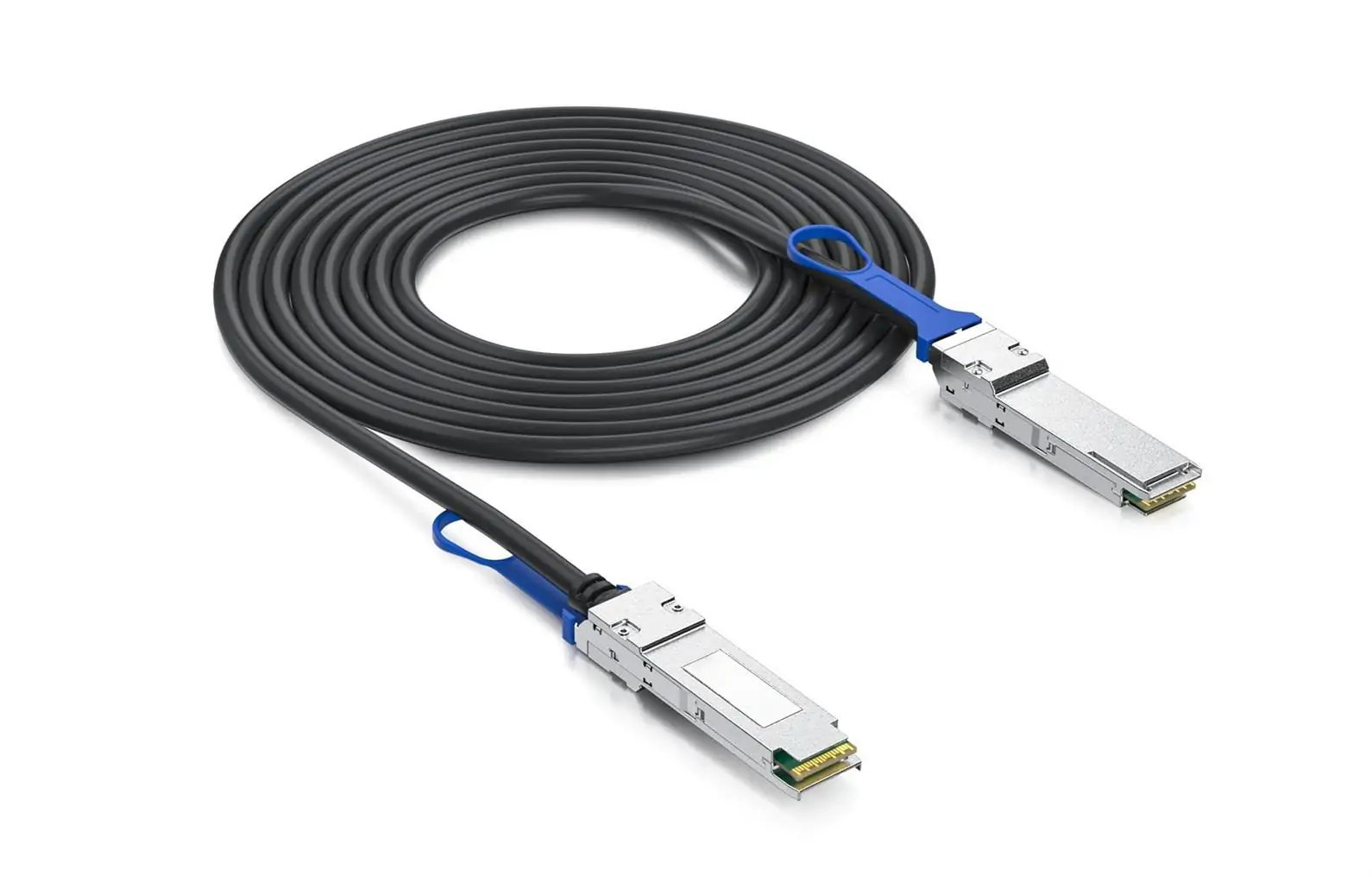 Features● Combines fixed electrical or optical transceivers with cable in a single assembly, supporting 10G (SFP+) and 40G (QSFP+) to 100G (QSFP28) and beyond. ● Offers a significantly lower cost per port and consumes less power than equivalent solutions using separate optical transceivers and fiber patch cables. ● Available in standard fixed lengths (typically 1m to 7m) for predictable performance, with custom options to meet specific rack layout and distance requirements. ● Provides a direct electrical or optical path with minimal signal conversion, resulting in very low latency and a robust, stable connection for critical links. ● Enables rapid, tool-less installation and stack formation between compatible switches, routers, and servers, simplifying network setup and reconfiguration. Principles
A Direct Attach Cable functions as an extension of the equipment's electrical board. Unlike standard optical links that use separate, pluggable transceivers to convert electrical signals to light and back, a passive DAC is essentially a sophisticated, shielded copper cable. It directly carries electrical signals from one device's port to another over short distances, leveraging the native electrical interface of the port (like SFI for SFP+).
An active DAC includes integrated electronics within the cable assembly heads to amplify and reshape the electrical signal, allowing for slightly longer reaches and improved signal integrity, but it still does not perform electro-optical conversion. An Active Optical Cable (AOC) uses fiber strands and includes full optical transceivers at each end to convert signals to light for transmission, offering longer reach than copper DACs but at a higher cost. The core principle across all types is to provide a complete, pre-tested channel that bypasses the need for independent transceiver procurement and management.
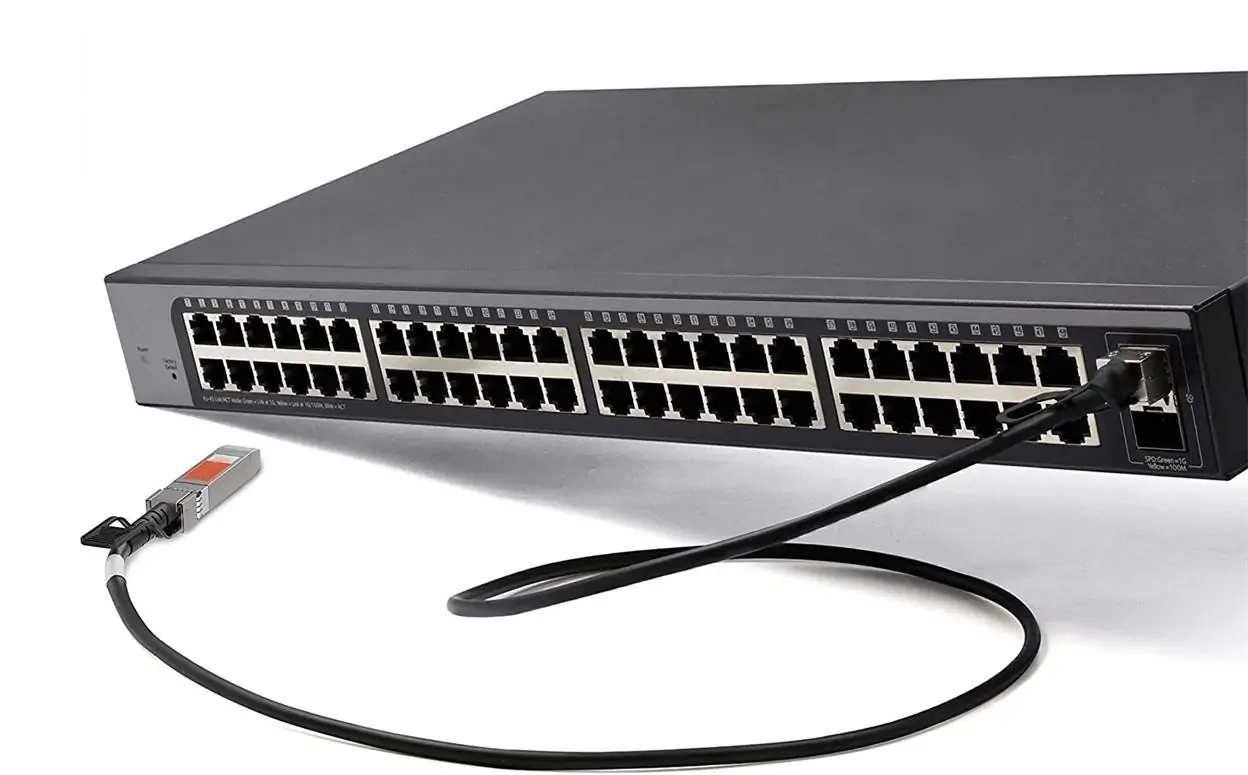 Applications● Data Center Top-of-Rack (ToR) Connectivity: Connecting leaf switches to spine switches within the same rack or adjacent racks over short distances (typically 1-7m). ● Switch Stacking and Clustering: Used as the primary cable for forming high-bandwidth, low-latency stacks between multiple switches. ● High-Performance Computing (HPC) and Storage Area Networks (SAN): Providing high-speed interconnects between servers, storage arrays within a cluster or data hall. ● Intra-Rack Server-to-Switch Links: Establishing high-density, cost-effective connections from servers to the top-of-rack switch within a cabinet. ● Network Equipment Interconnection: Linking routers, firewalls, and appliances in data center, enterprise network cores where short-reach, high-throughput links required. |




