


.webp)


Discover the types of fiber connectors and their differences. Here’s how these connectors are used for seamless data transmission in fiber optic networks!
12 Types of Fiber Connectors and Their Differences
Fiber optic technology has revolutionized the telecommunications industry by providing faster and more reliable data transmission. It enables faster and more reliable data transmission by using light waves to transmit data instead of electrical signals.
At the heart of this technology lies the fiber optic connector, which is responsible for connecting fibers together in both intraboard and point-to-point link applications. Fiber optic connectors are mechanical devices used to align and join two fibers precisely, enabling efficient transmission of light signals between them. There are several types of fiber connectors available on the market with varying characteristics suitable for different applications.
If you are exploring the world of fiber connectors, it is essential to understand their differences and how they can impact overall network performance. Read on to learn all about the different types of fiber connectors and their unique features.
What is a Fiber Connector?
Fiber connectors are essential components in fiber optic networks, as they provide a reliable and efficient method for connecting fibers. They provide a means to maintain and establish the alignment and connection of the fibers with high precision. It ensures minimal signal loss during data transmission, making fiber connectors critical components in any telecommunications system.
Fiber connectors not only simplify the installation process but also enable quick and easy maintenance of the network by allowing for easy switching or replacement of faulty fibers. Fiber connectors are a one-time investment that offers long-term benefits for your fiber optic network.
What are Fiber Connectors Used For?
Fiber connectors have various applications in fiber optic networks, ranging from telecommunications to medical equipment. Here are some uses in these areas:
Internet and Local Area Network
Fiber optic connectors are commonly used to connect different segments of LAN, including switches, servers, storage devices, and other network components. They are also used in internet data centers to provide high-speed connectivity between servers and other networking devices. Fiber optic cable works great with distances of up to 90m, which makes them ideal for remote communication applications.
Fiber connectors in LANs ensure smooth data transmission and eliminate signal degradation caused by electromagnetic interference. Moreover, it facilitates seamless browsing and high-speed data transfer across different devices connected to the network.
Public Utility Networks
Public utility networks, such as electricity and gas grids, rely on fiber optics for communication to enable real-time monitoring and control of the network. Fiber connectors are employed in these networks to transmit critical information and data without interference from external factors. The high bandwidth capacity of fiber optic connectors ensures that data is transmitted rapidly and accurately, preventing power outages or gas leaks.
Fiber connectors enable real-time monitoring and control of public utility networks, contributing to a more efficient and reliable system. If a failure occurs, fiber connectors make it easy to quickly locate and repair the affected area.
Military Network
Fiber connectors are also employed in military networks to provide secure and reliable communication channels. These connectors provide the necessary bandwidth and security that is critical in sensitive military operations. They ensure secure voice and data transfer, reducing the potential risk of interception. Sensitive data such as high-resolution video fees, real-time satellite imagery, and other critical information can be transmitted quickly and efficiently over fiber optic networks using fiber connectors.
These connectors also enable rapid deployment and movement of military units while maintaining connectivity, allowing for quick communication with command centers. Minimal latency and signal loss make fiber connectors ideal for military applications, where timely and accurate communication is crucial.
Security Systems
Security systems increasingly rely on fiber optic connectors due to their high bandwidth capacity and immunity to electromagnetic interference. Systems such as CCTV, access control systems, alarm systems, and intruder detection systems rely heavily on fiber optic technology for the transmission of high-quality video feeds and real-time data. Fiber optic connectors provide long-distance transmission of data with minimal loss, allowing for the integration of multiple security devices to create a comprehensive and robust security system.
Industrial Networking
In industrial networking, fiber optic connectors are utilized to transmit critical data and ensure precise control of complex processes. Fiber optic connectors offer a reliable and robust solution for communication in harsh industrial environments. The speed and reliability of data transmission provided by fiber optic connectors allow for efficient monitoring, control, and automation of industrial processes.
This facilitates efficient production processes, remote monitoring, and maintenance, and reduces downtime. Fiber connectors contribute to enhanced operation productivity and cost-effectiveness in industrial settings.
Healthcare and Medical Uses
Fiber optic connectors have also found applications in the healthcare industry, where they provide significant benefits to both patients and medical professionals. Fiber optic cables are used in medical imaging equipment such as endoscopes, microscopes, and other diagnostic devices. The compact size and flexibility of fiber optic cables make them ideal for use in minimally invasive medical procedures.
Research and Scientific Applications
In research and scientific applications, the choice of fiber connectors is critical in ensuring the reliable and high-fidelity transmission of data between instruments and equipment. They facilitate data analysis, simulations, and collaborations among researchers. Fiber connectors support the transfer of large data sets such as genetic sequences, astronomical images, and seismic data with minimal loss of information.
Types of Fiber Connectors and Their Differences
Now let's delve into the most widely used types of fiber connectors and understand their unique characteristics and differences.
Standard Connector (SC)
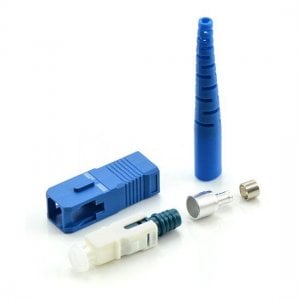
The SC connectors are the first choice for most single-mode fiber applications due to their low insertion loss and high precision alignment. They have a 2 1/2 mm ferrule and a push-pull coupling mechanism, which makes them easy to install and replace. Moreover, they support a range of wavelengths between 1100 nm to 1650 nm with minimal loss and are suitable for high-speed network applications like telecommunications and data centers.
Lucent Connector (LC)
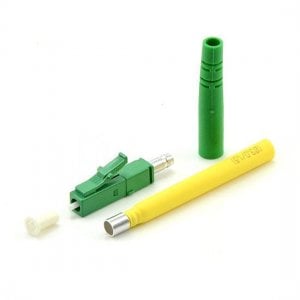
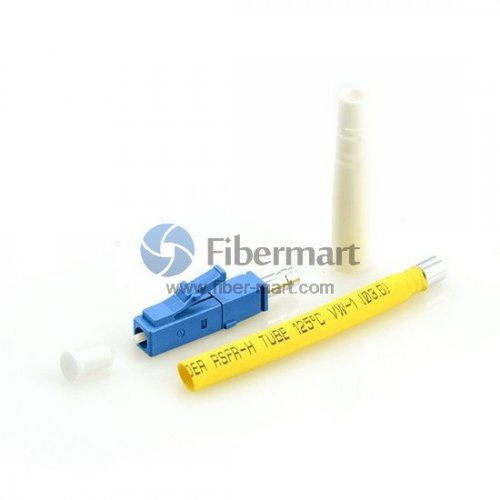
The LC connectors are smaller in size than the SC connectors and offer higher-density connectivity. Their small form factor makes them suitable for applications that require a large number of connections within a limited space, such as in data center equipment. It uses a push-pull latching mechanism and features a 1.25mm diameter ferrule with a ferrule hole size of 125 microns to achieve high precision alignment and low insertion loss.
ST Connector
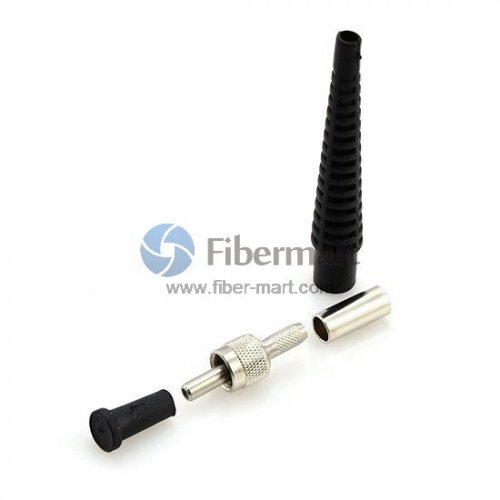
The ST connector is one of the oldest types of fiber connectors and is commonly used in multimode fiber optic applications such as LAN networks. It utilizes a bayonet-style coupling mechanism that requires a twist-on and-off mechanism, making it an ideal choice for applications that require frequent connections and disconnections. ST connectors are a reliable and durable choice which is why most LANs and industrial applications continue to use them, especially in harsh environments.
Ferrule Core Connectors (FC)
Compared to other connectors, FC connectors have a larger ferrule size of 2.5mm but offer superior alignment and stability due to their threaded coupling mechanism. This feature makes them suitable for high-vibration environments as they offer a secure connection between fibers, reducing the risk of loss. Data centers and backbone networks commonly use FC connectors as they provide low insertion loss and high repeatability.
It allows quick and easy identification and selection of the appropriate connector type for a specific application based on factors such as size, density, durability, and attenuation. The design, including a screw-in, prevents accidental disconnections and ensures a reliable, stable connection.
MTP/MPO (Multi-Fiber Push-On/Pull-Off) Connector
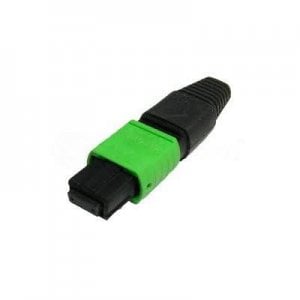
MTP is the commercial name for the MPO connector and is commonly used in high-density applications such as data centers where multiple fibers need to be connected simultaneously. Both MTP and MPO are multi-fiber connectors that incorporate arrays of up to 12 fibers into a single connector, facilitating quick and efficient installations. However, the MTP brand is used for more high-performance applications, and MPO works best for mechanical applications.
Both types of fiber connectors, MTP and MPO, provide superior performance in high-density applications where multiple fibers need to be connected simultaneously. Both fiber connectors have a push-on/pull-off mechanism, which allows for quick and easy installation. With 12-16 rows of fibers, MTP and MPO connectors enable efficient use of space, making them ideal for modern high-density data centers.
Mechanical Transfer Registered Jack (MT-RJ) Connector
The MT-RJ connector is a duplex connector that uses an innovative design combining both fiber optic strands into a single, compact package. It integrates both fibers into a single ferrule, which allows for easy termination of the connector onto the fiber optic cable.
Unlike other types of fiber connectors, MT-RJ uses a latch mechanism for connection, which reduces the risk of accidental disconnection. RJ45 and Ethernet networks also commonly use MT-RJ connectors. The duplex multimode applications maximize space efficiency while offering a reliable, stable connection suitable for various applications.
SubMiniature Version A (SMA) Connector
The SMA connector is a threaded, high-performance fiber connector commonly used in microwave applications. As opposed to other connectors, SMA employs a threaded screw mechanism which provides an extremely secure connection that can withstand high-vibration environments. This type of fiber connector is known for its robustness and stability. SMA connectors are widely used in high-power applications and equipment where reliable, high-frequency connections are necessary, such as in radar systems or microwave antennae.
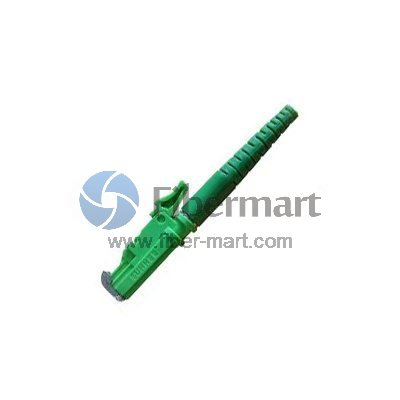
E2000 Connector
The E2000 connector is a type of fiber connector that provides superior performance in single-mode applications, which require high precision and advanced optical testing. It is a duplex connector, which means it can support two fibers for bidirectional communication. It offers excellent insertion loss and return loss performance due to its spring-loaded shutter mechanism that protects the internal fibers from movement or contamination. Furthermore, the E2000 connector also features an automatic metal shutter that locks into place during connection to prevent light leakage, enhancing its reliability and precision.
Miniature Unit (MU) Connector
The MU connector is a small form factor fiber connector designed for high-density applications such as data centers. Like the SC connector, it features a small 1.25 mm ceramic ferrule that supports precision alignment between fibers to minimize insertion loss. However, the body is much smaller. The push-pull latching mechanism of the MU connector allows for quick and easy insertion and extraction, even in tight spaces. It offers excellent alignment and durability, making it a popular choice for high-speed data transmission and telecommunication applications where space limitations are a critical factor.
MU connectors are preferred over other connector types in high-density environments due to their compact size and ease of use.
Hardened Fiber Optic (HFOC) Connectors
The HFOC connector is specially engineered to endure harsh environments such as oil and gas fields, the aerospace industry, or military applications. These connectors offer enhanced durability, ruggedness, and resistance against moisture or dust ingress to maintain the integrity of the optical signal. Throughout these demanding environments, the HFOC connectors can continue to transmit data accurately with no service disruptions.
Very Small Form Factor (VSFF) Connectors
Very Small Form Factor connectors are ultra-compact fiber connectors designed to reduce space usage in high-density applications. VSFF connectors have high fiber density in data centers and other communication systems, making them an ideal choice for high-speed data transmission and telecommunication applications.
DIN Connector
The DIN connector is a type of fiber optic connector used in Germany and other regions that follow the DIN standard. It uses a screw-on coupling mechanism that provides a secure and stable connection between two fibers. Unlike other connectors like ST and MU connectors, DIN connectors have a threaded coupling mechanism that makes them more resistant to vibrations and mechanical shocks.
These connectors find applications in industrial automation, manufacturing, and transportation systems where the stability of signal transmission is crucial in harsh environments.
If you're looking for a reliable place to buy fiber optic connectors and fiber optic cables at competitive prices, you've come to the right place. As a leading optical component supplier, we also offer fiber optic cables for sale, polarization maintaining cable, optical switches, and other related products. We take pride in providing our customers with high-quality and durable fiber optic connectors that meet their specific needs.
Explore more fiber optic connector options from our catalog, and contact us today for expert advice on selecting the best connectors for your application.





No comments have been posted yet.