


.webp)


In today’s communication networks, fiber pigtail is a crucial connection component that plays an essential role. For those looking to understand fiber communication equipment and boost network transmission efficiency, fiber pigtail is an indispensable technology. Fibermart provides a friendly, detailed introduction to fiber pigtail, covering its basic concept, product features, application scenarios, and key functions in networks. We aim to help readers gain a clearer understanding of this compact, efficient product.
1. What is a Fiber Pigtail?
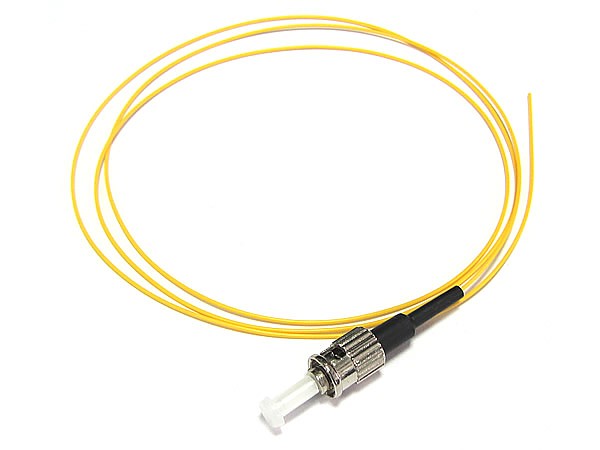
A fiber pigtail, also known as a “fiber optic pigtail,” typically consists of a fiber cable with a connector pre-installed at one end, while the other end remains bare. This design makes fiber pigtail a “bridge” in fiber networks, used to connect devices (like fiber splitters, terminal boxes, etc.) to main fiber cables and ensure stable data transmission.
The structure of a fiber pigtail is straightforward. You can consider it a “semi-finished” fiber cable: the connector end allows quick plugging into devices, and the bare fiber end can be fused with main cables for a secure connection. This design not only simplifies installation but also reduces signal loss caused by frequent plug-ins.
2. Key Features of Fiber Pigtails
To understand fiber pigtail, it’s essential to know its key features, which make it efficient and reliable in networks.
a. Pre-installed Connectors for Easy Installation
Fiber pigtail comes with a standard fiber connector pre-installed at one end, so it can quickly plug into distribution frames or fiber terminal equipment. Common connector types include SC, LC pigtail, ST, and FC, each with unique features:
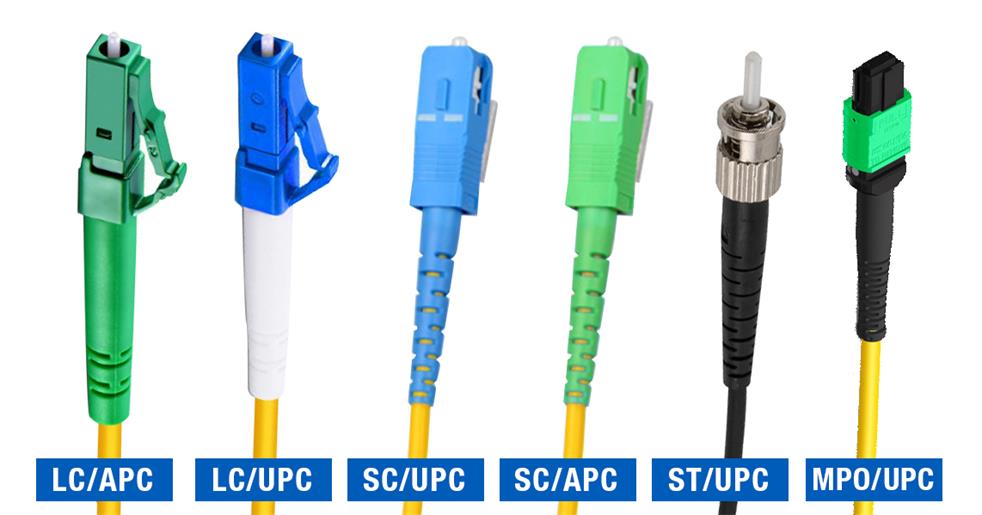
SC: Square push-pull type, commonly used in large data transmissions.
LC pigtail: Compact connector ideal for data centers with tight space.
ST: Round, bayonet-style connector, often used for multimode fiber connections.
FC: Threaded connector for firm connections in demanding environments.
These standardized connectors provide excellent compatibility for fiber pigtail, making it suitable for a wide range of applications.
b. Flexible Bare Fiber for Diverse Connections
The other end of fiber pigtail remains bare, offering flexibility during installation. In real-world applications, you can fuse the bare fiber end with the main cable or use a mechanical connection. This design enables fiber pigtail to act as a versatile component in fiber networks, greatly enhancing cabling efficiency.
c. Low Loss and High Reliability
Since fiber pigtail undergoes partial assembly and quality testing before leaving the factory, it offers low loss. High-quality connectors and fiber fusion ensure stable signal transmission, reducing network faults and improving reliability. Over long-term use, fiber pigtail consistently delivers stable, high-quality performance, meeting strict demands for signal quality in communication.
d. Premium Materials and Strong Adaptability
Fiber pigtail manufacturers often use high-grade fiber and polymer materials in fiber pigtail to ensure durability and environmental adaptability. It can withstand temperature changes, humidity, and even mild mechanical stress, making fiber pigtail ideal for outdoor and challenging environments.
2. Types of Fiber Pigtails
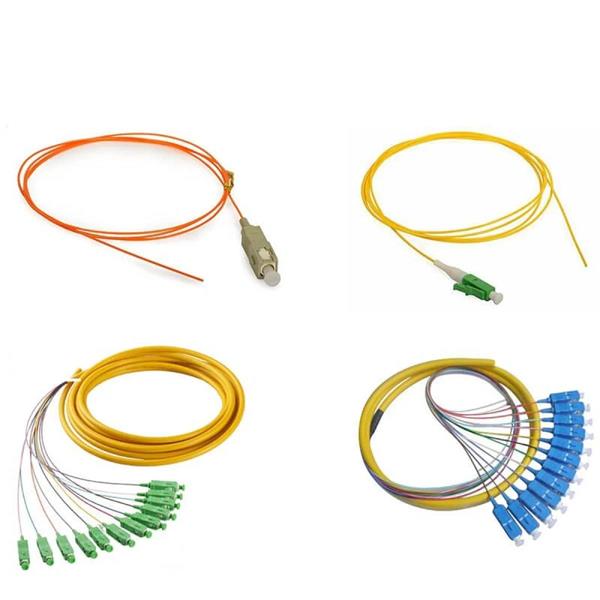
Fiber pigtail can be categorized into various types based on application needs and fiber type, including the following:
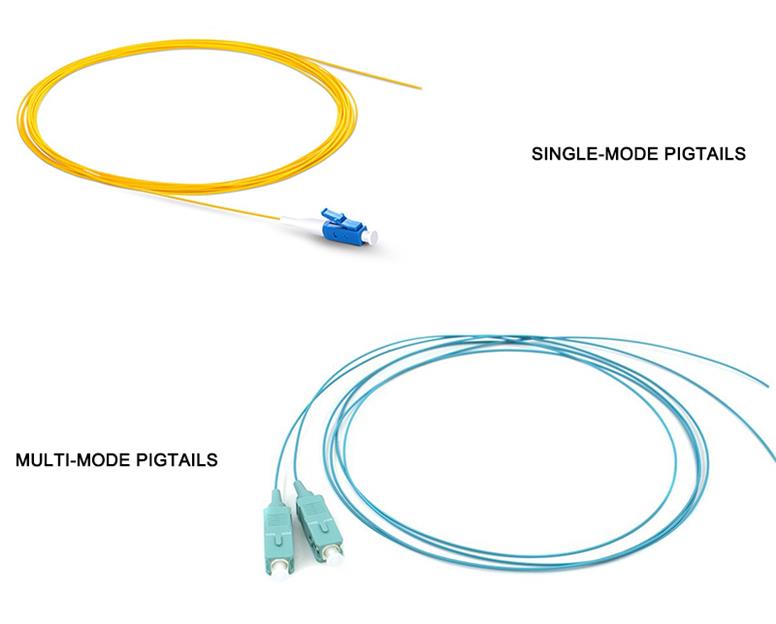
a. Single-mode Pigtail
Single-mode fiber pigtail is suitable for long-distance transmissions (typically over 10 km), making it ideal for telecom-grade fiber networks. It minimizes signal attenuation, with high transmission efficiency, operating at wavelengths of 1310nm or 1550nm. This type is perfect for high-bandwidth, long-distance data needs.
b. Multimode Pigtail
Multimode fiber pigtail is widely used for short-distance transmissions, such as in data centers and LANs. It has a larger core and operates at an 850nm wavelength, making it an excellent choice for local area data connections despite its shorter reach.
c. Jumper-style Pigtail
A jumper-style fiber pigtail has connectors on both ends, used for direct device-to-device connections. Its structure resembles that of a standard pigtail, but both ends plug directly into devices, allowing fast and flexible device connections.
3. Main Application Scenarios of Fiber Pigtails
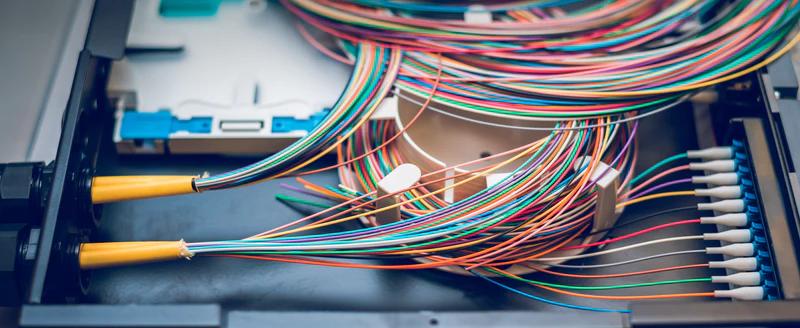
Thanks to its compatibility and efficient transmission, fiber pigtail finds wide applications in various fields:
a. Telecommunications and Broadband Networks
Fiber pigtail is widely used in telecom, serving as a key component in data transmission and communication networks. For fiber-to-the-home (FTTH) installations, fiber pigtail connects terminal devices to the fiber network, ensuring stable data flow.
b. Data Centers and Cloud Computing
In data centers, fiber pigtail enables efficient, stable high-volume data transmissions. It connects servers, storage devices, and switches, offering reliable high-density, high-speed transmission capabilities, which supports the core data needs of modern data centers.
c. Broadcasting and Security
In broadcasting, high bandwidth demands for video and audio transmission make fiber pigtail invaluable. Likewise, in security systems, fiber pigtail links cameras to control centers, enabling smooth transmission of HD video feeds.
d. Smart Home and Industrial Automation
As smart home technology advances, more households and businesses use fiber networks for device interconnection. Fiber pigtail supports data transfer between intelligent devices in smart homes and industrial automation, delivering a smooth control experience.
4. How to Choose a Fiber Pigtail?
Choosing the right fiber pigtail product is essential for effective use. Here are some tips to help make an informed choice:
a. Define Application Scenarios and Requirements
Select the right type of fiber pigtail based on your usage needs. Decide if you need single-mode, multimode, or jumper-style. If you’ll use it outdoors or in high-humidity areas, choose fiber pigtail with a high protection rating.
b. Choose the Right Connector Type
The connector is a critical part of fiber pigtail. Different connector types suit various applications, so make sure to choose one that matches your equipment.
c. Check Quality and Certifications
High-quality fiber pigtail products usually have international certifications like ISO or CE. Opt for certified pigtails to ensure network stability.
Conclusion
The fiber pigtail may be small in size, but it plays a crucial role in today’s communication networks. Through this guide, Fiber-MART.com aimed to highlight how fiber pigtail functions as a bridge in network systems. Whether in telecom, data centers, or smart homes, fiber pigtail continues to support reliable, efficient data transmission. We hope this article helps you understand fiber pigtail better and brings more confidence in selecting the right fiber products for your needs.





No comments have been posted yet.