


.webp)


You've likely encountered the terms "MC cable" and "BX cable" in your search for cabling solutions, and it's perfectly natural to have questions. What exactly are these cables? What applications are they suited for, and why are they becoming a more frequent topic of discussion? My aim is to eliminate any confusion by providing a clear, thorough explanation of these products and their uses.
BX Cable vs. MC Cable
The most important foundational knowledge is that both BX cable and MC cable are specific types of armored cable. The term "BX" is a branded name for AC (armored cable), much in the same way that "Band-Aid" is used to refer to all adhesive bandages; it is a proprietary name that has become a generic industry term. "MC cable," on the other hand, is a more direct abbreviation for "metal clad" or "metallic-sheathed cable."
So, is there a substantive difference in the BX vs. MC cable debate? Indeed, there is one major distinction in the context of electrical wiring: traditional AC or BX cables do not include an internal ground wire, whereas modern MC cables do. However, and this is a crucial point for our purposes, if you are seeking armored fiber optic cable, this electrical grounding difference is irrelevant. From a fiber optic standpoint, both terms essentially denote an armored cable. When fiber is armored, it is encased in a conductive metal jacket, typically fashioned from aluminum or steel. As a result of this metal sheath, the cable jacket will be marked with OFCP or OFCR ratings based on its fire resistance. For a deeper dive into these jacket ratings, I encourage you to consult dedicated resources on the subject.
Outdoor Armored Fiber MC Cable: Application and Construction
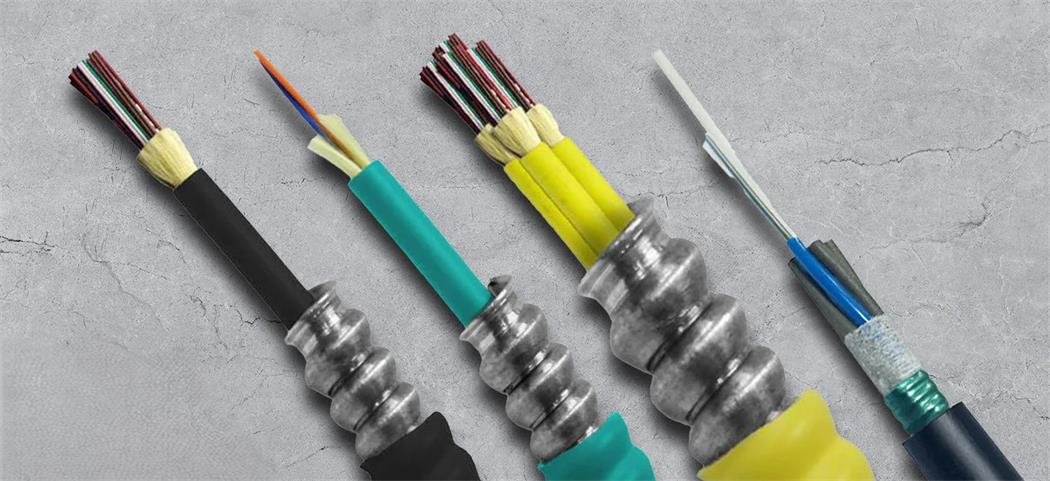
Let's delve into the practical applications, beginning with outdoor armored fiber optic cable. This cable is engineered for resilience in external environments. Its construction features a black PVC jacket that houses the fiber strands within a loose tube configuration, along with a ripcord for easy opening. The critical "MC" component here is a steel tape armor that surrounds this core. This armor is not merely for show; it is a vital protective layer for direct burial applications, designed to deter rodents like moles and gophers from chewing through the jacket and damaging the fragile fiber cores within.
Beneath this steel tape, you will find a water-blocking strip that absorbs any moisture, ensuring the internal fibers remain dry and functional. This entire assembly is meticulously designed to withstand harsh outdoor elements. The use of a loose tube design for the fiber is standard here, as it is more economical to manufacture for the long-distance runs typical of outdoor installations. These cables are almost invariably OS2 Single Mode fiber, which is optimized for transmitting a single signal over significantly longer distances.

For a reliable outdoor armored fiber cable, a highly recommended product is the Taihan OSP Outdoor Armored Fiber. A vital safety note: because this specific type of outdoor BX armored cable lacks the necessary fire rating for indoor spaces, building codes prohibit running it more than 50 feet inside a structure. For such scenarios, you would require a certified indoor/outdoor fiber optic cable.
Common use cases for outdoor armored cable include building-to-building runs on school campuses or large facilities with considerable distances between structures. By choosing outdoor armored fiber, you ensure your cable is shielded from environmental hazards, preventing signal damage and latency.
Indoor Fiber BX Cable: Design and Purpose
Conversely, the construction of indoor armored fiber cable is explicitly intended for interior use. It is characterized by a more flexible PVC jacket, which is color-coded according to the fiber mode (e.g., OM1, OM3, or OM4 Multimode). Multimode fiber is designed to carry multiple light signals over shorter distances.
The jacket for indoor fiber is also available in Plenum and Riser ratings. Riser-rated cables are commonly used as the backbone for cabling that runs between floors, while Plenum-rated cable is mandated for use in air-handling spaces (plenums) where the spread of fire is a critical concern, typically in larger, multi-story buildings. These distinctions are often required by building codes.

The armor in indoor fiber MC cable consists of a spiraled aluminum casing that wraps around the fibers. Under this casing lies a water-blocking tape that expands upon contact with moisture. Inside this tape, you will find the fiber cores, which are tight-buffered. Unlike the loose tube construction of outdoor cable, this tight-buffering makes the fibers more robust and significantly easier to organize and terminate during installation. Just like its outdoor counterpart, the primary purpose of the indoor armor is to protect against rodents and general physical damage. Given that indoor cable is subject to more frequent movement and handling, the entire assembly—from the PVC jacket to the internal cores—is designed for superior flexibility. For a high-quality indoor armored fiber, I would recommend exploring options like the Plenum OM4 Armored Cable from manufacturers such as Corning.

Working With Armored Cable: Techniques and Tools
A frequent challenge users face is how to properly prepare armored cable. While one might use a hacksaw on a copper cable, fiber optic cable demands greater care. Using improper tools can crack the glass fibers, rendering the cable useless.
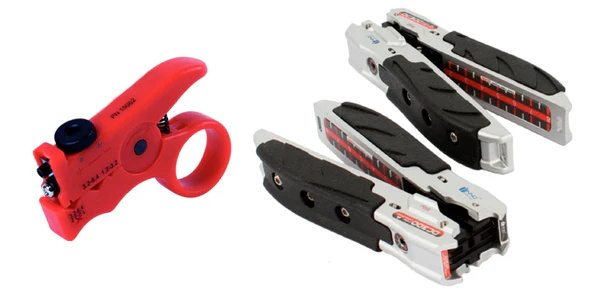
The outer jacket and metal armor can be removed with a specialized cable stripping tool. However, for the glass fibers themselves, you must use a precision instrument called a cleaver. A fiber cleaver is designed to score and snap the fiber cleanly, ensuring a perfect end-face without damaging the glass core. While these tools represent an investment, they are essential and will save you considerable time, money, and frustration compared to attempting unsuitable alternatives.
Is Armored Cable the Right Choice for You?
If you remain uncertain about the benefits of armored cable, it is worth considering that it may not be the optimal solution for every scenario. Other cable types have their own advantages. Remember that every cabling choice involves a balance of benefits and drawbacks.
For instance, standard outdoor fiber cable might have a lower initial cost than armored cable, but you must then factor in the expense and labor of installing a protective conduit, as the standard cable cannot be directly buried. For indoor applications, without armored shielding, your cables are vulnerable to damage from pests. Beyond a higher initial cost, there are few downsides to choosing armored cable over regular fiber. To help your decision, here is a detailed list of pros and cons:
Armored Cable Pros
( 1 ) Armored fiber is an integrated solution, as the protective armoring is pre-applied during manufacturing.
( 2 ) It is often more flexible and easier to install than the alternative of mounting a separate conduit and then pulling cables through it.
( 3 ) It is supplied on spools, making it shippable, whereas very long, pre-assembled conduit runs may be impossible to transport.
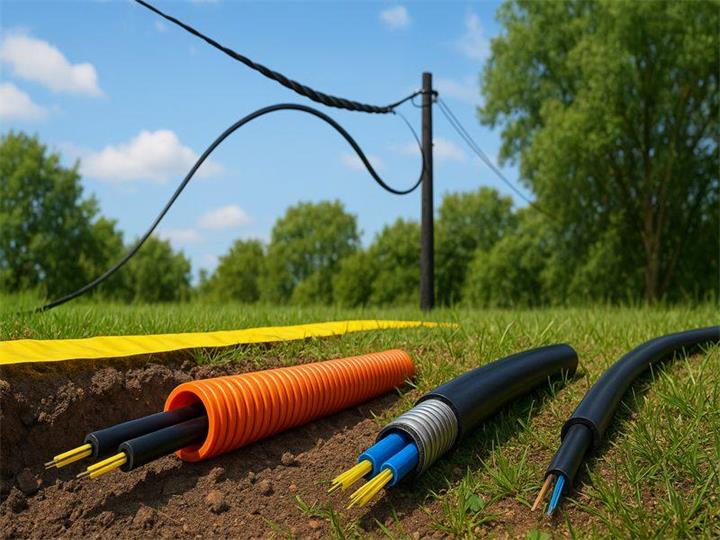
( 4 ) It provides excellent protection against rodents, accidental impacts from falling objects, and damage in areas with light foot traffic. In certain conditions, it can even be directly buried in dry or covered environments.
Armored Cable Cons
( 1 ) The spools of armored cable are heavy and can be difficult to maneuver on a job site.
( 2 ) The armor is not designed to withstand extreme force, such as being run over by a forklift or heavy truck.
( 3 ) It can be challenging to cut and strip without the correct, specialized tools.
( 4 ) While used for direct burial, it is not ideal for all environments, as the metal can corrode over time, and it generally cannot be buried very deeply due to its limited crush resistance.
At the very least, I trust this guide has been informative. Whether you are planning to purchase armored cable or were simply seeking to understand what MC and BX cables are, I hope you have found the information you needed.





No comments have been posted yet.