


.webp)


Fiber density continues to increase, from 12 fibers to 72 fibers, while the insertion loss of standard MTP connectors has dropped to an impressive 0.2 dB.US Conec's patented designs enable MTP connectors to surpass ordinary MPO products across multiple performance metrics.
Basic Concepts of MPO and MTP Connector
In the field of fiber optic connectivity, MPO and MTP are terms frequently mentioned yet often confused. MPO is the general term for "Multi-fiber Push-On" connectors, referring to single-ferrule connectors housing multiple fibers (typically 4 to 72).
MTP is US Conec's registered brand for a high-performance MPO connector, specifically designed for superior optical performance.
Why are multi-fiber connectors needed? The answer is simple: Density and Efficiency. Traditional LC or SC connectors handle only one fiber at a time. In high-density data center applications, managing and maintaining dozens or even hundreds of fiber connections becomes extremely cumbersome. MPO technology revolutionizes this by integrating multiple fibers into a single ferrule.
The excellence of MTP connectors lies in their tight tolerances and unique design. While various MPO connectors on the market claim to meet industry standards, significant differences in performance and lifespan exist between brands.
The design and manufacturing processes of the MTP product line ensure high performance and stability throughout the connector's lifecycle.
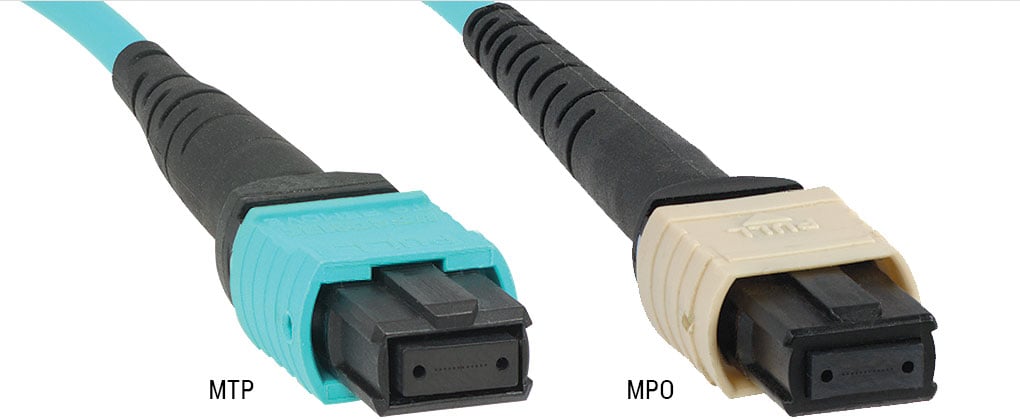
MTP Connector Key Technical Features
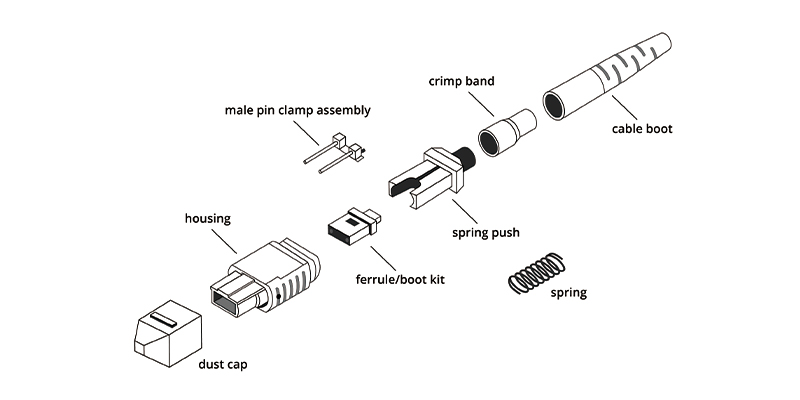
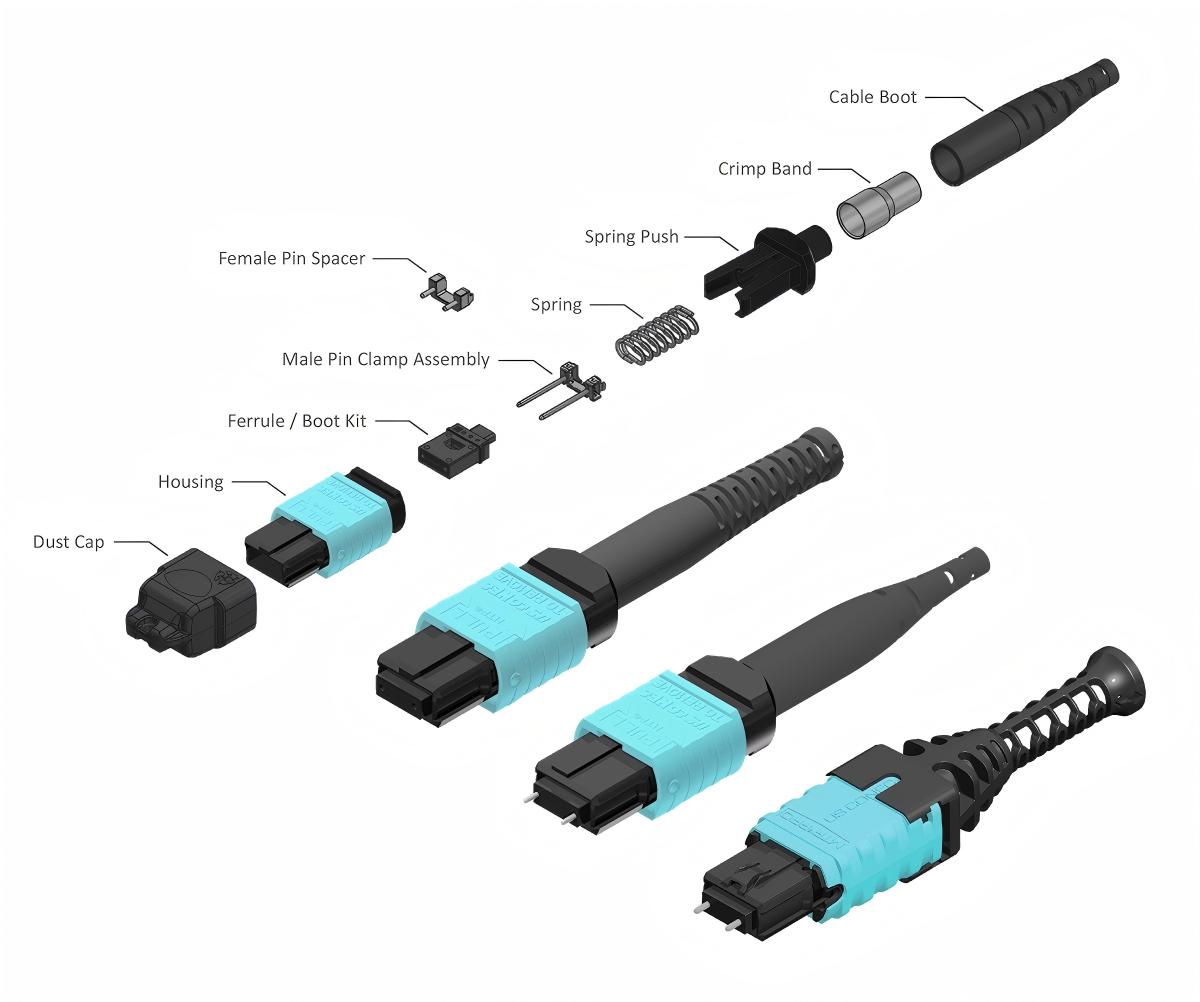
The standout features of MTP connectors are rooted in several patented designs. Most notable is the floating ferrule design. This innovation allows mating ferrules to maintain physical contact even under load, greatly enhancing mechanical performance.
For precise alignment, MTP connectors use elliptical stainless steel guide pins. This unique design not only improves guiding accuracy but also significantly reduces wear on the guide holes.
In terms of material selection, MTP connectors use a special material—glass-filled polyphenylene sulfide polymer for the MT ferrule. Compared to traditional ferrule materials like ceramic or zirconia, this material offers better thermal stability and machining precision.
The removable housing design is another major feature of MTP connectors. It allows users to rework and polish the MT ferrule, and even change the connector's gender (male or female) in the field. This design not only increases maintenance flexibility but also allows for interferometer scanning of the ferrule after assembly.
MTP connectors offer four different strain relief boot options to suit various applications:
-
For round loose tube cable constructions
-
For oval jacket cables
-
For bare ribbon fiber
-
Short boot (reduces footprint by 45%, ideal for space-constrained applications)
Performance Specifications Comparison for MTP connector vs MPO connector
To truly understand the advantages of MTP connectors, one must look at the data. The following table compares key performance indicators between MTP connectors and other MPO connectors:
| Performance Parameter | MTP Standard | MTP Elite | Ordinary MPO Connector |
|---|---|---|---|
| Multimode Insertion Loss (Typ/Max) | 0.20 dB / 0.60 dB | 0.10 dB / 0.35 dB | Typically > 0.6 dB |
| Single-mode Insertion Loss (Typ/Max) | 0.25 dB / 0.75 dB | 0.10 dB / 0.35 dB | Typically > 0.75 dB |
| Return Loss | > 20 dB (MM), > 60 dB (SM) | Same or better than Standard | Typically lower |
| Operating Temperature Range | -40°C to +80°C | Same as Standard | Typically a smaller range |
| Durability (Mating Cycles) | 1000 | 500-1000 | Typically less than 500 |
| Features | Floating ferrule, elliptical pins, removable housing | Ultra-low IL, higher performance | Basic industry standard compliance |
Table data compiled from multiple search results.
The MTP Elite version is particularly outstanding in insertion loss, with a maximum of 0.35 dB, significantly lower than ordinary MPO connectors. Furthermore, MTP connectors comply with multiple international standards, including FOCIS, IEC-61754-7, and TIA/EIA-604-5.
Summary of MTP Connector Advantages
MTP connectors significantly outperform ordinary MPO connectors across multiple dimensions.
High-performance optical characteristics are the primary advantage. The MTP Elite version reduces maximum insertion loss to 0.35 dB. This low-loss characteristic is crucial for high-speed data center applications, as higher data rates are more sensitive to optical signal attenuation.
Enhanced mechanical design is equally important. The floating ferrule ensures stable contact at the junction even under external force. The metal pin clamp not only prevents pin loss but also centers the push spring to protect fibers from spring damage.
MTP connectors support applications ranging from 10G to 800G, meeting the high-speed demands of modern data centers.
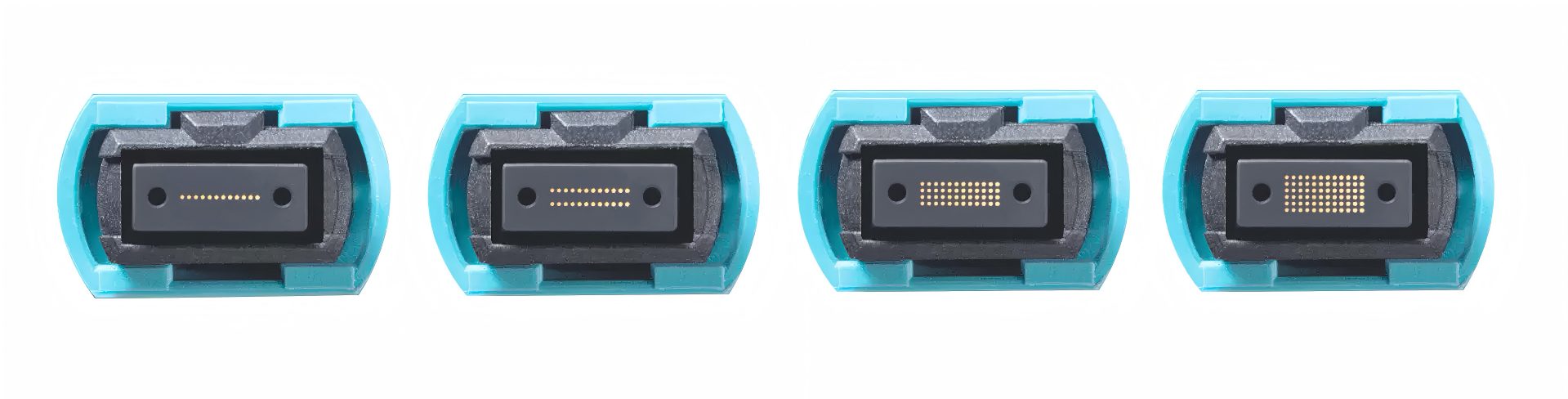
Providing solutions for high-density applications is another major MTP advantage. As fiber counts increase (e.g., 16, 24, 48, or even 72-fiber connectors), MTP technology accommodates more fiber connections within limited space.
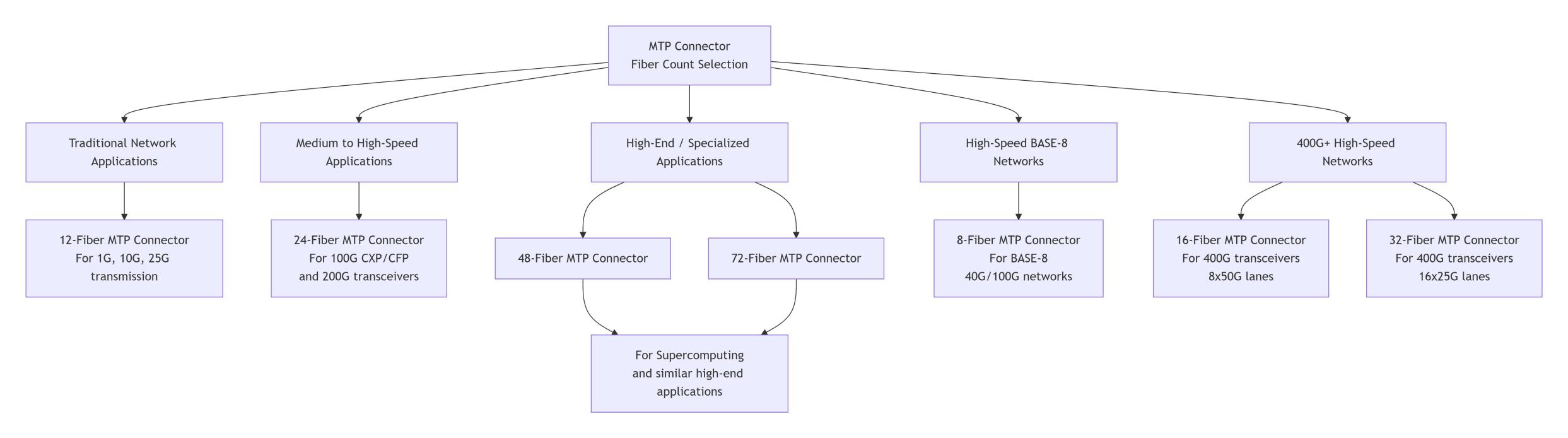
Application Scenarios and Fiber Count Selection of MTP Connector
MTP connectors have different fiber count requirements for various applications. Traditional 12-fiber MTP connectors are primarily used for 1G and 10G transmission, and more recently for 25G. These connectors are typically paired with MPO cassettes that provide front LC ports for equipment patching.
24-fiber MTP connectors are now used for 200G transceivers and were previously used for 100G CXP and CFP transceivers. 48-fiber and 72-fiber MTP connectors were developed for specialized applications like supercomputing.
For BASE-8 40G and 100G networks, which require 8 fiber channels, 8-fiber connectors and cables are used. 16-fiber MTP ports are now appearing in 400G transceivers using 8×50G channels. Some 400G transceivers under development use 32 fibers (16×25G channels).
To more clearly illustrate the application scenarios for MTP connectors with different fiber counts, the following table shows the correlation between the number of fibers in an MTP connector and its applications:
Guidelines for MTP Connector Selection and Use
Selecting the right MTP connector requires considering several factors. Ensuring the use of genuine, standards-compliant MTP components is crucial. Many products on the market claim to be MTP connectors but often exhibit performance and quality issues during actual installation. Consider polarity and adapter type. MTP/MPO adapters use an asymmetric housing design containing a reversed key to achieve correct fiber polarity. For 12-fiber MPO/MTP cables, TIA-568 defines three polarity standards: Type A (straight-through), Type B (cross-over), and Type C (cross-over pair).
For applications requiring the highest performance, consider the MTP Elite version. MTP Elite offers lower insertion loss than standard MTP.
Finally, select the appropriate strain relief boot. MTP connectors offer multiple strain relief boot options, including the short boot, which reduces the footprint by 45% and is ideal for space-limited applications.
Purchasing Guide of MTP Connectors
In data center and high-speed network environments, choosing high-quality fiber optic connectors is essential. While various MPO connectors are available on the market, only genuine MTP brand products ensure long-term, stable, high-performance operation.
Professional MTP connectors should feature removable housings, floating ferrule design, and precision elliptical guide pins. These features ensure the connector maintains low insertion loss and high stability even after repeated mating cycles.
For users pursuing the highest performance, the MTP Elite version is the ideal choice. Its maximum multimode and single-mode insertion loss of 0.35 dB meets the demands of the most stringent high-speed network applications.
To ensure you receive genuine, standards-compliant MTP products, choosing a reliable supplier is vital. A quality supplier not only guarantees authentic products but also provides professional technical support to help solve connectivity issues in complex networks.
At the Fibermart online store, you can find a wide range of high-quality MTP connectors and components. These products strictly adhere to industry standards, offering a complete series of solutions from 12-fiber to 72-fiber. A professional service team is available to provide technical consultation, ensuring you select the product combination best suited for your application needs.
FAQs on MTP Connectors
This section provides answers to frequently asked questions relating to MTP fiber connector components and maintenance.
What is the MT ferrule?
MT is the abbreviation for mechanically transferable. MT ferrule is a multi-fiber, plastic ferrule with a square end-face of 6.4x2.5mm and fiber pitch 0.25mm widely used in MPO/MTP connectors. Different from ferrule used in other fiber connectors, MT ferrule within an MPO/MTP connector is made from a monolithic, high-precision glass-filled polymer rather than a ceramic material. It can connect multiple fibers with high-precision and high-density technology to achieve low loss in each fiber.
How to clean MTP connectors?
It is a must to do fiber cleaning in the fiber connector manufacturing process or during the usage of fiber connectors, so do MTP connectors. The cleaning process for MTP connectors always goes through three stages: inspect, clean and reinspect. Correctly use the microscope to inspect and make sure there is no dust in either of two mating connectors because once one of them is polluted, the dirt can migrate to another one. Clean the end face of the MTP connectors with the use of the MTP cleaning tools designed for MTP connectors until the contaminants are removed.
Can female connector MTP cables be turned into male connector cables?
Currently, only MTP PRO connectors are designed to support easy gender conversion between male and female connectors. This feature allows users to switch between male and female configurations by adding or removing alignment pins, which makes the MTP PRO system highly versatile in field applications.
Are MTP connectors backward compatible with common connector types like LC, and SC?
No, MTP connectors are not backward compatible with common connector types like LC or SC. MTP connectors, which are a type of multi-fiber push-on connector, are designed to handle high-density fiber connections, typically with 12, 16, or 24 fibers. In contrast, LC and SC connectors are single-fiber connectors used for duplex connections. However, MTP connectors are compatible with MPO connectors, as they follow the same standard.





No comments have been posted yet.