


.webp)


Among the array of fiber optic cables available, MPO to LC cables have emerged as a cornerstone technology, bridging the gap between high-density backbone infrastructure and end-device connectivity. This article delves into the core attributes, applications, technical advantages, and selection considerations of MPO to LC cables, shedding light on why they have become the preferred choice for modern data center deployments.
Understanding MPO to LC Cables: Core Definitions and Design
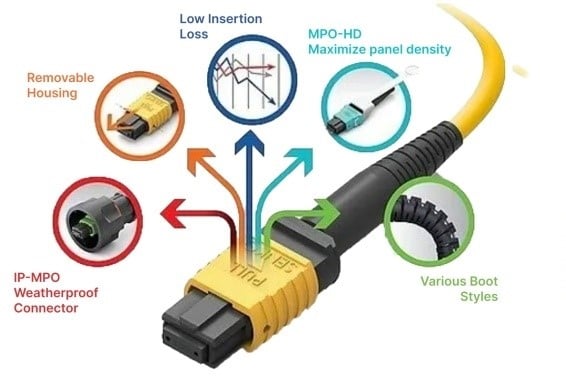
To fully grasp the value of MPO to LC cables, it is essential to first unpack their design and componentry. MPO, short for “Multi-Fiber Push-On/Pull-Off,” is a high-density connector capable of housing 8, 12, 24, or even 144 fiber strands in a single ferrule. This compact design eliminates the need for multiple individual connectors, drastically reducing the physical space required for cabling. On the other end of the assembly, LC (Lucent Connector) connectors—known for their small form factor and push-pull latching mechanism—serve as the interface to end devices such as servers, switches, and storage area network (SAN) equipment.
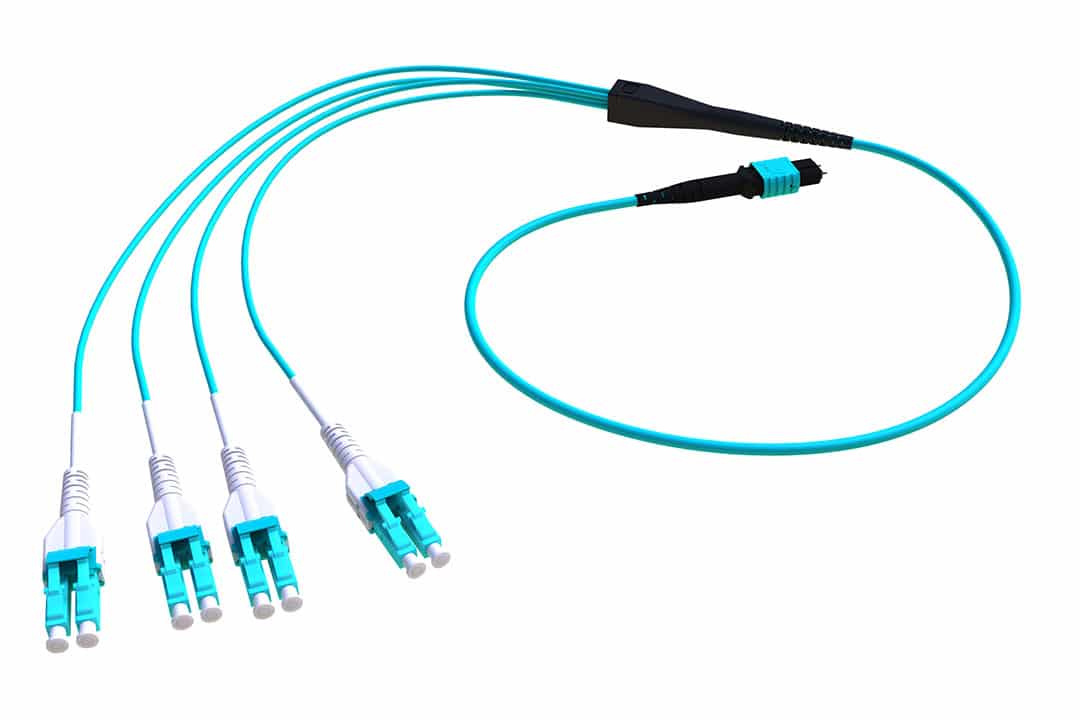
MPO to LC cables, often referred to as “breakout cables” or “harness cables,” feature an MPO connector on one end and multiple LC connectors on the other. This configuration is intentional: the MPO end links to high-capacity backbone trunks (e.g., MPO trunk cables), while the LC ends “break out” the aggregated fiber signals to individual devices. For instance, a 12-fiber MPO to LC cable typically terminates into 12 LC connectors, ensuring each fiber strand in the backbone is routed to a specific end point.
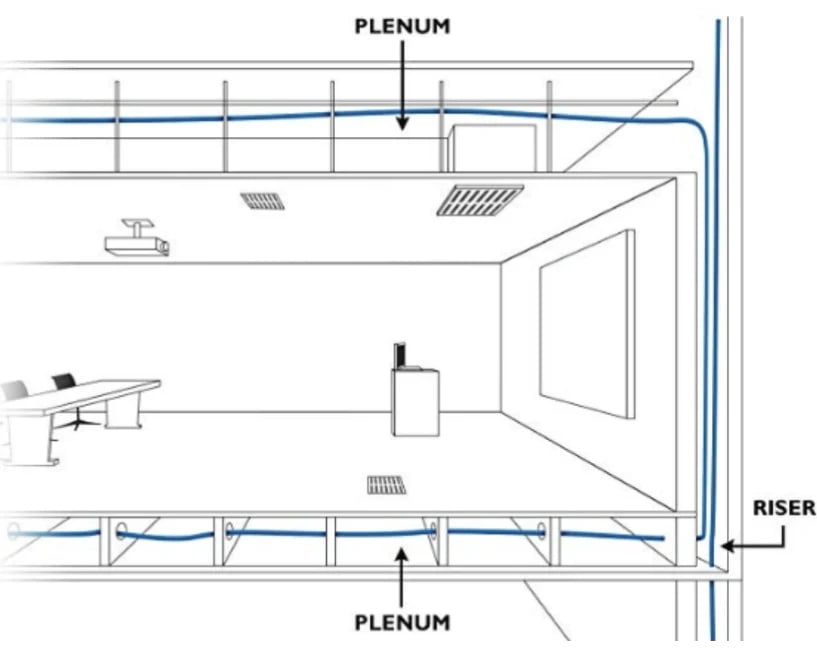
A key design element of these cables is the choice of cable jacket material, with LSZH (Low Smoke Zero Halogen) being the industry standard for data centers. LSZH jackets emit minimal smoke and no toxic halogens in the event of a fire, enhancing safety and compliance with global building codes. Additionally, cables may be rated as “Riser” (for vertical installations between floors) or “Plenum” (for air-handling spaces), further tailoring them to diverse installation environments.
Key Applications: Why MPO to LC Cables Dominate Data Centers
MPO to LC cables are not just a technical innovation—they are a solution to the unique challenges of modern data centers, where space constraints and bandwidth needs often conflict. Their primary applications revolve around high-density connectivity scenarios, where efficiency and speed are non-negotiable.
Data Center Backbone-to-Device Routing
The backbone of a data center consists of high-capacity trunk cables (e.g., 24-fiber or 144-fiber MPO trunks) that carry large volumes of data between racks. MPO to LC cables act as the “bridge” between these trunks and the end devices within each rack. For example, a 48-fiber MPO trunk cable running between two server racks can be connected to MPO to LC breakout cables, which split the 48 fibers into 48 individual LC connectors—each linking to a server or switch port. This eliminates the clutter of dozens of individual fiber cables, streamlining cable management and reducing the risk of accidental disconnections.

High-Speed Network Upgrades
As networks transition to 40G, 100G, and even 400G speeds, traditional single-fiber cabling becomes impractical. MPO to LC cables are engineered to support these high-bandwidth protocols. For instance, a 12-fiber single-mode MPO to LC cable can facilitate 40G Ethernet (using 4 lanes of 10G each) or 100G Ethernet (using 10 lanes of 10G each), making it a versatile choice for scaling network speeds without overhauling the entire cabling infrastructure. Multimode variants (e.g., OM3, OM4) are ideal for short-reach applications (up to 100 meters for OM4), while single-mode options excel in long-reach deployments (e.g., inter-data center links).
Cloud and Hyperscale Data Centers
Cloud service providers and hyperscale data centers—where thousands of servers operate in a single facility—rely heavily on MPO to LC cables. The high-density design of these cables allows for faster installation (reducing deployment time by up to 50% compared to individual LC cables) and easier maintenance. When adding or replacing servers, technicians can quickly disconnect and reconnect MPO to LC breakout cables, minimizing downtime and ensuring seamless service delivery.
Technical Advantages: Beyond Space and Speed
Low Insertion Loss and High Return Loss
Insertion loss (the amount of signal lost when passing through a connector) and return loss (the amount of signal reflected back from the connector) are critical metrics for fiber optic performance. MPO to LC cables are manufactured with precision-polished ferrules and strict quality control measures, ensuring insertion loss as low as 0.3 dB (decibels) for LC connectors and 0.5 dB for MPO connectors. This minimizes signal degradation, even over long distances, and ensures reliable data transmission. High return loss (typically >50 dB for single-mode) further reduces signal interference, making MPO to LC cables suitable for sensitive applications like high-frequency trading or real-time data analytics.
Scalability and Future-Proofing
One of the biggest challenges in data center design is anticipating future growth. MPO to LC cables address this by offering inherent scalability. For example, a data center initially deployed with 12-fiber MPO to LC cables can easily upgrade to 24-fiber or 48-fiber variants as bandwidth needs increase—without replacing the entire cabling pathway. Additionally, MPO connectors are compatible with MTP (Multifiber Termination Push-on) connectors (a proprietary but widely adopted variant of MPO), ensuring interoperability with existing infrastructure. This flexibility means data centers can avoid costly “rip-and-replace” projects and adapt to new technologies (e.g., 800G Ethernet) as they emerge.
Durability and Longevity
Data center cables are subjected to constant handling during installation, maintenance, and upgrades. MPO to LC cables are built to withstand this wear and tear, with robust connectors and durable jackets. The LSZH jacket, for example, resists abrasion, moisture, and chemical damage, extending the cable’s lifespan to 15–20 years. Additionally, the push-pull latching mechanism of LC connectors ensures a secure, consistent connection that is less prone to accidental disconnection than twist-lock connectors (e.g., SC). This durability reduces replacement costs and minimizes the risk of network outages caused by faulty cables.
How to Select the Right MPO to LC Cable: Key Considerations
Fiber Mode: Single-Mode vs. Multimode
The choice between single-mode and multimode fiber depends on the distance of data transmission and the required bandwidth:
Single-Mode Fiber: Ideal for long-reach applications (e.g., inter-building or inter-data center links) up to 10 kilometers or more. Single-mode MPO to LC cables support high bandwidths (100G, 400G) over extended distances and are commonly used in enterprise data centers with geographically dispersed facilities.
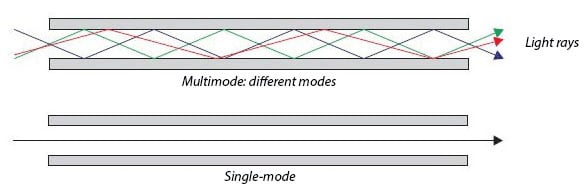
Multimode Fiber: Suited for short-reach applications (up to 100 meters for OM4) within a single data center. Multimode variants (OM1, OM2, OM3, OM4) are more cost-effective for short distances and are widely used in server racks, SANs, and local area networks (LANs). OM3 and OM4 are the most popular choices for modern data centers, as they support 10G, 40G, and 100G speeds.
Fiber Count
MPO to LC cables are available in fiber counts ranging from 8 to 144, with 12-fiber and 24-fiber variants being the most common. The fiber count should align with the number of end devices and the bandwidth requirements:
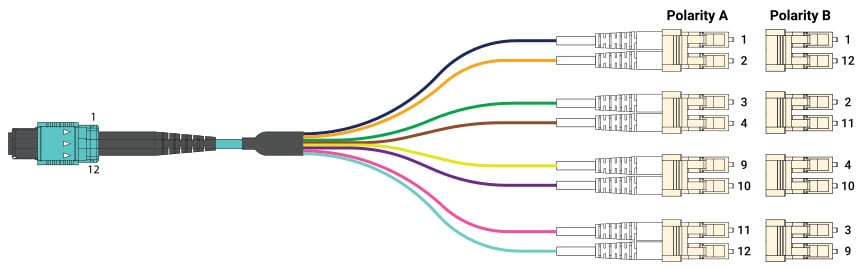
8-Fiber Cables: Suitable for small-scale deployments (e.g., 40G Ethernet using 8 lanes of 5G each) or edge computing environments with fewer devices.
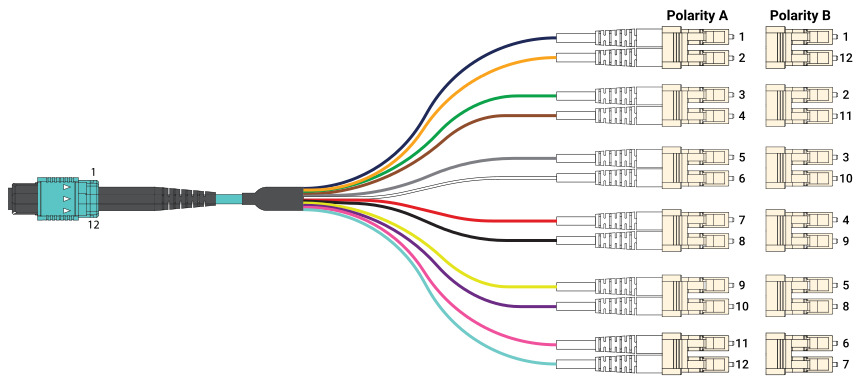
12-Fiber Cables: The industry standard for most data centers, supporting 40G (4 lanes) and 100G (10 lanes) Ethernet. They balance density and flexibility, making them ideal for server racks and SANs.
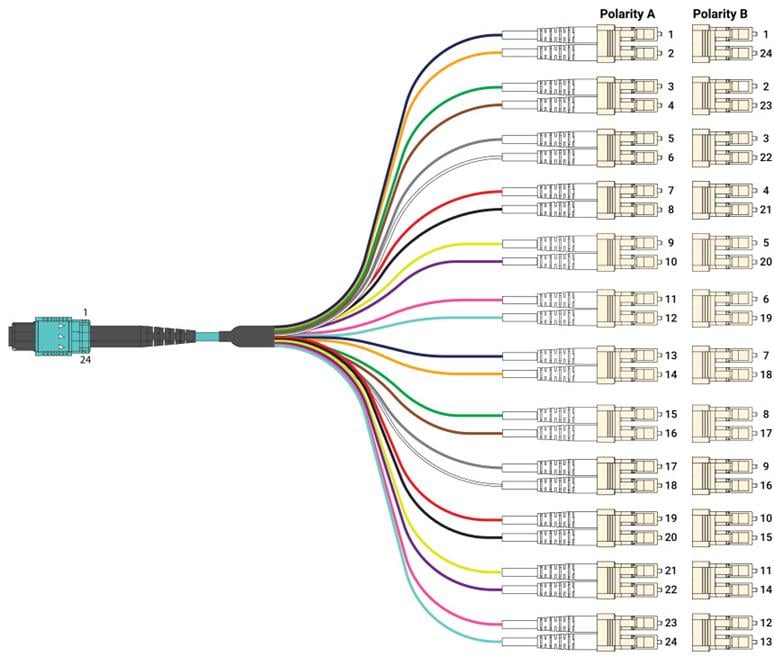
24-Fiber to 144-Fiber Cables: Reserved for high-density environments (e.g., hyperscale data centers or cloud facilities) where hundreds of devices need connectivity. A 144-fiber MPO to LC cable, for example, can breakout into 144 LC connectors, serving an entire rack of servers.
Jacket Type and Installation Environment
The cable jacket must comply with local building codes and the installation environment:
LSZH Riser: For vertical installations between floors (riser shafts), where fire safety is critical. LSZH Riser jackets prevent the spread of fire and toxic fumes between floors.
LSZH Plenum: For air-handling spaces (e.g., above ceiling tiles or under raised floors), where cables are exposed to airflow. Plenum-rated jackets meet stricter fire safety standards and are mandatory in many commercial and industrial buildings.
Customization and Supplier Support
Every data center has unique requirements, so partnering with a supplier that offers customization is essential. Leading suppliers (e.g., Fibermart) provide tailored MPO to LC cables, including custom lengths (to avoid excess cable clutter), mixed connector types (e.g., MPO to LC/SC hybrid), and specialized jackets for harsh environments. Additionally, look for suppliers that offer a lifetime warranty and fast shipping—critical for minimizing downtime during installation or upgrades.
Conclusion
In an era where data centers are the backbone of digital transformation, MPO to LC cables stand out as a technology that combines efficiency, scalability, and reliability. By consolidating multiple fiber strands into a single high-density MPO connector and breaking out to user-friendly LC connectors, these cables solve the dual challenges of space constraints and high-bandwidth demand. Whether deployed in a small enterprise data center or a large hyperscale facility, MPO to LC cables deliver consistent performance, reduce operational costs, and future-proof infrastructure for upcoming technologies.





No comments have been posted yet.