


.webp)


Although governments, utility companies, financial institutions, and other enterprises requiring protection for highly sensitive data in transit have launched pilot construction and deployment of quantum networks, quantum networks are still often regarded as abstract or strongly futuristic concepts when discussed. In reality, quantum networks are moving from laboratories to practical application scenarios, with their core technologies having preliminary implementation foundations. As the core carrier for quantum communication and data transmission, Optical Fiber play an indispensable role in quantum network construction. This article systematically explains the basic concepts, working principles, and core values of quantum networks, deeply analyzes the application logic and supporting role of fiber optic technology in combination with specific practical steps for building quantum communication networks, and provides in-depth resource guidelines related to quantum networks to help readers fully understand this revolutionary technological system.
What is Quantum Network?
The core value of quantum networks is first reflected in addressing the threat of advanced attacks on secure network infrastructures. Current mainstream classical encryption technologies (such as RSA, ECC, and Diffie-Hellman protocols) are all based on complex mathematical problems—for example, integer factorization and discrete logarithm problems. These problems are difficult to solve within the computing power of traditional computers, thereby ensuring data transmission security. However, with the development of quantum computing technology, quantum algorithms such as Shor's algorithm and Grover's algorithm can significantly reduce the difficulty of solving such mathematical problems, putting the traditional encryption system at risk of a "quantum crisis."
Quantum Secure Communication (QSC) relies on quantum networks to provide an encryption alternative based on the principles of quantum physics. Its security does not depend on computational complexity but stems from the fundamental laws of quantum mechanics—such as the Uncertainty Principle and the No-Cloning Theorem. Even in the face of mature quantum computers, it can resist brute-force attacks or algorithmic attacks, fundamentally reshaping the underlying logic of communication security. The application of fiber optic technology is precisely the key support for the large-scale implementation of quantum secure communication.
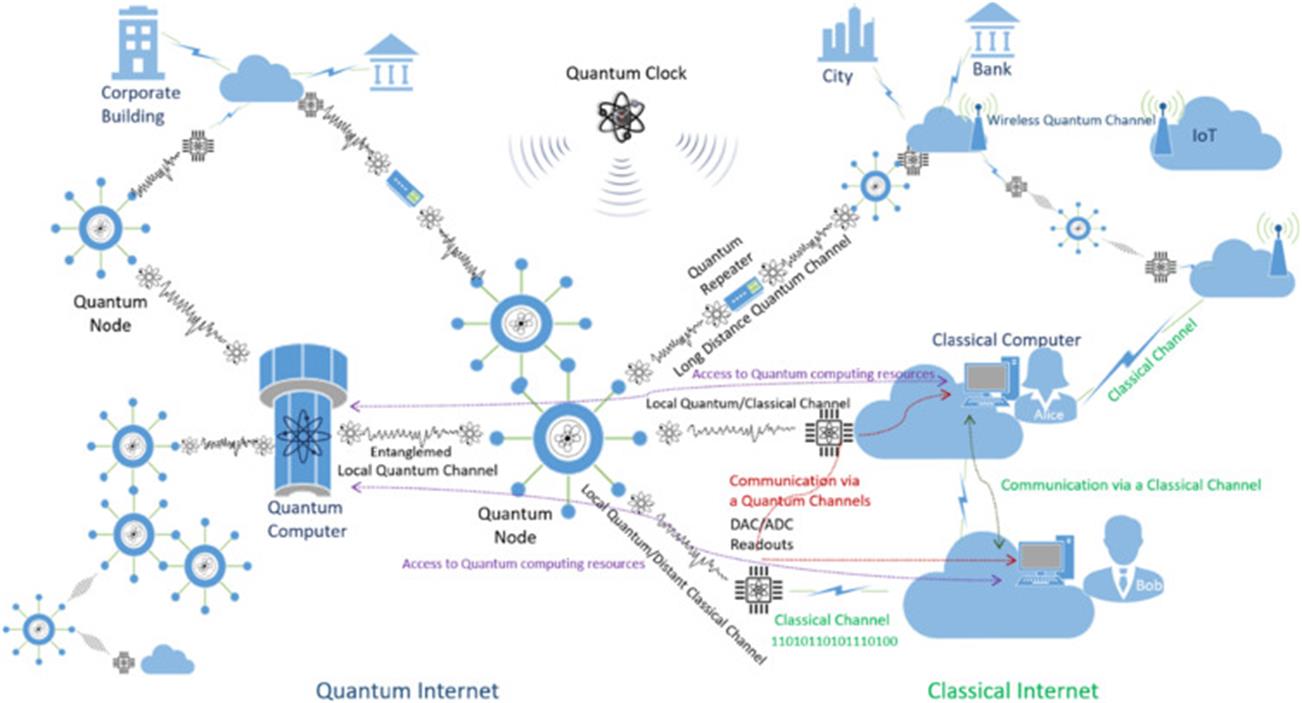
In addition to core security capabilities, quantum networks also possess three breakthrough functions:
● Distributed Quantum Computing Scaling: Interconnect scattered Quantum Processing Units (QPUs) and quantum computers to break through the computing power limit and qubit quantity restriction of a single quantum device, enabling more complex quantum computing tasks (such as large-scale quantum simulation and quantum artificial intelligence training). Optical Fiber provide a reliable medium for inter-device qubit transmission.
● Quantum Sensing Collaboration Enhancement: Connect distributed quantum sensors to improve measurement accuracy in scenarios such as Positioning, Navigation, and Timing (PNT), gravitational wave detection, and biomolecular imaging through quantum entanglement, surpassing the performance limits of traditional sensor networks. The low-loss transmission capability of Optical Fiber ensures the stable long-distance transmission of entangled photons.
● Blind Quantum Computing Support: Enable users to securely invoke remote quantum devices for computing without disclosing raw data, solving the data privacy protection problem in quantum computing resource sharing, and providing technical support for sensitive scenarios such as financial risk control and medical data analysis. Optical Fiber construct a secure and efficient remote quantum data transmission link.
The Fiber Optical Supporting in Quantum Communication
Classical networks transmit data via controllable electrical or optical signals, which are divided into standardized packets and routed by reading header information. Repeaters amplify signals to compensate for loss and enable long-distance transmission, while repeated packet copying and verification ensure reliability. Traditional Optical Fiber primarily improve transmission speed and range.
Quantum networks operate on a completely different mechanism. Qubits cannot be amplified, fully read (which would cause state collapse), or duplicated. Instead, quantum states are transmitted through entanglement distribution and quantum teleportation, with fiber as the core transmission medium. Entangled quantum pairs are distributed across fiber links to establish quantum correlations between distant nodes; with minor classical information assistance, quantum teleportation transfers quantum states between nodes without direct qubit delivery, building end-to-end quantum links. Entanglement is the core medium, classical information aids state calibration, and fiber ensures low-loss, low-interference transmission of entangled photons—all three components are essential.
How Optical Fiber Enhance Quantum Communication
Quantum communication, a revolutionary data transmission method based on quantum mechanics, boasts unparalleled security and speed. Large-scale quantum communication relies heavily on fiber optic technology, which efficiently transmits photons (the basic particles of qubits) over long distances with minimal signal loss, making it the ideal medium for quantum information transmission.
A core role of Optical Fiber in enhancing quantum communication is supporting Quantum Key Distribution (QKD). QKD can detect eavesdropping attempts, as Optical Fiber enable low-interference photon transmission, and any interception alters the quantum state—alerting both parties and reinforcing security.
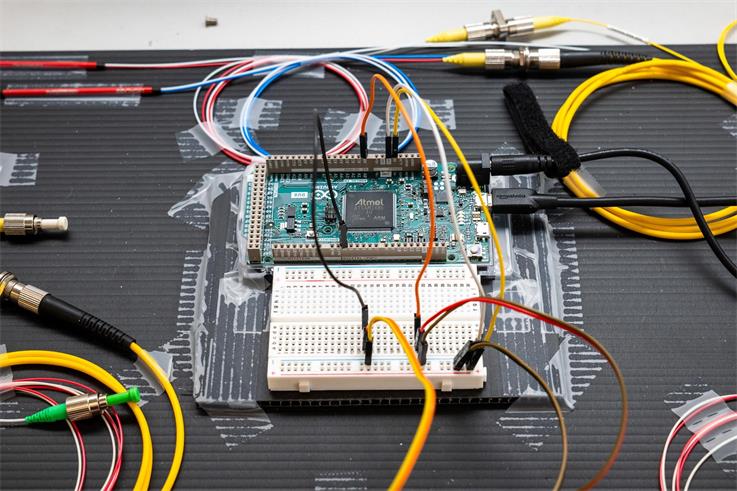
Optical Fiber are also essential for entanglement-based quantum networks, where qubits maintain distance-independent correlations. They ensure stable long-distance transmission of entangled photons and boost efficiency via near-light-speed photon travel, critical for large-scale networks and unlocking quantum computing potential.
Additionally, Optical Fiber facilitate long-distance quantum communication by mitigating qubit fragility with a controllable transmission environment. When paired with quantum repeaters (which amplify signals to extend range), they lay the groundwork for global quantum networks linking cross-continental quantum devices.
To tackle noise and coherence loss in quantum communication, fiber optic technology evolves continuously. Innovations like hollow-core fibers reduce photon-medium interaction, minimizing attenuation and interference to enhance quantum system efficiency and reliability, solidifying its role in current and future quantum computing demands.
The Core Value of Optical Fiber in Quantum Data Transmission
In quantum computing, qubit transmission between system components is key to high computing power. Optical Fiber, using light as the quantum information carrier, enable seamless qubit transmission. Their most notable feature is maintaining long-distance quantum coherence with minimal loss—an advantage beyond traditional transmission media.
Classical data transmission is unsuitable for quantum systems, as it cannot preserve qubits’ fragile quantum states. Optical Fiber solve this with a stable medium, enabling qubit transmission without losing properties critical for complex computations. They also integrate well with quantum sensors and repeaters; notably, quantum repeaters work with Optical Fiber to amplify quantum signals without disrupting their states, enabling high-quality long-distance transmission.
As quantum computers grow more complex, Optical Fiber grow more critical in quantum data transmission. Their fast, secure, and reliable qubit transmission ensures quantum computing fulfills its potential, and forms the core infrastructure for linking distributed quantum devices and building large-scale quantum networks.
Challenges and Innovations of Optical Fiber in Quantum Networks
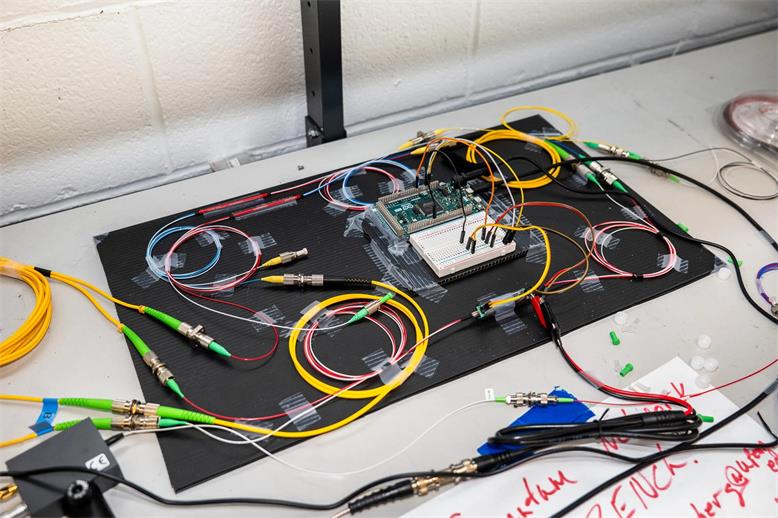
Although Optical Fiber are a core support for quantum networks, there are still several urgent challenges to address in their application. The primary challenge is signal loss: even with extremely low attenuation, Optical Fiber still experience some signal loss during long-distance transmission. Given the extreme sensitivity of qubits to environmental interference, even minor losses can significantly affect transmission quality.
The second core challenge is the integration and adaptation of Optical Fiber with existing quantum technologies. For example, connecting Optical Fiber to quantum computers requires dedicated interfaces to handle the unique properties of qubits. To address this, innovations in the field of quantum photonics—such as the development of quantum transceivers—are gradually bridging this gap by converting quantum signals into optical signals transmissible in fiber optic networks, enabling seamless connection between quantum devices and fiber optic links.
Fiber optic technology is also continuously advancing to reduce signal noise. Noise interferes with qubit transmission and causes quantum computing errors. Researchers are developing new types of Optical Fiber, such as hollow-core fibers, which reduce noise by isolating photons from environmental interference. These advances are crucial for building high-fidelity quantum networks. In addition, the research and development of quantum repeaters and quantum memory devices work in concert with fiber optic technology to continuously expand the coverage and improve the reliability of quantum networks, providing support for building robust quantum communication infrastructures. With the mutual iteration of quantum technology and fiber optic technology, the performance and scalability of quantum networks will be significantly enhanced.
Practical Steps for Building Quantum Communication Network
The construction of quantum communication networks follows a core process of "theoretical planning - hardware deployment - protocol debugging - software integration - pilot operation optimization," balancing technical feasibility and cost control. The selection, deployment, and adaptation of Optical Fiber are key links throughout the process. The following are specific practical details:
Step 1: Preliminary Planning and Requirement Analysis
First, clarify the network's application scenarios (such as financial encryption, government communication, and quantum sensing collaboration) and determine core indicators: transmission distance (metro, inter-city, or wide-area), key generation rate (to meet data encryption needs), qubit fidelity (to ensure communication reliability), number of nodes, and topological structure (star, ring, or mesh). Subsequently, conduct surveys of existing infrastructure, focusing on fiber optic link evaluation: when reusing existing Optical Fiber, accurately test parameters such as fiber loss, dispersion coefficient, and polarization mode dispersion (quantum signals are sensitive to fiber loss, typically requiring loss below 0.2 dB/km). If parameters are substandard, fiber optic repair, replacement, or the use of dedicated quantum fibers such as hollow-core fibers is necessary; simultaneously, plan fiber optic routes based on transmission distance, reserve deployment locations for quantum repeaters and transceivers, and support the planning of power supply and cooling resources.
Step 2: Hardware Deployment
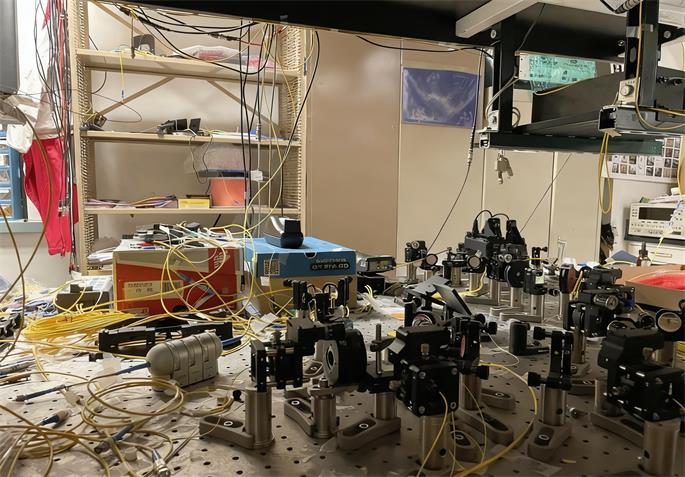
The hardware system is the foundation of a quantum network. Corresponding equipment must be deployed by node type, and fiber optic link construction and adaptation must be completed simultaneously:
● Quantum Signal Sources: Deploy single-photon sources (such as those based on semiconductor quantum dots or parametric down-conversion) at core nodes to generate polarization-encoded or time-encoded entangled photon pairs, ensuring photon coherence and stability (coherence time must match fiber optic transmission distance).
● Quantum Transceivers: Deploy quantum transceiver equipment at each terminal node to send, receive, and measure qubits. Integrate components such as photon detectors (e.g., Avalanche Photodiodes/APDs) and polarization controllers to achieve accurate encoding and decoding of quantum states, while completing docking and adaptation with fiber optic links to reduce quantum state loss at interfaces.
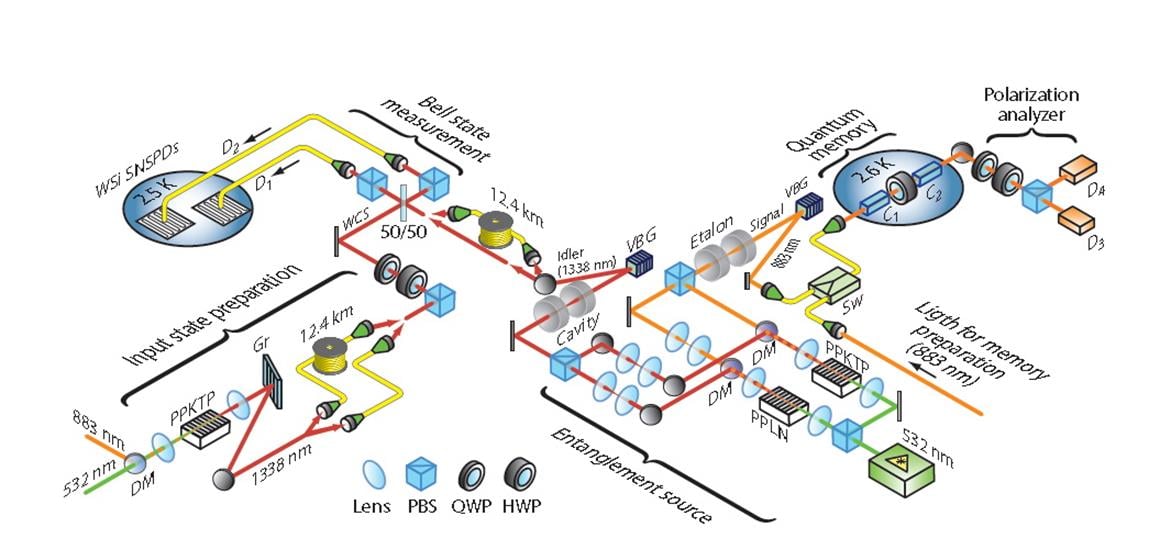
● Quantum Repeaters/Memories: For long-distance transmission scenarios (exceeding 100 km), deploy quantum repeaters midway in fiber optic links to extend quantum link distance through entanglement swapping and entanglement purification protocols; match with quantum memories (such as those based on atomic ensembles or superconducting qubits) to temporarily store quantum states, solve qubit transmission delay issues, and achieve long-distance quantum transmission in collaboration with Optical Fiber.
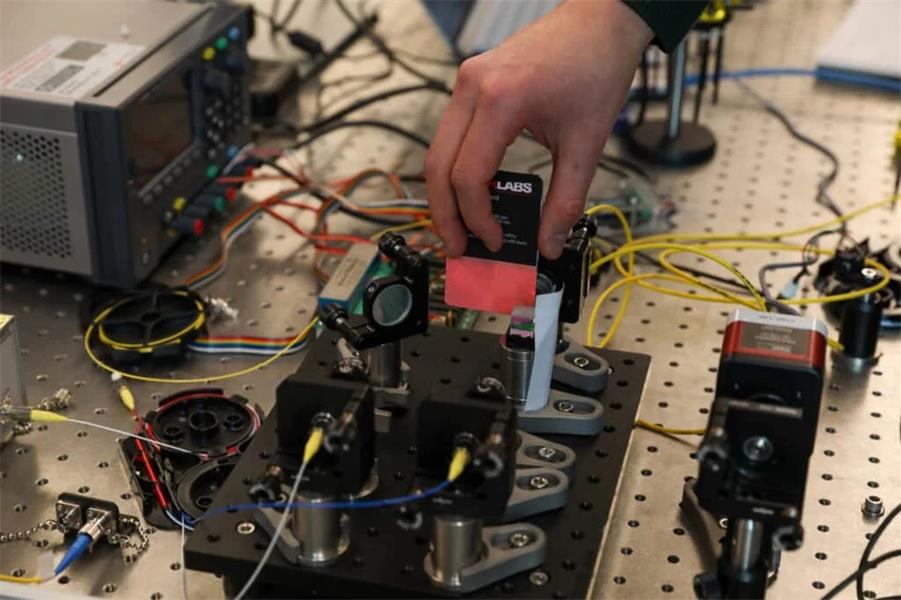
● Optical Fiber and Auxiliary Hardware: Lay or reuse fiber optic links based on scenario requirements—conventional low-loss Optical Fiber can be used for metro scenarios, while hollow-core fibers are preferred for long-distance or high-fidelity scenarios; deploy classical control links (for transmitting calibration information required for quantum teleportation), high-precision synchronous clocks (to ensure time synchronization for quantum state measurement at each node), and hardware monitoring equipment (to real-time monitor parameters such as photon source power, detector efficiency, and fiber optic link loss).
Step 3: Quantum Protocol Debugging and Link Calibration
After hardware deployment, debug protocols by quantum network stack layer and optimize fiber optic link performance to ensure coordinated operation of all links: debug entanglement generation protocols at the link layer to optimize the generation efficiency and fidelity of entangled photon pairs, and eliminate environmental noise interference through entanglement purification technology; debug entanglement distribution protocols at the network layer to determine entanglement link routing strategies based on fiber optic routes and achieve dynamic entanglement allocation between nodes; debug quantum teleportation protocols and QKD protocols at the transport layer, calibrate quantum state parameters in conjunction with classical control links, adapt to fiber optic transmission characteristics, and ensure accurate qubit transmission. Simultaneously perform full-link calibration: adjust polarization controllers to compensate for fiber optic polarization drift, optimize detector thresholds to reduce bit error rate (qubit bit error rate/QBER must be controlled below 1%), verify the sensitivity of eavesdropping detection mechanisms, and real-time monitor fiber optic link loss changes to promptly identify interference factors.
Step 4: Software System Integration
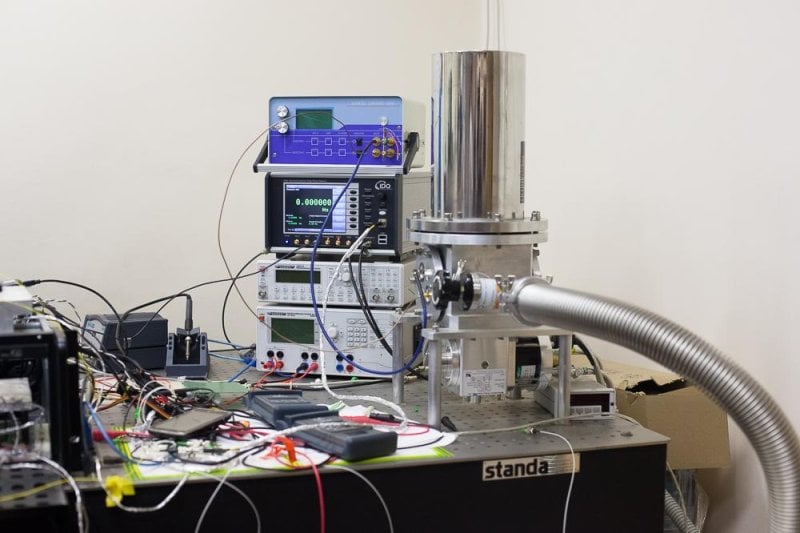
Integrate three core software components—high-physical-precision quantum network simulators, SDN-based orchestrators, and real-time operating systems—to achieve intelligent network management and control, while adapting to the dynamic monitoring needs of fiber optic links: use quantum network simulators to review fiber optic link performance, optimize hardware configurations and protocol parameters based on fiber optic loss, dispersion, and other parameters, and reduce pilot operation risks; deploy SDN-based orchestrators to build unified API interfaces, realize docking between the application layer and hardware layer, manage entanglement routing, key distribution, and node resource scheduling, and real-time monitor fiber optic link health status, QBER, key generation rate, entanglement fidelity, and other indicators; install real-time operating systems at each node to act as the underlying control core of the quantum hardware stack, achieve sub-nanosecond message transmission, control the operating status of hardware components, dynamically optimize parameters such as photon source power based on fiber optic loss fluctuations, and ensure the stability of fiber optic transmission.
Step 5: Pilot Operation and Optimization Iteration
Launch small-scale pilots, link to practical scenarios (e.g., small-scale government data transmission, financial transaction encryption), and continuously monitor network performance and fiber link status. Count indicators like key generation rate, transmission delay, and eavesdropping detection response time to verify preliminary requirements. Resolve pilot issues (e.g., fidelity degradation from fiber link noise, excessive interface loss, link interruptions) by optimizing hardware layout (adding shielding devices, replacing high-performance quantum transceivers), adjusting protocol parameters (optimizing entanglement purification algorithms), and upgrading fiber links (partially using hollow-core fibers). Gradually expand node count and transmission distance, verify fiber compatibility with quantum repeaters/memories for scalability, and ultimately build a stable quantum communication network.
Quantum Network Stack
The quantum network stack is a protocol system designed to achieve two core quantum network goals: distributing entanglement and utilizing distributed entanglement. Composed of 5 layers that work collaboratively to form a complete quantum network operational framework, fiber optic technology runs through multiple layers to provide basic transmission support:
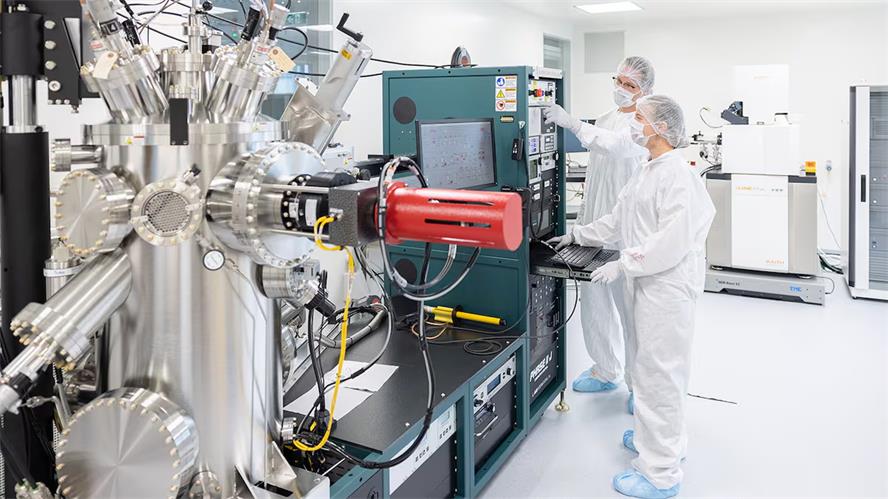
● Physical Layer: The hardware foundation of the network, including core components such as quantum light sources, quantum detectors, fiber optic links, quantum repeaters, and quantum memories. As the core transmission medium, Optical Fiber are responsible for the physical transmission of quantum states, and their performance directly determines the network's transmission distance, fidelity, and key generation rate.
● Link Layer: Responsible for entanglement generation and maintenance within a single link. Core protocols include entanglement generation, purification, and swapping protocols, which must adapt to fiber optic transmission characteristics, eliminate environmental noise interference on quantum states, ensure the stability and reliability of entanglement within a single link, and provide high-quality entanglement resources for upper-layer protocols.
● Network Layer: Responsible for cross-link entanglement distribution and routing scheduling. Through entanglement routing protocols and resource allocation protocols, it realizes dynamic entanglement connection between multiple nodes in combination with fiber optic topological structures, solving the problem of efficient allocation of entanglement resources.
● Transport Layer: Responsible for end-to-end qubit transmission. Core protocols include quantum teleportation and QKD protocols, which rely on fiber optic links to achieve accurate quantum state transmission and secure key generation/distribution, providing standardized quantum transmission services for the application layer.
● Application Layer: Contains software components and application interfaces for driving specific scenarios, such as quantum secure communication modules, distributed quantum computing scheduling modules, and quantum sensing collaboration modules. The implementation of its functions relies on stable quantum transmission channels built by fiber optic links, converting quantum network capabilities into practical applications.
In addition to the above 5 layers, three core software elements support the efficient operation of quantum networks, facilitating management and control across all layers while adapting to fiber optic link monitoring and optimization needs:
High-Physical-Precision Quantum Network Simulator
A core tool for quantum network design, testing, and optimization, it reduces hardware deployment risks and costs. A high-performance quantum network simulator requires two key capabilities: accurately simulating quantum protocol operational logic, and reproducing underlying physical characteristics (e.g., fiber loss, dispersion, laser power fluctuations, detector noise). Simulators enable predicting core performance indicators (key generation rate, bit error rate) via known fiber link parameters and hardware configurations—before investing in costly hardware—optimizing hardware selection and network topology. During network expansion/upgrades, they verify fiber link upgrade plan feasibility for optimal resource allocation.
SDN-Based Orchestrator
As the neural hub of quantum networks, it manages global hardware resources and protocol operations, bridging the application and hardware layers. Its core functions: providing standardized APIs for application-layer access to quantum network services; maintaining request queues to allocate entanglement resources and key generation rates by priority; implementing dynamic entanglement routing and coordinated hardware control based on fiber topology; monitoring fiber link health, QBER, key generation rate, entanglement fidelity and hardware parameters in real time, alerting anomalies such as abnormal fiber loss and interface failures, and triggering fault-tolerant mechanisms. The SDN-based architecture automates network operations, cuts manual maintenance costs, and enhances network flexibility and scalability.
Real-Time Operating System (RTOS)
Deployed at each quantum node, it acts as the underlying control core of the quantum hardware stack, requiring sub-nanosecond response speed and high-precision synchronization. Its core responsibilities include: real-time control and monitoring of node hardware (e.g., quantum light sources, detectors, polarization controllers) to ensure stable operation and compatibility with fiber optic transmission; adaptive protocol adjustment to dynamically optimize operating parameters per link changes (e.g., fiber loss fluctuations, polarization drift); and high-precision inter-node time synchronization plus sub-nanosecond message transmission, providing timing guarantees for core operations (e.g., quantum teleportation, entanglement swapping) and ensuring fiber link transmission efficiency and quality.
Conclusion
Quantum networks are no longer abstract futuristic concepts but practical technologies advancing from pilots to large-scale deployment. Global quantum communication network pilots use Optical Fiber as the core transmission medium. Applied mainly in government, finance, and energy, these pilots have validated the feasibility of integrating quantum secure communication with Optical Fiber.
The integration of Optical Fiber and quantum computing will profoundly shape future tech advancement. As quantum computers improve, demand for fast, secure, and efficient data transmission rises—Optical Fiber, with its reliable transmission, meets this need effectively. Its key impacts cover three scenarios: enabling distributed quantum computing by connecting devices to pool computing power for complex tasks; empowering quantum cloud computing via secure, high-speed data transmission to boost service convenience; and supporting large-scale industrial applications by providing infrastructure for quantum computing in finance, healthcare, and AI.
Looking ahead, quantum networks and Optical Fiber will mutually drive iterative upgrades. Quantum network demand will spur fiber optic innovations (e.g., lower-loss quantum fibers, high-efficiency quantum interfaces), while advanced Optical Fiber will extend quantum network distances and enhance fidelity, accelerating wide-area deployment. Notably, quantum technology competition is intensifying, with global players racing to deploy related technologies for an edge in "quantum era" information security. Proactive planning of fiber-based quantum networks and security technologies is imperative for key entities.
FAQs
Q1: What makes optical fiber vital to quantum computing?
Optical fiber facilitates the secure and efficient transmission of qubits while preserving their coherence over long distances— a critical requirement for quantum networks.
Q2: What function does fiber perform in quantum communication?
It underpins quantum key distribution (QKD), entanglement-based communication, and high-speed quantum data transmission with minimal signal loss.
Q3: Is long-distance quantum communication feasible with optical fiber?
Yes. With the aid of quantum repeaters, optical fiber enables intercontinental qubit transmission without undermining quantum integrity.
Q4: What are the major hurdles of using fiber in quantum computing?
Signal attenuation, noise interference, and integration with quantum processors are the key challenges, though innovations like hollow-core fibers and quantum transceivers are mitigating these issues.
Q5: In what way does optical fiber enable distributed quantum computing?
By interconnecting multiple quantum computers via fiber networks, it allows them to share qubit data and collaborate on solving complex tasks.
Q6: Which industries stand to benefit from quantum computing integrated with optical fiber?
Finance, healthcare, artificial intelligence, cybersecurity, and telecommunications will be the first sectors to capitalize on optical fiber-supported quantum networks.
Q7: What future innovations are anticipated for fiber in quantum systems?
Hollow-core fibers, advanced quantum repeaters, and quantum memory integration will boost the speed and reliability of fiber-based quantum networks.





No comments have been posted yet.