


.webp)


Explore the QSFP-DD cable's innovative features, its impact on data center operations, and why it’s considered a cornerstone of future-proof connectivity.
QSFP DD Cable: What It Is and How It Ushers in the Next Generation of Data Center Connectivity
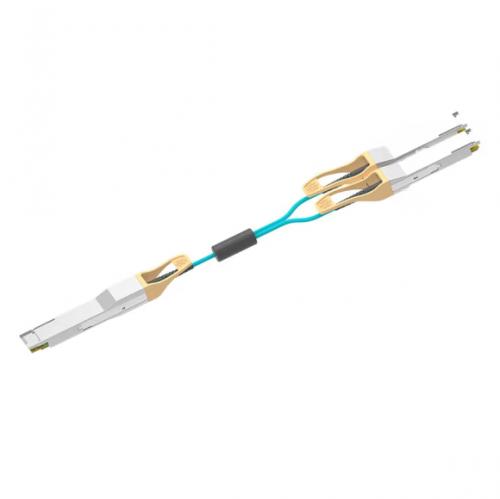
The digital age is synonymous with rapid data growth, demanding more from data center connectivity than ever before. To keep up with these demands, technological advancements are essential. Among these, the QSFP-DD (Quad Small Form-Factor Pluggable Double Density) cable emerges as a leading solution, offering a leap in performance and efficiency.
What is QSFP-DD?
QSFP-DD stands for Quad Small Form-factor Pluggable Double Density. It's a high-speed interconnect standard designed to meet the escalating bandwidth requirements of modern data centers. QSFP-DD cables are the physical connections that enable data transfer between devices equipped with QSFP-DD ports.
Compared to its predecessor, QSFP28, QSFP-DD features a form factor similar to the original QSFP but with a more robust design. It supports a 16-lane interface, each operating at 25 Gbps, which aggregates to a total bandwidth of 400 Gbps.
This high-speed capability makes it an ideal choice for applications requiring substantial data throughputs, such as data center interconnects, high-performance computing (HPC), and large-scale storage systems.
Types of QSFP-DD Cables
QSFP-DD Active Optical Cables (AOCs)
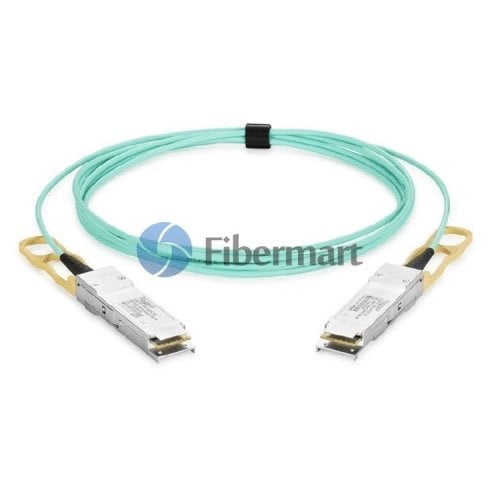
Active Optical Cables (AOCs) use optical fibers and built-in transceivers for high-speed data transfer over longer distances, from 1 to 100 meters. They deliver up to 400 Gbps with minimal signal loss and are immune to EMI, making them ideal for high-performance and high-density environments. However, they are more expensive due to the active components.
QSFP-DD Direct Attach Copper Cables (DACs)
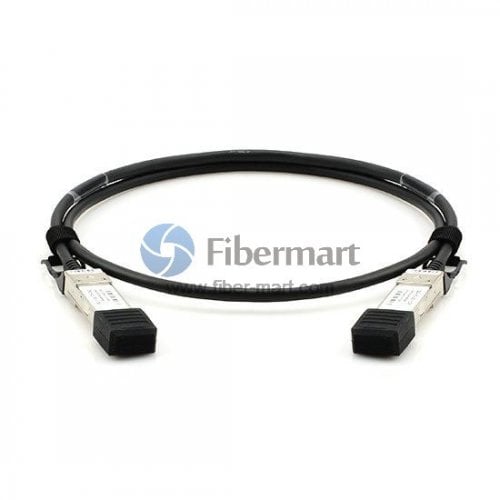
Direct Attach Copper Cables (DACs) offer a direct electrical connection with fixed connectors, making them ideal for short-range data center connections, typically from 0.5 to 7 meters. They provide up to 400 Gbps of bandwidth and are cost-effective but limited in distance and can suffer from signal degradation over longer stretches.
QSFP-DD Passive Copper Cables
QSFP-DD passive copper cables provide high-speed data transmission over short distances within a data center, using copper wires for direct connections. Typically ranging from 0.5 to 5 meters, these cables support up to 400 Gbps of aggregate bandwidth. They are cost-effective and straightforward but are limited by distance and can be affected by electromagnetic interference (EMI).
QSFP DD Cable: Key Specifications
- Form Factor: The QSFP-DD cable retains the compact and user-friendly design of the QSFP family but with additional density to accommodate the increased number of lanes.
- Data Rate: Each lane operates at 25 Gbps, combining for a total of 400 Gbps.
- Connector: These are the physical interfaces that connect the cable to the QSFP-DD ports on devices. They are designed to provide a secure and reliable connection while fitting into the same slots as QSFP28 modules but with enhanced capabilities.
- Distance: QSFP-DD cables support various lengths, with both active and passive options available to suit different deployment scenarios.
- Transceivers: These are electronic components that convert electrical signals into optical signals and vice versa. They are housed within the QSFP-DD modules.
- Optical Fibers: These carry the optical signals between the devices. The type of optical fiber used depends on the cable length and data rate requirements.
- Cable Assembly: This refers to the overall construction of the cable, including the arrangement of optical fibers, shielding, and other components.
QSFP-DD and Data Center Architecture
The adoption of QSFP-DD cables is transforming data center architecture. By providing higher bandwidth and density, QSFP-DD enables the construction of more efficient and scalable networks. Some key areas of impact include:
|
How QSFP-DD is Revolutionizing Data Centers
The QSFP-DD cable is not just an incremental improvement but a transformative development in data center infrastructure. Here’s how it ushers in the next generation of data center connectivity.
1. Enhanced Bandwidth
One of the most significant advantages of QSFP-DD cables is their ability to deliver 400 Gbps of aggregate bandwidth. This dramatic increase in data transfer rates addresses the growing need for higher bandwidth in data centers, driven by applications such as big data analytics, artificial intelligence, and cloud computing. By supporting faster data rates, QSFP-DD cables reduce bottlenecks and enhance overall network performance.
2. Smaller Footprint
The "double density" in QSFP-DD refers to its ability to pack twice the number of channels into the same physical space as QSFP28. This means that data centers can accommodate more ports in a smaller area, leading to increased density and reduced infrastructure costs.
3. Forward Compatibility
The QSFP-DD standard is designed with future growth in mind. It supports scalable upgrades, including compatibility with emerging technologies and faster data rates. This forward-looking approach ensures that data centers can adapt to evolving requirements without overhauling their entire infrastructure.
4. Enhanced Power Efficiency
Efficiency is a key consideration in data center operations. QSFP-DD cables are engineered to be power-efficient, which helps in managing overall power consumption. This is particularly important in large-scale data centers where power costs are a significant factor. The improved efficiency contributes to lower operational costs and supports green data center initiatives.
5. Versatility and Compatibility
QSFP-DD cables are versatile and compatible with a range of networking equipment. They support both active and passive configurations, making them suitable for various deployment scenarios. Additionally, their compatibility with existing QSFP28 slots ensures a smooth transition and integration into current data center environments.
6. Improved Signal Integrity
QSFP-DD incorporates advanced signal integrity features to ensure reliable data transmission over longer distances. This is critical for maintaining high performance and reducing errors in data center networks.
Challenges and Considerations
While QSFP-DD cables offer significant advantages, there are some challenges to consider:
Cost: QSFP-DD cables and components are currently more expensive compared to previous generations.
Power Consumption: While improvements have been made, power consumption remains a factor to manage in high-density deployments.
Thermal Management: Efficient cooling solutions are essential to prevent overheating in high-density environments.
Future-Proof Your Data Center With QSFP-DD Technology
Fiber-mart offers a comprehensive range of high-performance QSFP-DD cables and solutions tailored to meet your specific needs. Our commitment to quality and innovation ensures optimal network performance and scalability.
Don't let outdated infrastructure hinder your business growth. Explore our offerings and experience the next generation of data center connectivity. Schedule a meeting with us for tailored or OEM products available at Fibermart at wholesale rates!





No comments have been posted yet.