


.webp)


Explore the revolutionary technology of Passive Optical Networking (PON) and its transformative impact on high-speed broadband connectivity. Fibermart provide more infos about it.
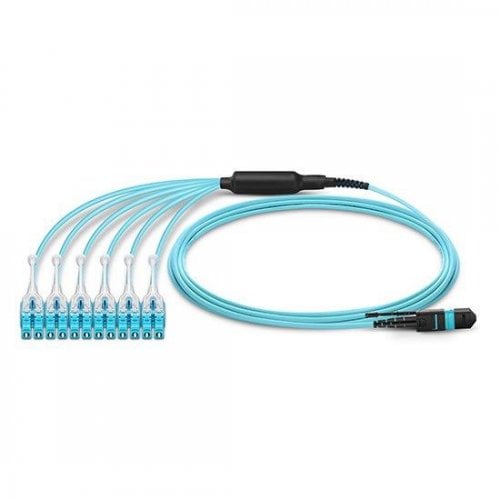
As the demand for high-speed broadband continues to soar, Passive Optical Networking (PON) emerges as a game-changer in the telecommunications industry. Its cost-effectiveness, scalability, and reliability make it an attractive solution for service providers seeking to deliver ultra-fast and reliable connectivity to both residential and business customers.
How Does Passive Optical Networking (PON) Work?
Passive Optical Networking (PON) is a fiber-optic communication technology that enables the distribution of broadband signals over optical fibers. Unlike traditional copper-based networks, where signals degrade over distance, PON utilizes optical fibers to transmit data with minimal loss over long distances. The "passive" aspect refers to the lack of active electronic components in the distribution network, leading to reduced power consumption and maintenance costs.
PON operates on the principle of shared infrastructure, where a single optical line terminal (OLT) located at the service provider's central office communicates with multiple optical network units (ONUs) or optical network terminals (ONTs) installed at the customer premises. The OLT sends data downstream to the ONUs/ONTs, which then distribute the signal to individual users.
The OLT sends data downstream (from the central hub to the subscriber locations) by converting electrical signals into optical signals and transmitting them through the fiber-optic cables. This downstream transmission is achieved using a technique called wavelength division multiplexing (WDM).
Here, different data streams are assigned to distinct wavelengths of light. This allows multiple signals to travel simultaneously over a single optical fiber without interfering with each other. Each ONU/ONT is assigned a specific wavelength or wavelength range to receive its designated data stream.
Conversely, data from the subscriber locations is sent upstream (from the subscriber locations to the central hub). The ONUs/ONTs collect and combine the upstream data from multiple users and transmit it back to the OLT.
A passive optical splitter is used to divide the optical signal from the OLT into multiple paths to serve multiple subscribers efficiently. The splitter does not require any external power source and simply splits the incoming signal into several output ports, each connecting to an individual ONU/ONT.
PON enables bidirectional communication, allowing data to flow seamlessly in both downstream and upstream directions. This bidirectional communication is essential for applications like video conferencing, online gaming, cloud computing, and more.
|
Did You Know: PON architecture is often deployed as Fiber to the Premises (FTTP), meaning that fiber-optic cables are extended directly to individual homes or businesses. This architecture eliminates the need for copper-based connections, such as DSL or cable, providing faster and more reliable internet access.
|
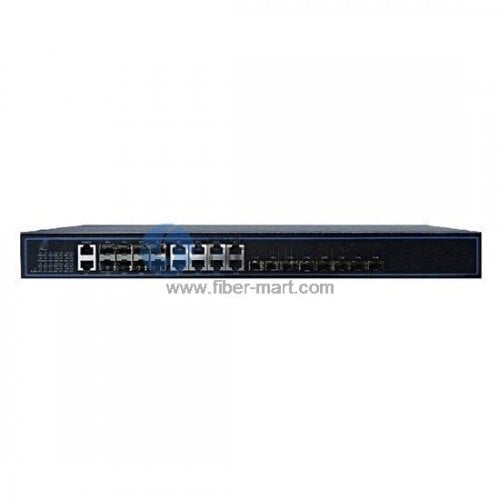
Key Applications Of PON
Residential Broadband: PON is one of the next-generation networking technologies that's extensively used by internet service providers (ISPs) to deliver high-speed broadband access to residential customers.
With the increasing demand for bandwidth-hungry applications such as streaming video, online gaming, and video conferencing, PON enables ISPs to provide reliable and fast internet connections to homes and apartments. This ensures a seamless online experience for residents, even in households with multiple connected devices.
Enterprise Networks: PON solutions are increasingly being adopted in corporate environments to meet the growing demands of data-intensive applications and services.
PON's scalability and high bandwidth make it well-suited for enterprise networks, supporting activities such as cloud computing, data storage, video conferencing, and unified communications.
Additionally, PON offers enhanced security and reliability, making it an ideal choice for businesses looking to optimize their network infrastructure.
Smart Cities: PON infrastructure serves as the backbone of smart city initiatives, enabling the deployment of various interconnected devices and sensors for improved urban management and sustainability.
PON facilitates the implementation of smart grid systems, intelligent transportation networks, environmental monitoring, public safety solutions, and other smart city applications. By leveraging PON technology, cities can enhance efficiency, reduce costs, and improve the quality of life for residents.
Telecom Backhaul: PON architectures play a crucial role in telecom backhaul, providing cost-effective and high-capacity connectivity between mobile base stations and the core network.
PON-based backhaul solutions enable telecom operators to meet the increasing demand for mobile data services while optimizing network performance and reducing operational expenses.
PON's scalability and flexibility make it an attractive option for extending high-speed fiber optic broadband connectivity to remote or underserved areas, enhancing mobile network coverage and capacity.
Rural Broadband Access: In rural and underserved areas where deploying traditional broadband infrastructure may be challenging or cost-prohibitive, PON offers a viable solution for delivering high-speed internet access to residents and businesses.
PON's ability to support long-distance fiber-optic connections and its cost-effective deployment model makes it an attractive option for extending broadband coverage to rural communities, bridging the digital divide, and fostering economic development.
Advantages of PON
Cost-Effectiveness
PON significantly reduces the overall cost of deploying and maintaining broadband infrastructure compared to traditional copper-based networks. By utilizing passive optical splitters to share fiber-optic infrastructure among multiple users, PON eliminates the need for individual fiber connections to each subscriber, thereby reducing material and labor expenses associated with cabling.
Scalability
PON architecture is inherently scalable, allowing service providers to easily expand their network capacity to accommodate growing demand. Additional subscribers can be seamlessly added to the network by installing new Optical Network Units (ONUs) or Optical Network Terminals (ONTs) without requiring extensive upgrades to the existing infrastructure. This scalability ensures that PON networks can adapt to changing user requirements and market conditions over time.
High Bandwidth
PON systems offer ample bandwidth to support bandwidth-intensive applications and services, such as high-definition video streaming, online gaming, and cloud computing. With downstream speeds of up to several gigabits per second (Gbps) and upstream speeds of up to 1 Gbps or more, PON delivers a superior user experience compared to legacy broadband technologies. This high bandwidth enables users to access and transmit large amounts of data quickly and efficiently, enhancing productivity and user satisfaction.
Energy Efficiency
PON operates using passive optical components, which consume significantly less power compared to active electronic devices used in traditional broadband networks. By minimizing the need for powered equipment such as repeaters and amplifiers, PON reduces energy consumption and environmental impact, resulting in lower operating costs and a smaller carbon footprint. This energy efficiency makes PON an environmentally friendly choice for broadband deployment and operation.
Reliability
PON networks are inherently more reliable and resilient to external interference and signal degradation compared to copper-based networks. Fiber-optic cables used in PON systems are immune to electromagnetic interference, lightning strikes, and other environmental factors that can disrupt traditional copper lines. Additionally, PON's passive infrastructure minimizes the risk of equipment failures and network downtime, ensuring uninterrupted connectivity for users.
Security
PON technology offers enhanced security features to protect user data and privacy. With its point-to-multipoint architecture and advanced encryption protocols, PON networks provide secure transmission of sensitive information over the fiber-optic infrastructure. This ensures that data remains confidential and protected from unauthorized access or interception, enhancing user trust and compliance with privacy regulations.
Future-Proofing
PON technology provides a future-proof solution for broadband connectivity, capable of supporting emerging technologies like 5G, the Internet of Things (IoT), and smart cities. With its inherent scalability and flexibility, PON ensures that networks can adapt to evolving consumer needs and technological advancements.
Partner with Fibermart for a Robust PON Architecture
Want to experience the transformative power of Passive Optical Networking (PON) in revolutionizing broadband connectivity? Explore Fibermart's next-generation networking technologies to discover cost-efficient ways to supercharge your network infrastructure.
From high-quality fiber-optic cables to advanced passive optical splitters, Fibermart provides the tools you need to build robust, future-proof PON networks. Upgrade your network with Fibermart and embrace the revolution in broadband connectivity!
Reach out to us at +1 (205)-282-9089 for more details regarding all the essential components you need to build robust PON networks for your home or office.





No comments have been posted yet.