


.webp)


The explosion of AI computing power drives exponential growth in data center bandwidth demand. 400G/800G optical transceivers have achieved large-scale deployment, while 1.6T and higher-rate products are accelerating commercialization. Silicon photonic solutions have gradually become the mainstream technical route in the market due to their core advantages of high integration and low cost. However, facing the diversified technical routes of overseas brands such as Intel and Cisco, coupled with key industry pain points like light source coupling and process yield, purchasers generally encounter three major challenges: the balance between performance and cost, the adaptation dilemma between technical routes and application scenarios, and the confusion in brand solution selection. This article starts from basic cognition and gradually decomposes the scientific selection logic of silicon photonic transceivers to provide references for practical applications.
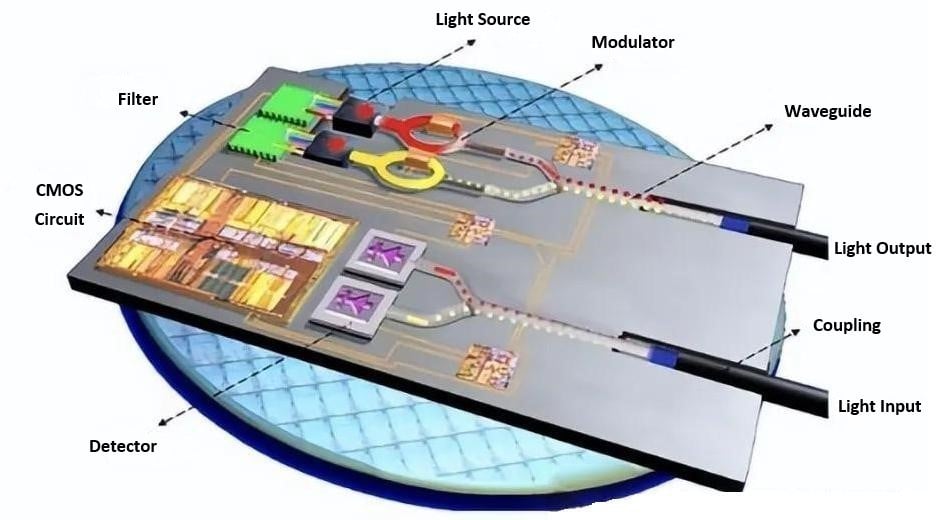
What is Silicon Photonic?
Fundamentals of Silicon Photonics
Silicon photonics is an emerging technology that realizes the integration of optoelectronic devices on silicon chips based on mature CMOS silicon-based semiconductor processes, thereby completing optical signal transmission, processing, and computation. Its core lies in constructing optical path systems through silicon-based materials, using optical signals to replace or assist electrical signals for information transmission, effectively integrating the inherent performance advantages of optical signals with the large-scale manufacturing advantages of silicon-based materials. The core characteristics of this technology are mainly reflected in the following three aspects:
● Significant Material Advantages: As the second most abundant element in the Earth's crust, silicon has a much lower raw material acquisition cost than III-V group compounds such as indium phosphide (InP) and gallium arsenide (GaAs) used in traditional optical transceivers. Meanwhile, more than 90% of integrated circuits worldwide are manufactured based on silicon-based CMOS processes, which can directly reuse the existing mature semiconductor industry chain to support large-scale cost reduction.
● Integration Breaks Through Bottlenecks: It breaks the technical limitations of discrete packaging of traditional optical devices. Relying on CMOS processes, core components such as lasers, modulators, detectors, and wavelength division multiplexers are integrated on a silicon-based substrate. It is particularly suitable for high-bandwidth optical transceiver applications and provides core support for high-density device deployment.
● Superior Optical Signal Performance: It effectively solves technical bottlenecks such as excessive power consumption, limited rate, and electromagnetic interference of electrical signals in short-distance, high-rate data transmission. The inherent characteristics of optical signals, such as high bandwidth, low latency, and anti-interference, combined with the manufacturing advantages of silicon-based materials, form differentiated technical competitiveness.
What is Silicon Photonic Transceivers?
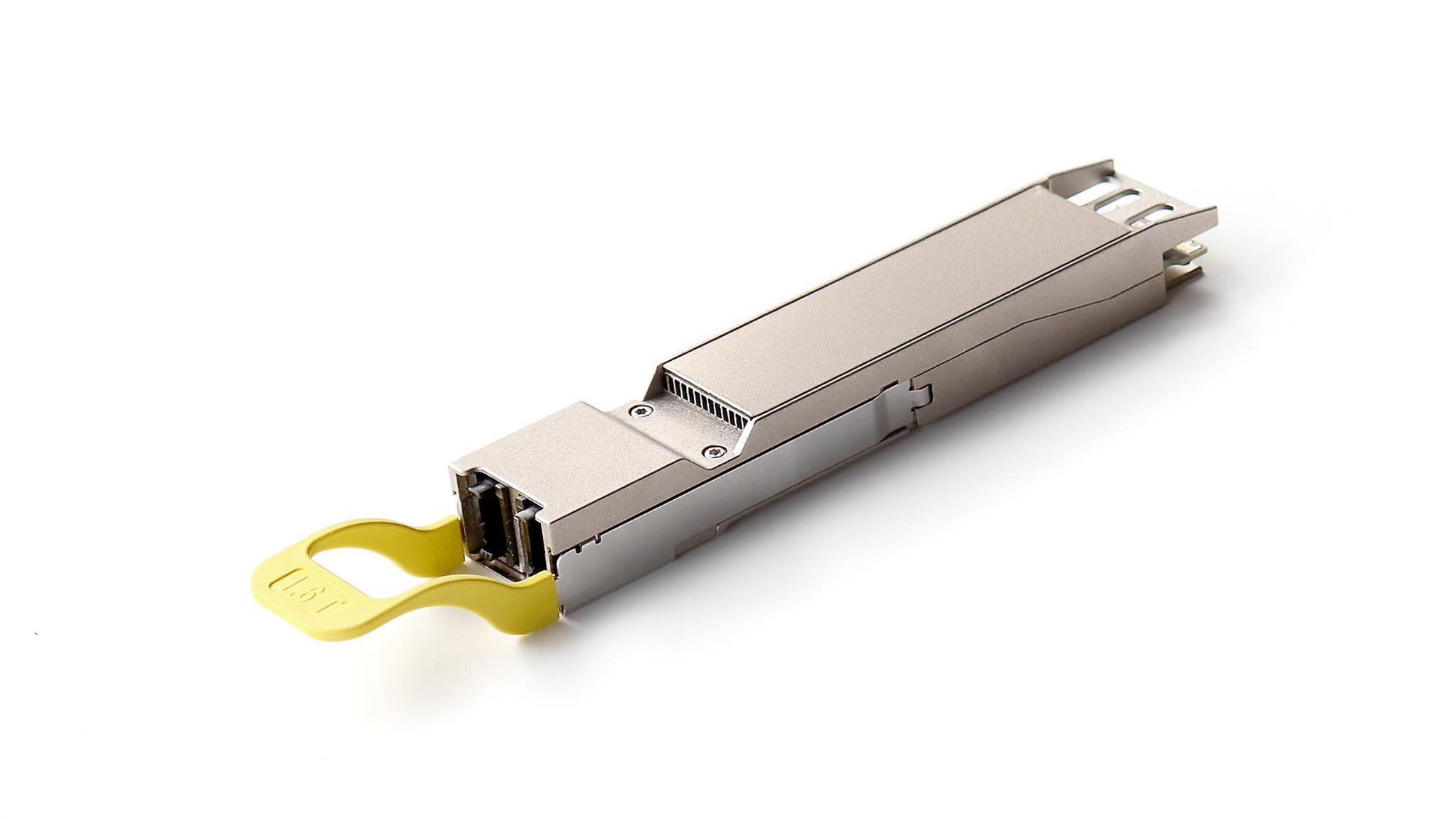
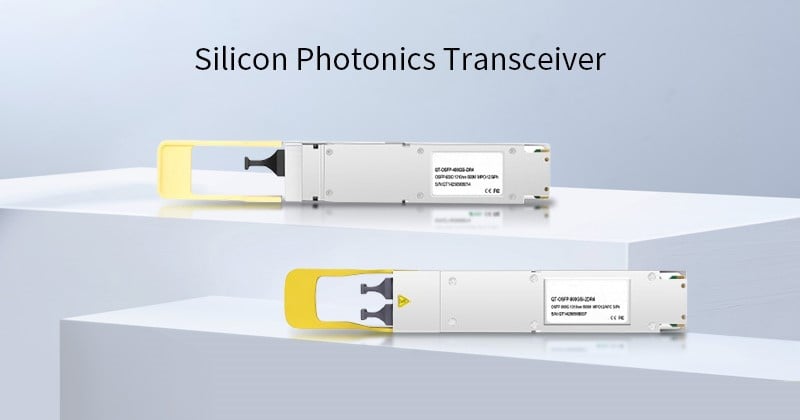
Silicon photonic transceivers are the most mature carriers for the commercial application of silicon photonics technology. They realize the emission, reception, and conversion of optical signals through silicon-based integration schemes and are widely used in core scenarios such as data center interconnection and 5G fronthaul. Compared with traditional optical transceivers, their core value stems from the "high integration, low cost, and low power consumption" characteristics brought by chip-level photonic integration technology, and they have become the core technical route for 1.6T and higher-rate optical transceivers.
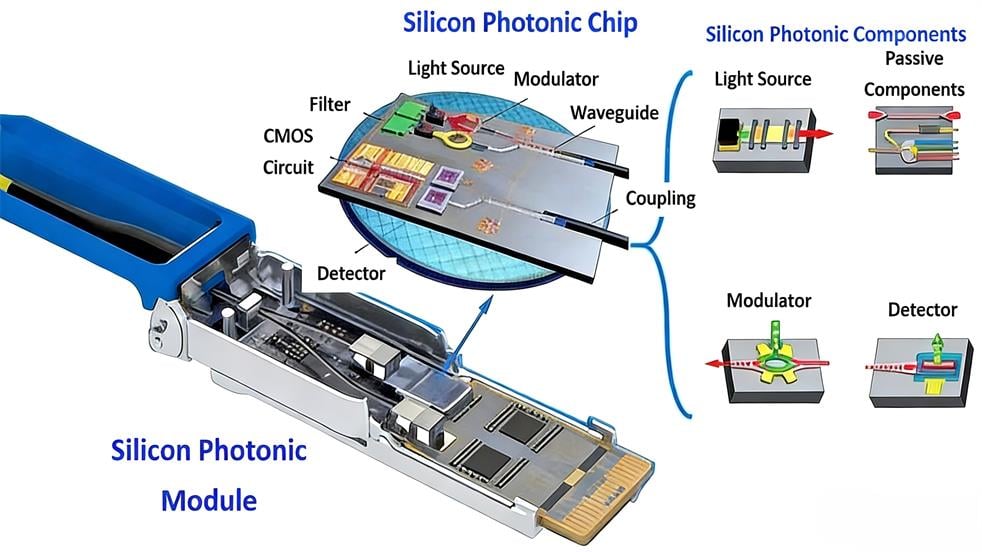
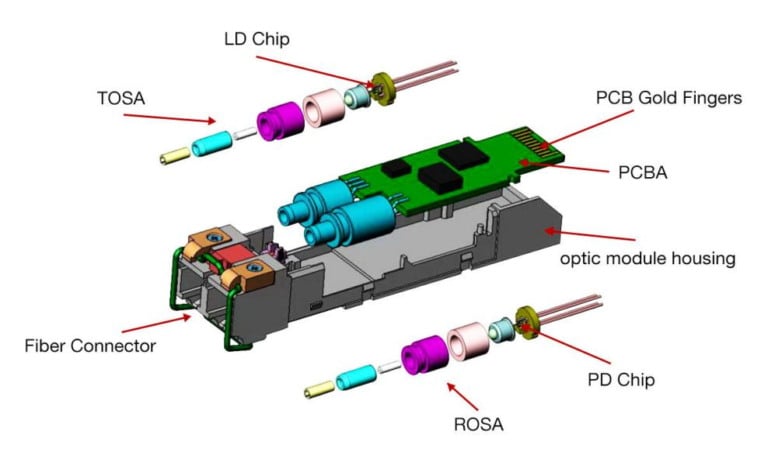
Differences Between Silicon Photonic Transceivers and Traditional Optical Transceivers
|
Comparison Dimension |
Silicon Photonic Transceiver |
Traditional Optical Transceiver |
|---|---|---|
|
Device Integration Method |
Passive/active devices integrated on a single silicon-based chip with high integration |
Discrete packaging of lasers, modulators, etc., followed by assembly |
|
Core Materials and Processes |
Silicon material, compatible with CMOS process, enabling large-scale mass production |
III-V group compounds, complex processes, and relatively high cost |
|
Size and Power Consumption |
Small size, high integration reduces interconnection power consumption, no TEC temperature control device required |
Larger size, high inter-device interconnection power consumption, some requiring temperature control |
|
Rate Potential and Cost |
Suitable for 400G/800G/1.6T high-speed scenarios, significant cost advantage after large-scale production |
Mature in medium and low-speed scenarios, limited room for cost reduction in high-speed solutions |
|
Mainstream Brands |
Intel, Cisco, Coherent, Lumentum |
Cisco, Finisar (under II-VI), Lumentum |
How to Choose the Right Silicon Photonic Transceivers?
Rate and Bandwidth Adaptation
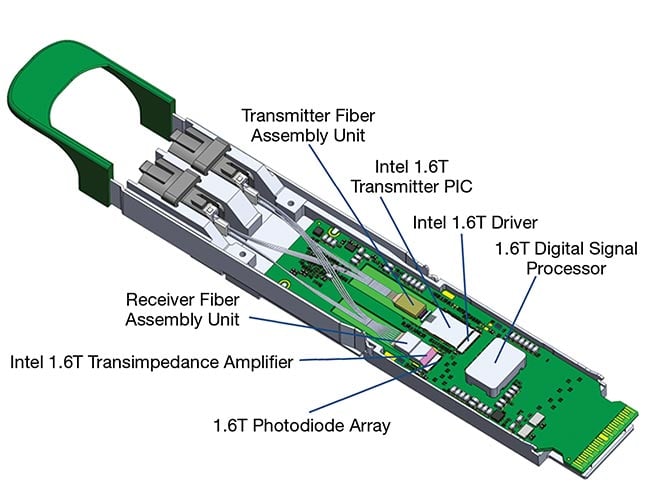
The rate level must be selected strictly according to the application scenario: in data center short-distance (within 500 meters) interconnection scenarios, 400G/800G silicon photonic transceivers have become the mainstream configuration, widely adopted by high-end AI computing platforms such as NVIDIA GB200. 1.6T silicon photonic transceivers are in the initial stage of commercialization, with leading manufacturers such as Intel and InnoLight having achieved small-batch supply, which can meet the high-density bandwidth needs of million-level GPU AI computing centers. Meanwhile, focus on the bandwidth density indicator—silicon photonic transceivers, with their smaller package size, can deploy more ports in the same panel area, significantly increasing the overall system bandwidth capacity.
Cost and Scalability Potential
The core of cost control depends on the process maturity and large-scale mass production capacity of brand manufacturers. With profound CMOS process accumulation, Intel holds a 61% market share in the data communication field for its silicon photonic transceivers, and the cost after large-scale production is about 30% lower than that of traditional solutions. The 3D stacked silicon photonic chip co-developed by TSMC and NVIDIA further reduces the mass production cost of silicon photonic transceivers. In the selection process, priority should be given to brands with mature silicon-based process systems and stable production capacity to avoid the risk of increased hidden costs due to insufficient yield of small and medium-sized manufacturers.
Light Source and Coupling Scheme
As a indirect bandgap material, silicon cannot achieve efficient light emission, so silicon photonic transceivers rely on external lasers, making coupling efficiency a core selection indicator. Among mainstream overseas technical solutions, TSMC adopts COUPE vertical coupling technology to achieve wide-band high-efficiency coupling; Coherent provides high-power external continuous wave lasers that can accurately match the light source requirements of silicon photonic transceivers. During selection, focus on verifying light source compatibility and coupling stability to ensure that the transmission efficiency meets the design standards.
Reliability and Process Yield
The temperature and humidity in data center operating environments fluctuate greatly, imposing strict requirements on the reliability of silicon photonic transceivers. Priority should be given to products with mature processes and sufficient reliability verification. Intel's Stratix 10 series silicon photonic FPGAs have passed multiple rigorous environmental reliability tests and can adapt to a wide temperature operating range; Cisco's silicon photonic transceivers have undergone long-term operation verification in telecom metro network scenarios, with a failure rate significantly lower than the industry average. Meanwhile, focus on product yield—leading manufacturers can achieve a silicon photonic transceiver yield of over 95%, which can effectively control subsequent maintenance costs.
Ecosystem and Standardization Adaptation
Silicon photonic technology routes show diversified characteristics, so priority should be given to products that comply with industry standards: the Optical Internetworking Forum (OIF) leads the formulation of 1.6T ZR/ZR+ coherent optical transceiver standards, and the Institute of Electrical and Electronics Engineers (IEEE) promotes the development of 1.6T Ethernet interface specifications. Leading brands such as Intel and Cisco are deeply involved in the research, development, and formulation of these standards, providing more guaranteed product compatibility. Meanwhile, take into account industrial chain adaptability—key components such as fiber arrays (250um/127um) and waveguide types (silicon waveguide/SiN waveguide) must be consistent with the existing equipment system.
Technology Integration Potential
Co-packaged Optics (CPO) technology is an important development direction for silicon photonic transceivers. NVIDIA's Quantum-X silicon photonic CPO switch co-packages the optical engine with the switch chip, reducing power consumption by 3.5 times compared with traditional solutions. Manufacturers such as Intel and TSMC are actively laying out this technical field. During the selection process, focus on the CPO technology reserves of brand manufacturers and prioritize products that can smoothly transition to the next generation of technology to extend the equipment lifecycle and return on investment cycle.
Common Mistakes to Avoid in Silicon Photonic Transceiver Selection
Ignoring Light Source Dependence
Some purchasers only focus on the performance indicators of the transceiver itself, ignoring the dependence of silicon photonic transceivers on external lasers, and failing to plan the light source selection and coupling scheme in advance, resulting in failure to meet expected transmission efficiency after device deployment. It is recommended to match products from professional light source manufacturers such as Coherent and Lumentum to ensure the compatibility and stability of the entire optical transmission system.
Blindly Pursuing High Integration
Over-pursuing integration parameters and blindly selecting products from niche brands with immature processes may lead to problems such as low yield and insufficient reliability. The manufacturing process of silicon photonic transceivers is highly complex. It is recommended to prioritize leading brands such as Intel and Cisco that have been engaged in the silicon photonics field for many years and have rich mass production experience to ensure product quality and supply stability.
Underestimating Compatibility Risks
The current level of standardization in the silicon photonics industry still needs to be improved, and there are significant differences in technical routes among different brand manufacturers. Failure to verify the compatibility of products with existing equipment (such as switches and transmission fibers) in advance may result in abnormal system interconnection. It is recommended to prioritize products from brands deeply involved in industry standard formulation to reduce compatibility risks.
Ignoring Reliability of Application Scenarios
Core scenarios such as data centers and 5G fronthaul have extremely high requirements for equipment stability. Some purchasers only focus on performance parameters and ignore the reliability test data provided by brand manufacturers, which may cause equipment failures under fluctuating temperature and humidity conditions and affect the stable operation of the entire system. During selection, require manufacturers to provide complete long-term operation reliability reports to fully evaluate product adaptability and avoid operational risks.
Recommended Silicon Photonic Transceiver Brands
Intel
Recommended Products: Intel Stratix 10 series FPGA silicon photonic solutions, 800G/1.6T silicon photonic transceivers. Core Advantages: Holds a 61% market share in the data communication field, compatible with mature CMOS processes, and mass production yield is at the industry-leading level. Co-developed 3D stacking technology with TSMC, featuring excellent power consumption control performance, which can accurately adapt to the short-distance interconnection needs of AI data centers. Its optical interconnection commercial products have passed strict verification by leading enterprises such as Google and Microsoft, with guaranteed performance and stability.
Cisco
Recommended Products: Cisco 400G silicon photonic transceivers, 1.6T coherent silicon photonic transceivers. Core Advantages: Holds a 49% market share in the telecom field, with products covering two core scenarios of data centers and 5G fronthaul. Deeply involved in the formulation of OIF and IEEE industry standards, ensuring worry-free product compatibility. Adopts self-developed silicon photonic chips, showing excellent reliability in complex network environments.
Coherent
Recommended Products: Coherent 800G silicon photonic transceiver + high-power external laser package. Core Advantages: As a core partner of NVIDIA's Quantum-X switch, it provides an integrated solution of light source and transceiver, effectively solving the technical pain point of silicon photonic coupling. The transceiver has excellent power consumption performance, adapting to high-density data center deployment needs, supporting LPO (Linear Direct Drive) technology, and power consumption is reduced by 30%-50% compared with traditional solutions.
Lumentum
Recommended Products: Lumentum 1.6T silicon photonic transceivers. Core Advantages: Focuses on R&D of high-rate silicon photonic technology. The transceiver adopts thin-film lithium niobate modulators, effectively making up for the performance shortcomings of silicon-based modulators. Optimizes packaging processes in cooperation with TSMC, with coupling efficiency and reliability at the forefront of the industry. Currently, sample delivery and testing to leading North American cloud manufacturers have been completed.
Conclusion
As core hardware in high-speed optical communication scenarios, the selection of silicon photonic transceivers should focus on four core dimensions: rate adaptation, cost control, reliability verification, and ecosystem compatibility. Priority should be given to overseas leading brands with mature processes, compliance with industry standards, and sufficient technical reserves to ensure equipment adaptability and long-term operational stability.
For further optimization of the selection plan, contact technical experts from brands such as Intel and Cisco to obtain customized selection suggestions based on specific application scenarios (data center/telecom network), rate requirements, and budget scope, and accurately grasp the application dividends of optical interconnection technology in the AI era.
FAQs on Silicon Photonic Transceivers
Q1: How to choose 400G/800G silicon photonic transceivers for AI data center 500m interconnection?
400G suffices for mainstream platforms (NVIDIA A100/GB200) with <70% bandwidth utilization; 800G is for million-level GPU clusters and 2-3-year expansion plans.
Q2: What to note when matching external lasers for silicon photonic transceivers?
Match laser power with specs, ensure coupling tech compatibility (e.g., TSMC COUPE), and align with existing fiber core diameter.
Q3: How to verify transceiver reliability in fluctuating temperature/humidity?
Require third-party wide-temp/aging reports, conduct 5%-10% small-batch pilot (1-3 months), and refer to proven brand cases (e.g., Cisco).
Q4: Why avoid cheap niche silicon photonic transceiver brands?
High failure/hidden costs (yield <80%), lack of after-sales support, and poor ecosystem compatibility for future upgrades.
Q5: Can silicon photonic transceivers replace traditional ones directly?
Only after verifying: interface (SFP/QSFP) consistency, fiber array/waveguide matching, and OIF/IEEE protocol compliance.
Q6: How to ensure CPO compatibility when purchasing?
Choose Intel/TSMC/Cisco models with CPO reserves, avoid closed routes, and confirm a smooth CPO upgrade plan.





No comments have been posted yet.