


.webp)


In the rapidly evolving landscape of optical communication, the demand for flexible, high-performance signal amplification has never been greater. Traditional fixed-wavelength optical amplifiers often struggle to meet the diverse needs of today’s complex networks—from telecom backbones and cable TV (CATV) systems to enterprise data centers and long-haul transmission links. This is where Custom Wavelength EDFA amplifier solutions step in, offering tailored amplification capabilities that align precisely with unique network requirements.
Understanding Custom Wavelength EDFA: Beyond Standard Amplification
To grasp the value of custom wavelength EDFA solutions, it is first essential to revisit the fundamentals of EDFA technology. Erbium-Doped Fiber Amplifiers leverage optical fibers doped with erbium, a rare-earth element that absorbs light at specific pump wavelengths (typically 980 nm or 1480 nm) and emits light in the 1550 nm range—the "C-band," widely regarded as the optimal window for low-loss optical transmission. Standard EDFAs are designed to amplify signals across a fixed segment of the C-band, making them suitable for general-purpose applications but limiting their utility in networks with specialized wavelength needs.
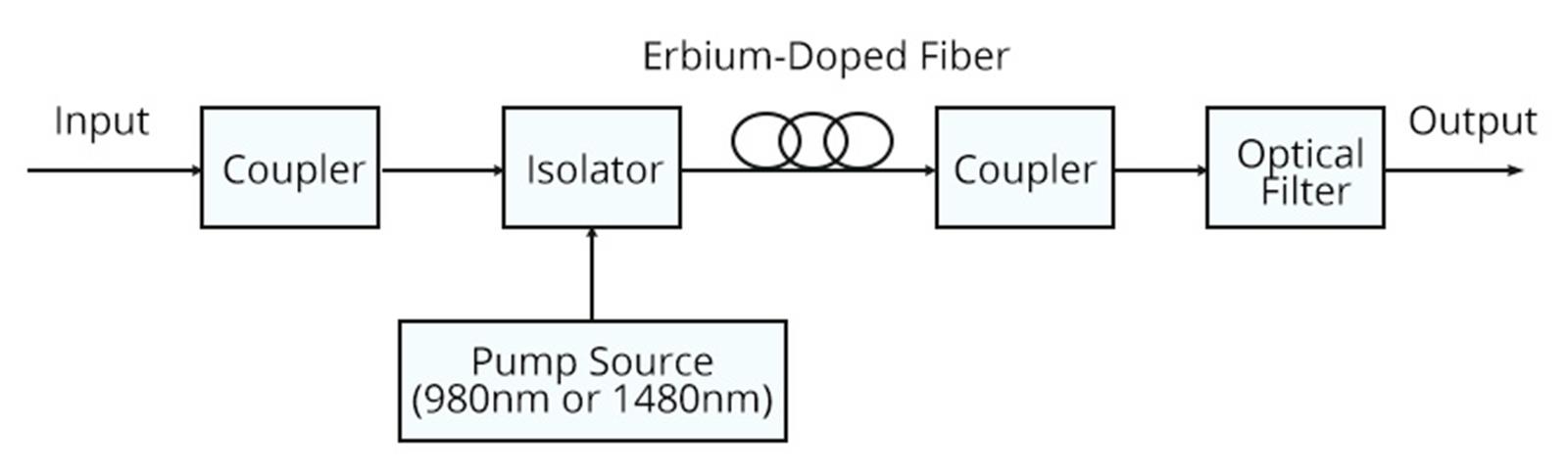
Custom wavelength EDFA solutions, by contrast, redefine this paradigm. These amplifiers are engineered to target specific wavelength bands—whether narrow sub-bands within the C-band, extended L-band (1565–1625 nm), or even non-traditional bands for niche applications. Through precise control of erbium doping concentration, pump laser parameters, and fiber design, Fibermart’s custom EDFAs can be calibrated to amplify signals at exact wavelengths, eliminating unnecessary amplification of unused bands and reducing noise interference. This level of customization ensures that each amplifier operates at peak efficiency, delivering consistent signal strength where it matters most.
Core Advantages of Custom Wavelength EDFA Solutions
The shift toward custom wavelength EDFA solutions is driven by a suite of compelling benefits that address critical pain points in modern optical networks. Unlike one-size-fits-all amplifiers, these tailored solutions offer:
Enhanced Signal Quality and Stability
Unwanted wavelength bands in standard EDFAs can introduce amplified spontaneous emission (ASE) noise, degrading signal-to-noise ratio (SNR) and reducing transmission distance. Custom wavelength EDFAs mitigate this issue by focusing amplification only on the required wavelengths, minimizing ASE and ensuring cleaner, more stable signals. For example, in dense wavelength division multiplexing (DWDM) systems—where dozens of signals travel over a single fiber—custom EDFAs can be tuned to match the exact channel spacing of the DWDM grid, preventing cross-talk and preserving signal integrity.
Flexibility for Diverse Applications
Different industries demand unique amplification profiles. A CATV network, for instance, may require amplification of specific wavelengths to support high-definition (HD) and 4K video streaming, while a long-haul telecom link needs amplification across extended bands to maximize coverage. Fibermart’s custom EDFA solutions cater to these varied needs: they can be configured for CATV-specific wavelength ranges, optimized for SDH (Synchronous Digital Hierarchy) networks, or adapted for FTTH (Fiber-to-the-Home) access networks. This flexibility eliminates the need for multiple fixed amplifiers, simplifying network design and reducing costs.

Improved Energy Efficiency
By avoiding amplification of unused wavelengths, custom EDFAs consume less power than standard models—a critical advantage in an era of growing focus on sustainability. Fibermart’s engineering team further enhances efficiency by integrating dual-pump (dsP) technology into select custom solutions. Dual-pump EDFAs use synchronized pump lasers to boost amplification efficiency, delivering higher output power with lower energy input. This not only reduces operational costs but also minimizes heat generation, extending the lifespan of network components.
Key Applications: Where Custom Wavelength EDFAs Shine
Telecom and Long-Haul Transmission
Telecom operators rely on long-haul networks to transmit data across hundreds or thousands of kilometers. These networks often require amplification across extended wavelength bands (such as the C+L band) to maintain signal strength over distance. Fibermart’s custom EDFAs can be tuned to cover these extended bands, ensuring consistent performance even in harsh environmental conditions. Additionally, for networks using DWDM technology, custom EDFAs are calibrated to match the exact channel frequencies of DWDM systems, enabling seamless integration and maximizing bandwidth.
CATV and Broadband Services
CATV providers face the challenge of delivering high-quality video, voice, and data services to millions of subscribers. Signal degradation in coaxial and fiber-optic links can lead to pixelation, lag, or service outages. Custom wavelength EDFAs for CATV applications are designed to amplify the specific wavelengths used for video transmission (typically in the 1550 nm band), ensuring clear, uninterrupted service. Fibermart’s CATV-specific custom EDFAs also support high output power, enabling coverage of large service areas without signal loss.
Enterprise and Data Center Networks
Modern data centers handle exponential growth in data traffic, driven by cloud computing, artificial intelligence, and IoT devices. These networks require low-latency, high-bandwidth amplification to connect servers, storage systems, and end-users. Custom wavelength EDFAs for enterprise networks can be tailored to the short-reach, high-speed requirements of data centers, supporting wavelengths used in 10G, 40G, and 100G Ethernet links. By matching the amplifier’s wavelength range to the network’s operating frequencies, Fibermart’s solutions reduce latency and improve data transfer speeds.

Specialized Industrial Applications
Beyond telecom and data, custom wavelength EDFAs find use in niche industrial sectors. For example, in remote sensing or aerospace applications, where optical signals must travel through challenging environments (such as atmospheric turbulence), custom EDFAs can be calibrated to amplify narrow wavelength bands, enhancing signal detection. Similarly, in medical imaging systems that use optical fibers, custom EDFAs ensure precise amplification of diagnostic signals, improving image clarity.
Choosing the Right Custom Wavelength EDFA: A Guide for Network Operators
Selecting the optimal custom wavelength EDFA solution requires careful consideration of several key factors. Fibermart’s team of experts works closely with clients to assess their needs and deliver tailored recommendations, focusing on:
Wavelength Range and Bandwidth
The first step is defining the exact wavelength range required for the application. Whether it’s a narrow sub-band in the C-band or an extended L-band, Fibermart’s engineers use advanced simulation tools to design an EDFA that matches the target wavelengths. They also consider bandwidth requirements—ensuring the amplifier can handle the number of channels (in DWDM systems) or data rate (in enterprise networks) without compromise.
Power Output and Gain
Power output and gain (the ratio of output signal strength to input signal strength) are critical for ensuring signal reach. For long-haul networks, higher gain and output power are needed to compensate for fiber loss. For short-reach data center links, lower power may be sufficient, but gain stability is prioritized. Fibermart’s custom EDFAs can be adjusted to deliver gain ranging from 15 dB to 40 dB and output power from 10 dBm to 30 dBm, depending on the application.
Environmental and Integration Requirements
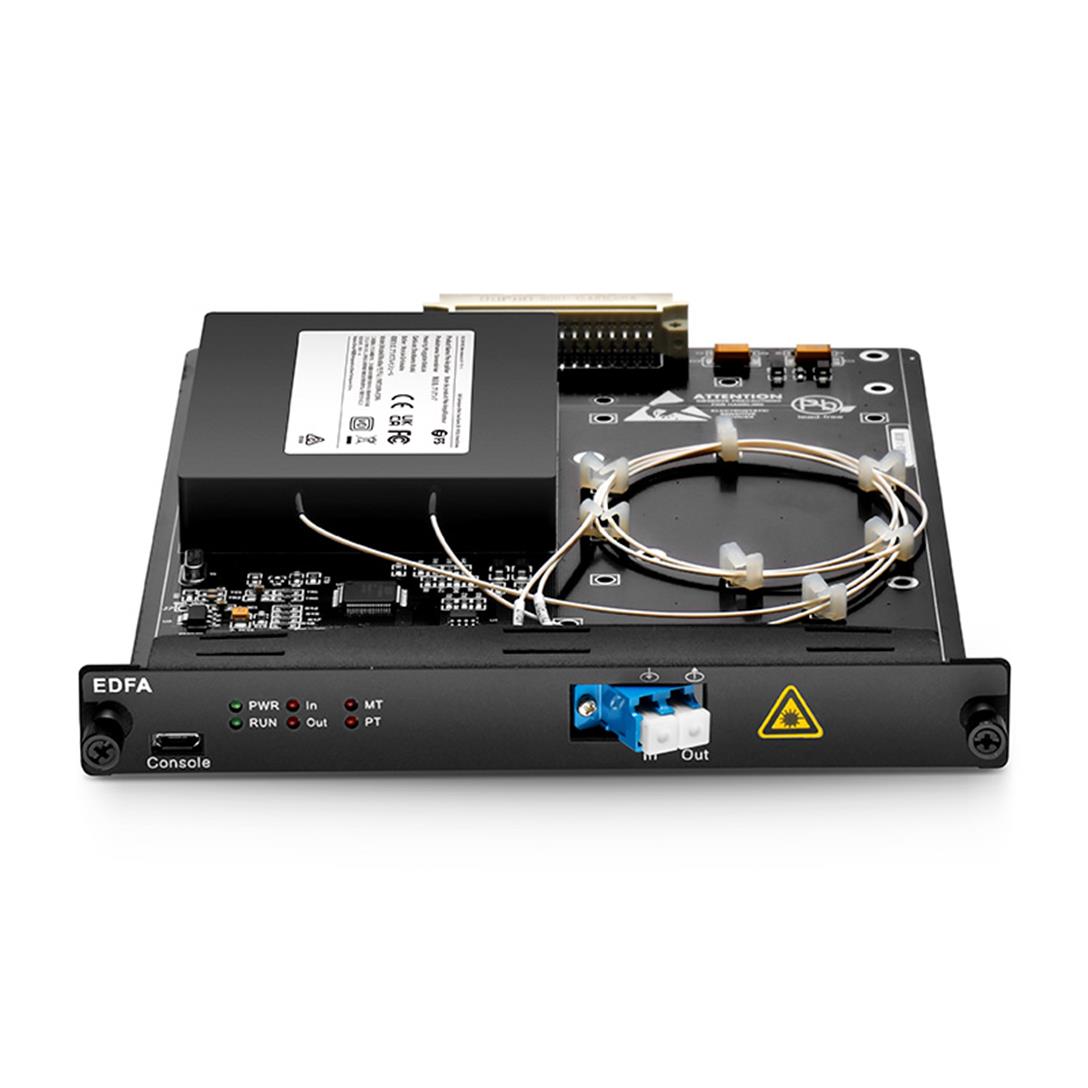
Network operators must also consider the operating environment of the EDFA. For outdoor installations (such as telecom towers), the amplifier must be ruggedized to withstand temperature fluctuations, humidity, and dust. Fibermart offers custom EDFAs in weather-resistant enclosures for such scenarios. Additionally, integration with existing network infrastructure—such as compatibility with SDH, DWDM, or FTTH equipment—is ensured through adherence to industry standards, as well as custom mechanical and electrical design.
As optical networks continue to evolve, the need for flexible, application-specific amplification will only grow. Custom wavelength EDFA solutions represent the future of optical amplification, offering the precision, efficiency, and flexibility required to meet the demands of modern telecom, CATV, enterprise, and industrial networks. Fibermart’s leadership in this space—combined with its commitment to innovation, quality, and customer collaboration—makes it the ideal partner for organizations seeking to optimize their optical infrastructure.





No comments have been posted yet.