


.webp)


In modern communication networks, fiber optic technology has become a crucial means of data transmission. Fiber optic couplers and splitters are two key components with distinct applications in the network. Are you struggling to decide between a fiber coupler and a fiber optic splitter? Check out this article from Fiber-Mart to understand their differences and selection tips, helping you make an informed decision.

Basic Concepts of Fiber Optic Couplers and Splitters
A fiber optic coupler is a device used to redistribute light from one fiber to one or multiple independent fibers. Its main function is to merge multiple signals into one line or split a single optical signal into multiple paths. Through precise interfaces, the coupler can ensure signal quality while minimizing insertion loss.
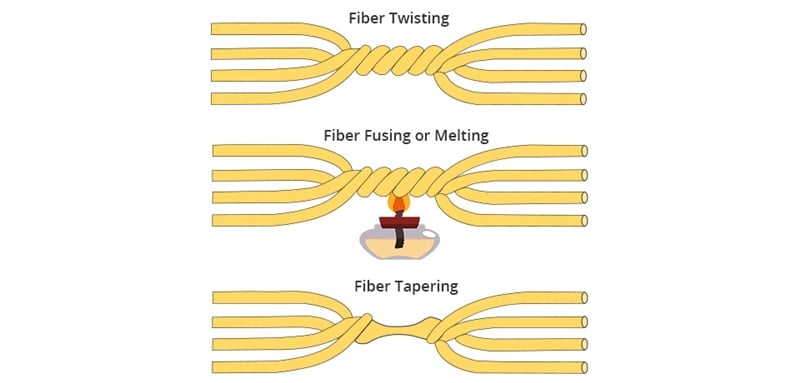
The working principle of a fiber optic coupler is based on optical physics. Common methods include Fused Biconical Taper (FBT) and Planar Lightwave Circuit (PLC) technology. FBT couplers achieve signal merging and splitting by fusing and tapering two fibers together, while PLC couplers use silicon waveguide technology, offering the advantages of low insertion loss and uniform splitting.
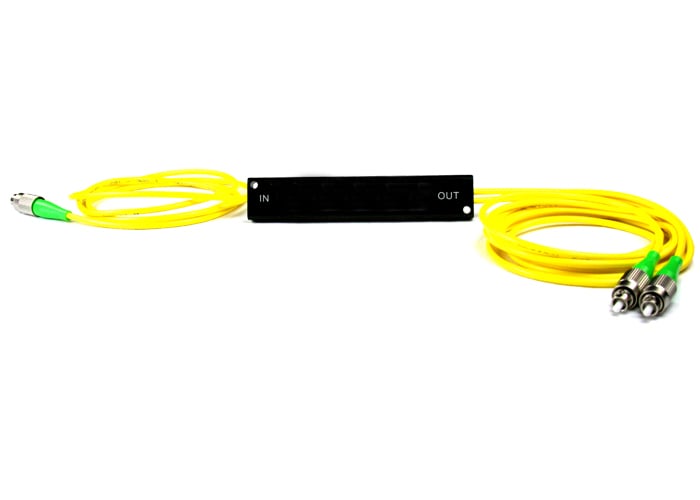
A fiber optic splitter, on the other hand, is a device used to split an optical signal into multiple outputs. Splitters operate without an external power source and are commonly used in Passive Optical Networks (PON), distributing a single optical signal source to multiple end users. Utilizing waveguide technology, fiber optic splitters efficiently separate signals, ensuring each user receives a stable signal.
The main technology for fiber optic splitters is PLC, which achieves uniform signal distribution through integrated waveguide optical power distribution devices. Compared to traditional FBT splitters, PLC splitters perform better in signal distribution uniformity and bandwidth handling capability.
Main Differences Between Fiber Optic Couplers and Splitters
Functional Differences
The primary function of a fiber optic coupler is to merge and distribute optical signals. They are suitable for scenarios where multiple signals need to be merged into one line or one signal needs to be distributed to multiple paths. For example, in a data center, you may need to merge multiple optical signal sources into one output to optimize transmission efficiency.
Fiber optic splitters are mainly used to split optical signals into multiple outputs, suitable for scenarios where one signal source needs to be distributed to multiple user terminals. For example, in Fiber to the Home (FTTx) networks in residential areas, splitters can distribute signals from the central office to multiple home users.
Technical Implementation
Fiber optic couplers use different technologies to achieve their functions. FBT couplers merge and split signals by fusing and tapering two fibers together. PLC couplers, using silicon waveguide technology, offer lower insertion loss and more uniform signal distribution.
Fiber optic splitters primarily rely on PLC technology, achieving efficient signal separation through integrated waveguide optical power distribution devices. Compared to FBT splitters, PLC splitters can handle broadband signals better, ensuring each output port receives uniform signal strength.
Application Scenarios
Fiber optic couplers are widely used in telecommunications networks, data communication systems, fiber optic sensors, and Local Area Networks (LAN) for signal merging, distribution, and integration. For instance, in a fiber optic sensor network, couplers can merge signals from multiple sensors into one output for centralized monitoring and management.
Fiber optic splitters are mainly used in PON, distributing optical signals to multiple users, suitable for FTTx solutions, Internet Service Providers (ISPs), and data center signal management. For example, in a large residential area's FTTx network, splitters can distribute signals from the central office to each home user, ensuring each user receives stable broadband service.
How to Choose the Right Fiber Optic Coupler and Splitter
Choosing Based on Network Needs
Selecting the right fiber optic coupler or splitter involves considering several factors. First is transmission distance. Single-mode couplers and splitters are suitable for long-distance transmission, while multimode devices are suitable for short-distance applications. For example, if your network covers a wide area, choosing single-mode devices would be a better option.
Next is the signal type and wavelength. Ensure the device supports the required wavelength range, usually between 850nm and 1625nm. For example, if your network uses signals transmitted at different wavelengths, choosing devices that support a wide wavelength range is necessary.
Bandwidth requirements are also important. Choose devices that can meet the network's bandwidth needs, especially in high data transmission rate applications. For example, in a data-intensive application scenario, choosing high-bandwidth devices can ensure stable and efficient data transmission.
Environmental Factors and Durability
The performance of fiber optic couplers and splitters is greatly affected by the environment, so mechanical strength and durability should be considered when choosing. Devices should have sufficient mechanical strength to withstand physical wear and environmental changes, ensuring long-term stable operation. For example, in a harsh industrial environment, choosing durable devices can ensure the network's long-term stability.
Environmental adaptability is also crucial. Devices should maintain high performance under various conditions, especially in scenarios with significant temperature and humidity changes. For example, in an outdoor network, choosing devices with good environmental adaptability can ensure the network operates normally under various climatic conditions.
Installation and Maintenance
Choosing devices that are easy to install and configure can reduce initial installation complexity and time costs. For example, in a complex network environment, choosing easy-to-install devices can significantly reduce construction time and labor costs.
Maintenance convenience is also a key factor. Devices should be easy to maintain and troubleshoot, reducing operating costs and downtime. For example, in a large data center, choosing easy-to-maintain devices can ensure high network availability and stability.
Conclusion, Go to Fiber-Mart.com for high quality fiber splitter and couplers!
Whether you are building a new network or maintaining existing fiber optic infrastructure, understanding the differences between fiber optic couplers and splitters and how to choose them is crucial. Selecting the right device that fits your network needs can enhance network performance, extend the device's lifespan, and ensure network stability.
If you are looking for high-quality fiber optic couplers and splitters, consider Fiber-Mart's fiber splitters products. Fiber-Mart offers a variety of PLC splitters and FBT couplers, such as 1x4, 1x8, 1x32, and 1x64 PLC splitters. These products not only feature low insertion loss, high reliability, and excellent performance but are also suitable for various EPON/GPON systems, meeting your diverse network needs.

Choosing Fiber-Mart for your fiber optic equipment means choosing quality and assurance. Purchase your fiber optic devices from Fiber-Mart.com and make your network construction and maintenance easier and more efficient. Don't miss the opportunity to enhance network performance; act now and experience the advantages of Fiber-Mart products!





No comments have been posted yet.