


.webp)


Discover how fiber splitters work, their types, and why they're essential for optimizing data transmission in modern networks.
Fiber Splitters: How They Work and Why You Need Them in Your Network
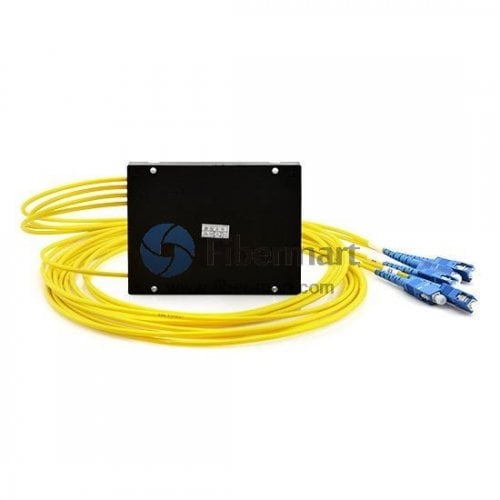
Fiber optic technology has transformed the telecommunications industry, enabling high-speed, reliable data transmission over vast distances. As businesses and service providers continuously seek ways to optimize network performance and expand infrastructure, understanding the role of fiber splitters is essential. These passive devices play a crucial role in distributing optical signals, helping to create cost-effective and scalable network solutions
What Are Fiber Splitters?
A fiber splitter—also known as an optical splitter—is a passive device used in fiber optic networks to divide a single optical light signal into multiple output signals or, in some configurations, to combine multiple signals into one. These splitters are essential in fiber-to-the-home (FTTH) networks, data centers, and telecommunication systems where distributing optical signals to multiple endpoints is required.
The primary benefit of fiber splitters is that they operate without the need for external power or electronics, ensuring a highly efficient and reliable optical signal distribution. Splitters allow network operators to extend services to multiple users or devices from a single fiber, making them indispensable in the creation of scalable, high-performance networks.

How Fiber Splitters Work
Fiber splitters function based on the principle of light distribution, where an optical signal traveling through the fiber is divided into multiple outputs. The process can be visualized as similar to an electrical junction splitting a current into several pathways.
However, splitting light signals requires greater precision due to the properties of light and the need to manage optical power distribution carefully.
Optical splitters use optical waveguides that guide light along the fiber, with these waveguides fused together in a way that splits the incoming signal. The splitter divides the light evenly across all output fibers, with the total power divided among the outputs. For example, a 1:2 splitter divides the power equally between two output fibers, while a 1:8 splitter divides the power into eight equal parts.
|
Two main configurations of splitters exist: balanced and unbalanced Balanced splitters distribute the signal evenly across all outputs, while unbalanced splitters divide the signal in varying proportions, depending on specific network needs. |
Types of Fiber Splitters
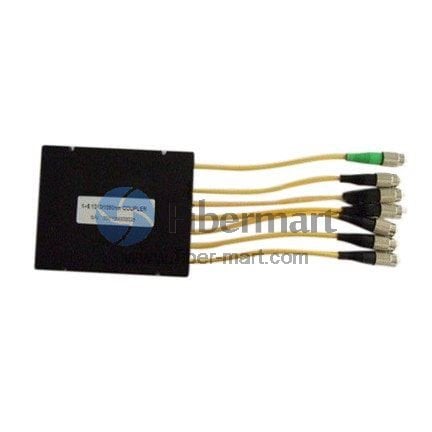
Fiber splitters come in two primary types: fused biconic taper (FBT) splitters and planar lightwave circuit (PLC) splitters. While both serve the same purpose of splitting optical signals, they differ in construction, performance, and typical use cases.
1. Fused Biconic Taper (FBT) Splitters
FBT splitters are one of the earliest types of optical splitters. They are constructed by fusing two or more optical fibers together in the middle, forming a taper that distributes the light signal. This simple design makes FBT splitters cost-effective and suitable for low-split ratios, such as 1:2 or 1:4.
FBT splitters work well in smaller networks with stable environments, as they are more sensitive to temperature changes. However, they may not be ideal for larger networks requiring high split ratios (e.g., 1:16 or 1:32) or those demanding highly precise light distribution. Despite these limitations, FBT splitters remain popular for their affordability and effectiveness in smaller-scale applications.
2. Planar Lightwave Circuit (PLC) Splitters
PLC splitters represent a more advanced solution in optical signal splitting. Manufactured using semiconductor technology, PLC splitters feature lightwave circuits etched onto a silica glass substrate, allowing for more precise light distribution. These splitters can handle high split ratios—such as 1:32 or 1:64—without compromising performance.
PLC splitters are highly reliable, stable, and less affected by environmental conditions such as temperature and humidity. This makes them ideal for large-scale FTTH deployments, data centers, and networks where high-density performance is required.
While PLC splitters are typically more expensive than FBT splitters, their advanced capabilities and durability make them a long-term investment for demanding network environments.
Why Fiber Splitters Are Essential for Your Network
The role of fiber splitters in modern networks is more crucial than ever. With the rising demand for high-speed internet, cloud computing, and seamless communication, fiber splitters ensure efficient data transmission across multiple endpoints. Here are several reasons why fiber splitters are vital to your network:
1. Cost-Efficient Network Expansion
One of the key benefits of fiber splitters is their ability to extend a network without requiring additional infrastructure. In FTTH networks, for example, a single splitter can distribute data to multiple homes or businesses through a single fiber optic line, significantly reducing installation and maintenance costs. This scalability makes it easier for service providers to expand their networks in urban or rural areas while controlling expenses.
2. Scalability
Fiber splitters provide a highly scalable solution for growing networks. Whether managing a small business or an expansive telecommunication system, splitters allow network operators to add more output fibers as needed. This flexibility enables the easy addition of new users, devices, or endpoints without major changes to the existing infrastructure.
3. High Bandwidth Distribution
Fiber optic technology is renowned for its ability to transmit large amounts of data at high speeds. Fiber splitters allow service providers to distribute these high-speed signals across multiple endpoints, ensuring that all users receive the same high-performance data transmission. This is particularly important in environments where multiple users or devices need consistent, high-bandwidth connectivity, such as in corporate offices, data centers, or smart city networks.
4. Reliability and Low Maintenance
As passive devices, fiber splitters do not require external power sources or active electronic components, which minimizes the need for ongoing maintenance. Once installed, splitters can operate reliably for years with minimal intervention, reducing operational costs for network providers. Their durability makes fiber splitters ideal for installations in locations that are difficult to access or maintain regularly, such as underground or outdoor installations.
5. Flexibility in Network Design
Fiber splitters offer tremendous flexibility when designing network topologies. Whether a network requires point-to-point or point-to-multipoint configurations, splitters can be easily integrated into the system to meet specific design needs. This adaptability makes fiber splitters ideal for a wide range of applications, from residential internet services to complex enterprise network setups.

Choose Fibermart for Your Fiber Splitter Needs
Whether you are a network operator expanding your coverage, a business optimizing internal data flow, or a service provider seeking to improve customer connectivity, fiber splitters offer a reliable and long-term solution.
Choosing the right type of splitter—whether FBT or PLC—depends on your specific network requirements, but both options offer significant benefits in terms of cost savings, scalability, and flexibility.
Fibermart offers a wide range of high-quality fiber splitters designed to meet the diverse needs of your network. Whether you require FBT splitters for cost-effective solutions or PLC splitters for advanced applications, our products ensure reliable signal distribution and superior performance.
Contact us today to order from our extensive selection of fiber splitters and other fiber optic solutions. Fiber-Mart team of experts is ready to assist you in finding the perfect components for your specific requirements.





No comments have been posted yet.