


.webp)


In advanced optical communication and sensing systems, signal accuracy and stability become increasingly important. Two of the most common components serving the same purpose of dividing an optical signal are the fiber optic cable splitter and polarization maintaining splitter. While both serve the purpose of splitting optical signals, their purposes, designs, and performances differ greatly. Understanding the differences will ensure better decision-making during component selection in optical networks.
Design and Construction Differences
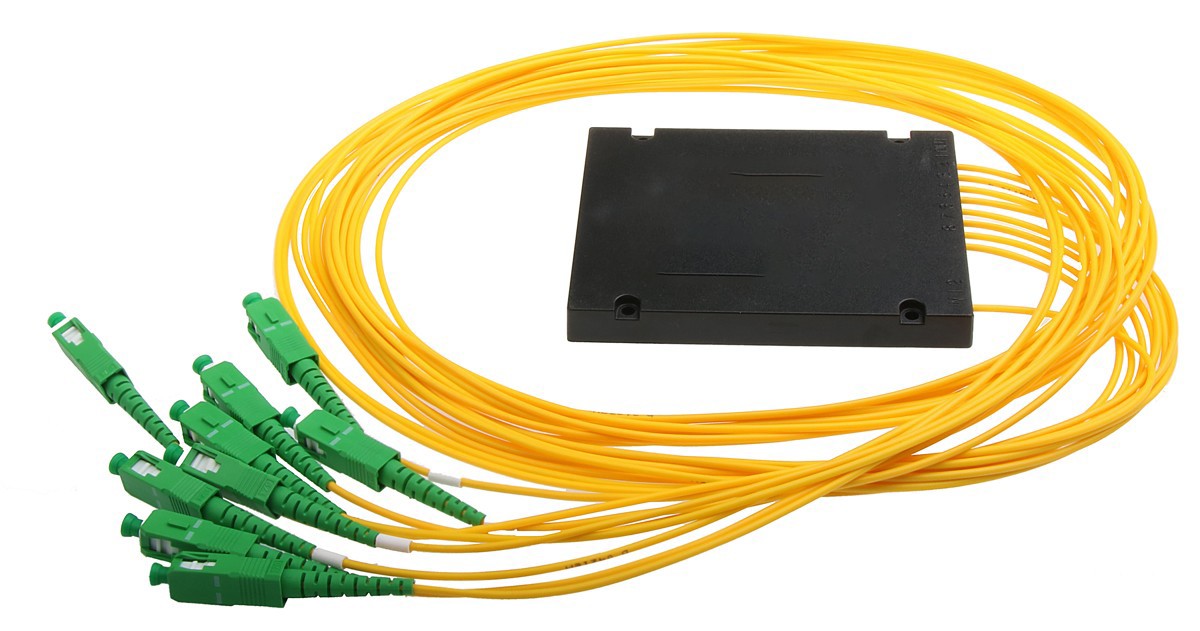
Structure of Fiber Optic Cable Splitter
A fiber optic cable splitter is designed to distribute the optical power from one input fiber into several outputs, allowing for equal light distribution with regard to compact size and low insertion loss. Such devices are widely used in PON systems, FTTH deployments, and data centers, where efficiency and scalability are decisive issues.
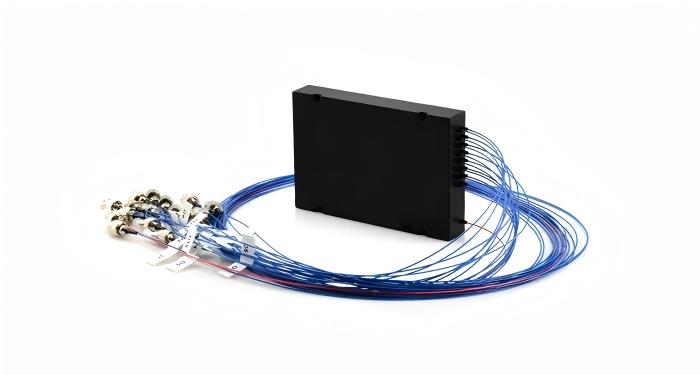
Polarization Maintaining Splitter Structure
In contrast, a polarization maintaining splitter uses polarization maintaining fiber to keep the light's electric field orientation the same while it travels. With a more precise and sensitive structure, its design ensures the conservation of polarization states through stress rods or special geometries of the fiber. Applications in coherent communication, interferometric measurement, and high-precision sensing systems require such a design.
Signal Stability and Polarization Control
Standard Splitter Behavior
An optical splitter reliably divides optical power, but it does not maintain the polarization of the light. Thus, in polarization-dependent systems like interferometers or quantum optics setups, standard splitters will result in phase drift or instability.
Advantages of Polarization Maintaining Splitters
A Polarization Maintaining Splitter does not change the polarization state between input and output fibers, which means signal stability is maintained even in an application that faces environmental or mechanical stress. For this reason, PM splitters are an imperative part of systems where coherence, phase accuracy, and polarization alignment are mission-critical.

Application Scenarios
When to use a fiber optic cable splitter
It is ideal for large-scale communication and signal distribution, and it splits the optical power effectively with minimum loss among several channels. The usual applications include:
- Telecommunication networks
- CATV systems (Cable Television)
- Enterprise data centers
- FTTH broadband projects
Consequently, scalability and cost-effectiveness are necessary in these contexts rather than polarization control.
When to Use a Polarization Maintaining Splitter
A polarization-maintaining splitter is ideal for systems requiring extreme accuracy and stability. Typical applications include:
- Quantum communication
- Fiber optic gyroscopes
- Optical Coherence Tomography (OCT)
- Interferometric and metrology systems
Many polarization-sensitive devices rely on maintaining polarization for data integrity or measurement accuracy in those fields.
.png "Slow axis align with connector key")
Performance and Reliability Comparison
Signal Consistency
In terms of signal quality, the polarization maintaining splitter is much more stable, keeping a high polarization extinction ratio and low crosstalk. The fiber optic splitter places more emphasis on equal light division and cost-effectiveness.
Durability and Manufacturing Quality
PM splitters are usually more expensive since they are constructed with precision to tight tolerances. They also have stringent performance testing to ensure that PER is stable over many years. In contrast, a regular fiber optic cable splitter focuses on mechanical reliability for long-term deployment in harsh environments and optical loss uniformity.

How to Choose the Right Splitter
The crucial differences that one must consider when choosing between a fiber optic splitter and a polarization maintaining splitter include:
- System sensitivity: In case the system performance depends on polarization alignment, use a PM splitter.
- Budget and scale: A standard fiber optic cable splitter realizes value for money in applications involving large-scale signal distribution.
- Application: Regular splitters would be employed in communications networks, and precision instruments would use PM technology.
Some of the state-of-the-art solutions even integrate PM fibers into conventional splitters, allowing hybrid designs that combine power distribution with polarization control, which is ideal for complex optical systems.

Conclusion
While both serve the basic function of splitting light, differences in design, stability, and application make each suitable for various roles. The fiber optic cable splitter performs exceptionally well in efficient, large-scale distribution in networks, while the polarization-maintaining splitter is used for signal precision and stability in polarization for specialized applications.
Understanding such differences allows the engineers and system designers to make informed choices, balancing cost, performance, and optical stability—important steps toward the delivery of optimum performance in today's high-speed fiber optic networks.


-on-the-Poincaré-Sphere.jpg "What is Polarization Extinction Ratio? How to Measure the PER in PM Fibers?")





No comments have been posted yet.