


.webp)


In the realm of high-speed data transmission and network infrastructure, fiber optics cable stands as a cornerstone technology, enabling seamless connectivity across indoor, outdoor, and specialized industrial environments. Beyond its core function of data transfer with low attenuation and high bandwidth, the tensile strength rating of a fiber optics cable is a critical parameter that directly impacts its reliability, durability, and suitability for specific installation scenarios. Whether deployed in aerial ADSS networks, FTTH drop installations, or data center backbones, understanding how to accurately calculate this rating is essential for engineers, network designers, and procurement professionals alike. This comprehensive guide outlines the key principles, influencing factors, and step-by-step methodology to determine the tensile strength rating of fiber optics cable.
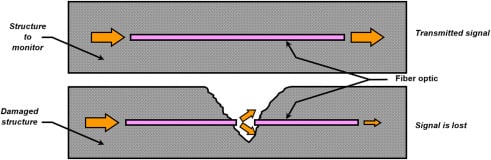
Fundamental Concepts of Tensile Strength in Fiber Optics Cable
Before delving into the calculation process, it is imperative to establish a clear understanding of tensile strength as it relates to fiber optics cable. Tensile strength refers to the maximum amount of tensile (pulling) force that a fiber optics cable can withstand before experiencing permanent deformation, fiber breakage, or structural failure. Expressed in units such as Newtons (N) or pounds-force (lbf), this rating is not a arbitrary value but a result of the cable’s design, materials, and construction—all of which are engineered to meet industry standards and application-specific requirements.
Key Terminology for Accurate Calculation
To avoid ambiguity during the calculation process, familiarity with specific terminology is essential:
● Breaking Force: The exact force at which the fiber optics cable fails under tension, serving as the primary data point for tensile strength rating.
● Rated Tensile Strength (RTS): The specified maximum force the cable is designed to endure without damage, typically derived from breaking force testing with a safety margin.
● Component Tensile Contribution: The individual tensile capacity of each structural element within the cable, such as the strength member, jacket, and buffer tubes.
● Safety Factor: A multiplier applied to the expected operational force to ensure the cable can withstand unexpected stress (e.g., wind loads for aerial cables, installation pulls).
Why Tensile Strength Rating Matters
The tensile strength rating is not a mere technical specification but a critical safeguard for network performance. For instance, an aerial fiber optics cable must resist constant tension from its own weight and environmental forces like wind and ice, while a FTTH drop cable must withstand the pulling force during installation without damaging the delicate optical fibers inside. A miscalculated or underestimated tensile strength rating can lead to costly downtime, fiber breakage, and the need for premature cable replacement—making accurate calculation a non-negotiable step in network planning.
Core Factors Influencing Tensile Strength of Fiber Optics Cable
The tensile strength rating of a fiber optics cable is determined by a combination of structural design and material properties. Each component plays a distinct role in distributing and resisting tensile force, and ignoring any of these factors can result in inaccurate calculations.
Strength Member Design and Material
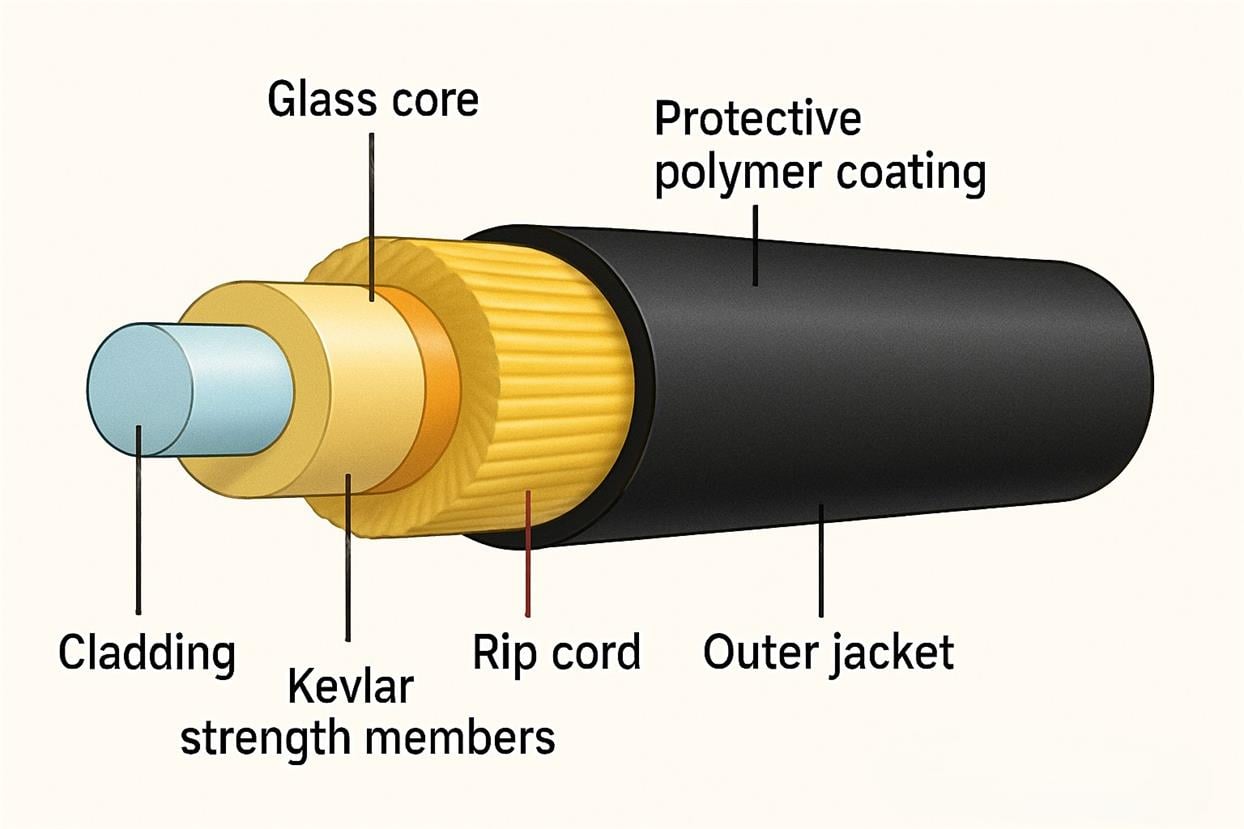
The strength member is the primary component responsible for bearing tensile force in a fiber optics cable. Common materials include aramid yarns (e.g., Kevlar), glass-reinforced plastic (GRP), and steel. Aramid yarns are widely used in indoor and FTTH cables for their high strength-to-weight ratio, while steel strength members are preferred for outdoor and aerial applications due to their superior load-bearing capacity. The tensile contribution of the strength member depends on two key factors: the material’s inherent tensile strength (e.g., aramid yarns typically offer 20–30 N per yarn) and the number of yarns or the cross-sectional area of the strength member.
Cable Jacket and Buffer Tube Properties
While the strength member bears the majority of tensile force, the cable jacket and buffer tubes also contribute to overall tensile strength. Jacketing materials like LSZH (Low Smoke Zero Halogen), PVC, and UV-resistant polymers provide additional structural support, especially in harsh environments. Buffer tubes, which house the optical fibers, are often made of rigid plastics that resist crushing and assist in force distribution. The thickness and material grade of the jacket and buffer tubes directly impact the cable’s ability to withstand tension without transferring excessive stress to the fragile fibers.
Installation and Environmental Conditions
Tensile strength calculation must also account for the intended installation scenario and environmental stressors. For example:
● Aerial fiber optics cables (e.g., Figure 8 designs) must withstand dynamic tension from wind gusts and temperature fluctuations.
● Underground cables installed in conduits face tension during pulling, as well as static pressure from soil and infrastructure.
● Industrial and sensing cables may encounter chemical exposure or mechanical abrasion, which can degrade material strength over time.
These factors require adjustments to the base tensile strength calculation, often through the application of environmental correction factors or increased safety margins.
Step-by-Step Methodology to Calculate Tensile Strength Rating
Calculating the tensile strength rating of a fiber optics cable involves a systematic approach that integrates component testing, force distribution analysis, and safety factor application. Below is a detailed, actionable framework:
Step 1: Identify and Test Individual Components
Begin by isolating the key structural components of the fiber optics cable and determining their individual tensile capacities:
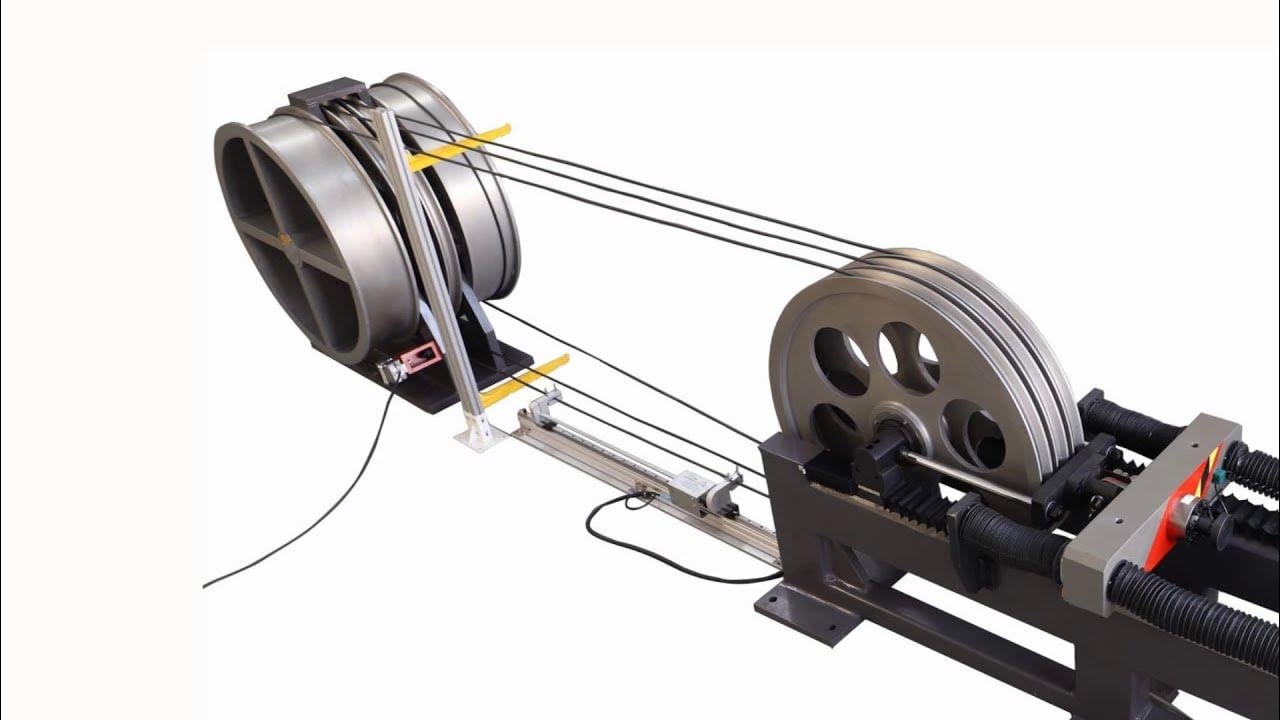
● Strength Member Testing: Extract a sample of the strength member (e.g., aramid yarn bundle, steel wire) and subject it to a tensile test using a universal testing machine. Record the breaking force (F_s) in Newtons. For bundled materials like aramid yarns, calculate the total strength member force by multiplying the breaking force per yarn by the number of yarns (F_s_total = F_s_per_yarn × N_yarns).
● Jacket and Buffer Tube Testing: Test samples of the jacket and buffer tubes to determine their tensile contribution (F_j and F_b, respectively). While these components typically contribute 5–15% of the total tensile strength, their contribution should not be overlooked, especially in cables with thin or flexible strength members.
Step 2: Calculate Total Component Tensile Capacity
Sum the tensile contributions of all components to obtain the total theoretical tensile capacity (F_total) of the fiber optics cable:F_total = F_s_total + F_j + F_bThis value represents the maximum force the cable can withstand if all components fail simultaneously, providing a baseline for the rating.
Step 3: Apply Safety and Environmental Factors
To ensure real-world reliability, apply two critical factors to the total component capacity:
● Safety Factor (SF): Industry standards (e.g., IEC 60794, ANSI/TIA) typically recommend a safety factor of 2–3 for most applications. For high-risk scenarios (e.g., long-span aerial cables), the safety factor may increase to 4. This factor accounts for manufacturing variations, installation errors, and unexpected stress.
● Environmental Correction Factor (ECF): Adjust for environmental conditions that degrade tensile strength (e.g., humidity, UV exposure, temperature extremes). ECF values range from 0.7 (severe environments) to 0.95 (controlled indoor environments), based on industry guidelines.
The adjusted tensile strength rating (RTS) is calculated as:RTS F_total × ECF) / SF

Step 4: Validate with Industry Standards and Real-World Testing
Finalize the calculation by cross-referencing the result with relevant industry standards. For example, a plenum-rated fiber optics cable for data centers must meet TIA-568.3-D standards for tensile strength, while an ADSS cable must comply with IEC 62067. Additionally, conduct full-cable tensile testing to verify the calculated RTS—this involves pulling a complete cable sample until failure and comparing the actual breaking force to the calculated rating. Any discrepancies should be addressed by re-evaluating component testing or adjusting correction factors.
Common Pitfalls to Avoid in Calculation
Even with a structured methodology, errors in tensile strength calculation can occur. Below are key pitfalls to mitigate:
● Overlooking Component Degradation: Materials like aramid yarns can lose tensile strength over time due to moisture or chemical exposure. Always use material specifications for the intended service life, not just initial strength.
● Ignoring Installation Tension Limits: The calculated RTS must exceed the maximum pulling force during installation (typically 100–400 N for indoor cables, 1000–3000 N for aerial cables). Failure to account for installation tension can lead to in-field damage.
● Using Inconsistent Units: Ensure all force measurements (N, lbf) and dimensions are consistent throughout the calculation to avoid unit conversion errors.
● Neglecting Cable Construction: Ribbon cables, breakout cables, and tight-buffer cables have different force distribution characteristics. For example, ribbon cables may require additional consideration for fiber ribbon integrity under tension.
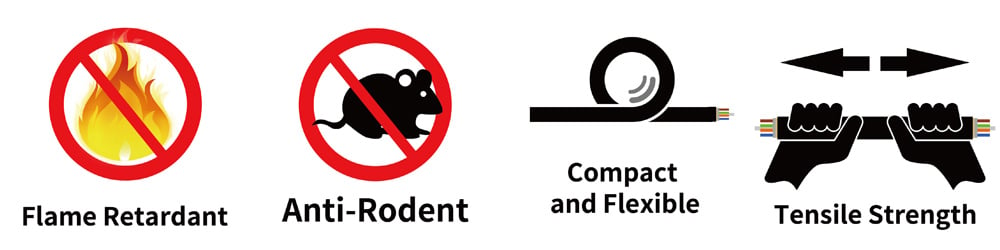
Calculating the tensile strength rating of fiber optics cable is a precise, multi-step process that balances material science, structural design, and real-world application requirements. By understanding the fundamental concepts, accounting for key influencing factors, and following a systematic methodology, professionals can determine a reliable tensile strength rating that ensures the fiber optics cable performs optimally in its intended environment. Whether for data centers, FTTH networks, or industrial sensing systems, accurate tensile strength calculation is a critical step in building robust, future-proof optical networks that deliver consistent performance and durability.





No comments have been posted yet.