


.webp)


Fiber-based networks form the backbone for communication, serving everything from enterprise systems to large-scale telecom infrastructures in today's world, which is highly driven by data. With the increasing demands on high-performance connectivity, for many buyers, choices boil down to two quite popular options: the outdoor armored fiber optic cable and the standard optical fiber cable. While both have the same key function of providing high-speed data transmission, their construction, durability, and ideal applications vary greatly. As a global professional manufacturer, Fiber-mart would like to explain these key differences for users to make informed choices.
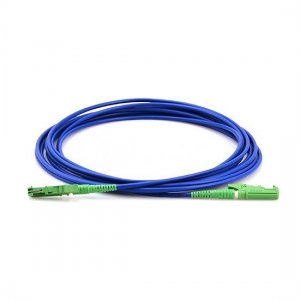
1. What is a Standard Optical Fiber Cable?
The typical optical fiber cable is designed for indoor or controlled-environment installations. It contains a fiber strand, buffer layers, and outer sheaths that allow good, efficient signal transmission with minimal attenuation. This form of cable is lightweight and somewhat flexible; thus, it sees applications in office networks, data centers, and residential deployments.
The major advantage of standard optical fiber cable is cost efficiency. Without complicated protection structures, a standard optical fiber cable features excellent transmission performance. However, it is vulnerable to various environmental factors such as moisture, pressure, rodents, and physical impact, which make it unsuitable for rugged outdoor environments.

2. What is an Armored Fiber Optic Cable?
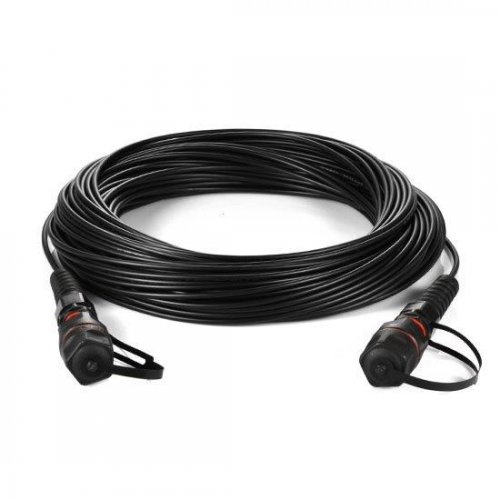
The armored fiber optic cable adds an extra layer to the cable for added mechanical protection against any harsh conditions. Most armored designs are manufactured with corrugated steel tape, stainless steel wire, or Kevlar-reinforced materials. This enhanced protection makes the cable resistant to crushing, bending damage, and animal interference.
When the armored structure is specifically engineered for demanding external environments, it becomes an outdoor armored fiber optic cable. These fiber optic cables can withstand extreme temperatures, UV radiation, soil acidity, vibration, and even the impact of accidental excavation, making them crucial for long-distance outdoor installations.

3. Key Differences Between Outdoor Armored Fiber Optic Cable and Standard Optical Fiber Cable
a. Structural Strength and Protection
The most salient difference is in their construction.
● A typical optical fiber cable would make use of a plastic jacket and simple buffer layers.
● Conversely, armored fiber optic cable has a strong metallic or non-metallic armor layer.
Outdoor armored fiber optic cables from Fiber-mart undergo the most stringent mechanical tests for the highest degree of crush resistance, rodent protection, and tensile strength, not found in ordinary indoor cables.

b. Environmental Adaptability
Outdoor installation environments are unpredictable and hazardous.
● Where standard optical fiber cables serve very well in indoor conduits, they perform very poorly when exposed to moisture or mechanical stress.
● Outdoor armored fiber optic cables feature waterproof gel and UV-resistant jackets that ensure stable performance over a large range of temperatures, along with corrosion-resistant armor.
Increased durability now allows for direct burial underground, installation in ducts, and installation in industrial outdoor facilities.

c. Installation Flexibility
Armoured cables provide even better protection but are slightly heavier and less flexible than regular optical fiber cables.
● Indoor installers prefer the ease of routing and bending with standard cables.
● While not as flexible, outdoor armored fiber optic cables make the installation process more straightforward in high-risk areas since fewer conduits or tubings are needed to give extra protection.
The armored cable designs by Fiber-mart are optimized for durability and workable flexibility, enabling field technicians to perform installations in a more effective manner.

d. Cost Considerations
Standard optical fiber cables are cheaper to make since they have a simpler construction. However, when used in the wrong environment, they can result in far higher long-term maintenance costs.
Outdoor armored fiber optic cables are moderately more expensive at the point of purchase but eliminate additional protection hardware and greatly reduce the possibility of failure, offering better overall cost performance.
4. Which Cable Should You Choose?
Choose a standard optical fiber cable if:
● Your installation is indoors.
● The atmosphere is climate-controlled.
● Mechanical impact and rodent threats are minimal.
● You need lightweight and flexible routing.
Choose an outdoor armored fiber optic cable if:
● The cable will be buried or routed outdoors, or laid directly in the ground.
● You expect exposure to harsh weather, UV rays, or chemical corrosion.
● There is a risk of rodent damage or digging by accident.
● Long-term reliability is a priority.
This armored option is highly recommended for outdoor projects, especially in industrial parks, telecom networks, or rural deployments, becoming vital in terms of network uptime.

5. Why Choose Fiber-mart for Fiber Cable Solutions?
Fiber-mart is a reliable global manufacturer of premium fiber-optic products. Among others, outdoor armored fiber optic cable solutions stand out for:
● High-precision fiber building
● Strict quality control and durability testing
● Multiple armor types (steel tape, steel wire, non-metallic strength members)
● Custom lengths and specifications
● Fast delivery and technical support
Whether you need a robust optical fiber cable for indoor deployment or a rugged armored cable solution that will perform the most challenging outdoor deployments, Fiber-mart offers professional and scalable options for the exact needs of your projects.
Conclusion
Both standard optical fiber cables and outdoor armored fiber optic cables are very useful in modern networking. These differences, such as protection, environmental resilience, installation requirements, and cost efficiency, will help users choose the right solution for their needs.
If you are planning an outdoor installation or are looking for solutions that will provide long-term high reliability, Fiber-mart's armored fiber optic cables will offer unparalleled security and performance. For indoor applications or whenever the environment is controlled, standard fiber cables still are practical and economical choices.





No comments have been posted yet.