


.webp)


In the realm of optical communication and sensing, the ability to control light’s behavior with unparalleled precision is paramount. Among the key innovations driving this precision is the Polarization Maintaining Fiber (PM Fiber) - a specialized optical component engineered to address a critical limitation of conventional fibers. This article delves into its definition, operational principles, unique characteristics, applications, and why it stands as an indispensable tool in modern optical technology.
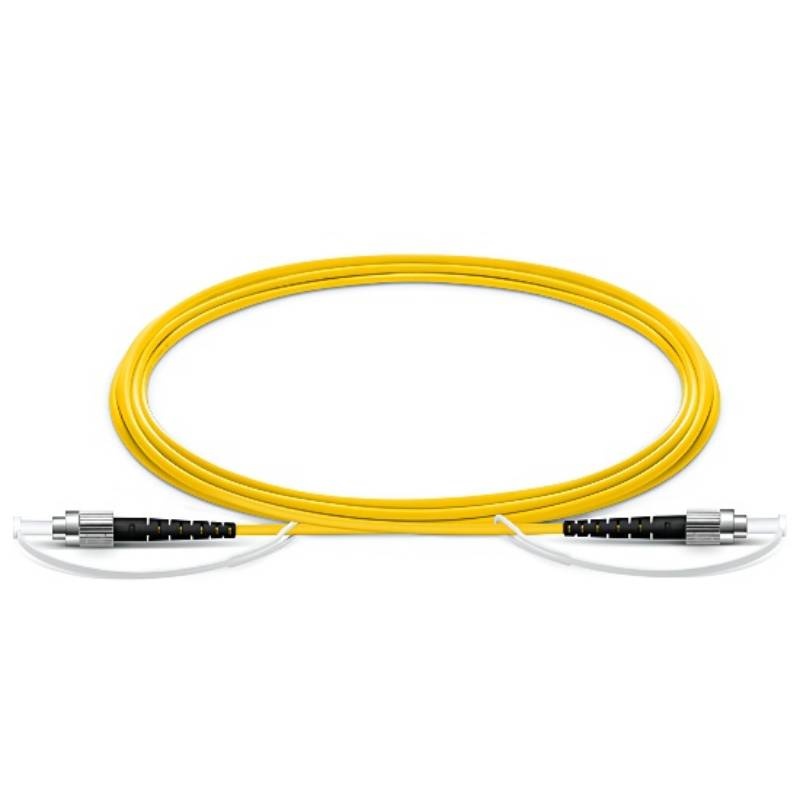
What is Polarization Maintaining Fiber?
Polarization Maintaining Fiber (PM Fiber) is a specialized type of optical fiber designed to preserve the polarization state of light as it travels through the fiber. Unlike standard single-mode fibers, which allow light’s polarization to drift or scatter due to environmental factors or structural inconsistencies, PM Fiber is engineered to lock in the initial polarization orientation. This unique characteristic ensures that the light’s electromagnetic wave orientation remains stable over transmission distances, making it invaluable in systems where polarization integrity directly impacts performance and accuracy.
How Does Polarization Maintaining Fiber Work?
The functionality of PM Fiber hinges on deliberate structural design aimed at counteracting polarization instability. At its core, PM Fiber incorporates a birefringent structure—a property that causes light to split into two orthogonal polarization modes (often referred to as “fast axis” and “slow axis”) with slightly different refractive indices.
To achieve this, manufacturers introduce controlled asymmetries into the fiber’s cladding or core. Common techniques include embedding stress-applying parts (such as rods of higher thermal expansion material) alongside the core. These components create internal stress, inducing a difference in refractive indices between the two axes. As a result, when light is launched into the fiber aligned with one of these axes, it primarily travels along that path, minimizing energy transfer to the orthogonal mode. This isolation prevents random polarization fluctuations, ensuring the light’s initial polarization state is maintained throughout transmission.
The Unique Traits of Polarization Maintaining Fiber
What distinguishes PM Fiber from conventional optical fibers lies in its ability to deliver uncompromising polarization stability under conditions that would degrade signals in standard fibers. Several key traits underscore its uniqueness:
Immunity to Environmental Perturbations: Unlike regular fibers, where temperature shifts, mechanical stress, or bending can disrupt polarization, PM Fiber’s birefringent design resists such interference. This makes it ideal for harsh environments, from industrial facilities to aerospace systems.
Precision in Mode Control: By isolating the two polarization modes, PM Fiber ensures minimal crosstalk between them. This precision is critical in coherent communication systems and interferometric sensors, where signal clarity depends on maintaining distinct polarization states.
Compatibility with Polarization-Sensitive Components: PM Fiber seamlessly integrates with devices like polarization beam splitters, circulators, and isolators—components that rely on consistent polarization to function. This interoperability enables the construction of high-performance optical networks and sensing setups.
Tailored Performance for Niche Applications: Advanced variants, such as high-extinction-ratio (ER) PM patch cords and dispersion-compensating PM fibers, are engineered to meet specific demands, from ultra-low signal loss to wavelength-specific stability, offering solutions beyond the capabilities of standard fibers.
Key Applications of Polarization Maintaining Fiber
The ability to maintain polarization makes PM fiber indispensable across a range of high-precision fields:
Optical Sensing Systems: In fiber optic gyroscopes (used in navigation) and strain sensors, PM fiber ensures that polarization-dependent measurements remain accurate, even in harsh environments with vibrations or temperature changes.
Laser Technology: High-power lasers and coherent laser systems rely on PM fiber to maintain beam stability, critical for applications in medical imaging, material processing, and scientific research.
Telecommunications: In advanced optical networks handling polarization-division multiplexing (PDM), PM fiber prevents signal crosstalk, enabling higher data transmission rates.
Aerospace and Defense: From avionics to radar systems, PM fiber delivers reliable performance in extreme conditions, where signal degradation could have severe consequences.
Advantages of High-Quality PM Fiber Products
Not all PM fibers are created equal. Leading manufacturers, such as FiberMart, produce PM fiber solutions that meet or exceed global industry standards, offering a suite of advantages that set them apart in critical applications:
Superior Extinction Ratio (ER): A hallmark of quality, high ER (often exceeding 20 dB, with premium options reaching 30 dB or more) is achieved through precise manufacturing controls. This ensures minimal leakage between polarization modes, preserving signal integrity even in long-haul transmissions or high-frequency systems. For applications like quantum communication or precision interferometry, where polarization purity is non-negotiable, this metric becomes a defining factor.
Exceptional Mechanical and Environmental Resilience: High-quality PM fibers are built to withstand extreme conditions. Ruggedized cable designs, featuring durable jackets (such as PVC, LSZH, or aramid-reinforced sleeves), resist abrasion, moisture, and chemical exposure. Additionally, they exhibit low sensitivity to temperature fluctuations (-40°C to +85°C in many cases) and mechanical stress, ensuring stable performance in aerospace, industrial, and outdoor deployments.
Broad Versatility in Configurations: To meet diverse system requirements, top-tier PM fibers are available in a comprehensive range of formats. This includes bare fibers (250µm) for integration into compact modules, buffered fibers (900µm) for enhanced protection in indoor setups, and heavy-duty cables (3mm and beyond) for rugged environments. They support a wide spectrum of operating wavelengths (460nm to 1650nm) and are compatible with all standard connector types (FC/UPC, FC/APC, SC/UPC, SC/APC, LC, ST), facilitating seamless integration into existing optical architectures.
Specialized Engineering for Niche Needs: Advanced variants cater to unique challenges. Dispersion-compensating PM fibers mitigate signal distortion in high-speed networks, while retroreflector PM patch cords optimize performance in fiber optic gyroscopes. For applications requiring ultra-low insertion loss (below 0.3 dB), precision-polished connectors and strict alignment tolerances ensure minimal signal degradation.
Rigorous Quality Assurance and Supply Chain Reliability: Compliance with ISO 9001 and Telcordia GR-409 standards guarantees consistent performance across batches. Leading suppliers maintain extensive inventories, enabling rapid delivery for time-critical projects, while comprehensive testing (including ER, insertion loss, and environmental cycling) ensures each product meets stringent specifications before shipment.
Customization Capabilities: Recognizing that off-the-shelf solutions may not fit every scenario, premium manufacturers offer tailored services—from custom cable lengths and connector configurations to wavelength-specific optimization -empowering engineers to design systems with exacting performance requirements.
Polarization Maintaining Fiber represents a leap forward in optical engineering, enabling precision that was once unattainable with conventional fibers. Its ability to preserve polarization stability under challenging conditions makes it a critical component in cutting-edge technologies, from telecommunications to aerospace.As industries demand ever-higher accuracy and reliability, the role of high-quality PM fiber—backed by rigorous manufacturing standards and versatile design—will only grow. For those seeking to elevate their optical systems, investing in premium PM fiber solutions is not just a choice, but a necessity to stay at the forefront of innovation.





No comments have been posted yet.