


.webp)


In the fast-paced world of data center networking, enterprise core aggregation, and service provider transport, high-speed transceiver modules are the backbone of seamless connectivity. Among the key players in this domain, QSFP+ and QSFP28 stand out as two pivotal form factors that have shaped the industry’s development. Understanding the differences and nuances of QSFP+ vs QSFP28 is essential for network architects, IT professionals, and businesses aiming to optimize their infrastructure for performance, efficiency, and scalability. This article delves into the core aspects of QSFP+ vs QSFP28, shedding light on their technical specifications, application scenarios, and the transformative impact they bring to modern networking.
An Overview of QSFP+ and QSFP28: Foundations of High-Speed Connectivity
Before diving into the detailed comparison of QSFP+ vs QSFP28, it is crucial to establish a clear understanding of each transceiver module’s origin and core purpose. Both are designed to facilitate high-bandwidth data transmission, but they emerged at different stages of networking evolution, addressing distinct market needs.
What is QSFP+?
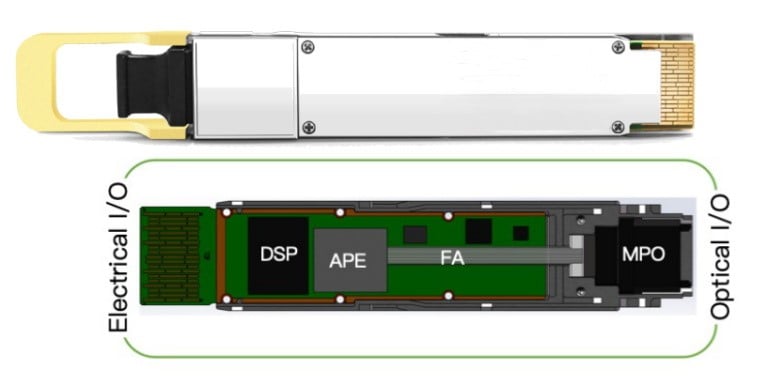
QSFP+, short for Quad Small Form-Factor Pluggable Plus, is a widely adopted transceiver standard that gained prominence in the early 2010s. It was developed to meet the growing demand for 40 Gigabit Ethernet (40GbE) connectivity, a significant leap from the previous 10GbE standard. QSFP+ modules operate by aggregating four 10Gbps channels, delivering an aggregate data rate of up to 40Gbps. This design made it a popular choice for data center top-of-rack (ToR) switches, enterprise core networks, and high-performance computing (HPC) clusters, where reliable mid-range bandwidth was a priority.
What is QSFP28?
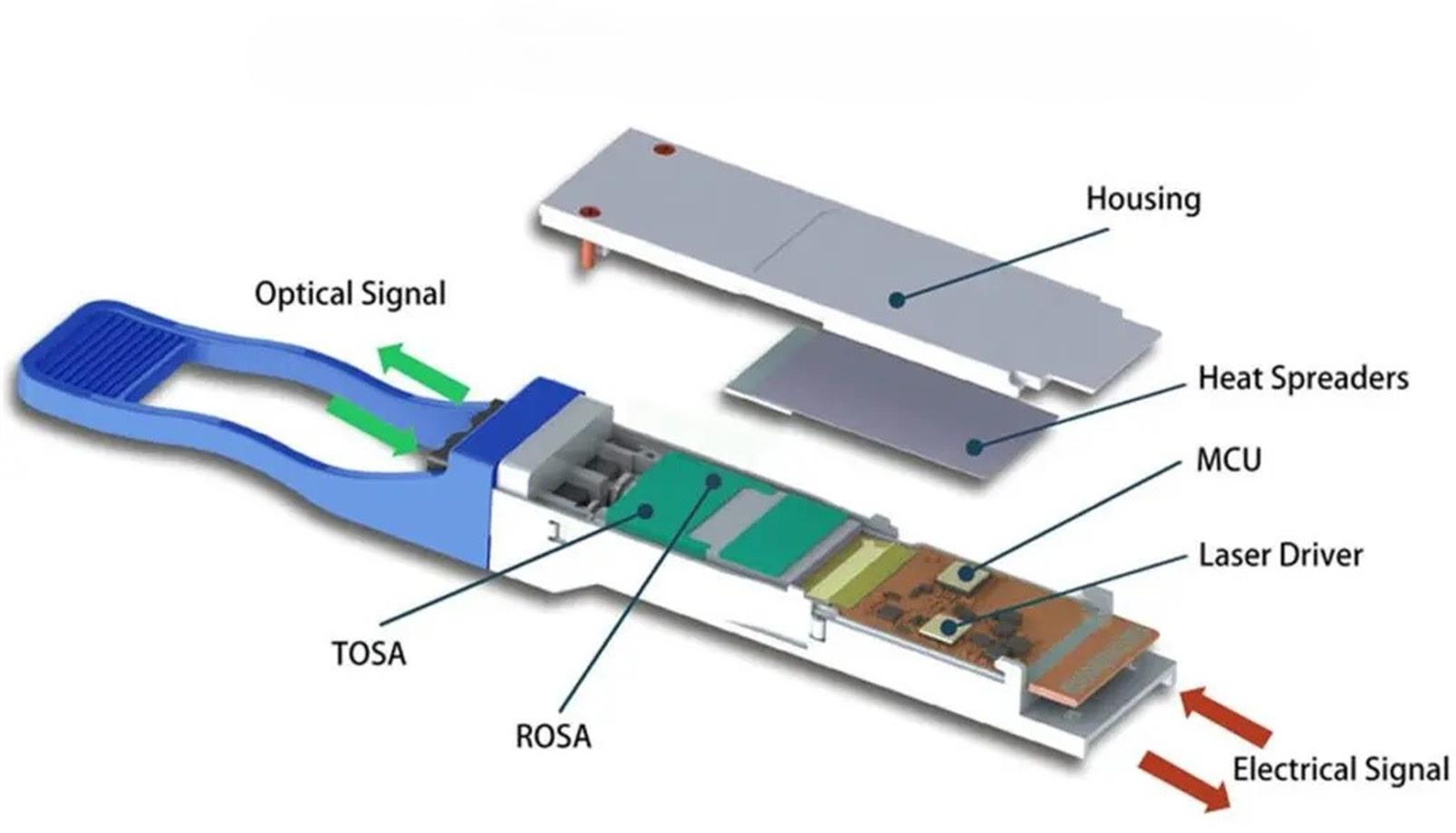
QSFP28, an advanced iteration of the QSFP family, was introduced to address the exponential growth in data traffic driven by cloud computing, big data analytics, and 5G deployment. The “28” in its name refers to the 28Gbps per lane speed, enabling the module to achieve an aggregate data rate of 100Gbps (4x25.78Gbps). As highlighted by industry-leading providers like Fiber-Mart, QSFP28 transceivers offer low power consumption, compact size, and high speed—key attributes that make them ideal for high-density cabling in modern data centers. QSFP28 has quickly become the dominant form factor for 100 Gigabit Ethernet (100GbE), supporting applications such as ITU-T OTU4 and 128G Generation 6 Fiber Channel.
QSFP+ vs QSFP28: Core Technical Specifications Comparison
The technical differences between QSFP+ and QSFP28 are fundamental to their performance and applicability. A side-by-side analysis of their key specifications reveals why QSFP28 has emerged as the preferred choice for next-generation networks, while QSFP+ remains relevant in specific legacy and mid-bandwidth scenarios.
Data Rate and Bandwidth Capacity
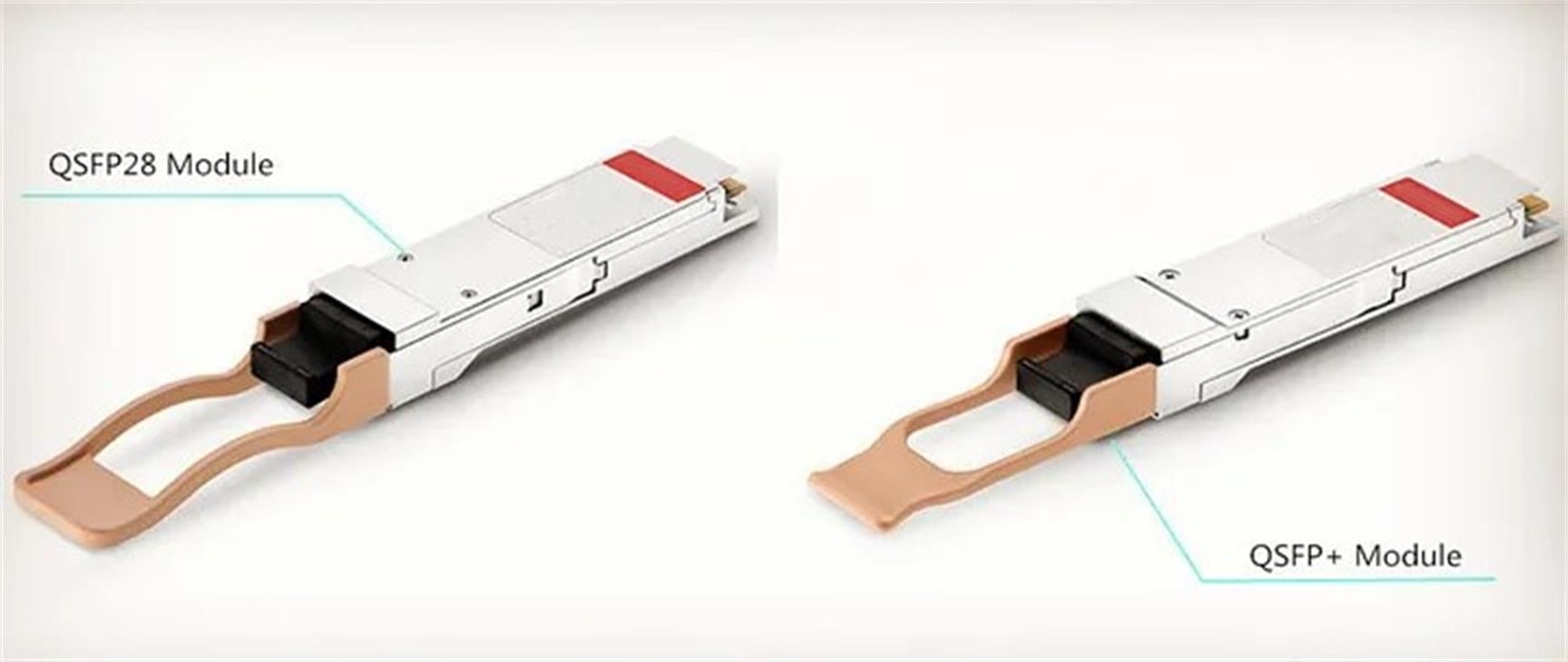
The most significant distinction in QSFP+ vs QSFP28 lies in their data rate capabilities. QSFP+ is limited to a maximum aggregate bandwidth of 40Gbps, with each of its four lanes operating at 10Gbps. This made it suitable for networks requiring moderate bandwidth, such as mid-sized enterprise backbones and early data center architectures. In contrast, QSFP28 pushes the boundaries with an aggregate data rate of up to 111.8Gbps (per Fiber-Mart’s product specifications), leveraging four lanes of 25.78Gbps each. This 2.5x increase in bandwidth directly addresses the need for faster data transmission in today’s data-intensive environments, where large datasets, video streaming, and real-time applications demand ultra-high speeds.
Power Consumption and Energy Efficiency
Energy efficiency is a critical consideration for data centers, where power costs and cooling requirements can significantly impact operational expenses. QSFP+ modules typically consume between 3.5W and 4.5W of power, a figure that was acceptable for its era but less optimal for modern high-density deployments. QSFP28, however, was engineered with power efficiency in mind, boasting a typical power consumption of ≤2.5W (as per Fiber-Mart’s QSFP28 product line). This reduction in power usage not only lowers operational costs but also enables higher port density, as more modules can be deployed without exceeding power and cooling constraints. The energy efficiency of QSFP28 is a key factor in its widespread adoption in large data centers and cloud infrastructure.
Form Factor and Port Density
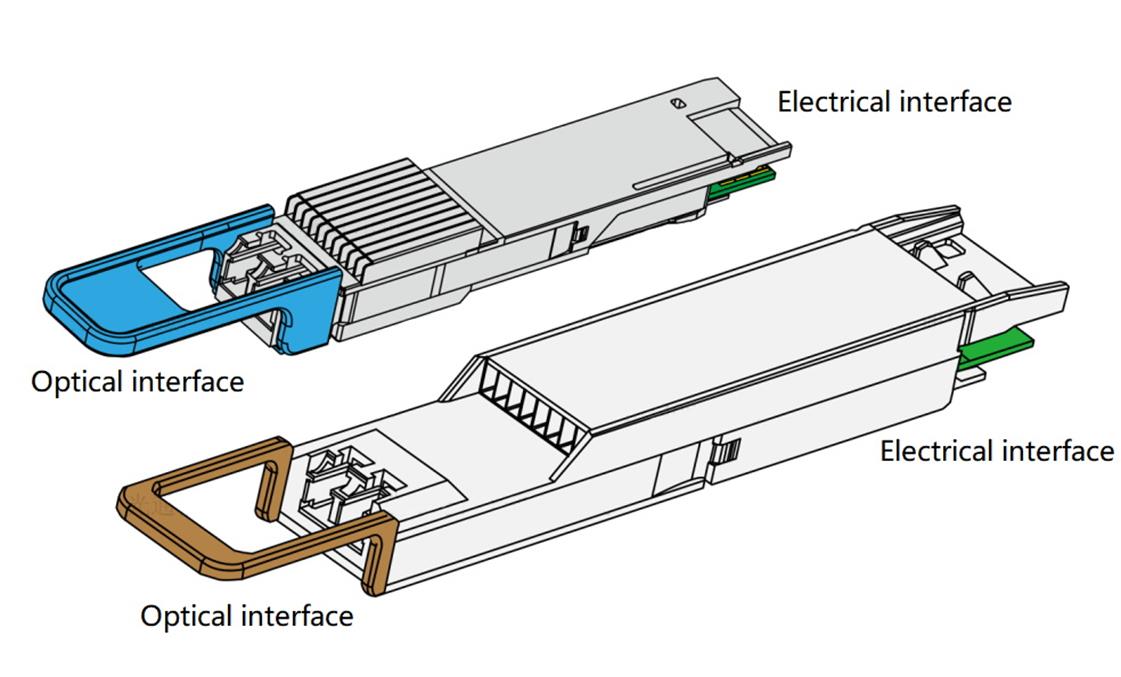
Both QSFP+ and QSFP28 share a similar small form factor, but QSFP28’s optimized design enhances port density—a critical advantage in space-constrained data centers. QSFP+ modules, while compact, were designed for 40Gbps applications, which required a certain level of component spacing. QSFP28, building on the QSFP form factor, packs higher performance into the same footprint, allowing network switches to support more 100Gbps ports per unit space. This high port density translates to better utilization of rack space, reducing the physical footprint of data center infrastructure and enabling scalability as bandwidth demands grow.
Compatibility and Protocol Support
Compatibility with existing network equipment and industry standards is another key aspect of QSFP+ vs QSFP28. QSFP+ modules comply with standards such as IEEE 802.3ba (40GbE) and QSFP MSA, making them compatible with a wide range of legacy networking hardware. However, their support for higher-speed protocols is limited. QSFP28, on the other hand, adheres to modern standards including IEEE 802.3bm (100GbE), QSFP28 MSA, SFF-8665, and SFF-8636. As noted by Fiber-Mart, their QSFP28 transceivers are fully compliant with industry standards and can work with 80% of networking equipment, with custom-encoded firmware available to ensure compatibility with almost any brand. Additionally, QSFP28 supports protocols like CPRI, eCPRI, and ITU-T OTU4, making it versatile for diverse applications including 5G base station connectivity and optical transport networks.
QSFP+ vs QSFP28: Application Scenarios and Use Case Differentiation
The technical disparities between QSFP+ and QSFP28 directly influence their application scenarios. While QSFP+ still serves a purpose in specific environments, QSFP28 has become the go-to solution for modern high-bandwidth requirements.
Where QSFP+ Excels
QSFP+ remains relevant in legacy networks and applications where 40Gbps bandwidth is sufficient. Key use cases include:
Mid-sized enterprise core and distribution layers, where data traffic volumes do not yet demand 100Gbps.
Legacy data center architectures with existing 40GbE switches and infrastructure, where upgrading to QSFP28 may not be immediately cost-effective.
High-performance computing (HPC) clusters that require reliable 40Gbps connectivity between nodes, without the need for higher speeds.
The Dominance of QSFP28 in Modern Networking
QSFP28’s superior performance and efficiency have made it the preferred choice for next-generation networks. Its primary applications include:
Large-scale data centers, where high-density cabling, 100Gbps Ethernet, and low power consumption are critical. Fiber-Mart’s QSFP28 transceivers, for example, are widely used in data centers to increase capacity, improve port density, and reduce power usage.
Cloud service providers and hyperscalers, who handle massive volumes of data and require scalable, high-speed connectivity to support cloud computing, storage, and content delivery.
Service provider transport networks, including 5G backhaul and fronthaul, where QSFP28’s support for CPRI and eCPRI protocols enables seamless connectivity between base stations and core networks.
Optical transport networks (OTN) utilizing ITU-T OTU4, where QSFP28’s dual-rate capabilities (e.g., 100GBASE-LR4 and 112GBASE-OTU4) provide flexibility and future-proofing.

Making the Right Choice: Factors to Consider in QSFP+ vs QSFP28
When selecting between QSFP+ and QSFP28, businesses and IT professionals must evaluate their specific needs, existing infrastructure, and future growth plans. Here are key factors to consider:
Bandwidth Requirements: If your network demands 100Gbps or higher speeds to support data-intensive applications, QSFP28 is the clear choice. For 40Gbps needs, QSFP+ may be sufficient, especially for legacy systems.
Infrastructure Compatibility: Assess your existing switches, routers, and cabling. Upgrading to QSFP28 may require compatible hardware, but the long-term benefits of higher performance and efficiency often justify the investment.
Power and Cooling Constraints: Data centers with limited power or cooling capacity will benefit from QSFP28’s lower power consumption, which reduces operational costs and environmental impact.
Scalability: If your business is growing and data traffic is expected to increase, QSFP28 provides future-proofing, as it can support higher speeds and is aligned with industry trends toward 200Gbps and 400Gbps (via QSFP-DD and OSFP) through backward-compatible form factors.

The Future of Transceiver Technology: Building on QSFP+ vs QSFP28
The evolution of transceiver technology continues to accelerate, with QSFP28 serving as a foundation for next-generation standards. While QSFP+ will remain in use for years to come in legacy systems, QSFP28 has established itself as the benchmark for 100Gbps connectivity. Looking ahead, technologies like QSFP-DD (Double Density) and OSFP (Octal Small Form-Factor Pluggable) are extending the QSFP family’s capabilities to 200Gbps and 400Gbps, building on the efficiency and form factor advantages of QSFP28.
However, the debate of QSFP+ vs QSFP28 remains relevant as businesses navigate the transition from 40Gbps to 100Gbps and beyond. Understanding the strengths and limitations of each module is crucial for making informed decisions that align with current needs and future goals. As data traffic continues to grow exponentially, QSFP28’s role in enabling high-speed, efficient, and scalable networking will only become more prominent, solidifying its position as a cornerstone of modern connectivity.
In conclusion, QSFP+ vs QSFP28 represents a pivotal evolution in high-speed transceiver technology—from 40Gbps to 100Gbps, from moderate efficiency to optimized performance. While QSFP+ has served the industry well, QSFP28’s superior bandwidth, power efficiency, and compatibility with modern protocols make it the ideal choice for today’s data-driven world. By carefully evaluating their requirements, businesses can leverage the right transceiver module to build robust, scalable networks that support growth and innovation for years to come.





No comments have been posted yet.