


.webp)


In the rapidly evolving landscape of optical communication networks, fiber optic switches stand as pivotal components that enable seamless signal routing, network reconfiguration, and high-speed data transmission. Among the diverse range of fiber optic switch types available today, SFP, SFP+, and QSFP28 have emerged as industry standards, each tailored to meet specific bandwidth, form factor, and application requirements.

Fundamentals of Fiber Optic Switches: A Foundation for Understanding
Core Function of Fiber Optic Switches
Fiber optic switches operate on the fundamental principle of selectively routing optical signals from one fiber optic circuit to another. Unlike traditional electrical switches that handle electrical signals, fiber optic switches work with light, leveraging advanced technologies such as mechanical actuation, MEMS (Micro-Electro-Mechanical Systems), or solid-state mechanisms to redirect light paths. This capability is critical for network reconfiguration, fault tolerance, and efficient resource utilization in applications ranging from data centers to telecommunications networks.
Key Performance Metrics
When evaluating fiber optic switches, several key performance metrics play a decisive role in determining their suitability for specific applications. Insertion loss refers to the amount of light lost when a signal passes through the switch, measured in decibels (dB). Lower insertion loss ensures minimal signal degradation, with high-performance switches typically offering insertion loss below 0.5dB. Cross talk is the unwanted leakage of signals from one port to another; high cross talk isolation (often ≥50dB for single-mode fibers) is essential to prevent signal interference and maintain data integrity. Switching time is the duration required for the switch to reconfigure signal paths, ranging from milliseconds (ms) for mechanical switches to microseconds (µs) for MEMS or solid-state switches, with faster switching times critical for real-time applications and network protection. Lifetime denotes the number of switching cycles the switch can endure before performance degrades, with industrial-grade switches often boasting a lifetime of over 10⁸ cycles to ensure long-term reliability.
In-Depth Analysis of SFP Fiber Optic Switches
What is an SFP Fiber Optic Switch?
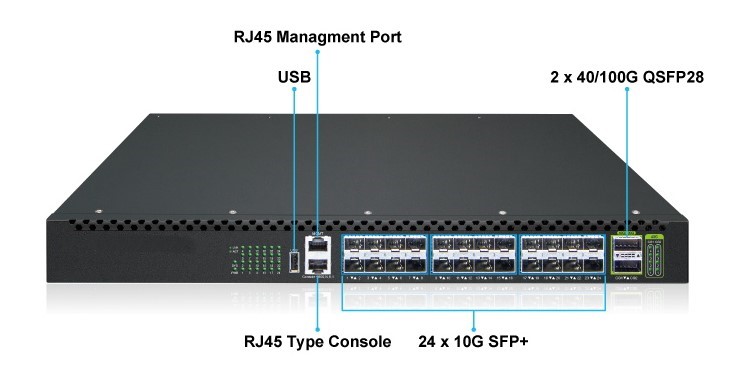
SFP (Small Form-Factor Pluggable) fiber optic switches are compact, hot-swappable devices designed for low to medium bandwidth applications. Introduced in the early 2000s, SFP switches revolutionized optical networking with their small form factor (typically 1x9 inches), allowing for high port density in network equipment such as routers, switches, and optical transceivers. The hot-swappable design enables easy installation and replacement without disrupting network operations, making SFP switches a cost-effective and flexible solution for small to medium-sized enterprises (SMEs) and branch offices.
Technical Specifications and Features
SFP switches support data rates ranging from 100Mbps to 4Gbps, making them ideal for applications such as Fast Ethernet, Gigabit Ethernet, and Fibre Channel (FC) at 1Gbps or 2Gbps. They operate across a wide wavelength range, typically from 850nm (multimode) to 1550nm (single-mode), enabling compatibility with various fiber types, including OM1, OM2, OM3, and single-mode (SM) fibers. Their compact form factor allows for up to 48 ports in a 1U rack-mounted device, maximizing space efficiency in network closets and data centers. Most SFP switches support standard control interfaces such as RS232, USB, and TTL, enabling seamless integration with network management systems (NMS) for remote monitoring and configuration.
Applications of SFP Switches
SFP switches are widely used in scenarios where moderate bandwidth and cost-effectiveness are prioritized. In branch office networking, they connect remote branch offices to corporate networks via Gigabit Ethernet, supporting file sharing, video conferencing, and cloud-based applications. In industrial automation, they enable reliable communication in environments such as factory automation and process control systems, where ruggedness and low power consumption are essential. Additionally, they serve as access switches in metropolitan area networks (MANs), connecting residential and business users to core network infrastructure.
Exploring SFP+ Fiber Optic Switches: Enhanced Performance for Mid-Range Applications
The Evolution of SFP+: From SFP to 10Gbps
SFP+ (Small Form-Factor Pluggable Plus) fiber optic switches represent an upgrade over traditional SFP switches, designed to meet the growing demand for higher bandwidth in mid-range applications. Introduced in the late 2000s, SFP+ switches retain the compact form factor of SFP switches while doubling the bandwidth capacity to 10Gbps. This evolution made SFP+ switches the de facto standard for 10 Gigabit Ethernet (10GbE) deployments, offering a balance of performance, cost, and compatibility.
Key Advantages Over SFP Switches
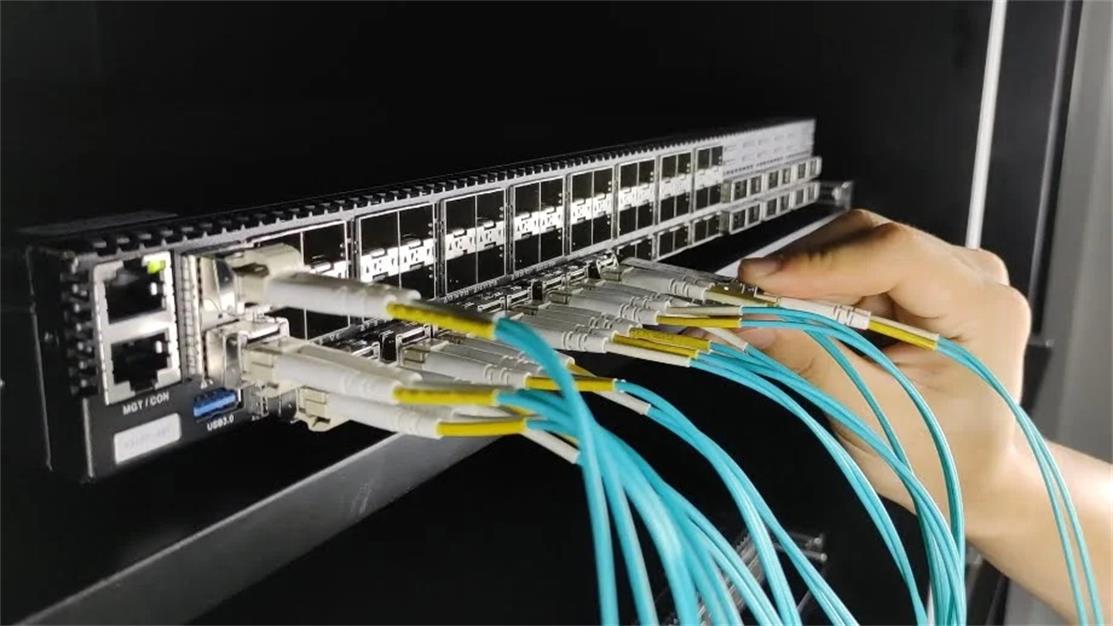
SFP+ switches offer higher bandwidth, supporting data rates of up to 10Gbps, which enables high-speed data transmission for applications such as video streaming, large file transfers, and virtualization. They feature improved signal integrity through advanced signal processing technologies and optimized design, reducing insertion loss and cross talk to ensure reliable transmission over longer distances (up to 40km for single-mode fibers). Backward compatibility is another key advantage, as SFP+ ports work with SFP transceivers, allowing network operators to upgrade their networks gradually without replacing existing hardware. Despite the higher bandwidth, SFP+ switches maintain low power consumption (typically 1-2 watts per port), making them suitable for energy-efficient data centers and enterprise networks.
Typical Use Cases
SFP+ switches are widely adopted in mid-sized to large enterprises and data centers. In Data Center Interconnect (DCI), they connect servers, storage systems, and network devices within a data center, supporting high-density virtualization and cloud computing. As enterprise backbone switches, they link multiple departments and branch offices with 10GbE links. In telecommunications access networks, they support 10Gbps access links in 5G networks, enabling high-speed mobile data transmission and low-latency communication.
QSFP28 Fiber Optic Switches: High-Speed Solutions for Data-Intensive Environments
An Overview of QSFP28 Technology
QSFP28 (Quad Small Form-Factor Pluggable 28) fiber optic switches are designed for high-performance, data-intensive applications that require ultra-high bandwidth. Introduced in the 2010s, QSFP28 switches leverage four lanes of data transmission, each operating at 28Gbps, to deliver a total aggregated bandwidth of up to 100Gbps. This makes QSFP28 switches the preferred choice for hyperscale data centers, cloud service providers, and high-performance computing (HPC) clusters.
Technical Breakthroughs and Capabilities
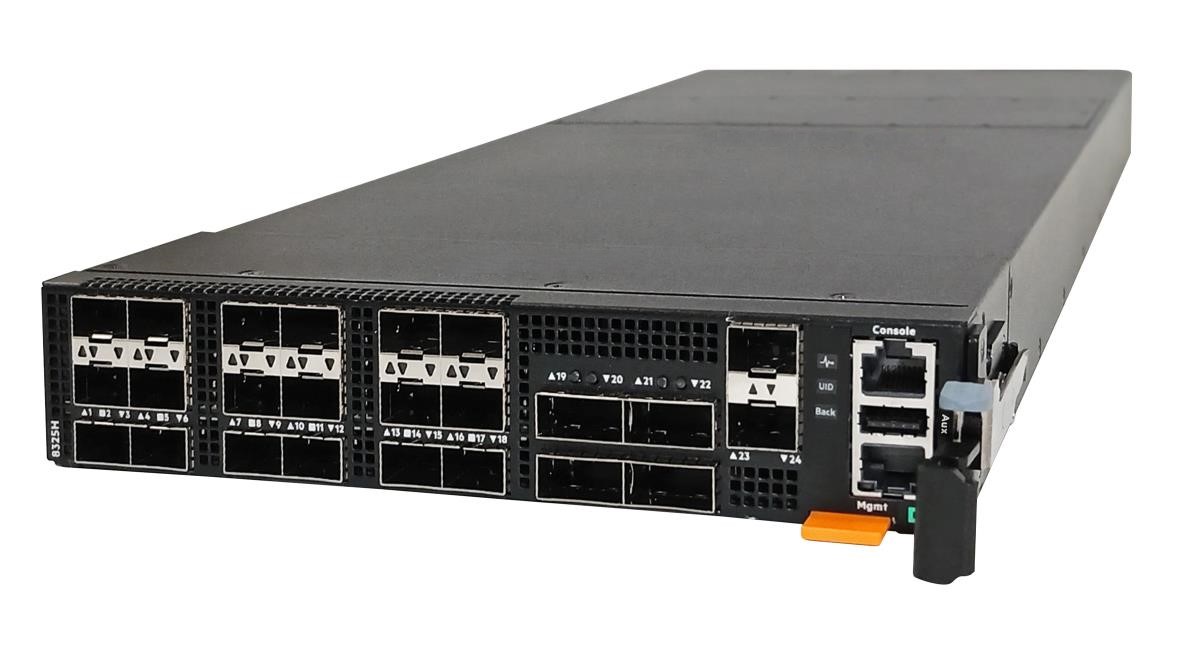
QSFP28 switches support data rates of 40Gbps (QSFP+) and 100Gbps (QSFP28), with some advanced models offering 200Gbps or 400Gbps by aggregating multiple QSFP28 ports. Despite the high bandwidth, they maintain a compact form factor, with 1U rack-mounted devices supporting up to 32 ports, maximizing space efficiency in data centers and reducing the total cost of ownership (TCO). With support for advanced modulation techniques such as PAM4 (Pulse Amplitude Modulation 4), QSFP28 switches can transmit data over distances of up to 100km for single-mode fibers, making them suitable for long-haul DCI and telecommunications networks. Advanced thermal design and cooling technologies ensure stable performance even under high load conditions, preventing overheating and ensuring long-term reliability.
Critical Applications in Modern Networks
QSFP28 switches are indispensable in environments where ultra-high bandwidth and low latency are non-negotiable. In hyperscale data centers, they power the infrastructure of major cloud service providers, supporting millions of concurrent users and data-intensive applications such as artificial intelligence (AI), machine learning (ML), and big data analytics. In High-Performance Computing (HPC), they enable fast communication between HPC clusters, supporting scientific research, weather forecasting, and complex simulations that require massive parallel processing. As core switches in 5G networks, they support the high bandwidth and low latency requirements of 5G applications such as autonomous vehicles, smart cities, and industrial IoT (IIoT).
Comparative Analysis: SFP vs. SFP+ vs. QSFP28
Bandwidth and Speed Comparison
SFP switches cover a data rate range of 100Mbps to 4Gbps, with a typical application speed of 1Gbps for Gigabit Ethernet. SFP+ switches extend the data rate range to 4Gbps to 10Gbps, with the typical application speed being 10Gbps for 10GbE. QSFP28 switches offer the highest performance, with a data rate range of 40Gbps to 400Gbps and a typical application speed of 100Gbps for 100GbE.
Form Factor and Port Density
SFP switches have the smallest form factor, making them ideal for low-port-density applications, with up to 48 ports possible in a 1U device. SFP+ switches share a similar form factor to SFP switches and can also support up to 48 ports in 1U for 10Gbps applications. QSFP28 switches are larger than SFP/SFP+ models but offer higher port density for high-speed applications, with up to 32 ports in 1U for 100Gbps operations.
Cost and Investment Considerations
SFP switches have the lowest cost per port, making them ideal for budget-constrained environments and small-scale deployments. SFP+ switches offer a moderate cost per port, striking a balance between performance and affordability for mid-range applications. QSFP28 switches have the highest cost per port, but this is offset by their ultra-high bandwidth and performance, making them cost-effective for data-intensive environments where high-speed transmission is critical.
Application Suitability
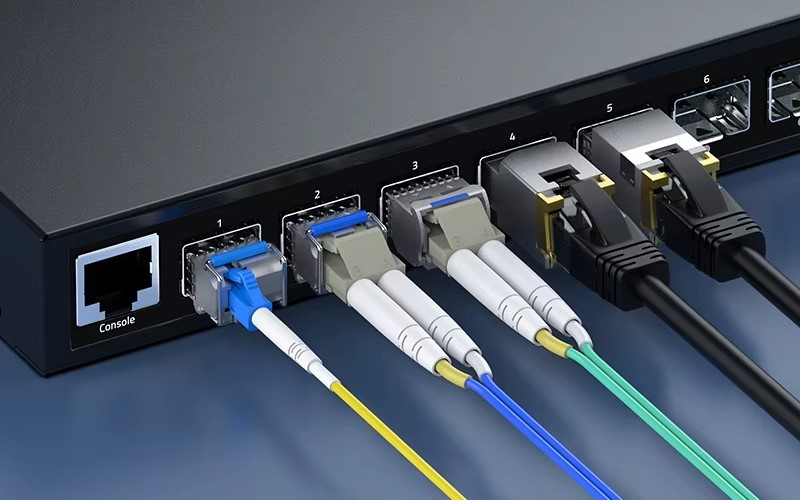
Choose SFP switches if you need a cost-effective solution for low to medium bandwidth applications, such as branch offices or small businesses. Opt for SFP+ switches if you require 10Gbps bandwidth for enterprise networks, data centers, or 5G access networks. Select QSFP28 switches if you need ultra-high bandwidth (100Gbps or higher) for hyperscale data centers, HPC clusters, or 5G core networks.
SFP, SFP+, and QSFP28 fiber optic switches each play a critical role in modern optical networks, offering distinct advantages in terms of bandwidth, form factor, and application suitability. When selecting a fiber optic switch, it is essential to consider your specific requirements, including bandwidth needs, port density, transmission distance, and budget.For small businesses and branch offices with low to medium bandwidth requirements, SFP switches offer a cost-effective and reliable solution. For enterprise networks, data centers, and 5G access networks requiring 10Gbps bandwidth, SFP+ switches provide an optimal balance of performance and affordability. For hyperscale data centers, HPC clusters, and 5G core networks needing ultra-high bandwidth (100Gbps or higher), QSFP28 switches are the ideal choice.





No comments have been posted yet.