


.webp)


Core Ethernet Switch vs. Standard Switch: The Heart and Blood Vessels of Network Architecture
In the data deluge of large enterprise networks, core switches silently handle traffic reaching hundreds of Gbps, while standard switches are responsible for connecting each end device to this high-speed network.
Core switches in data centers typically employ a distributed buffer architecture, with buffer capacities reaching 1GB or more. In comparison, standard switches usually have buffers of only 2-4MB.
This vast difference highlights the distinct roles these two types of switches play in network architecture—the core switch acts as the network's heart, while standard switches are like the blood vessels spread throughout the body, each performing vastly different tasks.
Network Switching Fundamentals: The Essential Difference
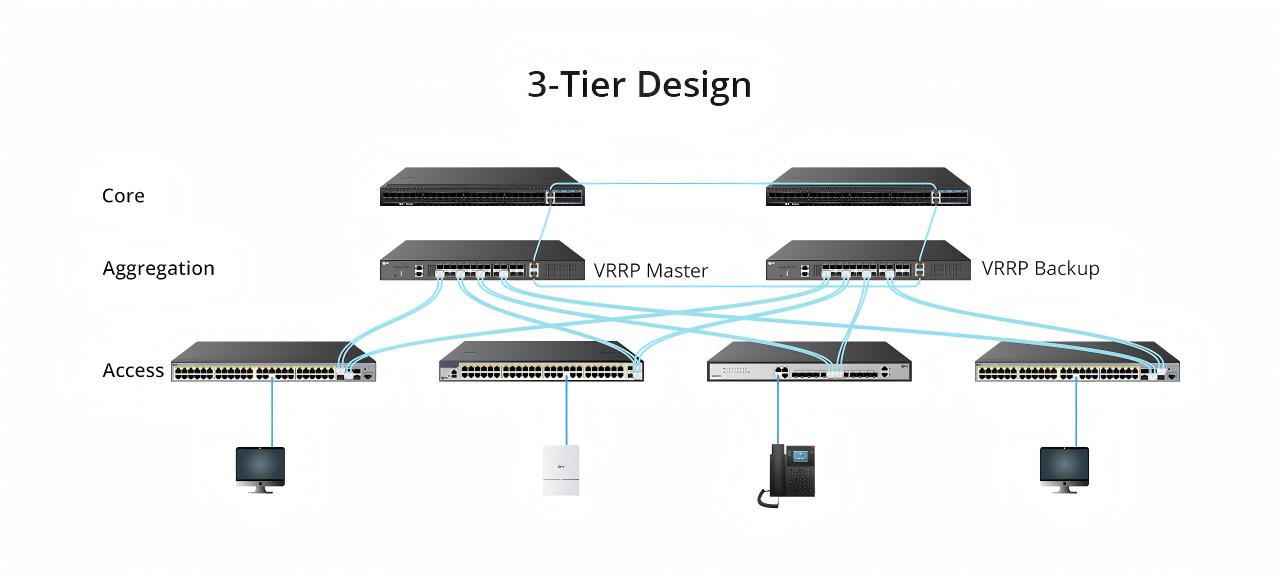
To understand the difference between core and standard switches, it's first essential to clarify their positions in the layered network architecture. Modern enterprise networks typically use a three-tier design: Access Layer, Distribution Layer, and Core Layer.
Standard switches are usually deployed at the Access Layer of the network, directly connecting to end-user devices like computers, printers, and IP phones. The primary function of these switches is to allow end users to connect to the network, hence they are characterized by low cost and high port density.
Core switches reside in the Core Layer, the backbone of the network. As the main hub for network data traffic, it needs to handle massive data flows from the entire network. The primary purpose of the core layer is to provide an optimized and reliable backbone transmission structure through high-speed forwarding.
From this perspective, the fundamental difference lies in the network tier they serve and the tasks they undertake. Standard switches focus on user access, while core switches specialize in high-speed data forwarding and backbone transmission.
Detailed Comparison: Technical Parameters and Functional Differences
Let's examine their differences more clearly through specific technical parameters:
Port Characteristics Comparison
Standard switches typically have 24-48 ports, mostly Gigabit Ethernet or Fast Ethernet ports. These ports are mainly used for accessing user data or aggregating data from some access-layer switches.
Core switches have a higher number of ports, often featuring a modular design allowing flexible combinations of fiber and Gigabit Ethernet ports. Today, with growing network demands, core switches even support 8-port 40G line cards and 4-port 100G line cards.
Functionality and PerformanceDifferences
Standard switches have relatively basic functionality, supporting at most VLANs, simple routing protocols, and some basic SNMP features. Their backplane bandwidth is relatively small.
Core switches are typically Layer 3 switches, capable of configuring various advanced network protocols like routing protocols, ACLs, QoS, and load balancing. Their backplane bandwidth far exceeds that of standard switches, and they usually have separate engine modules with active/standby designs to ensure high reliability.
Technical Feature Distinction
Standard switches primarily aim to fulfill basic interconnection needs and cannot achieve precise service identification and control.
Core switches need to support virtualization technology, transforming physical resources into logically manageable resources. They should also feature large buffer technology, employing a distributed buffer architecture with capacities over 1GB to guarantee zero packet loss during traffic bursts.
For a more intuitive display of the differences between these two types of switches, I've compiled the following comparison table:
| Comparison Dimension | Core Switch | Standard Switch |
|---|---|---|
| Primary Role | Network backbone, high-speed forwarding core | User access, terminal connection |
| Port Characteristics | High port count, modular design, supports high-speed interfaces | Typically 24-48 ports, fixed configuration |
| Functional Features | Layer 3 switching, supports advanced features (routing protocols, ACL, QoS, etc.) | Basic Layer 2 switching, relatively simple functions |
| Performance Parameters | High backplane bandwidth, large buffers (up to 1GB+), high-performance forwarding engines | Lower backplane bandwidth, smaller buffers (typically 2-4MB) |
| Reliability Design | Redundant power supplies, redundant engines, hot backup support | Usually single power supply, limited redundancy design |
| Deployment Location | Network Core Layer, data center backbone | Network Access Layer, office areas |
| Suitable Network Scale | Large enterprise networks, data centers (typically 50+ devices) | Small networks, branch offices (typically under 50 devices) |
Selection Guide: How to Choose the Right Ethernet Switch Based on Needs
After understanding the differences, the next question is how to make the right choice based on actual requirements. Here are key considerations:
Network scale is the primary factor. Generally, networks with over 50 devices should consider using a core switch, while small networks might only need standard switches or a router.
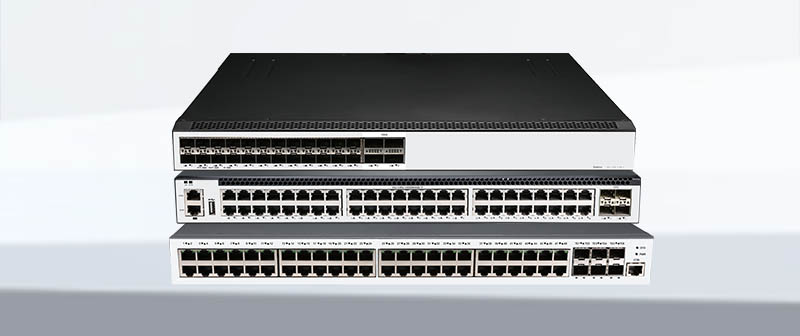
Business needs are equally important. If your network needs to support demanding applications like video conferencing, virtualized environments, or big data transfers, then the high-speed forwarding and low-latency features of a core switch will be essential.
Budget and scalability also need consideration. Although the initial investment for a core switch is higher, its modular design and powerful expansion capabilities protect long-term investment. Standard switches are more suitable for scenarios with limited budgets and low future expansion needs.
Fiber Network Solutions: Professional Support from Fiber-MART
When selecting the appropriate switch, matching fiber network equipment and solutions are equally important. FiberMART, as a global leading supplier of fiber optics, fiber optic cables, and optical networking solutions, provides comprehensive professional support for all types of switch deployments.
Whether it's high-speed optical modules required for core switches or fiber patch cables and accessories needed for standard switch connections, FiberMART delivers high-quality, innovative products and solutions.
For enterprises deploying core switches, FiberMART's high-speed fiber solutions ensure high-bandwidth, low-latency transmission for the network backbone, meeting the stringent performance demands of data centers and enterprise networks.
For scenarios using standard switches, FiberMART also provides cost-effective fiber access solutions, helping businesses ensure stable and reliable network connectivity while controlling costs.
Notably, as a manufacturer with 15 years of industry experience, Fiber-MART holds ISO9001:2015 and ISO14001:2015 certifications. Its strict quality control processes ensure the reliability of every product, providing solid assurance for your network deployment.
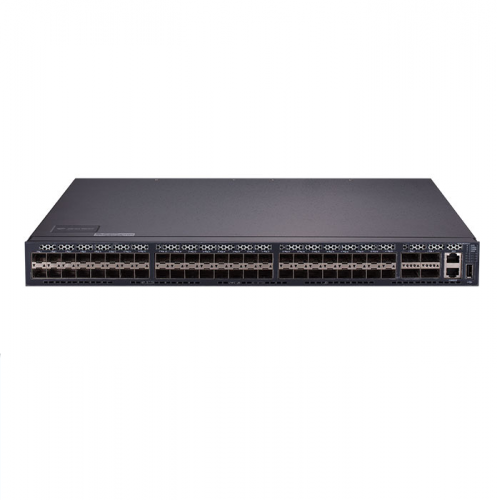
A standard switch works quietly at the access layer, while in the core equipment room rack, the modular core switch's indicator lights flash. Its 10 Gigabit fiber ports, connected through FiberMART's high-speed optical modules, link to the entire network's future.
For large data centers, core switches must possess high-capacity forwarding characteristics, support high-density 10G line cards, and meet the demands of data center high-density applications. Only such equipment can remain steadfast in the digital deluge, serving as a reliable engine driving enterprise digital transformation.





No comments have been posted yet.