


.webp)


Polarization Maintaining Fiber (PMF) is a specialized single-mode optical fiber designed to stabilize the linear polarization state of light during long-distance transmission and suppress random polarization fluctuation and mode crosstalk. Unlike conventional telecommunication fibers optimized purely for low-loss signal transmission, PMF features engineered asymmetric geometry and internal stress structures to introduce controlled, uniform birefringence along the entire fiber length. This design counteracts random polarization distortion caused by manufacturing imperfections and external environmental disturbances, making PMF an essential component for coherent optical communication, fiber lasers, high-precision fiber-optic sensors, quantum optics, and precision measurement systems. This guide elaborates on the fundamental principles, classification, key optical parameters, performance characteristics, engineering specifications, and industrial applications of polarization maintaining fiber.
Fundamentals of Optical Polarization
Light propagates as a transverse electromagnetic wave, with electric and magnetic fields oscillating perpendicularly to the direction of travel. Polarization describes the orientation and amplitude variation of the electric field vector, serving as the foundational concept for understanding PMF operating mechanisms.
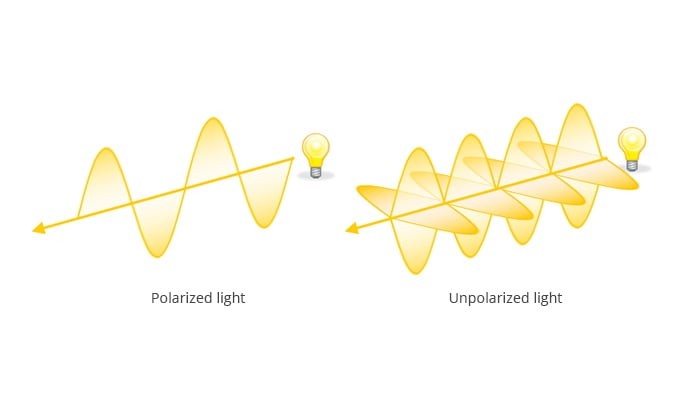
● Unpolarized Light: The electric field vibrates randomly across multiple transverse directions. Natural sunlight and conventional broadband light sources typically emit unpolarized light with no fixed polarization orientation.
● Linearly Polarized Light: The electric field oscillates along a single, fixed transverse plane. This stable, predictable polarization state is the ideal input for PMF operation and is mandatory for high-precision optical systems.
In an ideal perfectly circular-core single-mode fiber, two orthogonal polarization modes propagate with identical characteristics without polarization distortion. However, practical optical fibers always suffer from polarization degradation due to inherent imperfections, creating the core requirement for polarization maintaining fiber.
Limitations of Conventional Single-Mode Fiber
Theoretically, perfectly symmetric circular-core fiber exhibits zero birefringence and stable polarization transmission. In practical deployment, two primary factors induce random birefringence: manufacturing irregularities including core eccentricity, cross-section asymmetry, and preform inhomogeneities; and external disturbances such as fiber bending, tension, compression, temperature fluctuation, and mechanical vibration.
Random birefringence creates differential propagation velocities between the two orthogonal polarization modes, resulting in polarization crosstalk—random power coupling between polarization states. This leads to time-variant polarization distortion and polarization mode dispersion (PMD), which degrades signal fidelity, limits transmission bandwidth, and reduces measurement accuracy in coherent and sensing systems. Conventional fibers cannot support high-precision polarization-sensitive optical applications.
Working Principle of Polarization Maintaining Fiber
PMF does not eliminate birefringence; it actively introduces high-magnitude, uniform, and deterministic intrinsic birefringence along the full fiber length to suppress random birefringence and parasitic polarization coupling. The core operating mechanism relies on establishing two orthogonal polarization principal axes with distinct propagation constants, phase velocities, and refractive indices.
This structural differentiation maximizes mode isolation and minimizes random power coupling between polarization states. When linearly polarized input light is precisely aligned with either the fast axis or slow axis, nearly all optical power is confined to a single polarization mode, delivering long-term stable polarization transmission.
PM Fiber vs. Standard Single-Mode Fiber
The following comparison clarifies the structural and performance differences between PMF and conventional single-mode fiber, defining their respective application boundaries:
|
Parameter
|
Standard Single-Mode Fiber
|
Polarization Maintaining Fiber (PMF)
|
|---|---|---|
|
Birefringence Behavior
|
Weak, random birefringence with no fixed polarization axes
|
Strong, uniform intrinsic birefringence with stable orthogonal polarization axes
|
|
Polarization Stability
|
Poor; polarization state fluctuates randomly with environment and length
|
Excellent; sustains consistent linear polarization over transmission
|
|
Polarization Crosstalk
|
High and unpredictable mode coupling
|
Low and controllable crosstalk; suppressed by high birefringence
|
|
Beat Length
|
Meter-scale; negligible birefringence effect
|
Millimeter to centimeter scale; significant birefringence
|
|
Primary Applications
|
Non-coherent optical communication, general data transmission
|
Coherent communication, fiber lasers, precision sensing, quantum optics
|
|
Alignment Requirements
|
No polarization alignment required; simple splicing and termination
|
Precise fast/slow axis alignment mandatory; high-precision processing required
|
PMF Classification and Birefringence Mechanisms
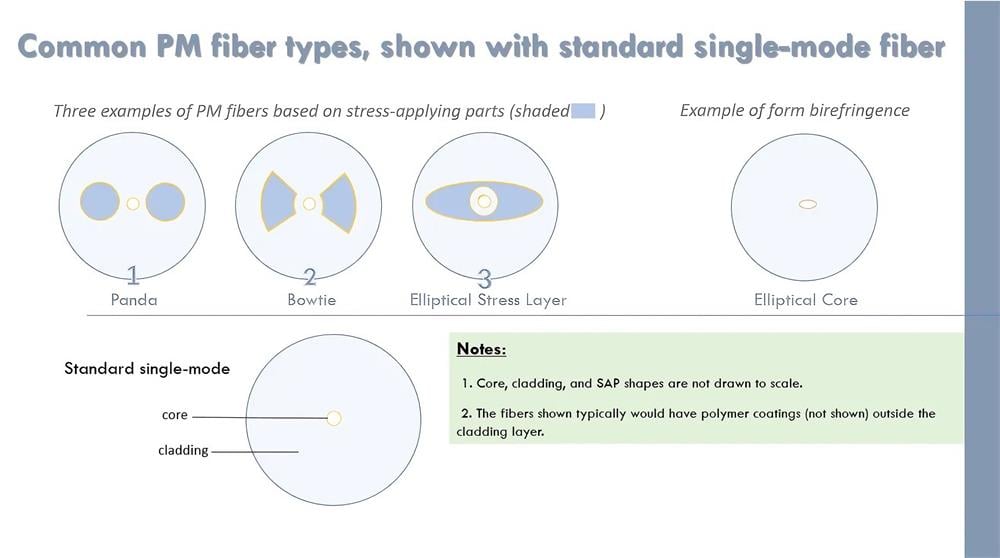
Polarization maintaining fibers are categorized into two fundamental types based on birefringence generation: form birefringence and stress-induced birefringence. Stress-induced PMF delivers superior birefringence and polarization stability, dominating commercial and industrial applications.
Form Birefringence
Form birefringence originates from asymmetric waveguide geometry via vector electromagnetic effects, requiring no internal stress structures. The most common implementation is elliptical-core PMF, which breaks circular symmetry with an elliptical core cross-section. This asymmetric refractive index profile creates consistent propagation differences between orthogonal polarization modes.
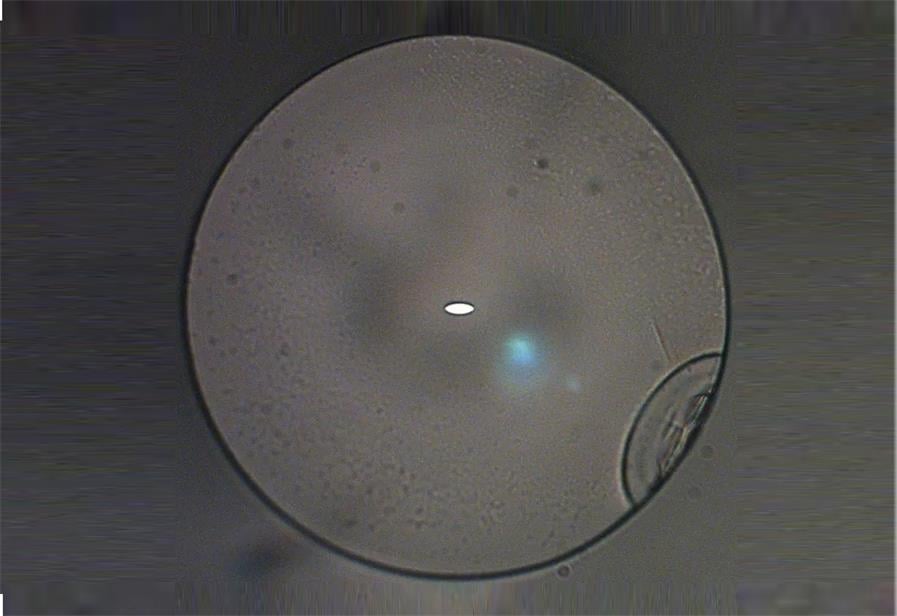
Form birefringence fiber features excellent thermal stability and easy end-face polishing due to the absence of doped stress regions. However, it provides relatively weak birefringence and limited polarization holding capability, restricting its use to specialized low-demand scenarios.
Stress-Induced Birefringence
Stress-induced birefringence is the most widely adopted commercial solution, generating high birefringence via thermomechanical stress. Stress-applying parts (SAP) with dissimilar thermal expansion coefficients are embedded symmetrically in the cladding. During fiber drawing and cooling, differential thermal contraction creates permanent asymmetric residual stress across the core region, modifying local refractive indices and producing strong, stable birefringence. Three mainstream types are listed below:
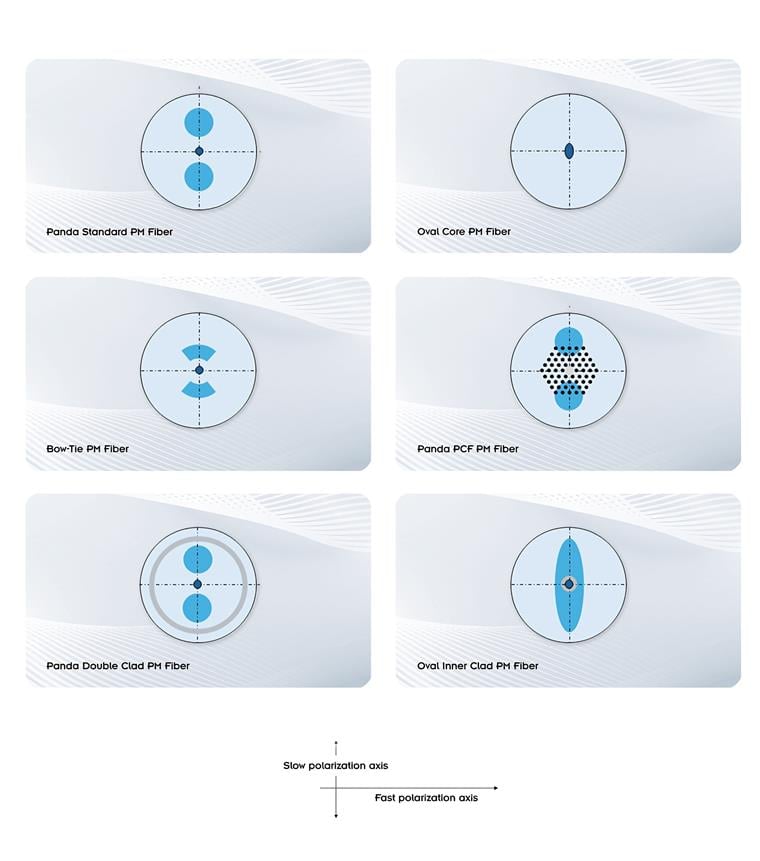
● PANDA PMF: Named for its panda-eye cross-section geometry with two symmetric cylindrical boron-doped stress rods. PANDA (Polarization-maintaining And Absorption-reducing) fiber offers exceptional structural uniformity, stable birefringence, and scalable manufacturing capability, supporting continuous fiber lengths up to hundreds of kilometers. The primary drawback is moderate temperature sensitivity due to large stress regions. It is the standard choice for fiber optic gyroscopes and general-purpose polarization-sensitive systems.
● Bow-Tie PMF: Fabricated via modified chemical vapor deposition (MCVD) with wedge-shaped stress regions positioned close to the fiber core. Bow-tie PMF achieves the highest birefringence and superior polarization isolation among commercial PMFs. The tradeoff is complex geometric control, limited preform dimensions, and higher production costs, making it suitable exclusively for ultra-high-precision interferometric sensing applications.
● Elliptical Stress Layer PMF: Manufactured by mechanically flattening circular preforms before drawing, transforming annular boron-doped layers into elliptical stress structures. This type delivers balanced mechanical stability but involves complicated machining processes, resulting in limited commercial adoption and only niche specialized applications.
Performance Comparison of PMF Types
|
PMF Type
|
Key Advantages
|
Limitations
|
Typical Applications
|
|---|---|---|---|
|
PANDA
|
High uniformity, excellent repeatability, mass-production compatible, unlimited fiber length
|
Moderate temperature sensitivity
|
Fiber optic gyroscopes, general sensing, PM patch cords
|
|
Bow-Tie
|
Ultra-high birefringence, best-in-class polarization holding
|
Complex fabrication, high cost, limited preform size
|
High-precision interferometry, ultra-sensitive sensing systems
|
|
Elliptical-Core
|
Thermally stable, no internal stress structures, easy polishing
|
Weak birefringence, limited polarization performance
|
Low-temperature environments and special industrial conditions
|
|
Elliptical Stress Layer
|
Good mechanical stability, uniform stress distribution
|
Complicated processing, low manufacturability
|
Custom high-end special optical systems
|
Key Optical Parameters of PMF
PMF performance is defined by standardized optical parameters that guide product selection, testing, and system integration. The physical definitions, formulas, and engineering criteria are detailed below.
Modal Birefringence (Bm)
Modal birefringence quantifies the propagation constant difference (Δβ) between two orthogonal polarization modes. A normalized unitless parameter is adopted for universal characterization:
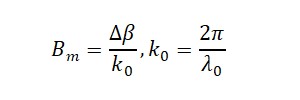
Where Δβ = propagation constant difference, k₀ = free-space wave number, λ₀ = operating wavelength in vacuum.
Higher modal birefringence enhances polarization mode isolation and suppresses random crosstalk. Commercial PMF typically features Bm greater than 10⁻⁴, orders of magnitude higher than conventional single-mode fiber (≈10⁻⁶).
Beat Length (LB)
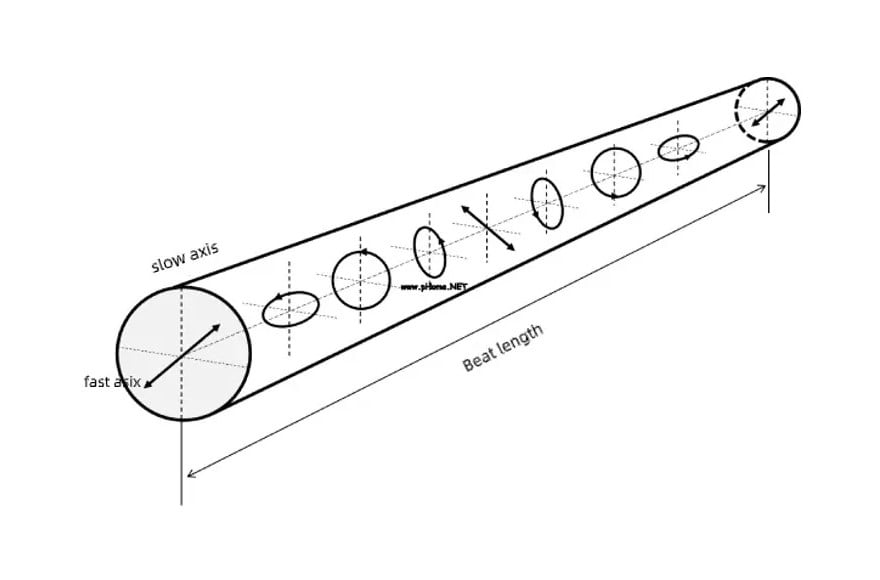
Beat length is the fiber length required for two orthogonal polarization modes to accumulate a phase difference of 2π, representing the spatial periodicity of polarization state evolution.
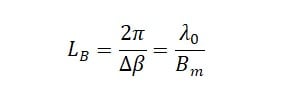
Beat length is inversely proportional to birefringence: shorter beat length corresponds to stronger birefringence, better mode separation, and higher polarization stability. High-grade gyroscope PMF typically has a beat length of approximately 2 mm, while commercial general-purpose PMF ranges from several millimeters to centimeters. Beat length is wavelength-dependent and must be specified at the operating wavelength.
Fast Axis and Slow Axis
Refractive index asymmetry in PMF creates two orthogonal polarization axes with distinct phase velocities:
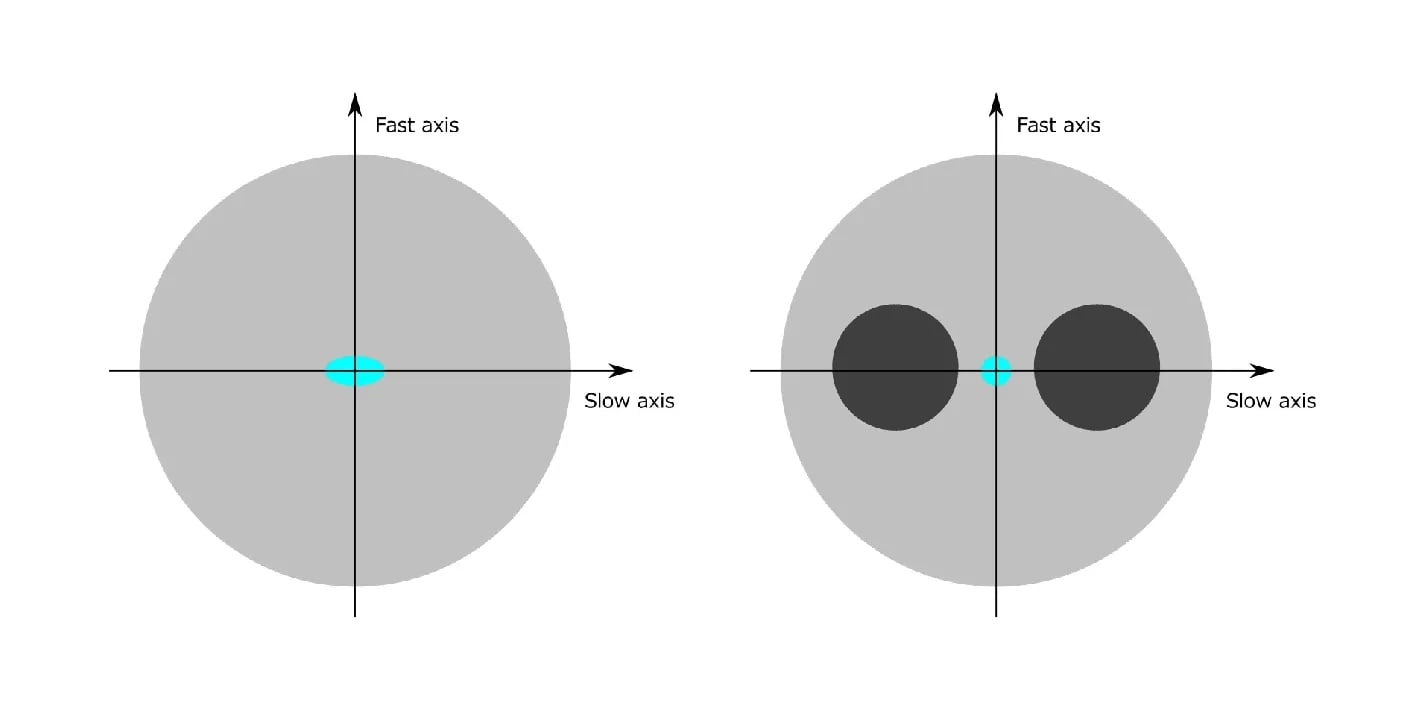
● Slow Axis: Features higher effective refractive index and larger propagation constant, resulting in slower phase velocity. This axis provides stronger mode confinement and superior robustness against bending, temperature, and vibration disturbances, serving as the primary working axis in precision systems.
● Fast Axis: Features lower effective refractive index and smaller propagation constant, enabling faster phase velocity. It exhibits weaker anti-interference performance and is generally used as a secondary auxiliary axis.
The fast and slow axes are permanently orthogonal and structurally fixed, identifiable via fiber cross-section geometry.
Polarization Crosstalk
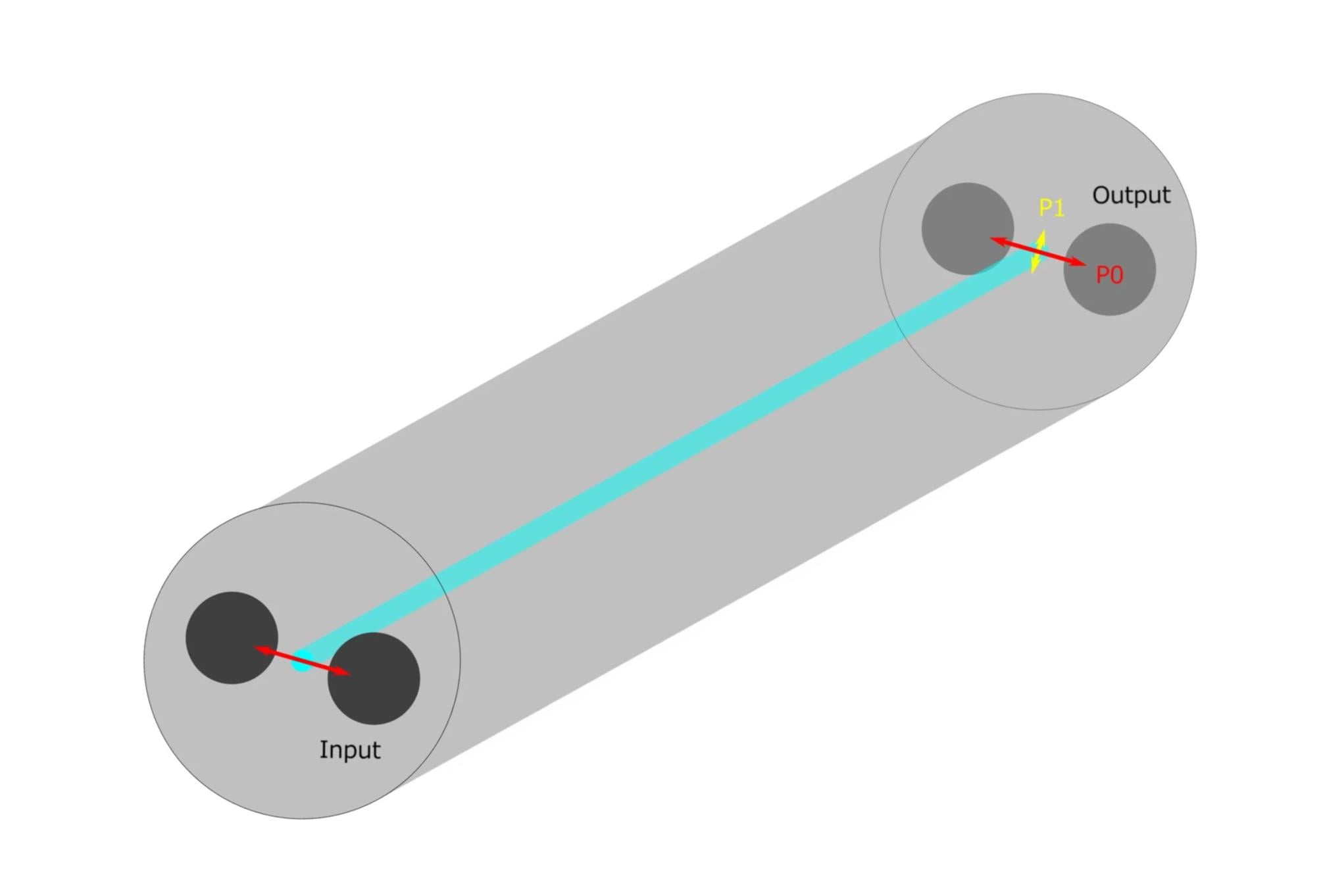
Polarization crosstalk characterizes undesired power leakage between orthogonal polarization axes, directly indicating polarization degradation. Tested by launching polarized light aligned with one principal axis and measuring leaked power on the orthogonal axis:
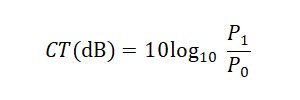
Where P₀ = main polarization output power, P₁ = leaked crosstalk power. Lower crosstalk values represent better polarization isolation.
Polarization Extinction Ratio (PER/ER)
PER is the definitive metric for evaluating PMF polarization purity, defined as the power ratio between the dominant polarization component and the orthogonal leakage component:
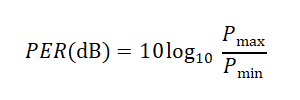
Where Pmax is the maximum power of the main axis polarized light; Pmin is the minimum power of the orthogonal axis leakage light. Higher PER values indicate purer polarization output and better polarization maintaining performance. Standard commercial PMF provides PER above 20 dB, while high-precision PMF exceeds 30 dB.
Distinction: Beat length describes periodic polarization evolution; PER describes final polarization purity after transmission.
Polarization Holding Parameter (H-Parameter)
The H-parameter defines per-unit-length polarization extinction ratio, evaluating longitudinal polarization uniformity and long-distance stability. It is measured via standardized crosstalk testing and specified at a calibrated operating wavelength, critical for kilometer-scale PMF applications.
PM Fiber Engineering Installation and Operation Specifications
PMF system performance relies heavily on high-precision assembly. The core requirement is accurate principal axis alignment; minor angular misalignment will significantly increase crosstalk and degrade extinction ratio.
● Termination Requirements: Fiber stress rods or elliptical core orientation must be precisely keyed with connector alignment features to eliminate angular offset.
● Splicing Requirements: PMF splicing demands precise 3D spatial alignment and rotational axis matching to avoid polarization loss and signal distortion.
● Uniformity Requirements: End-face polarization reference orientation must be consistent with cross-section principal axes to ensure continuous polarization performance along the entire fiber length.
Primary Applications of PMF
With superior polarization stability, PMF is widely deployed in high-end polarization-sensitive optical systems:
● Coherent Optical Communications: Eliminates polarization-induced signal distortion, improving signal-to-noise ratio and extending transmission distance for high-speed coherent systems.
● Fiber Lasers: Stabilizes output polarization state, ensuring consistent power distribution, mode quality, and polarization purity for industrial and scientific laser systems.
● High-Precision Fiber Sensors: Enables ultra-sensitive measurement for fiber optic gyroscopes, accelerometers, hydrophones, and vibration sensors, serving aerospace, defense, and deep-sea detection systems.
● Precision Metrology and Quantum Optics: Supports interferometers, polarization detection, and quantum communication systems to guarantee measurement accuracy and optical path stability.
● Medical Optical Devices: Applied in optical coherence tomography (OCT) and biomedical imaging systems to enhance resolution and detection precision.
FiberMart's PM Solutions
Fibermart provides a comprehensive selection of polarization-maintaining optics, including fiber pigtails, optical splitters, circulators, and switches. The products are manufactured to leading industry standards, adhering to ISO9001:2015 and ISO14001:2015 certifications, and have received widespread recognition from customers globally.
● Polarization Maintaining Fiber Optics
● Polarization Maintaining Cable
● Polarization Maintaning Fiber
Summary
Polarization maintaining fiber solves the inherent random polarization instability of conventional optical fibers via engineered geometric asymmetry and controlled internal stress, delivering stable, high-strength birefringence. PMF performance is quantitatively defined by birefringence magnitude, beat length, polarization crosstalk, and extinction ratio. Different PMF structures offer tradeoffs between manufacturing scalability, thermal stability, and polarization isolation, covering general communication and ultra-precision sensing scenarios.
As a foundational component of polarization-controlled optical systems, PMF is indispensable for coherent communication, laser technology, precision metrology, and quantum optics. With the continuous advancement of precision optical engineering, the application value and technical importance of PMF will continue to expand.
Frequently Asked Questions (FAQ)
Does PMF eliminate birefringence?
No. PMF suppresses random parasitic birefringence by introducing controlled, uniform intrinsic birefringence. Stable high birefringence is the fundamental mechanism enabling polarization maintenance.
Can fast axis and slow axis be used interchangeably?
No. The slow axis provides superior mode confinement and anti-interference capability and is the standard working axis. The fast axis offers lower stability and is only acceptable for low-precision applications. High-accuracy systems strictly adopt slow-axis transmission.
Does a shorter beat length represent better PMF performance?
Yes for standard operating conditions. A shorter beat length indicates stronger birefringence, higher mode isolation, and better resistance to external disturbances, delivering more stable polarization performance for precision applications.
Are PMF and standard single-mode fiber interchangeable?
No. Standard fiber lacks fixed polarization axes and cannot sustain polarized transmission. PMF requires high-precision polarization alignment and cannot replace conventional fiber for general data communication, and vice versa.
What are the most commonly used PMF types in industry?
Three mainstream PMFs dominate industrial use: PANDA fiber for universal applications, mass production compatibility, and fiber gyro systems; Bow-Tie fiber for ultra-high birefringence and high-precision interferometry; elliptical-core fiber for superior thermal stability in low-temperature and special working conditions. Other types are custom-specific and rarely used in general engineering.
What are the standard operating wavelengths for PMF?
Common industrial PMF wavelength bands cover three ranges: visible band (488 nm, 633 nm, 650 nm) for laboratory precision experiments; near-infrared band (780 nm, 850 nm, 980 nm) for fiber lasers and short-range sensing; telecom band (1310 nm, 1550 nm) for long-distance coherent communication and fiber gyroscopes. Ultraviolet and far-infrared wavelengths are custom special bands.
Posted on 22 May, 2026, by Francisco, Fibermart, All Copy Right Reserved.





No comments have been posted yet.