


.webp)


Want to know the difference between AOC and DAC Cable? Read this post and learn all about it in detail.
What Is The Difference Between AOC And DAC Cable

Understanding the myriad of cabling types in the technology world can be a daunting task. Among these, Active Optical Cables (AOC) and Direct Attach Cables (DAC) are integral components in high-speed data communication. While both are used for similar purposes, they possess unique characteristics suited to specific applications. This blog aims to clear the air and differentiate between AOC and DAC cables.
What Are AOCs?
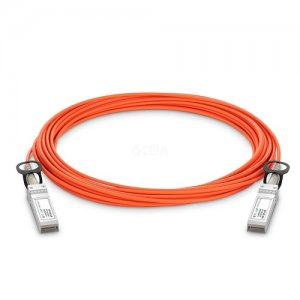
Active Optical Cables are fundamentally fiber optic assemblies with self-contained transceivers at each end. They convert electrical signals to optical signals and vice versa, offering high-speed data transmission over longer distances.
The inbuilt transceiver makes them an attractive choice for plug-and-play applications, eliminating the need for separately purchased transceivers. AOCs are typically used in data centers, high-performance computing (HPC) networks, and enterprise networking.
What Are DACs?
Direct Attach Cables, on the other hand, are twinax copper cables with fixed connectors on both ends. They come in two types - passive and active. Passive DACs, suitable for short distances, don't require power to operate as they lack signal amplification and equalization components.
Active DACs, equipped with electronic components, can operate over longer distances but still can't match AOCs in this regard. DACs are commonly used in storage area networks (SANs), data centers, and high-performance computing networks.
Comparing AOCs and DACs: Distinct Advantages
Both AOCs and DACs provide high-speed, low-latency data transmission, but there are significant differences in their performances and use cases.
1. Power Consumption and Distance
AOCs typically consume more power than DACs due to their optical-electrical conversion, but they allow for much longer transmission distances – up to 100 meters or more. This makes them more suitable for data center interconnections or connecting devices in different rooms. In contrast, DACs consume less power but are better suited for shorter distances, generally below 15 meters.
2. Interference and Signal Quality
AOCs, with their fiber optic construction, are immune to electromagnetic interference (EMI), ensuring a stable signal quality even in 'noisy' environments. DACs, being copper-based, are susceptible to EMI, which could impact data transmission.
3. Flexibility and Weight
AOCs are lighter and more flexible than DACs, making them more suitable for high-density wiring environments. On the other hand, DACs, being relatively stiffer and heavier, may be difficult to handle in congested cabling situations.
4. Cost
While AOCs offer more advantages, they also come with a higher price tag compared to DACs. This makes DACs an economical choice for shorter distances within a rack or between nearby racks.
If you want to buy AOC cables or DAC cables, then Fibermart is your best option. We are one of the top providers of fiber optic solutions. Our wide range of products includes fiber patch cables, Polarization Maintaining Fiber cables, fiber trunk cables, SFP+, optical amplifiers, QSFP+, and a lot more.Get in touch with us today and learn more about our fiber optic products in detail.





No comments have been posted yet.