


.webp)


In the era of high-speed data transmission and global connectivity, maintaining strong, unattenuated optical signals across long distances and complex network architectures is a critical challenge. This is where the fiber optic amplifier emerges as a transformative technology. Serving as the backbone of modern optical communication systems, the fiber optic amplifier directly addresses signal loss issues, ensuring that data, voice, and video signals retain their integrity even as they traverse access networks, metro links, regional backbones, and long-haul transmission lines. This guide explores the core principles, types, applications, and key advantages of the fiber optic amplifier, shedding light on why it is an indispensable component for telecom, cable, and enterprise networks worldwide.
Understanding Fiber Optic Amplifier: What It Is and How It Works
At its core, a fiber optic amplifier is a device designed to boost the strength of optical signals without first converting them into electrical signals—a process known as “direct optical amplification.” Unlike traditional repeaters, which require signal conversion (and introduce latency and complexity), the fiber optic amplifier operates entirely in the optical domain, making it faster, more efficient, and better suited for high-bandwidth applications.

The most widely used type of fiber optic amplifier is the Erbium-Doped Fiber Amplifier (EDFA), a technology that leverages the unique properties of the rare-earth element erbium. Here’s how it works: a section of optical fiber is doped with erbium atoms. When a pump laser (operating at specific wavelengths, typically 980nm or 1480nm) is applied to this doped fiber, it excites the erbium atoms from a low-energy state to a high-energy state. As the weakened optical signal (usually in the 1550nm “C-band”—the optimal wavelength for long-haul fiber transmission) passes through the doped fiber, the excited erbium atoms release energy in the form of photons that match the frequency of the input signal. This process, called “stimulated emission,” amplifies the original signal, restoring its strength for further transmission.
This direct amplification mechanism is what makes the fiber optic amplifier so valuable: it eliminates the need for costly and slow electrical conversion, enabling seamless, high-speed signal boosting across even the longest network links.
Key Types of Fiber Optic Amplifier: Tailored to Diverse Network Needs
Not all fiber optic amplifier solutions are identical—they are engineered to address specific network requirements, from dense wavelength division multiplexing (DWDM) systems to cable TV (CATV) networks and beyond. Understanding these types is essential for selecting the right fiber optic amplifier for your application.
Erbium-Doped Fiber Amplifier (EDFA): The Industry Standard
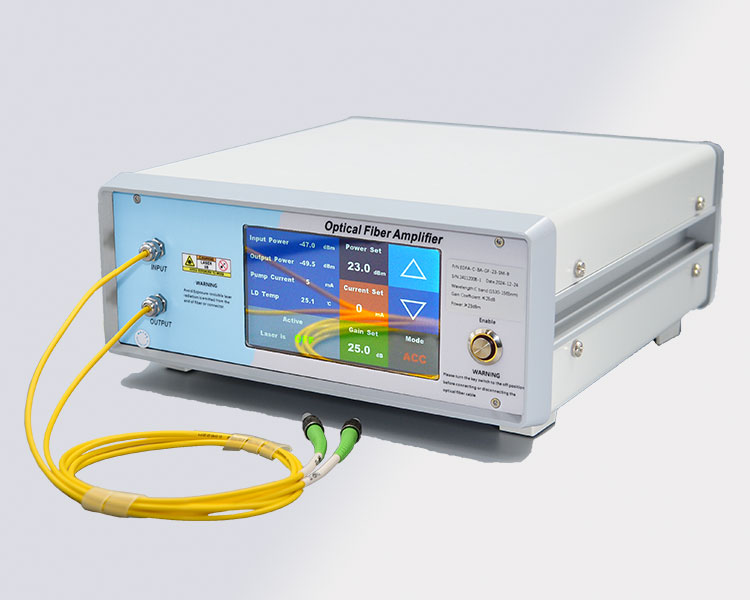
EDFA is the most common and versatile type of fiber optic amplifier, widely used in telecom, enterprise, and cable networks. Its ability to amplify signals in the 1550nm C-band (and sometimes the L-band) makes it ideal for long-haul and metro transmission. Fibermart offers several specialized EDFA variants to meet targeted needs:

DWDM EDFA: Designed for DWDM systems, which transmit multiple optical signals over a single fiber using different wavelengths. This fiber optic amplifier boosts all DWDM channels simultaneously, ensuring uniform amplification and minimal cross-talk between channels—critical for high-capacity long-haul networks.
CATV EDFA: Optimized for CATV applications, this amplifier delivers stable, high-power amplification for analog and digital video signals. It ensures consistent signal quality across hundreds of TV channels, even in distributed cable networks.
SDH EDFA: Tailored for Synchronous Digital Hierarchy (SDH) networks—a standard for high-speed data transmission in telecom. This fiber optic amplifier supports the strict timing and signal integrity requirements of SDH systems, ensuring reliable data delivery across regional and metro links.
Mid-Stage EDFA: Equipped with mid-stage access ports, this variant allows for in-line signal monitoring or adding/removing channels without disrupting the main signal. It is ideal for flexible network architectures where periodic signal adjustments are needed.
Raman Fiber Amplifier: Boosting Signals at the Source
Another critical type of fiber optic amplifier is the Raman amplifier, which uses a different amplification principle: stimulated Raman scattering (SRS). Unlike EDFAs, which rely on erbium-doped fiber, Raman amplifiers use the intrinsic properties of the transmission fiber itself. A high-power pump laser (operating at a wavelength shorter than the signal wavelength) is injected into the fiber, and through SRS, energy is transferred from the pump laser to the weakened signal, amplifying it.
Raman amplifiers are particularly valuable for ultra-long-haul networks (e.g., transoceanic cables) because they can amplify signals across a broader wavelength range and reduce noise more effectively than traditional EDFAs. They are often used in conjunction with EDFAs to create hybrid amplification systems that maximize signal strength and transmission distance.

High-Power Fiber Amplifier: Meeting Demanding Output Needs
For applications requiring extremely high signal power—such as long-haul transmission over hundreds of kilometers or powering distributed antenna systems (DAS)—high-power fiber optic amplifier variants are essential. Fibermart offers solutions like the Erbium-Ytterbium-Doped Fiber Amplifier (EYDFA), which combines erbium and ytterbium doping to deliver higher output power (often exceeding 100mW) than standard EDFAs. These amplifiers are critical for networks where signal loss is significant, such as rural telecom links or large-scale enterprise campuses.
Polarization-Maintaining EDFA: Ensuring Signal Stability in Sensitive Applications
In some high-precision networks—such as aerospace, defense, or test and measurement systems—maintaining the polarization state of the optical signal is crucial. Polarization-maintaining (PM) EDFAs are a specialized type of fiber optic amplifier that preserves the polarization of the input signal during amplification. This ensures signal integrity in applications where polarization-dependent loss (PDL) could degrade performance, making them indispensable for mission-critical systems.
Applications of Fiber Optic Amplifier: Powering Critical Network Segments
The versatility of the fiber optic amplifier makes it a cornerstone of diverse network environments, from local access networks to global long-haul links. Its ability to boost signals without conversion ensures that networks operate efficiently, reliably, and at scale.
Telecom Networks: Connecting Regions and Continents
Telecom operators rely heavily on fiber optic amplifier technology to power their long-haul and metro networks. EDFAs and Raman amplifiers are used to amplify signals as they travel between cities, countries, and even continents (via undersea cables). For example, DWDM EDFAs enable telecom networks to transmit thousands of gigabits of data per second over a single fiber, supporting the growing demand for 5G, cloud services, and international data transfer. Without the fiber optic amplifier, these long-haul links would suffer from prohibitive signal loss, making global connectivity impossible.

CATV Networks: Delivering High-Quality Video to Homes
CATV providers use specialized fiber optic amplifier (CATV EDFA) to distribute analog and digital TV signals to millions of households. These amplifiers ensure that video signals remain strong and clear, even as they travel through the distributed cable network (from the headend to local nodes and finally to homes). By maintaining signal integrity, CATV EDFAs enable features like 4K/8K ultra-high-definition (UHD) video, video-on-demand (VOD), and interactive TV services.
Enterprise Networks: Supporting On-Site and Cloud Connectivity
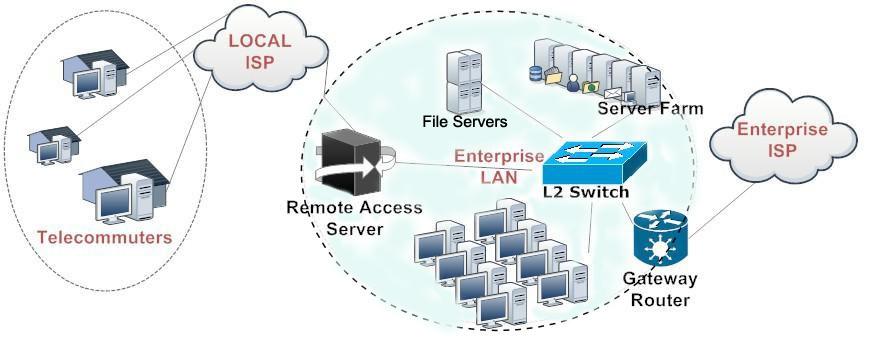
Large enterprises—such as data centers, universities, and corporate campuses—depend on fiber optic amplifier to manage their internal and external connectivity. For example, high-power EDFAs may be used to connect geographically dispersed campus buildings, while mid-stage EDFAs enable flexible signal management in data centers (where adding/removing channels is common). The fiber optic amplifier ensures that enterprise networks can handle high-bandwidth applications like cloud computing, video conferencing, and large file transfers without latency or signal degradation.
FTTH (Fiber-to-the-Home) Networks: Bringing High-Speed Internet to Residences
FTTH networks, which deliver fiber optic connectivity directly to homes and apartments, rely on compact, low-power fiber optic amplifier to boost signals in the “last mile.” These amplifiers ensure that signals remain strong as they travel from the local exchange to individual residences, supporting gigabit-speed internet, streaming, and smart home services. Without the fiber optic amplifier, the last mile of FTTH networks would suffer from signal loss, limiting the speed and reliability of residential internet access.
Choosing the Right Fiber Optic Amplifier: Key Considerations
Selecting the optimal fiber optic amplifier for your network requires careful evaluation of your specific needs, network architecture, and performance requirements. Here are the critical factors to consider:
Define Your Network Segment and Application
Start by identifying where the fiber optic amplifier will be deployed: access (e.g., FTTH), metro, regional, or long-haul? What application will it support (telecom, CATV, enterprise)? For example, a long-haul telecom link may require a Raman-EDFA hybrid system, while a CATV network will need a specialized CATV EDFA.
Evaluate Performance Specifications
Key performance metrics for a fiber optic amplifier include:
Gain: The amount of signal amplification (measured in decibels, dB). Ensure the amplifier’s gain matches your network’s signal loss requirements.
Output Power: The maximum power of the amplified signal (measured in mW). High-power applications (e.g., long-haul) require amplifiers with higher output power.
Bandwidth: The range of wavelengths the amplifier can support. DWDM systems need amplifiers with broad bandwidth to cover multiple channels.
Noise Figure: The amount of noise introduced during amplification (lower is better). Low noise figures are critical for maintaining signal integrity in long-haul networks.
Conclusion
As the demand for high-speed, long-distance, and high-capacity connectivity continues to grow, the fiber optic amplifier remains an irreplaceable technology in the global communication ecosystem. From enabling transoceanic data transfer to powering residential FTTH networks, the fiber optic amplifier ensures that optical signals retain their strength, integrity, and speed—overcoming the inherent limitations of signal loss in fiber optic cables.
By understanding the different types, applications, and selection criteria of the fiber optic amplifier, network operators, telecom providers, and enterprises can make informed decisions that optimize their infrastructure for today’s demands and tomorrow’s innovations. Whether you need a DWDM EDFA for a long-haul telecom link or a compact amplifier for FTTH, investing in a high-quality fiber optic amplifier is an investment in the reliability and scalability of your network—ensuring it can keep pace with the ever-evolving digital landscape.





No comments have been posted yet.