


.webp)


Build a resilient redundant optical switching network with Fibermart for disaster recovery, ensuring seamless communication, service continuity, and fault tolerance during failures.
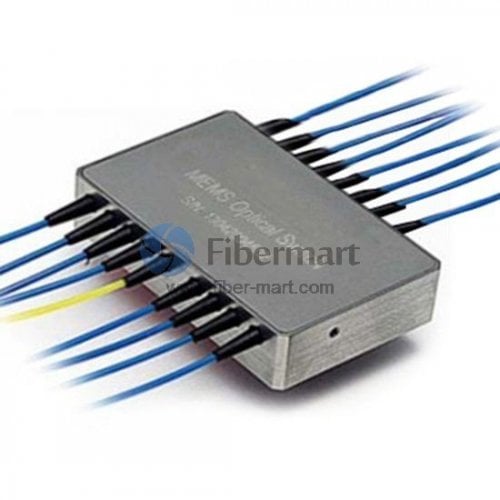
Network failures can cripple business operations, disrupt communication, and lead to significant financial losses. Organizations relying on optical networks for data transmission must implement redundancy strategies to mitigate disruptions caused by natural disasters, cyberattacks, equipment failures, or power outages. A redundant optical switching network enhances disaster recovery capabilities by ensuring seamless failover, minimizing downtime, and maintaining service continuity.
|
What is Optical Switching Redundancy?An optical switching network relies on optical circuit switching (OCS) and optical packet switching (OPS) to manage high-bandwidth data transmission across fiber-optic infrastructure. Redundancy in such a network means deploying backup pathways, failover mechanisms, and automated rerouting capabilities that prevent single points of failure.
Two primary redundancy models exist in optical networks:
1. Path Redundancy – Establishing multiple fiber paths between nodes ensures alternate routes are available when a primary path fails. 2. Equipment Redundancy – Deploying duplicate network elements, including optical switches, transponders, and amplifiers, minimizes the risk of hardware-related failures.
|
Key Components of a Redundant Optical Switching Network
Optical Cross-Connects (OXCs) and ROADMs
Reconfigurable Optical Add-Drop Multiplexers (ROADMs) and Optical Cross-Connects (OXCs) enable dynamic path rerouting, ensuring uninterrupted service during network failures. Modern Colorless, Directionless, and Contentionless (CDC) ROADMs further enhance flexibility, allowing any wavelength to be switched dynamically without disrupting active connections.
Multiprotocol Label Switching (MPLS) and GMPLS
MPLS and its optical variant, Generalized MPLS (GMPLS), enable fast rerouting (FRR) and label-switched paths (LSPs), providing deterministic failover mechanisms. GMPLS extends traffic engineering to optical layers, allowing automatic path restoration during fiber cuts or link failures.
Automatic Optical Switches
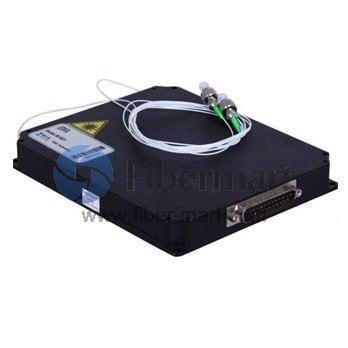
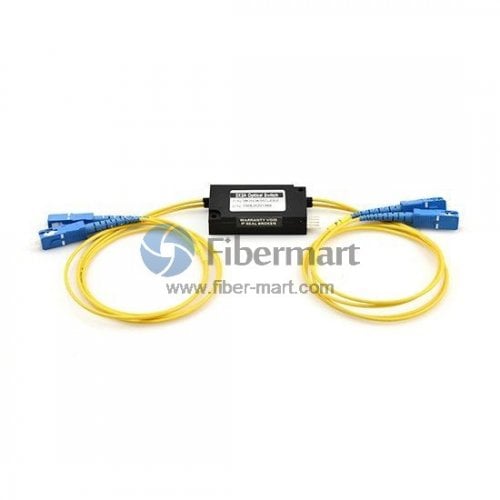
Optical switches with automatic failover capabilities detect failures in real-time and redirect traffic without manual intervention. These switches operate at nanosecond speeds, ensuring seamless transition to backup paths.
Redundant Transponders and Amplifiers
Deploying duplicate transponders and optical amplifiers prevents signal degradation during a failure event. Redundant components enhance link stability and prevent data loss.
Protection Mechanisms (1+1, 1:N, M:N Protection)
o 1+1 Protection: Identical data is transmitted simultaneously over two paths, with the receiving end selecting the best signal.
o 1:N Protection: A single backup link serves multiple working channels, reducing redundancy costs.
o M:N Protection: A balance between cost and resilience, where M backup channels protect N working channels.
Software-Defined Networking (SDN) and Network Function Virtualization (NFV)
SDN and NFV enable dynamic reconfiguration of network paths based on real-time conditions, enhancing redundancy and resilience. AI-driven network management can predict failures and reroute traffic proactively.
Automatic Protection Switching (APS) and Restoration Mechanisms
APS systems, typically used in SONET/SDH and optical transport networks (OTNs), provide rapid switchover to backup circuits upon detecting faults. Combined with self-healing rings, these mechanisms reduce service disruptions to milliseconds.
Best Practices for Building a Redundant Optical Switching Network
1. Implement Diverse Fiber Routing
Geographical diversity in fiber routing eliminates vulnerabilities associated with single-route dependencies. Deploying physically separate paths ensures that natural disasters or construction activities do not sever both primary and backup links simultaneously.
2. Use Wavelength Protection Strategies
Wavelength protection involves assigning redundant wavelengths to critical traffic, allowing automatic failover in case of signal degradation. Implementing Wavelength Selective Switching (WSS) enables seamless reconfiguration without manual intervention.
3. Deploy Optical Line Protection Systems (OLPS)
OLPS continuously monitors fiber quality and switches traffic to an alternate path if attenuation or breakages are detected. These systems ensure that even minor signal disruptions do not escalate into network outages.
4. Ensure Multi-Layer Redundancy
Optical switching redundancy should be complemented by redundancy at the IP and transport layers. Multiprotocol Label Switching (MPLS) and Border Gateway Protocol (BGP) configurations provide additional layers of failover protection.
5. Utilize AI and Machine Learning for Predictive Failover
AI-driven network monitoring tools can detect patterns indicating potential failures and preemptively switch traffic before a failure occurs. Machine learning models analyze historical data to optimize failover decisions.
6. Conduct Regular Network Stress Tests
Simulating failure scenarios allows network operators to assess the effectiveness of redundancy measures. Regular disaster recovery drills ensure that all components function as expected under failure conditions.
7. Implement Optical Submarine Cable Protection
For organizations relying on undersea fiber optics, deploying redundant landing stations and diverse routing paths mitigates risks from seismic activity, ship anchor damage, or undersea cable faults.
Redundant Network Architectures for Disaster RecoveryDesigning a redundant optical switching network requires selecting the right topology to minimize failure risks. Common architectures include:
1. Mesh Network TopologyA fully meshed optical network provides the highest level of redundancy, with multiple interconnections between nodes ensuring uninterrupted data flow. Enterprises requiring 99.999% availability prefer this model, although it demands significant investment in infrastructure and management.
2. Dual-Homed ArchitectureData centers and mission-critical facilities often deploy a dual-homed topology, where each node connects to two independent optical transport providers. This ensures resilience against carrier outages or regional disruptions.
3. Self-Healing Ring TopologiesSONET/SDH and OTN-based optical networks frequently employ bidirectional line-switched rings (BLSRs) and unidirectional path-switched rings (UPSRs) to provide automatic failover. When a fiber cut occurs, traffic is instantly rerouted via an alternate ring path.
4. Hybrid Optical-IP RedundancyFor cloud service providers and hyperscale enterprises, a hybrid model integrating optical transport redundancy with IP/MPLS failover ensures end-to-end service continuity. This approach provides multi-layer resilience spanning both Layer 1 (optical) and Layer 3 (IP/MPLS).
|
Key Challenges and Solutions in Optical Network Redundancy
1. High Deployment Costs
Solution: Opt for shared protection schemes like 1:N and M:N protection to balance cost and redundancy. Leveraging SDN reduces hardware dependency and optimizes resource utilization.
2. Latency in Redundant Paths
Solution: Optimize fiber routing and use advanced optical signal regeneration techniques to maintain low-latency connectivity across backup paths.
3. Complexity in Network Management
Solution: Automate network monitoring and failover using AI-powered SDN controllers. Real-time analytics streamline redundancy management without manual intervention.
4. Bandwidth Constraints on Backup Links
Solution: Implement traffic prioritization mechanisms to allocate sufficient bandwidth to critical applications during failover events.
The Role of Fibermart in Optical Network Redundancy
Fibermart offers a comprehensive range of optical networking solutions, including high-performance optical switches, transponders, and protection systems tailored for disaster recovery scenarios.
Build a future-proof redundant optical network—explore FiberMart’s solutions today.
By leveraging cutting-edge technology and industry expertise, we help organizations build resilient optical networks capable of withstanding unforeseen disruptions.





No comments have been posted yet.