


.webp)


Aiming for low insertion loss and high return loss? Invest in quality fiber optic solutions by Fibermart to improve performance and functionality.
Insertion Loss Vs. Return Loss: What Is The Difference?

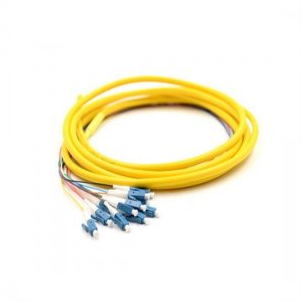
Return loss and insertion loss are critical parameters in fiber optical communication when it comes to evaluating the quality of interfaces between fiber patch cable, optical fiber connector, pigtail fiber, and other fiber optic components.
While the term loss is associated with negative conceivable scenarios almost unilaterally in most cases, the term holds a dual relative meaning in the electronic field. Depending on the circumstances, a loss can be both good and bad.
Experts at Fibermart discuss the significance of return loss and insertion loss, along with their effects on functionality and performance.
What is Insertion Loss?
The signal loss that occurs along the length of the fiber optic links is known as insertion loss. The parameters of measurement for insertion loss are expressed in decibels (dB), and the number is almost always positive since it indicates the amount of signal loss by comparing output and input power.
But, by chance, if the number is negative, it doesn’t necessarily imply that it’s an unfavorable parameter. A negative insertion loss usually indicates an issue with the reference setting. For instance, when a reference cable should be cleaned when setting the zero benchmark, but it’s cleaned before testing, it might show a gain in insertion loss and potentially a negative measurement parameter.
However, insertion loss naturally occurs with many types of transmissions, including electrical and data. Moreover, as it’s the case with all conductive paths and transmission lines, the longer the path, the more the loss. Additionally, the loss can also occur at every connection point along the transmission line, including connectors and splices.
What is Return Loss?
With the unit of expression also being decibels, return loss refers to the measurement of the amount of light reflected toward the source. It’s a positive number, with high return loss being a favorable measurement, correlating to lower insertion loss.
Moreover, reflectance, another measurement parameter that uses decibels to express reflection, is also negative. It’s not a favorable measurement parameter if it’s excessive. In a nutshell, return loss refers to signal power loss because of discontinuity or signal reflection in fiber optic transmission lines or links. The impedance mismatch could be with the terminating load or the device inserted in the transmission line.
Additionally, return loss also defines the relationship between the standing wave ratios (SWR) and the reflection coefficient. Increased return loss incidentally correlates to lower SWR. Simply put, return loss expresses how well a line or device matches. And a high return loss is favorable because it results in lower insertion loss.
Fibermart offers a range of fiber optic components with low insertion lossand high return loss. Our quality control measures help ensure each product meets and exceeds the requirements. Each fiber optic product is inspected thoroughly prior to shipping to ensure top-notch quality and compliance with industry standards.
We’ve got a range of fiber optics tools for sale available at Fibermart. You can buy fiber patch cables, MTP/MPO, LC and SC cables, PLC splitters, optical amplifiers, fiber optic adaptors, quick connectors, fiber couplers, and so much more from our trusted online store.
Our representatives can also assist you when you need help in buyingpolarization-maintaining cables, fiber polishing machines, and DWDM modules, among other products. Contact us to invest in efficient fiber optic solutions!





No comments have been posted yet.