


.webp)


In modern passive optical networks (PONs), fiber-to-the-home (FTTH), 5G fronthaul, and data center interconnection systems, optical cable splitters serve as fundamental passive components for optical power distribution. Among all performance indicators, Insertion Loss (IL) and Return Loss (RL) are the two most critical specifications that directly determine transmission quality, link budget, and long-term stability of optical communication systems. This article systematically explains the definition, mechanism, influencing factors, and application value of these two core parameters to support precise selection, deployment, and evaluation of optical splitters in engineering practice.
Basic Concepts of Optical Cable Splitters
Optical cable splitters are used to divide one optical signal into multiple output signals or combine multiple input signals into one output port. They are widely deployed in PON, CATV, and enterprise local area network scenarios. Common types include Fused Biconical Taper (FBT) splitters and Planar Lightwave Circuit (PLC) splitters. PLC splitters, based on semiconductor-style planar waveguide technology, feature compact structure, good uniformity, high stability, and excellent performance in high-channel-count applications, making them the mainstream choice for large-scale optical access networks.
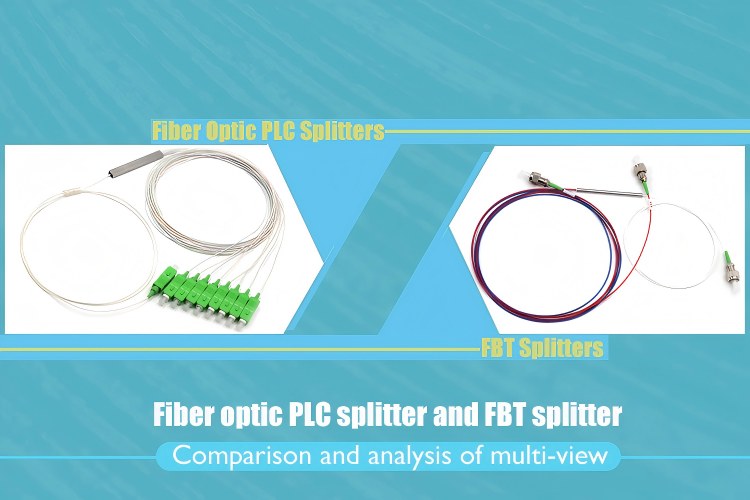
The performance of a splitter directly affects the power budget, bit error rate, and transmission distance of the entire link. Insertion Loss and Return Loss are not only basic evaluation criteria but also key constraints for network design and equipment compatibility.
Insertion Loss (IL): Definition, Mechanism and Calculation
Definition and Physical Meaning
Insertion Loss refers to the optical power attenuation caused by inserting a splitter into an optical transmission link, expressed in decibels (dB). It quantifies the usable power reaching the output port relative to the input power. Lower IL means higher energy efficiency and stronger transmission capability.
Mathematical Expression
The standard formula for Insertion Loss is:IL = -10 log₁₀ (Pout / Pin)Where Pin is the input optical power and Pout is the output optical power of a specific channel.
Composition of Insertion Loss
Insertion Loss consists of two parts:
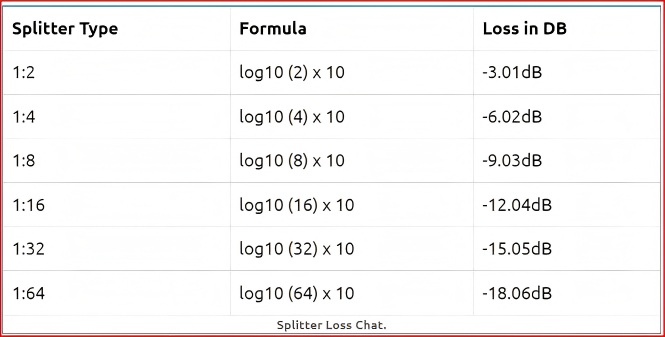
● Splitting Loss: Theoretical attenuation determined by the splitting ratio, e.g., 1:2 ≈ 3.01 dB, 1:4 ≈ 6.02 dB, 1:8 ≈ 9.03 dB.
● Excess Loss: Additional attenuation caused by manufacturing imperfections, waveguide scattering, fiber misalignment, and coating defects. High-quality PLC splitters have minimal excess loss, typically below 1.0 dB for 1×8 configurations.
Typical Values and Application Requirements
Typical IL values for PLC splitters (1×N) at 1310 nm and 1550 nm:
1×2: ≤ 3.8 dB
1×4: ≤ 7.1 dB
1×8: ≤ 10.2 dB
1×16: ≤ 13.5 dB
1×32: ≤ 16.5 dB
In FTTH and 5G systems, IL directly determines the number of split stages, coverage radius, and optical module power budget. Excessive IL will lead to insufficient receiving power, increased bit error rate, and even link interruption.
Return Loss (RL): Definition, Mechanism and Importance
Definition and Physical Meaning
Return Loss measures the ability of a device to suppress reflected signals, expressed in dB. It represents the ratio of incident power to reflected power at the input port. Higher RL indicates weaker reflection and better matching performance.
Mathematical Expression
The formula for Return Loss is:RL = -10 log₁₀ (Prefl / Pin)Where Prefl is the reflected power returning to the input port.
Sources of Reflections
Reflections mainly come from:
● End-face defects and contamination of connectors
● Refractive index mismatch between fiber and waveguide
● Mechanical misalignment and air gaps
● Material inhomogeneity inside the splitter chip
Typical Requirements and Standards
For high-performance PLC splitters:
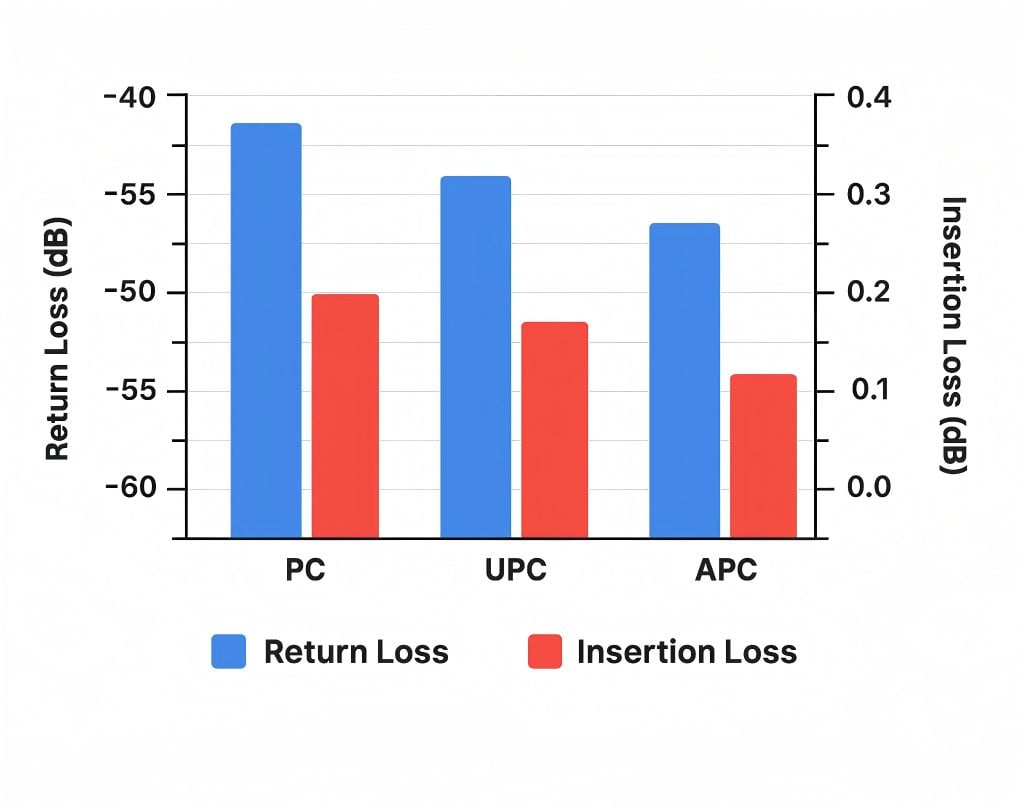
● RL ≥ 50 dB for UPC connectors
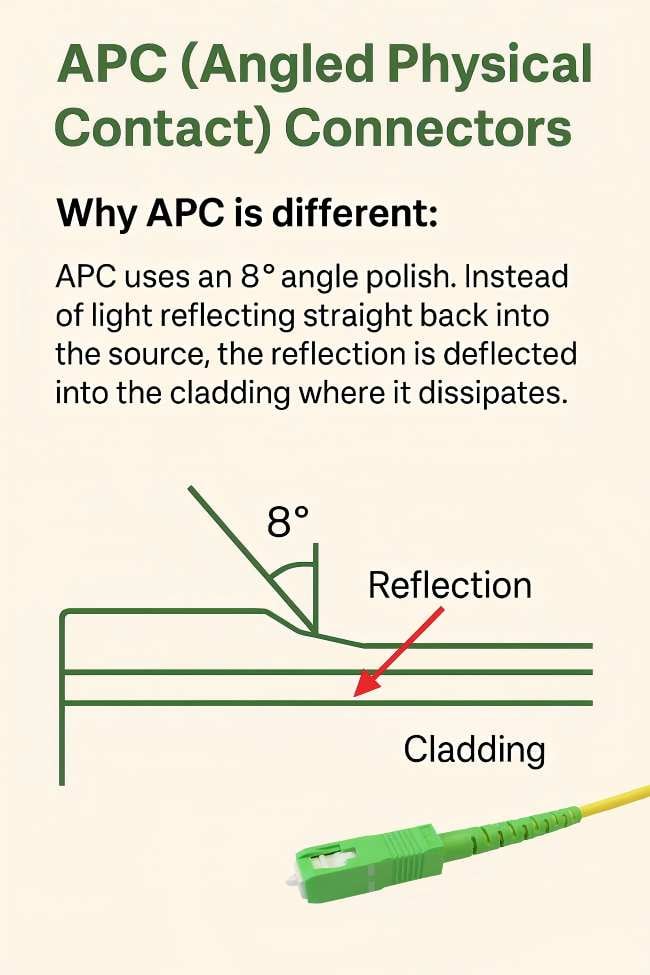
● RL ≥ 55–60 dB for APC connectors
High RL protects lasers from signal degradation, noise, and damage caused by strong reflections, especially in CATV, coherent communication, and long-haul transmission systems.
Key Factors Affecting Insertion Loss and Return Loss
Manufacturing Process and Material Quality
Advanced PLC fabrication reduces scattering and defects. High-purity quartz waveguides and precise optical coupling minimize IL and improve RL stability across temperatures.
Splitting Ratio and Port Count
Higher channel counts increase theoretical splitting loss and introduce more excess loss, raising total IL. RL remains relatively stable across port configurations in well-designed devices.
Connector Type and End-face Finish
PC, UPC, and APC end-faces yield different RL performance. APC connectors provide the highest RL but require matching mating adapters to avoid performance degradation.
Environmental Stability
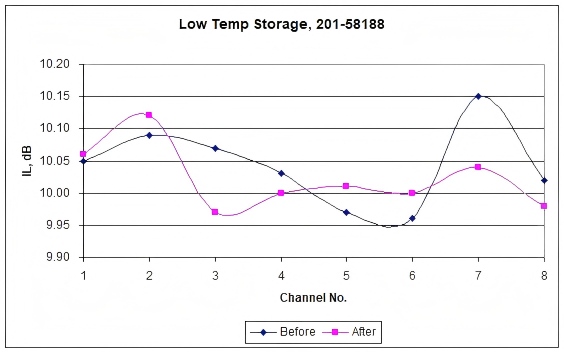
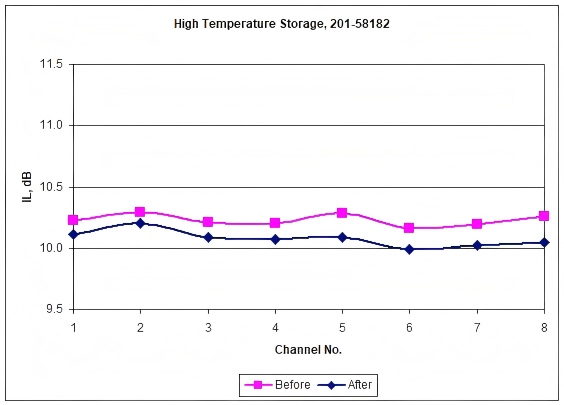
Temperature changes from -40 °C to +85 °C can induce stress and refractive index shifts. Premium PLC splitters maintain IL variation within ±0.2 dB, ensuring reliable outdoor operation.
Wavelength Dependence
IL varies slightly across 1260–1650 nm. High-quality splitters show low Wavelength Dependent Loss (WDL), supporting triple-play (voice, video, data) services.
How IL and RL Jointly Determine System Performance
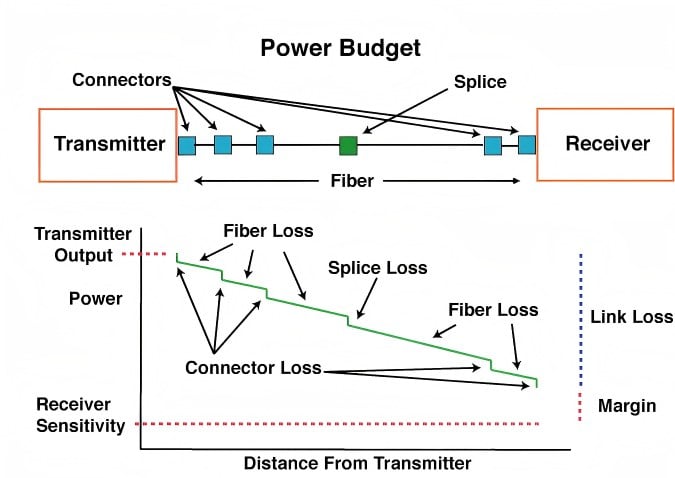
Insertion Loss affects the power budget and link reach. Low IL allows longer distances, more split stages, and lower-cost optical modules. Return Loss affects signal integrity, noise, and laser reliability. Poor RL causes multipath interference, increased bit error rate, and even laser instability or failure.
In PON design, both parameters must be budgeted together. A splitter with low IL but poor RL is unsuitable for high-speed systems. Similarly, high RL cannot compensate for excessive IL that violates the link budget.
Selection and Application Guide for Optical Splitters
Prioritize PLC splitters for FTTH, 5G, and high-channel-count applications for superior uniformity and stability.
Calculate IL based on splitting ratio and excess loss to meet the system power budget.
Select connector types (UPC/APC) according to RL requirements; use APC for CATV and long-distance transmission.
Verify performance over the full temperature range and operating wavelength band.
Use certified products with compliance with ITU-T G.671, IEC 61300, and relevant industry standards.
Insertion Loss and Return Loss are foundational specifications for evaluating optical cable splitters. Insertion Loss determines energy efficiency and transmission distance, while Return Loss controls reflections and ensures system stability. With the rapid expansion of optical networks, strict control of these parameters becomes increasingly critical for high-speed, large-capacity, and long-distance transmission.Understanding IL and RL enables engineers to select appropriate splitters, optimize network design, reduce failure risks, and improve reliability. In future 5G-Advanced, 6G, and all-optical interconnection scenarios, these indicators will remain essential for building efficient, stable, and future-proof optical communication systems.





No comments have been posted yet.