


.webp)


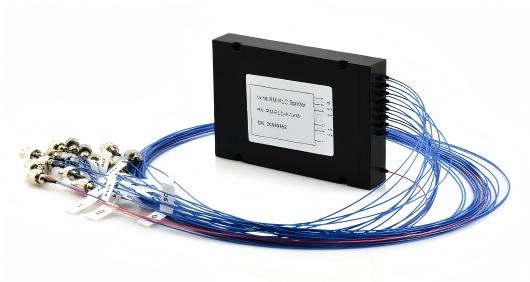
In the rapidly evolving landscape of fiber optic technology, fiber sensing networks have emerged as a cornerstone of modern industrial monitoring, environmental surveillance, and high-precision measurement. At the heart of these advanced networks lies a critical component: the Polarization Maintaining PM Fiber Splitter. Designed to preserve the polarization state of optical signals while enabling precise signal distribution, it has become an indispensable solution for elevating the performance, stability, and scalability of fiber sensing systems worldwide.
The Critical Role in Fiber Sensing Networks
Fiber sensing networks rely on the transmission and analysis of optical signals to detect subtle changes in physical parameters such as temperature, pressure, strain, and vibration. Unlike conventional communication systems, where signal polarization fluctuations may be negligible, fiber sensing applications demand uncompromised polarization stability. This is where the PM Fiber Splitter steps in, addressing two core challenges of fiber sensing networks: signal distribution and polarization preservation.
1.Enabling Precise Signal Distribution
Fiber sensing networks often require a single optical source to feed multiple sensing points or interferometric modules. The device achieves this by splitting an input optical signal into predefined power ratios (e.g., 50:50, 90:10, 99:1) with exceptional accuracy. Whether configured as 1×N or 2×N distribution types, these splitters ensure uniform signal power across all output channels, eliminating discrepancies that could skew sensing data. This precision is particularly critical in distributed fiber sensing systems and arrays of interferometric sensors, where consistent signal strength directly translates to measurement reliability.
2.Preserving Polarization Integrity
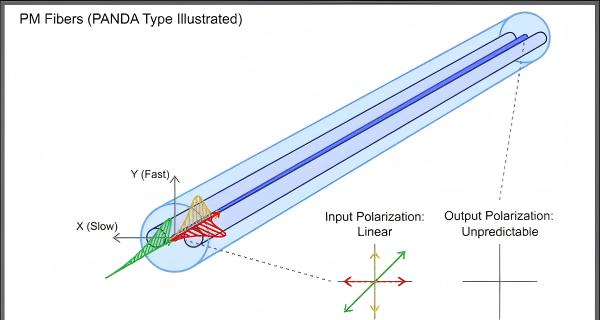
Polarization instability is a major threat to fiber sensing performance. Random changes in the polarization state of light can cause signal fading, reduced signal-to-noise ratio, and distorted measurement results. The PM Fiber Splitter mitigates this risk by maintaining the original polarization state of the input signal throughout the splitting process. Leveraging specialized PM PANDA fiber with parallel stress rods, it creates birefringence in the fiber core, guiding linearly polarized light along the designated slow or fast axis. With a high Polarization Extinction Ratio (PER ≥ 18 dB with connectors, and typically ≥ 23 dB for high-performance models), it ensures minimal polarization degradation, enabling sensing networks to deliver consistent, accurate data even in harsh operating conditions.
Key Advantages for Fiber Sensing Applications
Engineered to meet the stringent demands of fiber sensing networks, the PM Fiber Splitter offers a suite of advantages that set it apart from conventional fiber splitters:
1.Exceptional Environmental Ruggedness
Fiber sensing networks are often deployed in extreme environments—from sub-zero temperatures in aerospace applications to high-humidity industrial settings. The splitter is designed to withstand these challenges, with an operating and storage temperature range of -40°C to 85°C (-40°F to 185°F). Encased in durable packages such as ABS modules, steel tubes, or rack mounts, it resists mechanical stress, moisture, and corrosion, ensuring long-term reliability in mission-critical sensing scenarios.
2.Low Insertion Loss and High Directivity
Signal loss can undermine the sensitivity of fiber sensing systems, especially in long-distance deployments. The PM Fiber Splitter features ultra-low insertion loss, thanks to precision manufacturing techniques like FBT (Fused Biconical Taper) and PLC (Planar Lightwave Circuit) technology. Complemented by high directivity (≥ 55 dB) and return loss (≥ 50 dB), it minimizes signal reflection and energy waste, maximizing the efficiency of optical signal transmission. This low-loss performance is essential for extending the sensing range and enhancing the detection capability of fiber networks.
3.Customization for Diverse Sensing Needs
No two fiber sensing networks are identical—different applications require specific wavelengths, splitting ratios, and connector types. The device offers extensive customization options to meet these unique requirements. It supports a wide range of operating wavelengths, including 460nm, 630nm, 780nm, 850nm, 980nm, 1310nm, and 1550nm (±40nm), making it suitable for quantum optics experiments, fiber optic gyroscopes, and hydrophone arrays alike. Additionally, customizable splitting ratios and connector options (LC/SC/FC/ST/E2000 with UPC/APC polish) allow seamless integration into existing sensing architectures, reducing deployment complexity and costs.
4.Rigorous Quality Assurance
Reliability is non-negotiable in fiber sensing, where system failures can lead to costly downtime or inaccurate measurements. Every unit undergoes 100% individual testing, with a detailed test report provided for each. Certifications including CE, RoHS, FCC, and ISO9001 validate compliance with global quality standards, while a lifetime warranty ensures peace of mind for end-users. This commitment to quality guarantees consistent performance with zero failure over its operational lifespan.
Real-World Applications in Fiber Sensing
The versatility and performance of the PM Fiber Splitter make it a key enabler for a wide range of fiber sensing applications:

1.Industrial and Infrastructure Monitoring
In oil and gas pipelines, power grids, and civil engineering structures, it supports distributed fiber sensing systems that monitor temperature, strain, and vibration in real-time. By splitting optical signals to cover extensive network segments, it enables early detection of leaks, structural defects, or equipment malfunctions, preventing accidents and minimizing maintenance costs.
2.Aerospace and Defense
Aerospace and defense applications demand components that can withstand extreme conditions and deliver precise data. It is integrated into fiber optic gyroscopes for navigation, hydrophones for underwater detection, and guidance systems for military platforms. Its rugged design and polarization stability ensure reliable performance in high-shock, high-temperature environments, critical for mission success.
3.Scientific Research and Metrology
In quantum optics laboratories and precision metrology facilities, it plays a vital role in experiments requiring stable polarization states. Used for laser frequency comb distribution, interferometric measurements, and quantum communication research, its high PER and low noise make it an ideal choice for these cutting-edge applications where even minor polarization fluctuations can invalidate results.
4.Environmental and Geophysical Sensing
It enables environmental monitoring networks that track climate change, natural disasters, and geological activity. Supporting sensors for measuring soil moisture, seismic waves, and ocean currents, it provides scientists with accurate, real-time data to study and mitigate environmental risks. The ability to customize wavelengths and splitting ratios allows these networks to adapt to diverse sensing scenarios, from forest fire detection to earthquake monitoring.
Choosing the Right Solution for Your Network
Selecting the optimal PM Fiber Splitter requires careful consideration of your network’s specific requirements:
● Wavelength Compatibility: Ensure it supports the operating wavelength of your sensing system (e.g., 1310nm/1550nm for long-distance sensing, 850nm for short-range applications).
● Splitting Ratio: Choose a standard ratio (50:50, 90:10) or a custom ratio to match the power distribution needs of your sensing nodes.
● Connector Type: Select connectors (LC/SC/FC) and polish type (UPC/APC) that align with your existing fiber infrastructure.
● Package Style: Opt for an ABS module, steel tube, or rack mount based on your deployment environment (e.g., rack mount for data centers, steel tube for outdoor use).
● Performance Specifications: Prioritize high PER, low insertion loss, and wide temperature range for harsh or high-precision applications.
By partnering with a trusted supplier like Fibermart, you gain access to high-quality solutions backed by expert technical support and customization capabilities. Whether you’re building a new fiber sensing network or upgrading an existing one, this critical component ensures optimal performance, reliability, and scalability.

As fiber sensing networks continue to expand into new industries and applications, the demand for high-performance, polarization-stable components has never been greater. The PM Fiber Splitter stands out as a pivotal solution, offering precise signal distribution, uncompromised polarization integrity, and rugged design tailored to the unique challenges of fiber sensing. With its extensive customization options, rigorous quality assurance, and proven performance in real-world applications, it is the ideal choice for unlocking the full potential of your fiber sensing network. Invest in this advanced component today and experience the difference in precision, reliability, and scalability that drives the future of fiber optic sensing.





No comments have been posted yet.