


.webp)


Choosing the right data center fiber installation method for AI-era infrastructure directly affects cluster performance, uptime, scalability, and total cost of ownership over the life of the facility. In GPU-dense environments, poor fiber design can strand expensive compute, create bottlenecks as speeds move from 400G to 800G and beyond, and make future reconfigurations slow, risky, and costly.
This is why many operators are now revisiting one of the most foundational choices in their physical layer: should fiber be field-terminated on-site, relying on technician skill and jobsite conditions, or delivered pre-terminated, factory-tested, and ready for immediate installation? Both methods are common in modern data centers, both carry clear advantages, and both introduce tradeoffs that grow more pronounced as facilities increase density and compress build timelines.
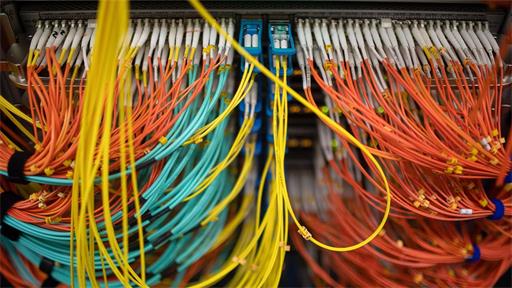
This guide breaks down the real-world cost, speed, and risk differences between pre-terminated and field-terminated fiber so operators can align their cabling strategy, staffing reality, and time-to-service targets.
Definition of Pre-Terminated Fiber Cable and Field Termination Fiber Cable
While the terms “field-terminated” and “factory-terminated” are familiar to most fiber optic technicians, they may be unclear to the average professional. Simply put, a “terminated” fiber optic cable is one with a connector attached to its end—this connector plugs into the network and facilitates data transmission via the cable. Field-terminated cables offer valuable flexibility but demand highly skilled technicians, and even then, quality can vary. When flexibility is unnecessary and fiber measurements are precise, terminations performed in a controlled factory environment tend to be more reliable and useful, particularly for single-mode applications.
Fiber technicians face critical tradeoffs when selecting a termination method. Below is a detailed comparison of the merits and considerations between factory-terminated (pre-terminated) and field-terminated fiber.
Field-Terminated Cables
Field termination fiber cable is the optimal choice for fiber network projects where distance estimates are unreliable. It allows for installing exactly the amount of cable needed, eliminating the risk of running short or having excess slack. Additionally, field splicing enables safe cable pulling through tight spaces and conduits. However, on-site work comes with significant drawbacks.
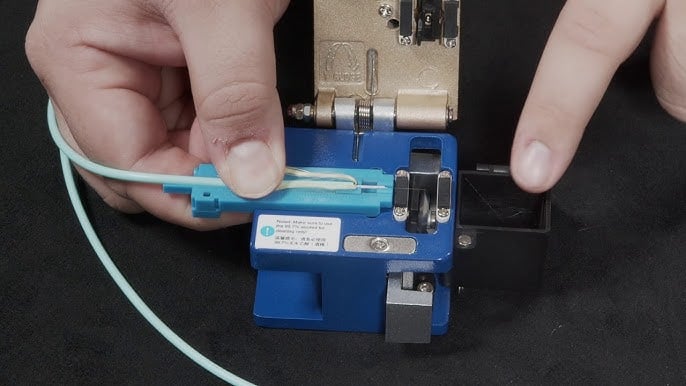
Field termination is time-consuming and requires a fully stocked kit of specialized tools and supplies. Each connector must undergo OTDR (Optical Time-Domain Reflectometer) field testing to ensure functionality. The process demands skill and precision—careless handling can lead to compounded costs. Single-mode applications also carry a higher risk of quality degradation compared to multimode applications. For projects requiring splicing, we strongly recommend technicians use pre-terminated 900um pigtails to achieve optimal performance.
Pre-Terminated (Factory-Terminated) Fiber Cables
Pre-terminated (factory-terminated) fiber optic cables are a reliable solution for ensuring network quality. Built to specific lengths, these cables fit their intended applications perfectly. The connector ferrule is polished to exacting standards, and epoxy is cured for the precise duration required. Most importantly, the cable endface is free of dust or microscopic blemishes that could hinder data transmission, making pre-terminated cables the best choice for minimizing insertion loss and ensuring consistent overall quality.
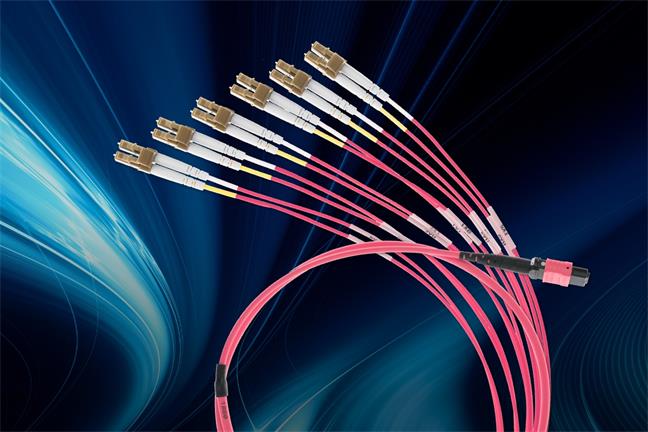
To use pre-terminated fiber, exact cable length measurements are essential. Best practices recommend allowing sufficient slack to accommodate minor changes in the final configuration. If a project requires flexible cable length determination, field-terminated cables are the only viable option. A hybrid solution—pigtailed cables and trunks with one factory-terminated end and one field-spliced end—combines the benefits of factory termination with the flexibility of on-site adjustments, saving time during installation.
Cost Comparison of Pre-Terminated and Field Terminated
At first glance, field termination may appear more economical based solely on material costs, as bulk cable and loose connectors typically have a lower unit price than pre-engineered assemblies. However, in AI-era data centers, the most significant cost drivers are rarely the cables themselves, but rather the labor, rework, and schedule risks associated with installation.
Cost Profile: Field-Terminated vs. Pre-Terminated Fiber
|
Cost Factor |
Field-Terminated Fiber |
Pre-Terminated Fiber |
|---|---|---|
|
Material Cost per Link |
Lower cable and connector unit cost; appears cheapest on paper. |
Higher unit cost for engineered trunks and assemblies. |
|
Labor Hours per Connector/Link |
High: Multiple steps (preparation, cleaving, polishing, inspection, testing) for each termination. |
Low: Plug-and-play installation with minimal on-site preparation or termination work. |
|
Rework and Troubleshooting |
Higher: Poor cleaves, contamination, or subpar polishing can require retests and re-terminations across bundles. |
Lower: Factory testing catches most issues before shipment; on-site failures are rare. |
|
Tools and Consumables |
Significant: Splicers, cleavers, scopes, polishing films, curing ovens, and cleaning kits are required. |
Minimal: Only basic cleaning and test gear is needed; no investment in full termination tool sets. |
|
Sensitivity to On-Site Conditions |
High: Dust, humidity, vibration, and poor lighting directly impact quality and efficiency. |
Lower: Optical work is performed in controlled factory conditions; on-site work is primarily routing and plugging. |
|
Installation Speed in Dense Builds |
Slower and less predictable, especially at 400G/800G with numerous connectors to certify. |
Faster and more consistent; large AI rows can be activated within a compressed timeframe. |
|
Impact on Project Overhead |
More on-site hours, higher overtime risk, and additional schedule padding for rework. |
Fewer labor hours, reduced overtime, and tighter, more reliable go-live dates. |
|
Long-Term Maintenance Cost |
Greater risk of inconsistent terminations causing intermittent issues later. |
Lower: Consistent factory quality reduces trouble tickets and unplanned maintenance. |
|
Best Fit for AI-Era Deployment |
Cost-effective with abundant skilled labor and flexible timelines. |
Delivers the lowest true project cost when time-to-service and predictability are priorities. |
In practice, field termination remains cost-effective when abundant skilled labor, flexible timelines, or highly custom runs (that don’t justify engineered assemblies) are available. Pre-terminated systems, however, typically offer the lowest total project cost in high-density AI deployments—where compressed timelines, limited expert labor, and speed to service matter more than the lowest material price.

Installation Speed Comparison
AI clusters represent massive capital investments, and every day of delay in activating fiber translates to idle computing resources. This makes installation speed a financial consideration, not just a logistical one.
Field Termination Installation
Field termination is inherently sequential, as each connector is built and certified on-site. In practice, this workflow involves:
● Technicians preparing, stripping, and cleaving fibers at the rack or workbench.
● Terminating connectors or fusion-splicing pigtails, followed by polishing and cleaning.
● Inspecting and certifying each connection before the link can go live.
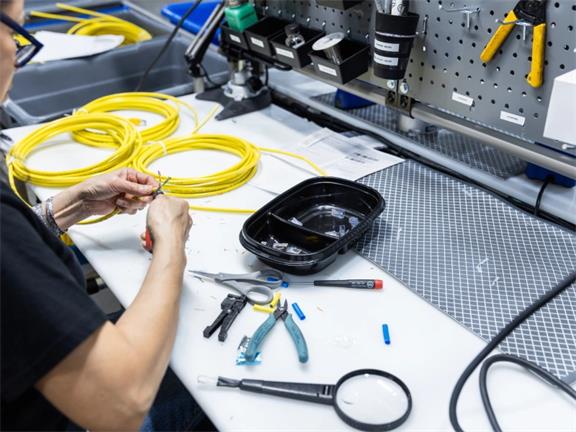
Across hundreds or thousands of fibers, this process can extend build schedules by days or weeks—especially when the number of experienced technicians and termination stations is limited. The key advantage is adaptability: teams can adjust to pathway changes, last-minute design tweaks, or small additions without waiting for new assemblies to be ordered.
Pre-Terminated Installation
Pre-terminated assemblies shift most labor to the factory, so on-site work is more about structured installation than precision craftsmanship. Typical on-site tasks include:
● Pulling pre-terminated trunks into pathways.
● Routing and dressing cables in trays and cabinets.
● Plugging in connectors and performing continuity/acceptance testing.
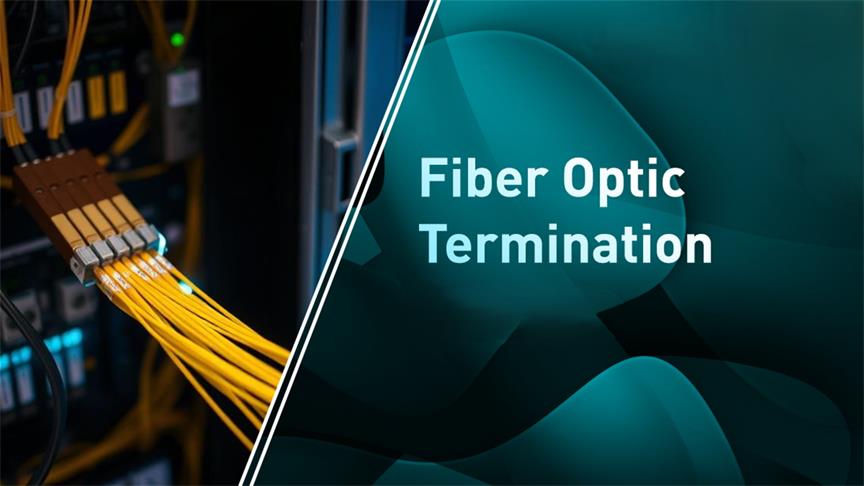
Because multiple trunks can be pulled and installed in parallel, projects often see significantly faster activation (e.g., dozens of AI racks in a single maintenance window) with less congestion in active construction zones. For operators launching new AI zones in rapid cycles, this predictability and speed-to-service are often as critical as material cost when selecting an installation method.
Risk Comparison
As networks transition to 400G/800G, optical performance requirements become far more stringent. Small deviations in connector geometry or end-face quality can erode link margin and signal integrity, making the termination method a key factor in reliability and troubleshooting.
Field Termination Risk Factors
While field termination has a proven track record and can deliver excellent performance in experienced hands, real-world conditions introduce significant variability. Common risk factors include:
● Dust contamination during assembly or between process steps.
● Inconsistent cleave angles and fiber preparation quality.
● Uneven polishing techniques across different technicians.
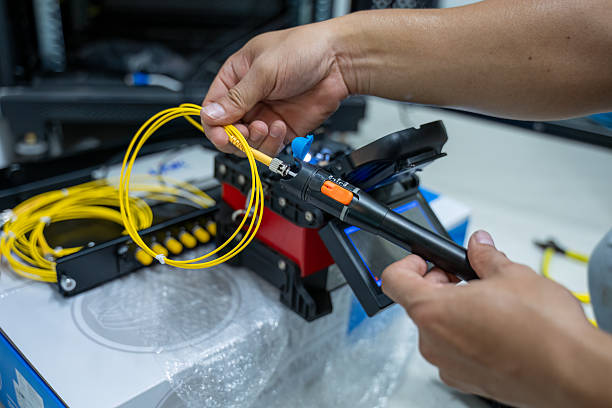
● Small variations in ferrule geometry across large numbers of terminations.
● Cracks, chips, or micro-scratches introduced during handling and cleaning.
● Higher error rates when teams work long shifts to meet aggressive go-live dates.
Many of these issues are difficult to detect until final testing, often surfacing late in the project or during early operation—when troubleshooting is most disruptive. For MPO-based links, isolating a single faulty fiber may require pulling and inspecting multiple trunks or harnesses to identify the root cause.
Pre-Terminated Risk Reduction
Pre-terminated assemblies mitigate variability by moving critical work to a controlled factory process and catching defects before they reach the data hall. Typical quality safeguards include:
● Ferrule geometry verified through high-resolution inspection and measurement.
● End faces polished and cleaned in dust-controlled environments.
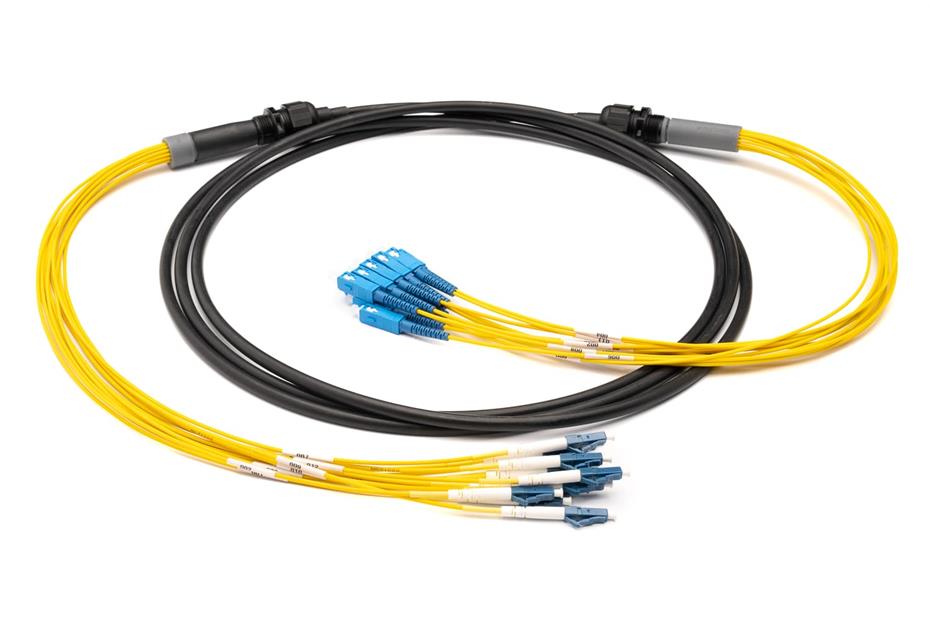
● Insertion loss and return loss tested and documented for each assembly.
● Serial numbers and documentation linking trunks/harnesses to test results.
● On-site work limited to cleaning, routing, and simple connections.
The result is lower variability across large connector counts, fewer surprises during commissioning, and a lighter troubleshooting burden as AI clusters go live. While field termination can still achieve excellent performance, pre-terminated systems make it easier to maintain consistent optical quality at scale in high-density 400G/800G builds.
Summary
In AI-era data centers, choosing between pre-terminated and field-terminated fiber is less about tradition and more about how you want to manage cost, speed, and risk over the life of the network. Field termination can still be a smart choice when pathways are irregular, lengths are hard to predict, timelines are flexible, and skilled technicians are readily available, particularly for smaller projects or highly bespoke runs where engineered assemblies are harder to justify.
Pre-terminated systems, by contrast, are usually the better fit for dense GPU environments where compressed schedules, tight 400G/800G loss budgets, and limited expert labor make predictability and repeatability non-negotiable. Modular trunk-and-cassette designs support phased AI growth, keep cabling organized around high-density racks, and reduce the troubleshooting burden as clusters scale out.
FAQs
Q1. When should we choose field-terminated fiber instead of pre-terminated fiber?
Choose field-terminated fiber when cable distance is hard to estimate (avoids shortage/slack), for pulling through tight spaces, or for last-minute design changes/flexible lengths.
Q2. What skills and tools do we need for field termination?
Field termination needs skilled technicians and tools (splicers, strippers, cleavers, OTDR, etc.). Each connector requires OTDR testing; mistakes in handling add costs.
Q3. Is pre-terminated fiber really more reliable than field-terminated fiber?
Yes, pre-terminated fiber is more reliable (especially for single-mode/400G/800G). Factory-controlled production and testing reduce on-site failures; field termination is affected by on-site conditions and skill.
Q4. Which termination method is faster for high-density AI data center builds?
Pre-terminated fiber is faster for dense builds. Factory labor reduces on-site work (only routing/plugging), allowing parallel installation. Field termination is sequential and slower for large fiber counts.
Q5. Why does pre-terminated fiber have a higher material cost, but often lower total project cost?
Pre-terminated fiber has higher material costs but lower total project costs: it cuts labor, rework, and delays. Field termination’s lower material costs are offset by more labor, tools, and rework—costly in AI data centers.
Q6. When is a hybrid termination solution (factory-terminated + field-spliced) a good idea?
A hybrid solution (one factory-terminated, one field-spliced) combines factory reliability with on-site flexibility, saving time and reducing risk.
Posted on 23 April, 2026, by Francisco, Fibermart, All Copy Right Reserved.





No comments have been posted yet.